Jewelry Professional Photography: The Complete Guide to High-End Product Images
1. Introduction: Why Jewelry Photography Requires Precision
Jewelry is one of the most visually demanding product categories in ecommerce. Unlike clothing or general merchandise, jewelry buyers expect an extremely high level of visual clarity before making a purchase. Every detail, from the sparkle of a gemstone to the finish of a metal surface, plays a role in how customers perceive value.
When customers browse online, they cannot physically touch or inspect a piece. Instead, they rely entirely on images to evaluate quality. This makes jewelry photography far more than just a visual asset, it becomes the primary sales tool.
Buyers expect to see:
Fine craftsmanship and intricate details
Accurate metal tones and gemstone colors
Sparkle, brilliance, and reflections
Surface finish and polish quality
Even small imperfections such as dust, poor lighting, or inaccurate colors can reduce perceived value and trust. This is why professional jewelry photography is essential. It ensures each piece appears premium, precise, and desirable, helping brands compete effectively in the ecommerce space.
2. What Is Jewelry Professional Photography?
Jewelry professional photography refers to a specialized form of product photography focused on capturing the intricate details, textures, and reflective properties of jewelry pieces.
Unlike standard product photography, jewelry photography requires a highly controlled environment and advanced techniques to produce high-quality results. It combines technical precision with artistic presentation to highlight the beauty of each piece.
Key components include:
Controlled lighting setups to manage reflections
Macro photography to capture fine details
Precision styling and positioning
Advanced retouching and post-production
This type of photography is widely used across multiple channels, including:
Ecommerce product listings
Luxury brand catalogs
Advertising campaigns
Social media marketing
The goal is to create visually striking images that accurately represent the product while enhancing its appeal.
3. Why High-Quality Jewelry Images Drive Sales
Jewelry is often an emotional purchase. Customers are not just buying a product they are investing in a symbol of love, status, or personal expression. Because of this, visuals play a critical role in influencing buying decisions.
Build Trust
High-quality images signal professionalism and authenticity. Customers are more likely to trust brands that present their products clearly and accurately.
Highlight Craftsmanship
Jewelry often involves intricate design work. Professional images showcase fine details such as gemstone cuts, engravings, and metal finishes.
Increase Conversion Rates
Clear and appealing visuals reduce hesitation. When customers can see exactly what they’re buying, they feel more confident making a purchase.
Support Premium Pricing
Luxury-looking images elevate perceived value. This allows brands to justify higher price points and position themselves as premium sellers.
4. Key Elements of Professional Jewelry Photography
Creating high-quality jewelry images requires careful attention to several critical elements.
Lighting
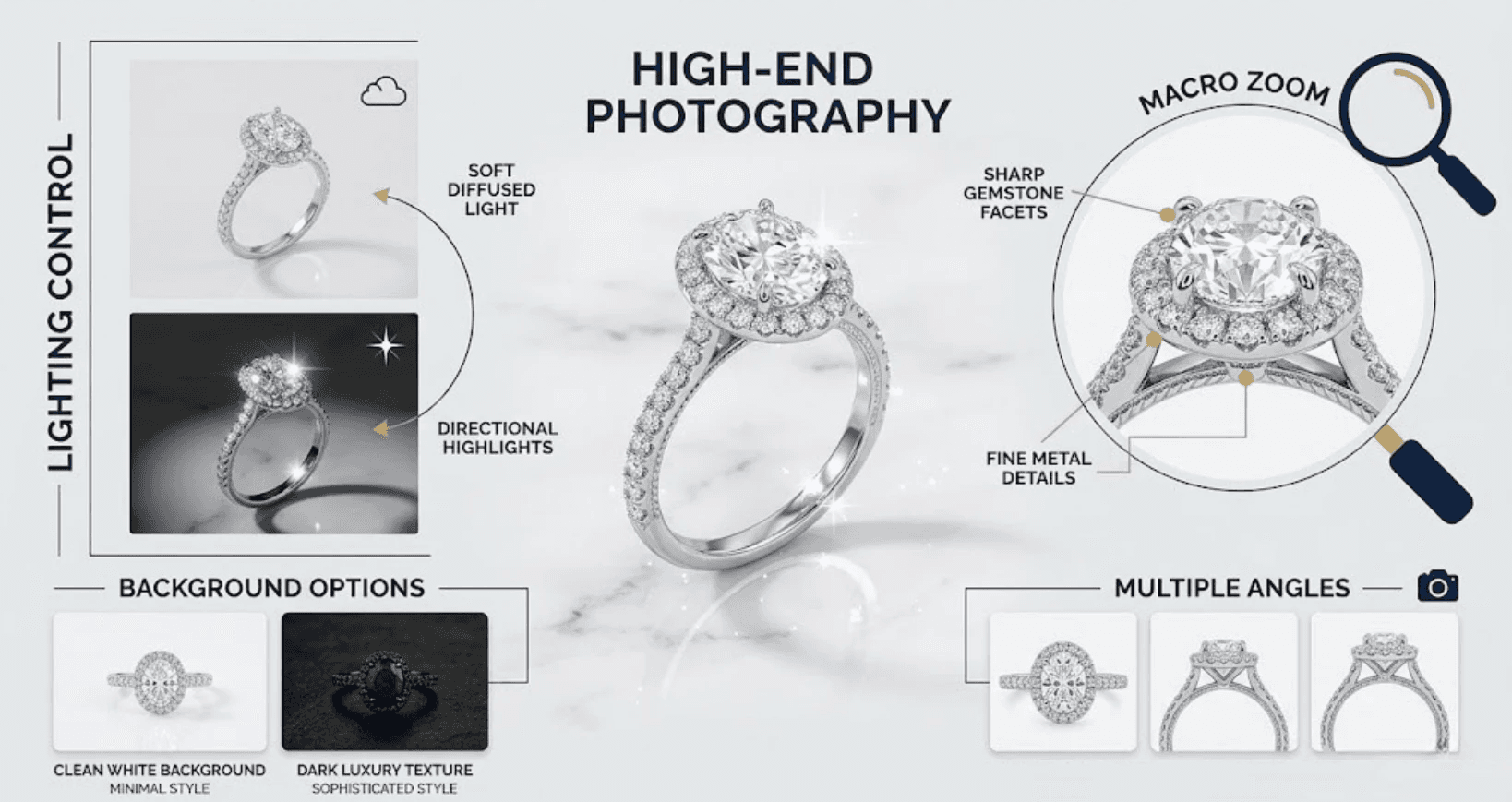
Lighting is the most important factor in jewelry photography. Because jewelry is reflective, improper lighting can cause glare, harsh reflections, or dull appearances. To compare source types and modifiers before choosing a setup, use our lights for jewelry photography guide.
For a repeatable enclosed setup, our light-box jewelry photography guide shows how to place diffusion and reflection cards, then verify color, construction, focus, and commerce truth.
Professional setups use soft, diffused lighting combined with directional highlights to enhance sparkle while maintaining clarity.
Background
White backgrounds are commonly used for ecommerce platforms to maintain consistency and meet marketplace requirements. For branding and marketing, darker or textured backgrounds can create a more luxurious feel.
Angles and Composition
Multiple angles help customers understand the full structure and design of the jewelry piece. Proper composition ensures the product is centered, balanced, and visually appealing.
Focus and Sharpness
Macro photography techniques are used to capture extremely fine details. Sharp focus ensures that textures, engravings, and gemstone facets are clearly visible.
5. Types of Jewelry Product Images
Different image types serve different purposes in the buyer journey.
White Background Images
These are standard for ecommerce platforms such as Amazon and Etsy. They provide a clean, distraction-free view of the product.
Lifestyle Images
Lifestyle images show jewelry in real-world settings, helping customers imagine how it will look when worn.
Close-Up Shots
These images highlight craftsmanship, materials, and intricate details.
Model Photography
Showing jewelry on a model helps demonstrate scale, fit, and real-world appearance.
Editorial Images
These are creative, high-end visuals used for branding, advertising, and storytelling.
Using a combination of these image types creates a complete and compelling product presentation.
6. Common Challenges in Jewelry Photography
Jewelry photography is technically challenging due to the nature of the products.
Reflective Surfaces
Metals and gemstones reflect light easily, making it difficult to control highlights and glare.
Tiny Details
Jewelry pieces are small, requiring macro precision and careful focus.
Light Refraction
Gemstones bend and scatter light, which can distort appearance if not handled correctly.
Dust and Imperfections
Even tiny particles can become highly visible in close-up shots.
Color Accuracy Issues
Capturing true-to-life colors for metals and stones is difficult but essential for customer trust.
Because of these challenges, even professional shoots often require extensive post-production work.
7. Jewelry Photo Retouching Explained
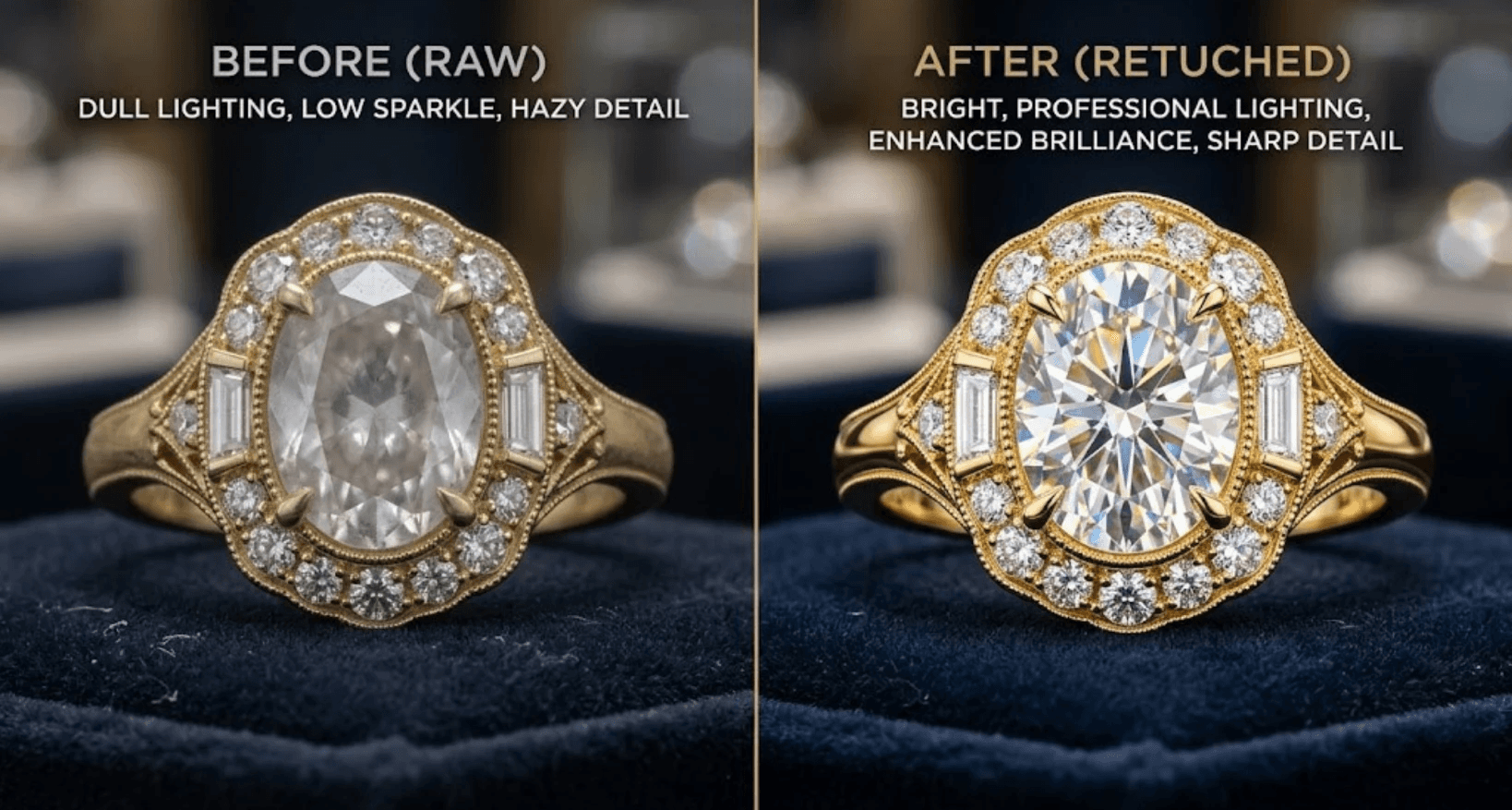
Post-production is a critical part of jewelry photography. Even the best raw images require refinement to achieve a polished, professional look.
Typical retouching tasks include:
Removing dust, scratches, and imperfections
Controlling reflections and glare
Adjusting color accuracy
Enhancing gemstone brilliance
Cleaning up backgrounds
The goal of retouching is to enhance the image without making it look artificial. Over-editing can reduce authenticity and negatively impact customer trust.
8. Jewelry Photography Pricing
Jewelry photography pricing varies depending on the complexity of the shoot and the level of editing required.
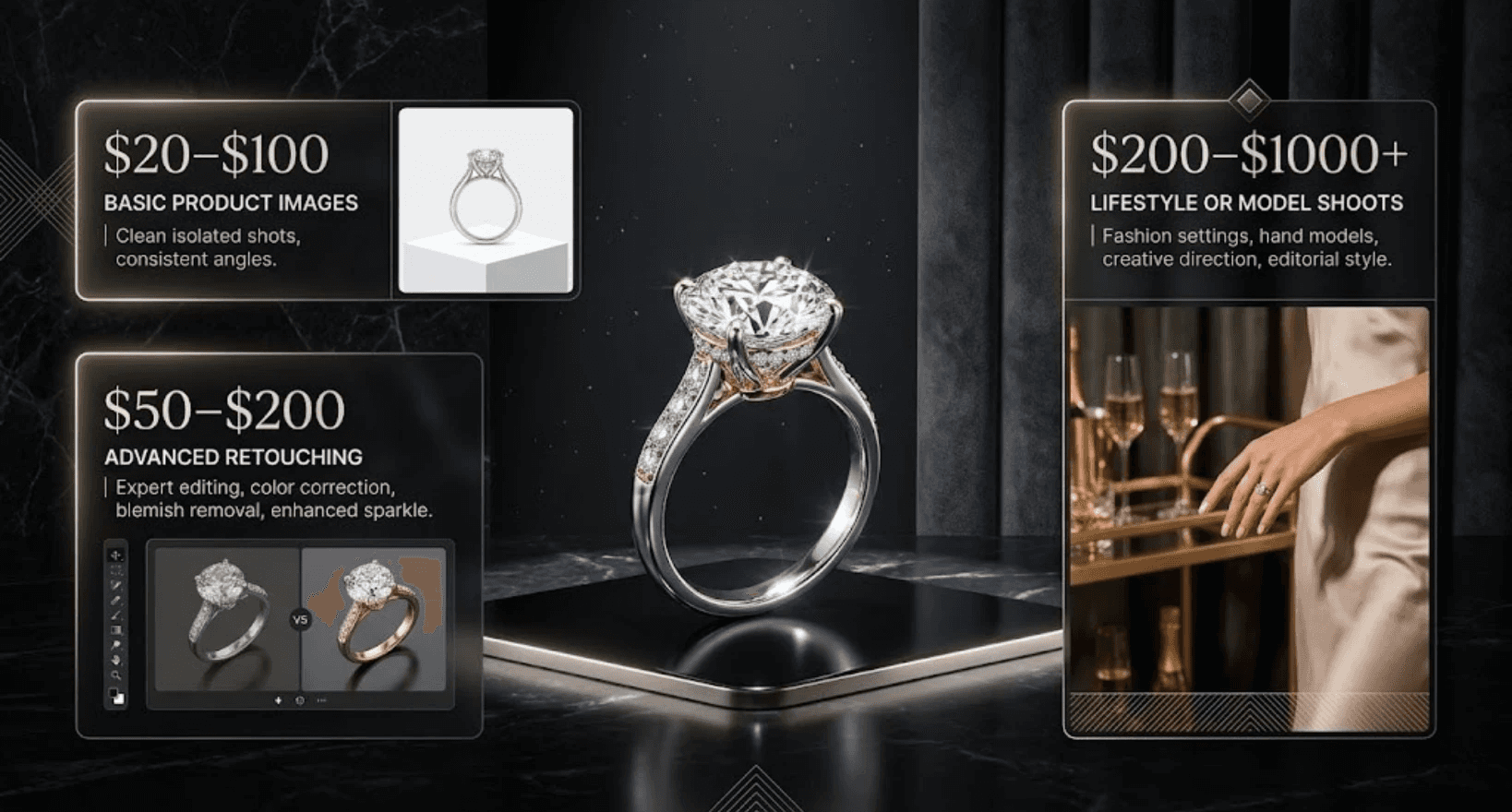
Typical Pricing
Basic product images: $20 to $100 per image
Advanced retouching: $50 to $200 per image
Lifestyle or model shoots: $200 to $1000+
Factors That Affect Pricing
Type of jewelry (rings, necklaces, watches)
Number of images required
Level of retouching
Studio setup and equipment
Use of models and props
High-end jewelry brands often invest more in photography to maintain a premium image.
9. Scaling Jewelry Photography for Ecommerce Brands
As ecommerce brands grow, they face increasing demands for visual content. Launching new collections and maintaining large catalogs requires efficient production workflows.
Brands need:
Consistent image quality across products
Faster turnaround times
Scalable production processes
Cost-effective solutions
Traditional photoshoots can become a bottleneck due to time and cost constraints. This has led many brands to explore more scalable approaches.
10. The Importance of Model-Based Jewelry Photography
Model-based images play a crucial role in improving conversions.
They help customers:
Understand size and proportions
Visualize how the jewelry looks when worn
Connect emotionally with the product
However, traditional model shoots involve:
Hiring models
Booking studios or locations
Coordinating stylists and photographers
Managing production logistics
This makes them expensive and time-consuming, especially for large product catalogs.
11. Tool Spotlight: Creating Model Jewelry Visuals Without Photoshoots
To overcome these challenges, modern AI-powered tools are transforming how jewelry visuals are created.
Platforms like Look Atlas enable brands to generate photorealistic on-model images directly from standard product photos. These tools are designed to preserve fine details such as metal textures, gemstone sparkle, and intricate design elements, ensuring the final visuals remain both accurate and premium in appearance.
With this approach, brands can:
Produce lifestyle and on-model visuals faster
Reduce production costs significantly
Create multiple variations for marketing and campaigns
Scale visual content across large product catalogs
Instead of relying on repeated photoshoots for every new piece or variation, brands can maintain a consistent, high-end visual style while moving much faster.
For jewelry brands aiming to showcase elegance and detail at scale, this kind of workflow opens up entirely new creative possibilities.

12. How to Choose a Jewelry Photography Service
Selecting the right photography provider is critical for achieving high-quality results.
Key factors to consider include:
Experience specifically with jewelry photography
Portfolio showcasing similar work
Expertise in lighting and reflections
Retouching capabilities
Transparent pricing and timelines
Jewelry requires specialized skills, so working with experienced professionals is essential.
13. Common Jewelry Photography Mistakes
Avoiding common mistakes can significantly improve image quality.
Overexposed Highlights
Excessive brightness can wash out details and reduce clarity.
Harsh Reflections
Uncontrolled reflections can distract from the product.
Blurry Macro Shots
Lack of sharpness reduces perceived quality.
Inconsistent Lighting
Different lighting styles across images can harm brand consistency.
Over-Editing Gemstones
Excessive enhancement can make stones look unrealistic.
Maintaining balance between enhancement and realism is key.
14. Future Trends in Jewelry Photography
Jewelry photography is evolving with advancements in technology.
AI-Assisted Image Enhancement
Automation tools are improving editing speed and consistency.
Digital Model Visualization
Brands can create on-model visuals without physical shoots.
Faster Production Workflows
New tools allow quicker turnaround times for large catalogs.
Scalable Content Generation
Brands can produce more visuals without increasing costs significantly.
Those who adopt these innovations gain a competitive advantage in ecommerce.
15. Final Thoughts
Jewelry professional photography is one of the most important investments for ecommerce brands selling high-value products. High-quality images communicate craftsmanship, build trust, and directly influence buying decisions.
However, as product catalogs expand and marketing demands increase, relying solely on traditional photography methods can become inefficient. This is why many brands are adopting a hybrid approach combining professional photography with modern, scalable tools.
By leveraging both traditional expertise and new technologies, brands can maintain premium-quality visuals while improving speed, reducing costs, and scaling their ecommerce operations effectively.
