So, what exactly is lifestyle photography? At its heart, it's about capturing real-life moments and telling stories in a way that feels both authentic and beautifully composed. It’s the sweet spot right between a formal, posed portrait and a completely candid, fly-on-the-wall snapshot.
The whole point is to capture genuine emotion and interaction.
Unpacking the Art of Authentic Storytelling

Lifestyle photography is all about documenting genuine events, milestones, and the quiet moments in between. While the scenes feel completely real, they’re often gently guided by the photographer to create a narrative-driven image that pops. This style really took off with the rise of social media, where users started craving content that felt more genuine. You can dive deeper into current photography industry trends to see just how much consumer tastes have shifted.
Unlike traditional portraiture with its static poses and neutral backdrops, lifestyle photography pulls the environment right into the frame, making it a key part of the story. The aim isn't just to show what someone looks like, but to offer a glimpse into who they are.
Where Does It Fit In?
To really get it, let's think about a family baking cookies.
A traditional portrait photographer might line everyone up, have them smile perfectly at the camera, and hold a flawlessly decorated cookie. A documentary photographer would probably hang back and capture the chaos as it unfolds—flour everywhere, no intervention.
The lifestyle photographer does something different. They’ll set the scene, maybe suggest a fun activity, and then encourage the family to just be together. They capture the real laughter, the messy hands, and the little glances between parent and child. This "directed reality" is what makes the final images so powerful and relatable. The moments are genuine, but they're framed with an artist’s eye for composition and light.
The magic of lifestyle photography lies in its ability to freeze a feeling, not just a face. It’s about capturing the authentic connection and the small, in-between moments that truly define a person or a family’s story.
To help clarify these distinctions, let's break down how lifestyle photography stacks up against other common styles.
Lifestyle Photography vs Other Styles at a Glance
Attribute | Lifestyle Photography | Traditional Portrait | Documentary Photography |
|---|---|---|---|
Photographer's Role | Gentle director, creates a scenario | Full director, poses the subject | Pure observer, no interference |
Posing Style | Prompt-based and activity-driven | Formal, static, and precise | Completely unposed and candid |
Environment | Part of the story, feels natural | Often a studio or neutral backdrop | Whatever the real-life setting is |
Goal | To capture authentic emotion and connection | To create a perfect, polished likeness | To record an event exactly as it happened |
Final Feel | Relatable, warm, and narrative-driven | Formal, classic, and controlled | Raw, unfiltered, and immediate |
As you can see, lifestyle photography intentionally carves out its own unique space, borrowing the best elements of planned and candid approaches to create something that feels both beautiful and true to life.
Core Principles of Lifestyle Photography
This entire style is built on a few foundational ideas that really set it apart:
It’s Story-Driven: Every photo should feel like a page in a larger story about the subjects.
It’s Emotion-Focused: The real subjects are the genuine laughs, tender moments, and connections between people.
Context is Everything: The location and environment are never just a background; they’re essential characters in the narrative.
It's Guided, Not Posed: Subjects are given prompts and activities to spark natural interactions, steering clear of rigid, unnatural poses.
The Three Pillars of a Great Lifestyle Photograph
So, what’s the secret sauce that takes a lifestyle photo from just good to genuinely unforgettable? It really boils down to three core elements that have to work in harmony. When they click, you get an image that feels alive, authentic, and truly connects with people.
Think of it like a three-legged stool. If one leg is wobbly, the whole thing feels unstable. It’s the same with these photos.
The first, and arguably most important, pillar is authentic emotion. This is the absolute heart of lifestyle photography. We’re not hunting for the classic "say cheese" grins here. We're after genuine laughter, quiet, thoughtful expressions, and real connections between people. The best photographers are masters at creating a relaxed vibe on set, making people comfortable enough to almost forget a camera is even there.
The Power of Place and Context
Next up is environmental context. In lifestyle photography, the setting isn't just a pretty background—it’s a crucial part of the story. A family playfully making a mess while baking in their own kitchen tells a completely different tale than the same family in a sterile photo studio.
Every detail—the location, the props, the clothes—adds another layer of personality and meaning. These elements ground the photo in a believable reality, which is what helps a viewer imagine themselves in that scene. To really nail this, it helps to explore foundational design concepts like balance, rhythm, and harmony, which are just as vital for composing a photograph as they are for designing a room.
The strongest lifestyle images make you feel like you've stepped into a real moment. They don’t just show you a person; they show you a piece of that person’s world.
Finally, the third pillar is the special technique that pulls it all together: guided candor.
The Art of Guided Candor
I know, it sounds like a total contradiction. But this is the magic that truly defines the genre. If you just shoot completely candid moments, you often end up with chaos and no clear focus. On the flip side, overly posed shots feel rigid and fake.
Guided candor is that perfect sweet spot in the middle. It's about giving your subjects prompts, activities, or simple directions to spark a genuine reaction.
Instead of just telling a couple to "smile," you might ask them to whisper their favorite memory of each other. That one little prompt can instantly bring out real smiles, tender looks, and even a few happy tears.
Here are a few classic examples of guided candor:
For a family: "Okay, on the count of three, everyone tickle Dad!" or "Whisper a silly secret to Mom."
For a couple: "Just walk toward me holding hands, and try to make each other laugh without looking at the camera."
For a solo shot: "Close your eyes and think about a place that makes you feel completely at peace."
This technique steers the energy of the shoot without micromanaging every single pose. It builds a framework where authentic moments can unfold naturally, giving you images that look and feel spontaneous but are still beautifully composed and emotionally powerful.
How Brands Use Lifestyle Images to Build Connection

For modern brands, especially in e-commerce, the classic product-on-white-background shot just doesn't cut it anymore. It's clean, sure, but it's cold. This is where lifestyle photography steps in, not just to show a product, but to sell a feeling.
These images build an emotional bridge. They help customers picture the product in their own lives, making it instantly more desirable. When a shopper sees a cozy blanket draped over a sofa in a beautifully lit room, they aren't just seeing a blanket. They're imagining a relaxing evening, a comfortable home, and a moment of peace.
That crucial context is what turns a passive browser into an enthusiastic buyer. It’s the difference between listing a product’s features and actually telling its story.
Transforming Products into Experiences
At its core, lifestyle photography in marketing is all about providing aspirational yet relatable context. It's a tricky balance to strike. The scenes need to be attractive enough to inspire desire but authentic enough for customers to feel like that life is within their grasp.
Think about a direct-to-consumer cookware brand. A shot of a frying pan on a plain background is purely functional. But a photo of that same pan sizzling with a family breakfast, steam rising and kids laughing at the table? That creates an immediate emotional spark.
Suddenly, the pan isn't just a piece of metal; it's a tool for creating happy family memories. This is a level of narrative power that static product shots simply can't touch. Of course, knowing how to take good product shots that sell more is a key part of the entire visual strategy.
Building Relatability and Trust
Lifestyle images also do wonders for building brand loyalty and trust. By showing products being used by real-looking people in believable scenarios, brands feel more human and less like a faceless corporation. This is especially vital for building a community on social media, where authenticity is king.
A brand that nails lifestyle photography doesn’t just sell a product; it sells an identity. Customers buy into the story and the feeling the brand represents, which builds much stronger, long-term loyalty.
The demand for this authentic style is clear. The professional photography sector in the United States alone was projected to pull in $15.8 billion in revenue in 2025. This shows just how much brands are investing to connect with audiences through compelling visual stories. Ultimately, these images give products a soul, making them an non-negotiable part of any modern marketing playbook.
Your Blueprint for a Successful Lifestyle Photoshoot
Great lifestyle photos look effortless, but they almost never happen by accident. That feeling of a perfect, spontaneous moment is usually the result of some serious behind-the-scenes planning. Having a solid game plan is what turns a vague idea into a collection of images that truly resonate.
The work starts long before a camera is even picked up. First thing’s first: you have to define the core story. What’s the feeling you're trying to capture? Is it the cozy chaos of a family weekend? The quiet focus of a ceramicist at their wheel? Or the vibrant energy of friends sharing a meal? Every single decision you make from here on out will circle back to this central theme.
Building Your Creative Vision
Once you know the story, it's time to build a mood board. This is your visual North Star—a collage of images, colors, textures, and even words that nail the aesthetic and emotional tone you're after. Think of it as a mission statement that gets the entire team, from the photographer to the models and stylists, on the same creative page.
Your mood board will directly inform two other crucial pieces of the puzzle:
Location Scouting: The setting isn't just a backdrop; it’s a character in your story. You’ll want to hunt for spaces with incredible natural light and details that add context without becoming a distraction. A bright, airy kitchen tells a completely different story than a moody, industrial loft.
Styling and Wardrobe: Clothes and props need to support the narrative, not steal the show. The outfits should feel real and appropriate for the people and the place. When putting looks together, it can be a lifesaver to check out guides on choosing the right outfits for a photoshoot to make sure everything works together visually.
A well-planned photoshoot is like a movie with a great script. The director knows the story they want to tell, the scenes are set with intention, and the actors are given the freedom to bring their characters to life authentically.
Directing for Authenticity
With a clear vision in place, the day of the shoot is all about execution. This is where you shift from planner to director. Instead of forcing people into stiff, awkward poses, your job is to create an environment where genuine moments can actually happen.
Use prompts and activities that tie back to your core story. For example, if your theme is all about connection, you could ask a couple to whisper a secret or share a favorite memory. These simple cues are the secret to unlocking those unscripted smiles, gentle touches, and real laughs that make lifestyle photography so powerful. It’s a guided approach that ensures the emotions are 100% real, but the final images are beautifully composed and perfectly aligned with the blueprint you worked so hard to create.
Techniques for Capturing Effortlessly Natural Moments
Getting those perfectly imperfect shots isn't about having the fanciest camera gear. It's really about knowing how to work with light, guide your subjects, and set up your camera to create a scene that feels completely real.
The Magic of Natural Light
Your most powerful tool as a lifestyle photographer is, without a doubt, natural light. It’s soft, it’s flattering, and it immediately makes any scene feel authentic.
Try to find large windows that cast a gentle, diffused glow on your subjects. Or, better yet, plan your shoot during the "golden hour"—that incredible slice of time just after sunrise or before sunset. The light is warm, soft, and incredibly forgiving. Mastering the basics of great lighting for photography is the first step to making your images truly stand out.
From Stiff Poses to Genuine Prompts
Forget telling people to "say cheese." The best lifestyle shots come from sparking real interactions, not forcing stiff poses. This is where prompts come in—they're the secret to capturing the genuine smiles and unguarded connections that make these photos so powerful.
Here are a few simple prompts you can try on your next shoot:
For couples: Ask them to whisper something they admire about each other. This almost always brings out a real, tender smile.
For families: Get them to huddle up and try to make the person in the middle laugh. It's a fantastic way to create natural movement and joy.
For individuals: Have them walk towards you while thinking about their happiest memory. This small trick helps create a thoughtful, unforced expression.
The idea is to guide the energy of the moment, not dictate every little movement.
A great prompt gives your subjects something to do or think about, which makes them forget the camera is even there. That’s when their true personalities emerge, letting you capture moments that feel truly alive.
Having a clear plan helps everything fall into place. Breaking it down into core steps ensures you're always prepared.
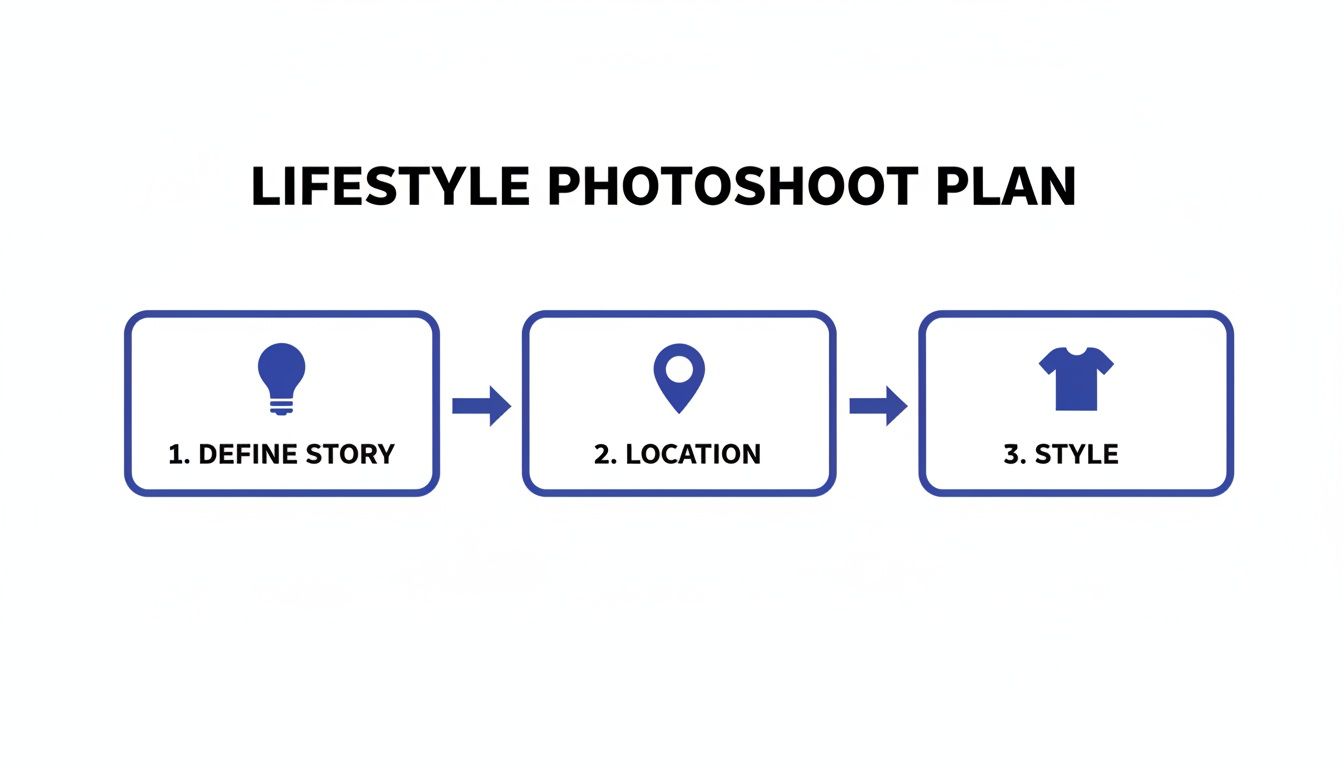
This simple framework keeps your story, location, and styling aligned, which is key for building a strong, cohesive narrative in your images.
Finally, don't overlook your camera settings. Shooting with a wide aperture (think f/1.8 or f/2.8) gives you that beautiful, blurry background—a shallow depth of field—that makes your subject pop. It’s a classic technique for adding a professional, almost dreamy quality to your shots. This emotional, personal style is clearly in demand. The closely related field of portraiture, for example, is a massive $20.6 billion global industry, which just goes to show how much people value high-quality, authentic images.
A Starter Shot List for Telling a Complete Story
The secret to a great lifestyle shoot? Don't just show up and hope for magic. The best way to capture a complete and compelling story is to walk in with a plan.
A simple shot list is your roadmap. It’s not about stiff, overly-posed pictures; it’s about making sure you get the variety you need to build a powerful narrative. Think of these shots as the essential building blocks for telling your story.
Your goal is to guide the viewer’s eye, moving from the big picture all the way down to the intimate details. You’ll want to start wide with scene-setting shots that establish the environment and overall mood. Then, you can push in for medium shots that focus on how people are interacting with each other or the product.
Finally, get in tight for those powerful close-up shots. This is where you capture raw emotion, the texture of a fabric, or the small detail of hands holding a coffee mug. A mix of these three perspectives is what makes a visual story feel dynamic and real.
The Essential Shot Checklist
To put this into practice, here’s a simple checklist that works for almost any lifestyle scenario, whether you're shooting a family at home or a full-blown brand campaign.
The Establishing Shot: This is your wide shot that shows the whole scene. It’s like the opening of a movie—it tells the audience where and when the story is happening.
The Interaction Shot: A medium shot that captures two or more people connecting. This could be friends laughing together on a couch or a parent helping their child tie their shoes. It’s all about the relationship.
The Solo Portrait: A focused shot of one person in their element. They might be lost in thought, enjoying a quiet moment, or actively using a product. This adds a personal, human layer to the story.
The Detail Shot: Get close. Really close. Focus on hands, a product in use, a specific prop, or a fleeting facial expression. These tiny moments add a rich, sensory feel that pulls the viewer in.
A well-rounded gallery isn’t just a collection of good pictures; it’s a sequence of images that work together. Each shot should feel like a sentence in a paragraph, contributing to the overall narrative.
Once the shoot is wrapped, remember that post-production for lifestyle photos is about enhancement, not transformation. You're aiming for subtle tweaks to color, contrast, and light to bring out the natural warmth of the moment. The best editing feels invisible, preserving the authenticity you worked so hard to capture.
This checklist doesn't just help you get the right shots—it also helps you direct your models. When you know the compositions you need, you can give better prompts that lead to natural, unforced results. For more ideas on guiding your subjects, our guide on fashion model poses has tons of inspiration you can easily adapt for a more relaxed, lifestyle vibe.
Answering Common Questions About Lifestyle Photography
Once you start digging into lifestyle photography, a few questions always seem to surface. Let's tackle some of the most common ones to really nail down what makes this style so effective.
How Is Lifestyle Photography Different From Candid Photography?
This is a great question, and it gets to the heart of the matter. While both aim for a natural, unposed vibe, the key difference is the photographer's involvement.
Candid photography is completely observational. It’s about capturing a moment exactly as it unfolds, with zero interference. Think of a classic photojournalist or a street photographer who is simply a fly on the wall.
Lifestyle photography, however, is more like "guided reality." The photographer sets the scene, creates a scenario, and then gives gentle direction to encourage natural interactions and emotions. The goal isn't just to wait for a perfect moment to happen by chance, but to create the conditions for one to emerge beautifully.
The real distinction is intervention. A candid photographer is a silent observer. A lifestyle photographer is a subtle director, crafting a framework where genuine moments can happen on cue.
What Gear Do I Need for Lifestyle Photography?
You don't need a studio full of equipment to get started. A good DSLR or mirrorless camera is the perfect foundation, but your choice of lens will really define the look and feel of your images.
A versatile prime lens, like a 35mm or 50mm, is a workhorse for lifestyle shoots. These lenses are fantastic in low light and produce that soft, blurry background (known as bokeh) that makes your subject pop. But honestly, the most important tool you have isn't in your bag—it's your ability to connect with your subjects and make them feel completely at ease.
Can Lifestyle Photos Work for Professional Headshots?
Yes, and they're becoming the new go-to for professionals who want to look more approachable and authentic. The days of stiff, corporate headshots against a mottled gray backdrop are fading fast.
Instead of a sterile studio portrait, a lifestyle headshot tells a story. It might show a graphic designer sketching in a sunlit creative office, or a financial advisor chatting with a client at a local coffee shop. These images show more than just a face; they give a glimpse into a person's personality, their work environment, and what it might actually be like to work with them.
Ready to create stunning, story-driven lifestyle images for your products without the hassle of a traditional photoshoot? Look Atlas uses AI to generate hyper-realistic, on-model photos that capture the authentic feel your customers love. Transform your product shots into compelling visual stories today.
