Choosing the right dresses for your photoshoot is more than just grabbing pretty styles off the rack. It’s about understanding how a garment will actually perform in front of the camera. The real magic happens when you see how a dress's fabric interacts with light and movement, and how its silhouette shapes the entire story of your images. A dress that billows and flows tells a completely different story than one with sharp, architectural lines.
How Fabric and Silhouette Shape Your Photoshoot
The success of your e-commerce photos often comes down to two things: the fabric and the silhouette of the dress. These aren't just aesthetic details; they're technical tools that control how a dress will look, move, and feel in your final shots. When you get these right, you create images that are not only professional but also give customers a true sense of the product, helping them imagine wearing it themselves.
Think of fabric as the dress's personality. A lightweight chiffon or silk will catch the slightest breeze, creating dynamic, ethereal shots full of soft motion. This makes them perfect for outdoor or lifestyle shoots where you want to evoke a feeling of freedom and romance. These materials play beautifully with natural light, producing soft highlights and gentle shadows that give your photos real depth.
On the other hand, structured fabrics like crepe, taffeta, or a heavy cotton are the dress's architecture. They hold their shape, creating clean lines and a defined form. This is exactly what you want for studio shoots where the goal is to highlight the precise cut and tailoring of the garment. It's less about capturing movement and more about communicating sophistication, power, or modern minimalism.
Matching Silhouette to Your Brand Story
The silhouette of a dress really sets the stage for the narrative you're building. Every shape has its own voice and works for different photoshoot goals. For example:
A-Line Dresses: The A-line cut is a classic for a reason—it’s universally flattering. It's your go-to for creating an elegant, timeless look. That gentle flare from the waist adds a touch of femininity and allows for graceful movement, making it a solid choice for both studio and lifestyle settings.
Sheath Dresses: A sleek sheath dress just screams modern confidence. Its form-fitting design is fantastic for showcasing the body's lines and works incredibly well in minimalist, urban, or even corporate-themed shoots. Here, the focus is all on that clean, powerful shape.
Ball Gowns or Full Skirts: If you want drama, this is it. The sheer volume and potential for incredible twirls make these silhouettes a favorite for high-impact, editorial-style photoshoots. The dress itself becomes the star of the show.
Key Takeaway: Choosing a dress should be a deliberate decision that supports your campaign's goals. Don't just pick a dress you like; pick a dress that works for the story you want to tell and the environment you're shooting in.
The Impact on Post-Production
Don't forget that your fabric and silhouette choices directly affect your editing workflow later on. Flowing, delicate fabrics might need a careful touch in post-production to ensure they don't get blown out by bright light and lose their texture. Meanwhile, heavily structured dresses might require you to lift shadows so you don't lose important design details.
Thinking about these nuances from the start can save you a ton of time and headaches. In fact, a deep dive into professional e-commerce photo editing shows just how much smoother the process is when the initial photos are captured with the right materials in mind. This kind of foresight is what separates good images from great ones, ultimately boosting customer engagement and driving sales for your brand.
Mastering Color and Fit for E-commerce Success
You can pick the perfect fabric and silhouette, but if the color is off or the fit is sloppy, you’ll lose the sale. For e-commerce, where customers can’t physically try on the dress, color and fit are everything. They build the trust a shopper needs to finally click “add to cart” and dramatically cut down on returns.
Choosing Your Color Palette
Color isn't just about aesthetics; it’s about emotion. A cool blue or a soft green can create a feeling of calm and trust, which works wonderfully for lifestyle shots in a natural setting. On the other hand, a bold red or a vibrant yellow screams energy and excitement—perfect for grabbing attention in a high-fashion or festive collection.
But it’s not just about the dress. You have to consider how its color interacts with the model’s skin tone and, just as importantly, the background. A stunning dress can completely wash out or get lost if it clashes with its surroundings. Your goal should always be to create either beautiful harmony or a deliberate, powerful contrast.
To get this right, think in terms of color theory.
For a soft, cohesive feel, use analogous colors—those that sit next to each other on the color wheel. Think of a teal dress shot against a muted blue wall.
To make the dress truly pop, go for complementary colors—those on opposite sides of the wheel. A burnt orange dress against a deep blue sky is a classic example of this.
When you're unsure, you can’t go wrong with neutral backgrounds. Grey, beige, or off-white are your safety net because they let the dress be the star, whether it’s a solid color or a busy pattern. This is especially true for those clean, product-on-model shots where clarity is the main goal.
This simple decision tree can help you visualize how your primary photoshoot goal—whether it's showing off movement or highlighting a specific shape—guides your dress selection from the very beginning.
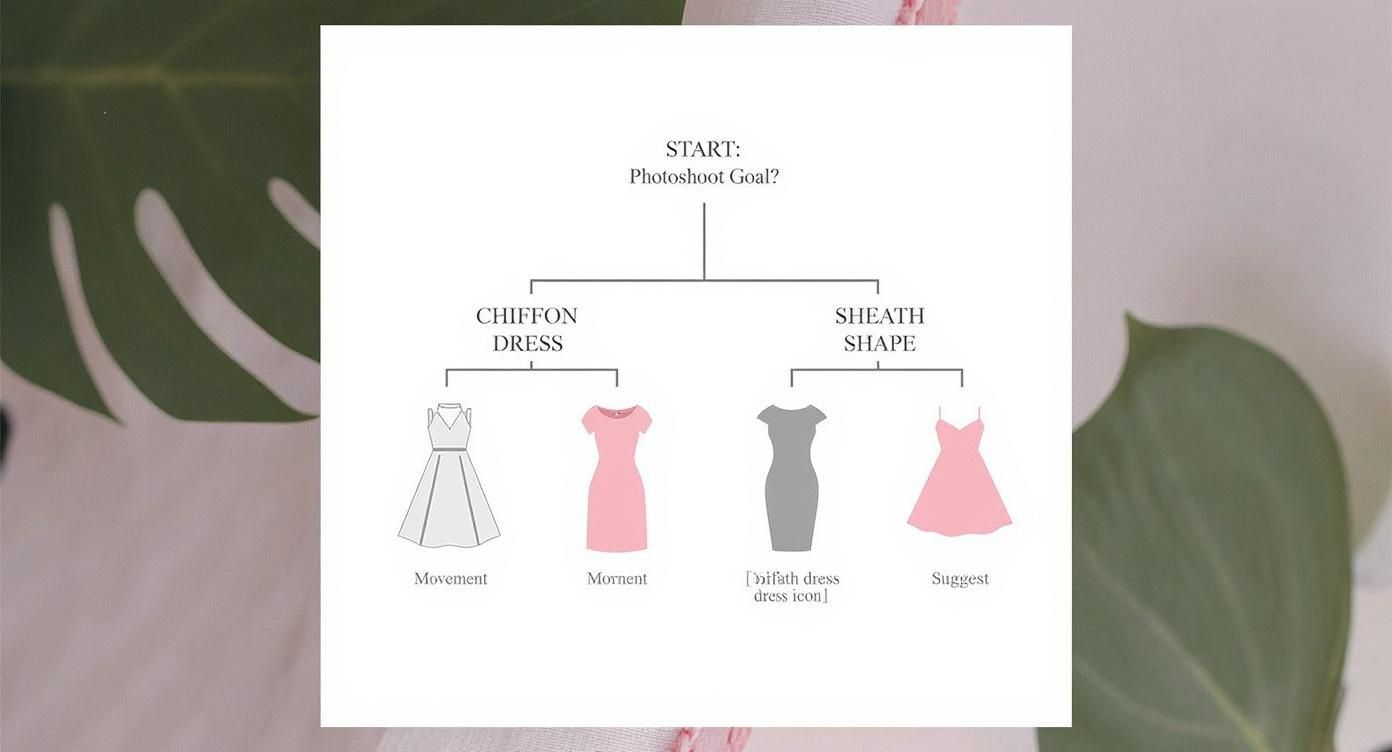
Starting with a clear objective, like emphasizing a dress's flowy nature versus its structured design, makes it so much easier to narrow down your choices and get the perfect shot.
Nailing the Perfect Fit On Set
Nothing looks more unprofessional than an ill-fitting dress. Even if you have the model’s correct size, almost every garment will need some on-the-fly adjustments to look flawless for the camera. This is where a stylist's kit becomes your most valuable tool on set.
Here are a few tricks of the trade every team should know:
Binder Clips & Clamps: These are the MVPs for quickly cinching a waist or pulling fabric taut from the back to create that perfect silhouette for front-facing shots.
Double-Sided Tape: A lifesaver for securing plunging necklines, keeping straps from slipping, or taming a hem that won’t cooperate.
Safety Pins & Straight Pins: For more delicate tweaks, especially on lighter fabrics where clips are too harsh. Just remember to pin from the inside so they stay hidden.
A dress that fits perfectly on-model becomes a powerful selling tool. It allows you to showcase its intended design from multiple angles, giving customers a 360-degree view that simulates an in-person fitting room experience.
This obsession with detail is what separates the pros from the amateurs. It’s a huge deal in the fashion world, especially considering the global party dress market is expected to hit $15.5 billion by 2033. That growth is driven by social events where a picture-perfect look is the ultimate goal. For a deeper dive, you can explore the full research on party dress trends.
Capturing Fit from Every Angle
Once the fit is perfect, you have to prove it to your customers. A single photo from the front just doesn't cut it anymore. Your shot list needs to anticipate and answer every question a shopper might have about how the dress will look and feel on them.
Make sure your photographer is capturing these essential views:
The 3/4 View: This shows how the dress shapes the body from a flattering, slightly turned angle.
The Side Profile: Absolutely critical for showing how the dress drapes over the bust and hips.
The Back View: Displays important details like zippers, a low-cut back, or how the fabric gathers at the waist.
Close-up Detail Shots: These highlight texture, seams, and craftsmanship, which sends a strong signal of quality.
By mastering both the science of color and the art of the on-set fit, you’ll create images that aren't just beautiful—they’re hardworking sales tools. This approach turns your product photos from simple pictures into a trusted guide that gives customers the confidence they need to buy.
Styling and Accessorizing for a Cohesive Story
A great dress is only the beginning. The real magic in a photoshoot happens when you build a complete, compelling look around it. Styling isn't about just adding more stuff; it's about telling a cohesive story that connects with your customer. You're not just selling a dress; you're selling a feeling, an experience, a lifestyle.
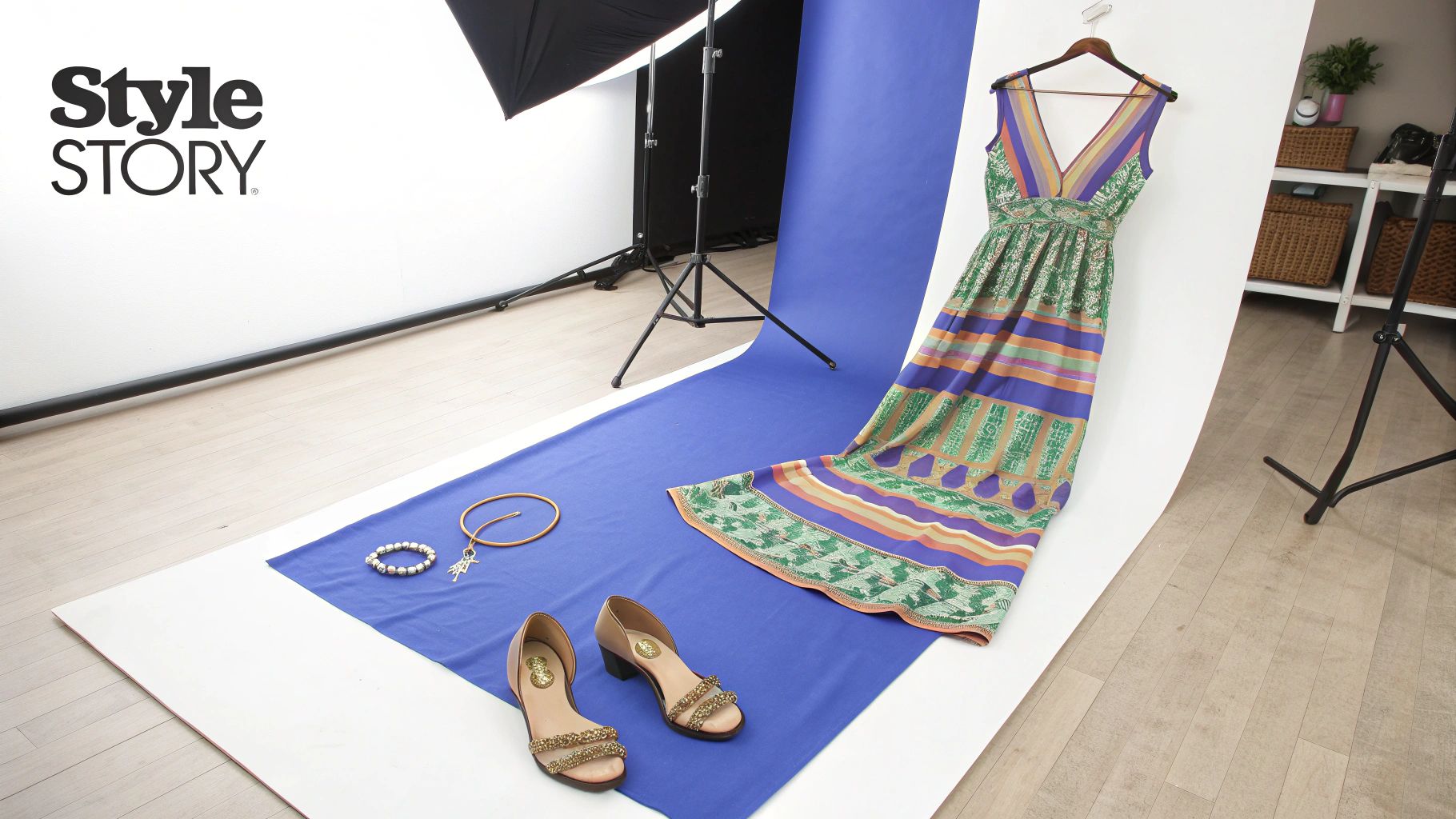
The goal is always to make the dress the hero of the shot. Every accessory, from the shoes to the jewelry, should feel intentional and serve the overall narrative. It’s about thinking through the entire scene before the first photo is even taken.
Building Your Narrative
Before you even think about picking out a necklace, you need to define the story. What’s the vibe? Minimalist and urban? Romantic and whimsical? Edgy and high-fashion? This narrative becomes your North Star for every single styling choice.
A flowy bohemian dress, for instance, tells a story of freedom and nature. Chunky boots and a wide-brimmed hat amplify that story. But pair it with delicate stilettos? The message gets muddled, and the look falls flat.
Let’s look at a few scenarios:
Minimalist Urban: Imagine a sleek, solid-colored sheath dress. You’d pair it with sharp, geometric jewelry and classic pumps. The backdrop could be as simple as a modern chair or a concrete wall. The story here is all about sophistication and urban confidence.
Romantic Garden: A floral maxi dress truly comes to life with strappy sandals, delicate gold necklaces, and maybe even a fresh flower tucked into the model’s hair. The narrative is soft, dreamy, and utterly feminine.
Edgy Street Style: Take a simple slip dress and throw a leather jacket over it. Add combat boots and layered silver chains. Suddenly, you’ve told a story of attitude and modern cool.
This idea of building a complete, story-driven look is everywhere. Think about the global cosplay clothing market, which often features incredibly elaborate dresses for photoshoots. It’s projected to hit around $9.21 billion by 2035, a trend fueled by period dramas that inspire highly stylized photography. You can dig deeper into this creative market's growth in this detailed industry report.
The Art of Balance in Accessorizing
Here’s the golden rule: the dress is the star of the show. Everything else is just the supporting cast.
If the dress itself is busy—think complex patterns, a dramatic silhouette, or lots of texture—keep the accessories simple and understated. A delicate chain or simple studs will do the trick.
On the flip side, a simple, solid-colored dress is the perfect canvas for more statement-making pieces. A plain black dress, for example, is begging to be styled with a bold necklace or brightly colored shoes to inject some personality.
Pro Tip: When a dress has a clear focal point, like a deep V-neck or an open back, choose accessories that enhance it. Delicate, layered necklaces draw the eye to a plunging neckline, while elegant drop earrings are perfect for a dress that shows off the shoulders.
Choosing the Right Shoes
Shoes are so much more than a finishing touch. They fundamentally change a model's posture and how they pose. The right footwear grounds the entire look and has to make sense for the location and theme.
Heels: They instantly elevate posture and create long, elegant lines. Perfect for formal, glamorous, or high-fashion concepts. Just be practical—stilettos on a sandy beach will look ridiculous and make the model's job impossible.
Flats & Sandals: These give off a more relaxed, natural vibe. They’re your go-to for casual, lifestyle, or beach shoots where you want dynamic movement and comfortable, believable poses.
Boots: Boots can add an element of edge or a seasonal feel. A pair of ankle boots can toughen up a feminine dress, while knee-highs create a sophisticated look for fall or winter.
When you carefully curate every element, you’re no longer just showing a product. You're creating an aspirational vision that helps customers see exactly how that dress fits into their life. That’s how you turn a passive browser into a confident buyer.
Bringing Dresses to Life with Movement and Posing
Let’s be honest: a static, lifeless pose can make even the most incredible dress look boring. If you really want to capture the spirit of a garment, you need to bring some energy into your photos. We're talking about moving beyond those stiff, mannequin-like stances and showing the dress how it was meant to be seen—in motion. This doesn't just make for prettier pictures; it gives your customers a genuine feel for the fabric's drape, the way it fits, and its overall personality.
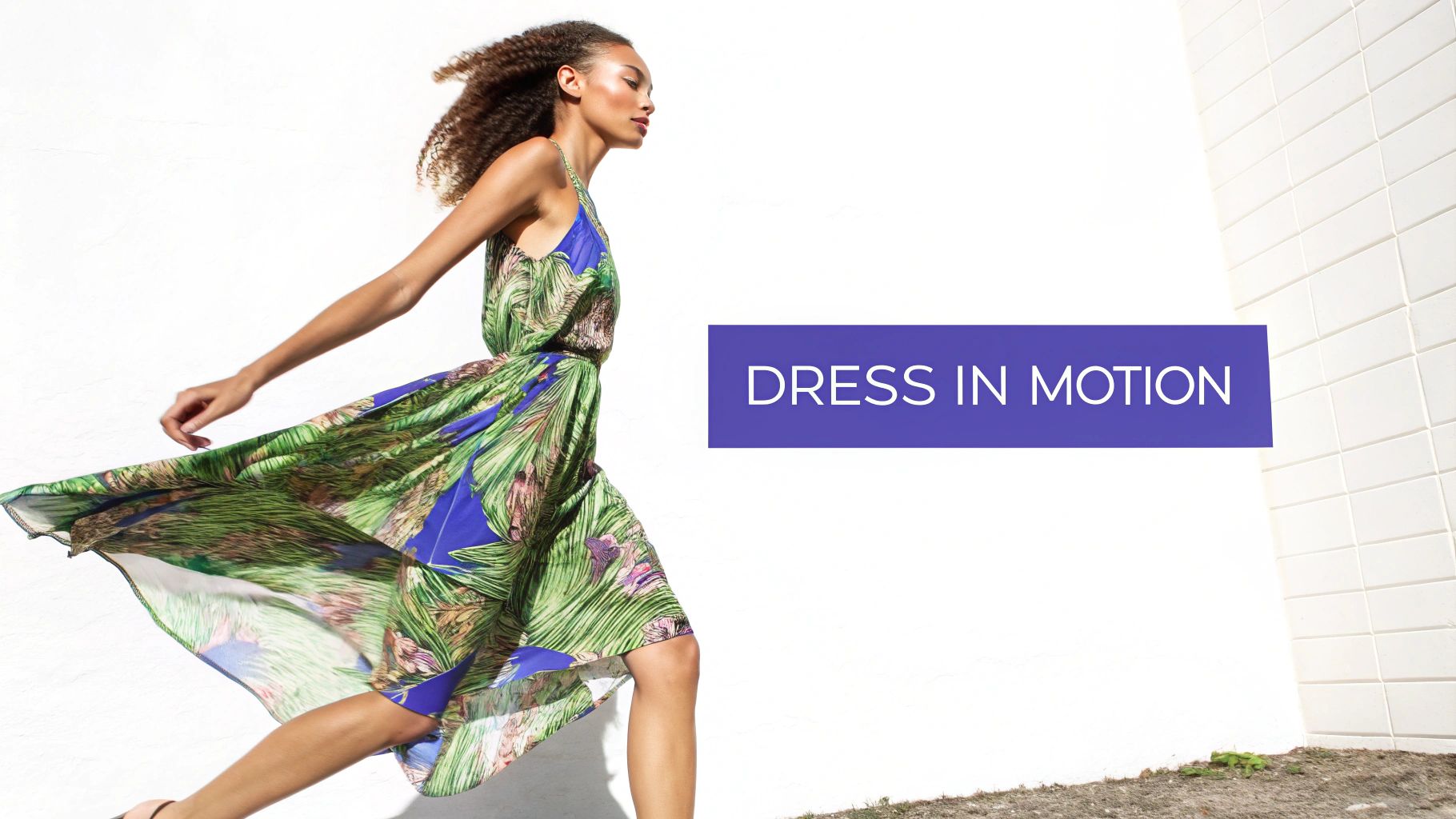
Getting a model to move naturally is a bit of an art form. Instead of giving rigid directions like "stand there, now turn," try using prompts that inspire action. Ask them to walk towards you, sway gently, or even just fiddle with the hem of the dress. You'd be surprised how these small, organic movements translate into authentic, captivating photos.
Poses That Make Your Dress the Hero
The right pose can act like a spotlight, instantly drawing the eye to a dress's best features. You have to tailor your posing strategy to the specific design you’re shooting. When you match the pose to the garment, you're communicating its unique selling points without ever having to write a word.
Here are a few classic pairings I always come back to:
The Twirl: This is a no-brainer for any dress with a full or A-line skirt. A slow, graceful twirl lets the fabric fan out, beautifully showcasing its volume and flow. It’s a shot that feels joyful and free.
The Walking Shot: Absolutely essential for dresses made from slinky fabrics like silk or chiffon. As the model walks, the material drapes and moves around them, showing customers exactly how it behaves in real life. It answers the question, "How will this feel when I'm wearing it?"
The Over-the-Shoulder Glance: Perfect for showing off any back details—a low-cut design, cool straps, or a unique zipper. It’s a classic for a reason; it’s elegant and highlights a view customers don't always get to see.
Expert Insight: Don't shy away from props that encourage movement. Something as simple as a bouquet of flowers or a handbag can solve the age-old "what do I do with my hands?" problem and lead to much more natural, unforced poses.
Why Video is Your Secret Weapon
Photos are great, but nothing shows off a dress’s movement quite like video. We live in an age of short-form content, and platforms like Instagram Reels and TikTok have become massive sales drivers. A quick video clip of a model twirling in a flowy dress can be far more persuasive than a dozen static photos ever could.
Video simply brings fabric to life. It shows customers exactly how a satin dress catches the light or how a tulle skirt billows with every step. This kind of visual proof builds a ton of confidence in a potential buyer, closing the gap between seeing an item online and imagining it in their own closet.
And creating good video content doesn't require a Hollywood budget. With a few smart techniques, even simple clips shot on a phone can be incredibly effective. If you're looking to dive deeper, there are some great guides on how to create product videos that really get results.
Directing for Authentic Motion
To get those great shots, your direction needs to be clear, but also encouraging. Try giving your model a simple scenario to play out. For example, instead of just saying "walk," try something like, "walk like you're heading to meet a friend at your favorite café." This tiny shift in direction almost always results in a more relaxed and natural stride.
Here are a few quick tips for directing on set:
Turn up the music. Putting on some upbeat tunes can instantly help models relax and move more naturally.
Use the environment. If you're shooting outside, encourage the model to interact with their surroundings. Have them lean against a cool wall, walk through a field, or brush their hand along a railing.
Focus on the little things. Sometimes the most captivating shots come from small, subtle actions—a gentle toss of the hair, a soft laugh, or the simple act of adjusting a sleeve.
By combining thoughtful posing with the dynamic energy of movement and video, you create a far richer experience for your audience. You're not just showing them a dress; you're showing them how that dress will make them feel.
The Technical Side: Lighting, Backgrounds, and Prep
Your creative vision is only half the battle. Without solid technical execution, even the most beautiful dress will fall flat in a photo. We're talking about the behind-the-scenes work—the lighting, the background choices, and the meticulous prep—that separates amateur shots from professional, high-converting e-commerce images.
Getting these elements right makes sure the dress is always the star. It's all about creating a controlled environment where the garment's texture, color, and fit come through with absolute clarity.
How Lighting Shapes the Mood
Think of lighting as the paintbrush for your photoshoot. It dictates the mood, highlights texture, and defines the shape of the dress. The choice between soft, natural light and crisp studio light will completely change the story your images tell.
Soft, Natural Light: Imagine the gentle light pouring through a large window on an overcast day. This creates a dreamy, romantic vibe with soft shadows and smooth tones. It's incredibly flattering and works perfectly for lifestyle shoots or campaigns going for an ethereal, approachable feel.
Hard, Studio Light: This is the high-contrast light you see in high-fashion editorials. It carves out sharp, defined shadows and makes colors pop. This style is a must for e-commerce product shots where you need to show off precise details, sharp tailoring, and the true color of a dress.
Knowing when to use each is key. For brands looking to master their own setup, diving into the fundamentals of the best lighting for product photography can make a huge difference in your final image quality.
Choosing Backgrounds That Make Your Dress Pop
The background should always compliment the dress, never compete with it. A busy or distracting background pulls focus and can cheapen the entire look. Whether you're in a studio or on location, the goal is a setting that elevates the garment.
For studio shoots, seamless paper backdrops in neutral colors like grey, beige, or off-white are your best friend. They create a clean, distraction-free canvas that lets any dress—solid or patterned—take center stage.
Shooting on location? Think about the environment's color palette. A vibrant green dress might get lost against a lush forest but would look incredible against the neutral tones of an urban, concrete backdrop. You're always aiming for contrast or harmony, never a clash.
My Two Cents: Your pre-shoot prep is your safety net. Meticulous planning prevents on-set chaos and ensures every minute of expensive shoot time is used effectively. A well-prepared shoot is a smooth shoot, every time.
The Ultimate Pre-Shoot Prep Checklist
Success is truly in the details. The hours leading up to a photoshoot are just as critical as the shoot itself. A rushed, disorganized prep process will always show in the final images, whether it's through wrinkles, loose threads, or missed shots.
Make this checklist non-negotiable:
Garment QA: Inspect every single dress for flaws. Hunt for loose threads, missing buttons, or tiny stains. Handle any needed repairs well in advance.
Steaming and Pressing: Every garment has to be perfectly steamed or pressed on the morning of the shoot. Wrinkles look unprofessional and are a nightmare to edit out later.
Organize by Look: Pair each dress with its intended accessories—shoes, jewelry, bags, whatever you're using. Bag them or hang them together as a complete look so you can transition between shots quickly and efficiently.
Create a Detailed Shot List: Never just wing it. Your shot list should break down every required angle for each dress: full-length, 3/4 view, back view, and close-ups of any special details. This is how you guarantee you get all the assets you need for product pages and marketing campaigns.
This level of preparation is just standard practice in the professional world. The global photography services market was valued at $55.6 billion in 2023, a huge slice of which is driven by the demand for high-quality fashion content where this kind of precision is expected. You can find more insights by checking out the full report on photography industry statistics. Meticulous prep is what elevates your brand to that professional standard.
Answering Your Top Photoshoot Dress Questions
When you're prepping for a shoot, a million little questions pop up, especially about the dresses. Getting these details right is the difference between a good shoot and a great one. Let's tackle some of the most common questions we hear from brands to get you from planning to shooting with total confidence.
What Are the Best Fabrics for Capturing Movement?
If you want those beautiful, dynamic shots where the dress feels like it's dancing, you need to think about fabric. Lightweight, flowing materials are your best friends here—they're the key to creating those elegant, airy images that stop people in their tracks.
Your go-to choices should be:
Chiffon: It’s incredibly light and catches the air beautifully, giving you those soft, ethereal drapes.
Silk: Famous for its gorgeous sheen and fluid movement, silk plays with light in a way that’s simply stunning on camera.
Tulle and Organza: These add dramatic volume without the weight, perfect for big, sweeping twirls and creating soft, cloud-like shapes.
These fabrics are amazing for lifestyle or outdoor shoots where you're aiming for a sense of freedom and grace. Even a small fan or a natural breeze can bring them to life. While they are the clear winners for movement, don't rule out structured fabrics like a quality crepe or lightweight satin—they can still offer a beautiful drape with a bit more form.
How Do I Pick a Dress Color That Won’t Clash With the Background?
This all comes down to a little bit of color theory. The goal is to either create a beautiful, harmonious look or a deliberate, eye-catching contrast. If the dress just blends in or, even worse, fights with the background, it completely loses its power.
For a serene, cohesive feel, go with analogous colors—these are colors that sit right next to each other on the color wheel. Picture a soft blue dress against a muted green, leafy scene. It just works.
If you want that dress to be the absolute star of the show, use complementary colors. These are opposites on the color wheel and create an instant, high-impact look. A vibrant red dress against a lush green backdrop? Classic, powerful, and it grabs attention immediately.
Expert Tip: When you're in doubt, neutrals are your safety net. A simple grey, beige, or white background provides a clean canvas that makes any dress color pop. This is especially true for standard e-commerce product shots where clarity is everything. Always, always test a fabric swatch against your background with your planned lighting before shoot day.
Should I Use Patterned or Solid-Colored Dresses for My E-commerce Site?
Both have their place, but your choice really depends on what you want the image to do.
For your main product images on your e-commerce site, solid colors are almost always the better choice. They let the silhouette, texture, and cut of the dress shine through without any distractions. This kind of clarity gives customers the details they need to click "add to cart."
Patterned dresses are fantastic for bringing personality and context to your brand through lifestyle shots, editorial content, or social media posts. The catch? Patterns can be tricky. Uneven lighting can easily distort them, and they might not photograph true to life. A smart strategy is to lead with solid colors for your core on-model product shots and save the patterns for more creative, story-driven content.
How Far in Advance Should I Get the Dresses Ready for a Shoot?
Give yourself at least a week. Seriously. This buffer is your best defense against last-minute chaos, whether it's a small repair or a frantic search for the right pair of earrings. Rushing this part of the process just leads to stress on set.
Be methodical about it. A week out, inspect every single garment for loose threads, tiny stains, or any other flaws. Then, put together each complete "look" by pairing the dress with all its accessories. The day before the shoot (or the morning of, at the latest), every dress needs to be professionally steamed or pressed. Wrinkles look unprofessional and will cost you a fortune in post-production. A smooth, efficient shoot day is always born from meticulous prep work.
Ready to create stunning on-model imagery without the hassle and cost of traditional photoshoots? Look Atlas uses AI to generate ultra-realistic product photos and videos that boost conversions and build a consistent, high-quality catalog. Generate your first images today.
