Picking the perfect dress for a photoshoot is about so much more than just finding a pretty garment. It’s a strategic decision. The right dress tells the story you want to tell, whether you’re driving sales for a specific product or capturing a certain brand vibe. It's the difference between images that just look good and images that actually work.
Aligning Your Dress Choice with Photoshoot Goals
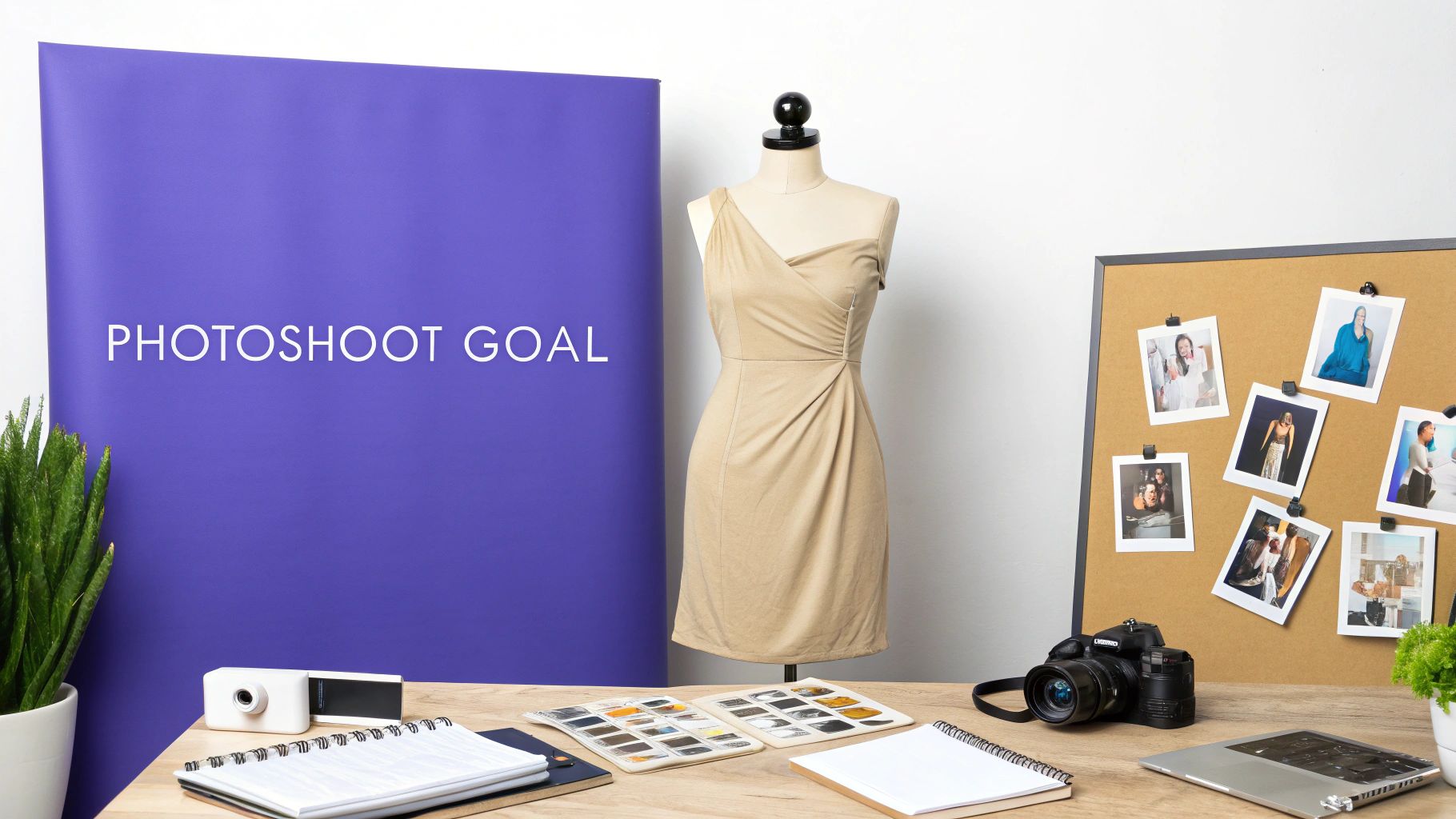
Before you even think about scrolling through styles, you have to lock in the purpose of your shoot. Every single photo you create needs to have a job. If you don't have a clear goal, you'll end up with a dress that’s beautiful but completely misses the mark with your audience and your business needs.
It all starts with a simple question: "What do I need these images to do?" The answer to that question will steer every other choice you make, from the dress's silhouette to the location and lighting. This is what separates professional commercial photography from just taking pictures.
Product-Centric vs. Brand-Focused Shoots
First things first, you need to know if you're selling the item or selling the dream. This is the fundamental split in photoshoot objectives.
Product-Centric (eCommerce): The goal here is simple: convert. The dress is the star of the show. Every other element—the lighting, the background, the pose—exists solely to highlight its features, fit, and feel. You're aiming for clarity to help a customer click "add to cart."
Brand-Focused (Lifestyle/Editorial): Here, the goal is to build a connection. The dress is just one piece of a much larger narrative. You’re using it to create a mood, evoke an emotion, and cement your brand’s identity. The focus isn't on the nitty-gritty details of the garment, but on the overall feeling the image leaves you with.
Think of it this way: a high-converting product shot for your Shopify store will likely have the dress on a clean, neutral background, lit perfectly to show off the fabric. But an editorial shoot for that same dress might place it in a sun-drenched, golden-hour field to sell a feeling of romantic, carefree summer days.
Think of your photoshoot's goal as the compass for all creative decisions. A product shot needs absolute clarity. A lifestyle shoot needs emotion and context. Let your objective guide the entire aesthetic.
Tailoring Dress Selection to Specific Goals
Once your main objective is crystal clear, you can pick a dress that actively helps you achieve it. Let's walk through a couple of common scenarios for direct-to-consumer brands.
Goal 1: Driving Direct Sales on Product Pages
When the mission is to sell this specific dress, there can be no ambiguity. Your customer needs to see it and understand it instantly.
What to Choose: Stick with dresses that have clean, defined silhouettes. Solid colors or simple patterns that don't distract the eye are your best friends. The dress needs to look great from every angle—front, back, and side—so shoppers get the full picture.
What to Avoid: Anything overly complex or avant-garde that might make a customer wonder, "How would I even wear that?" Also, steer clear of tricky fabrics that are a nightmare to light or that swallow the garment's shape.
Goal 2: Creating Engaging Social Media Content
For platforms like Instagram or TikTok, the game is different. You have about two seconds to stop the scroll. Your dress needs to have that visual hook.
What to Choose: Movement is king here. Think flowing skirts, fun ruffles, or interesting textures that pop in a quick video clip or a Boomerang. Bold, bright colors and unique details are also fantastic for creating that thumb-stopping moment.
What to Avoid: Anything that looks static or boring on camera. That simple, classic dress might be a bestseller on your product page, but it probably lacks the "wow" factor needed to cut through the noise of a crowded social feed.
By consciously aligning the dress for a photoshoot with a specific, strategic goal, you turn it from just another piece of clothing into a powerful marketing asset. Nail this first step, and your final images won't just be stunning—they'll be incredibly effective.
Selecting Colors and Fabrics That Pop on Camera
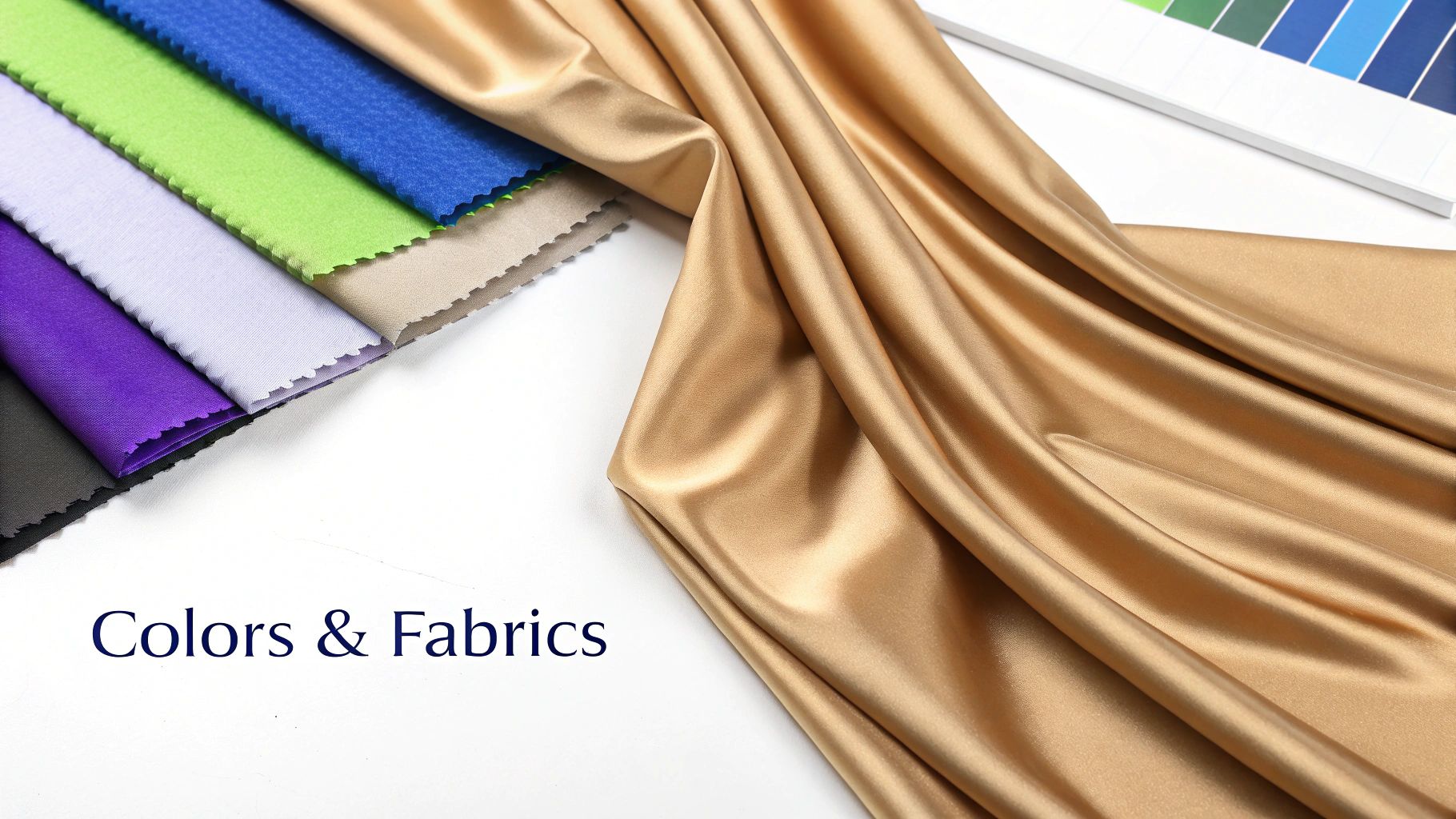
It’s a tale as old as eCommerce: a dress looks incredible in person, but the photos just fall flat. The magic is lost somewhere between the real world and the digital image. This happens because the camera lens doesn't see the way our eyes do. Understanding how colors and fabrics behave under studio lights is what separates amateur shots from professional, high-converting imagery.
This isn't just a creative choice; it's a core part of visual merchandising. With nearly 95.6% of brands relying on model photography and the average product page featuring eight different images, the dress you choose has to work hard across every single shot. You can dive deeper into these fashion photography statistics and their impact on eCommerce to see just how critical these details are.
Harnessing the Power of Color
Color is what grabs a customer’s attention first. It sets the mood instantly, so your color choices have to be deliberate, balancing your brand's look with the story you're trying to tell.
Brand Colors: Weaving your brand palette into the shoot is a great way to build recognition. But this doesn't mean your model has to wear your exact logo color. Think about using secondary or tertiary brand colors for a more sophisticated, on-brand vibe.
Complementary Tones: Sometimes the perfect color has nothing to do with your brand guide. You have to consider the model's skin tone, the background, and the feeling you want to evoke. Rich jewel tones like emerald and sapphire scream luxury, while soft pastels give off a romantic, dreamy feel.
A classic rookie mistake is going for color extremes. Pure black can swallow up all the beautiful details and textures of a dress, turning it into a flat silhouette. On the other hand, stark white can easily get "blown out" by the lights, losing all its form. And don't even get me started on neons—they're notorious for casting a strange, unflattering glow on the model's skin.
Understanding How Fabric Interacts With Light
The material you choose is just as important as the color. A fabric’s texture, weight, and finish determine how it plays with light, which directly shapes how dimensional and high-quality the dress looks in the final photo.
Think of fabric as your secret light-shaping tool.
Materials with some sheen—like silk, satin, or charmeuse—are fantastic for creating gorgeous highlights and conveying a sense of fluid movement. They catch the light beautifully, adding depth and a touch of luxury that’s perfect for more elegant or evening wear collections.
On the flip side, matte fabrics absorb light. This creates a clean, modern, and often more graphic look. Materials like heavy cotton, matte jersey, or crepe are brilliant for showing off a dress’s unique structure and silhouette without any distracting glare. They give you a solid, even block of color that can be incredibly powerful for product-focused shots.
The fabric of your chosen dress is a silent collaborator in your photoshoot. Sheen and gloss create dynamic highlights and a sense of luxury, while matte finishes emphasize pure color and form. Choose the material that best communicates your product's story.
Fabric Performance on Camera
Here’s a quick-reference guide comparing how different fabrics behave under studio and natural lighting during a photoshoot. It’s designed to help you choose the best material for your desired visual effect.
Fabric Type | Best Use Case | Lighting Interaction | Potential Issues |
|---|---|---|---|
Silk/Satin | Evening wear, luxury items, pieces meant to show movement | Catches and reflects light beautifully, creates strong highlights | Can show every wrinkle; reflections may cause "hot spots" if lit poorly |
Cotton/Linen | Casual wear, structured pieces, lifestyle shots | Absorbs light, provides a natural, soft look with subtle texture | Wrinkles very easily (requires constant steaming on set) |
Matte Jersey | Draped styles, form-fitting dresses, modern silhouettes | Absorbs light for a smooth, even color; hides imperfections well | Can look flat if not styled to create shape and dimension |
Chiffon/Organza | Layered looks, romantic or ethereal styles, editorials | Sheer and light-diffusing, adds softness and depth | Can be too transparent; difficult to light without losing detail |
Velvet | Autumn/winter collections, luxury and vintage-inspired looks | Absorbs light in its pile but has a subtle sheen, creating rich depth | Can look flat from certain angles; pile direction matters for consistency |
Sequins/Metallics | Party wear, statement pieces, festive campaigns | Highly reflective, creates dramatic sparkle and highlights | Can easily blow out highlights, may be distracting if overused |
Choosing the right fabric is about knowing the look you want to achieve. If you want high drama and luxury, something reflective like satin is your go-to. If you're aiming for an organic, down-to-earth feel, matte cotton is a much better fit.
Common Fabric and Pattern Pitfalls to Avoid
I've seen so many shoots get derailed by a poor fabric choice. Certain textures and patterns look amazing in real life but create a digital nightmare on camera. Knowing what to watch out for can save you a world of hurt in post-production.
Moiré Patterns: This is the big one. It's a weird, wavy distortion that happens when the camera sensor can't handle fine, repeating patterns. Thin stripes, small houndstooth, and tight checkerboards are the most common culprits. It’s nearly impossible to fix later.
Overly Busy Prints: A bold print can be a showstopper, but if it's too small or dense, it just turns into a muddy mess on camera. The print can completely overwhelm the dress's silhouette and distract from the model's face.
Stiff or Wrinkly Fabrics: Materials that crease the moment you look at them (I'm looking at you, linen) mean you'll have a steamer working overtime on set. Overly stiff fabrics are just as bad—they can make the model look boxy and prevent them from moving naturally, leading to stale, awkward poses.
When you’re picking a dress for photoshoot success, always think about that partnership between color and fabric. Get it right, and you’ll create images that don't just look good—they'll look compelling enough to make customers click "add to cart."
Getting the Perfect Fit and Capturing Movement
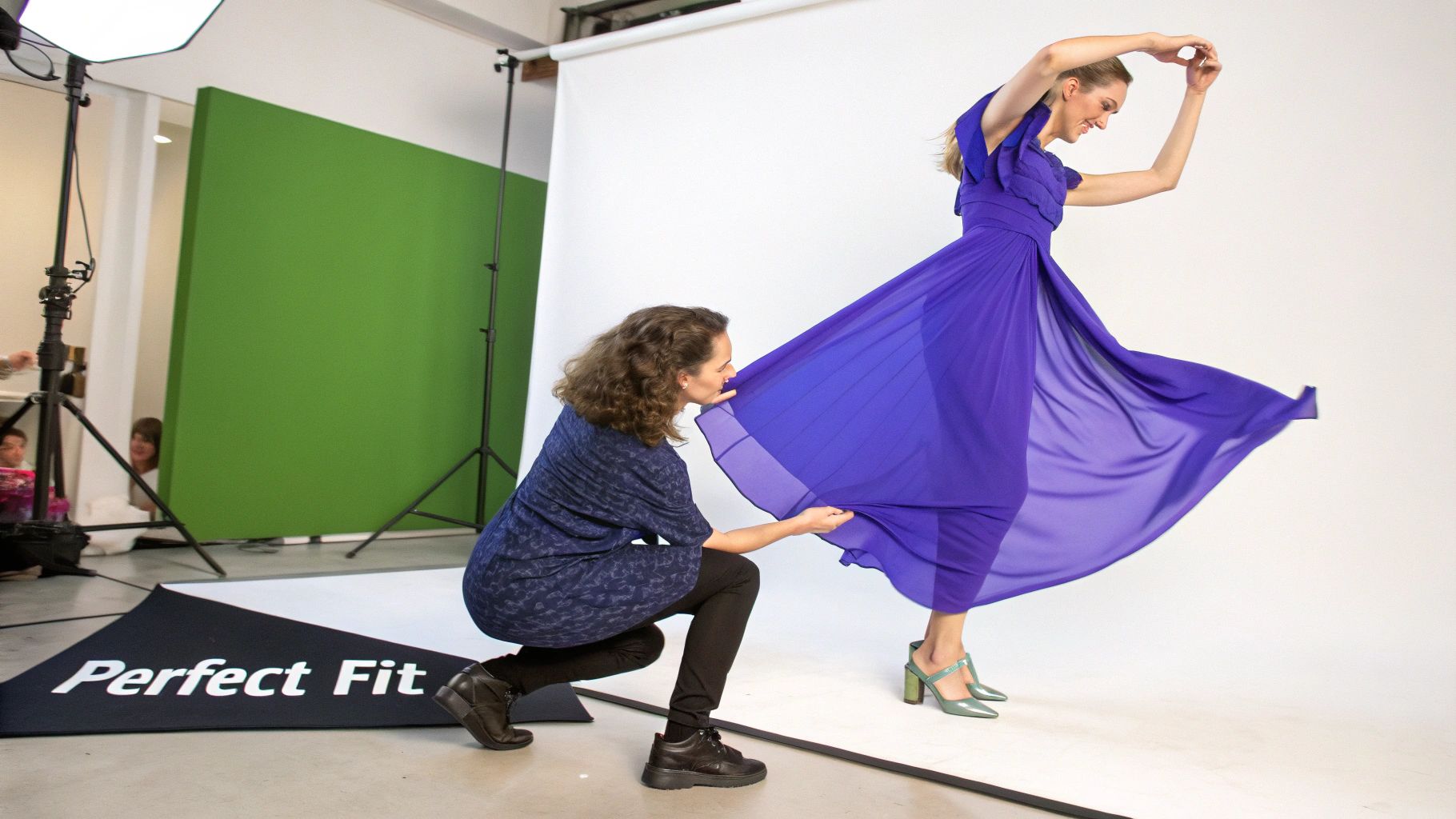
A dress can look incredible on the hanger, but if it fits poorly on the model, all that potential is lost. The silhouette is everything. When a garment gapes, bunches, or pulls in the wrong places, customers notice immediately. A flawless fit doesn't just look professional; it communicates quality and helps shoppers imagine themselves wearing the dress with that same confidence.
Even when you have perfect measurements, a dress can hang differently in person. This is why on-set tailoring isn't just a nice-to-have—it's an absolute must. A few quick, on-the-fly adjustments can take a dress from "okay" to "perfect," ensuring it looks stunning from every single angle.
Your On-Set Fit and Styling Kit
Never, ever show up to a shoot empty-handed. A well-stocked styling kit is your secret weapon, ready to solve almost any wardrobe issue in seconds and save you the headache of a reshoot.
Here's what I always have in mine:
Bulldog and Binder Clips: These are the industry standard for a reason. They're perfect for cinching extra fabric at the back to create a clean, tailored line. Pro tip: slide a small piece of felt or cardboard under the clip's teeth to avoid marking up delicate fabrics.
Fashion Tape (Double-Sided): An absolute lifesaver for plunging necklines, unruly straps, or temporarily holding a hem in place for a specific shot.
Safety Pins: A classic for a reason. Have them in every possible size to fix anything from a broken zipper pull to a quick hem adjustment.
Straight Pins and a Pincushion: For those finer, more delicate adjustments where a big clip just won't do the trick.
Of course, prep work is key. Before the shoot, using tools like adjustable dress forms for a perfect fit can help you spot and fix potential fit problems long before the model even arrives on set.
Designing for Dynamic Movement
Your product photos live in a world of endless scrolling. The best way to stop that scroll? Motion. Movement breathes life into a garment, showing customers how it drapes, flows, and feels in the real world. It transforms a simple product shot into a story.
A dress that just hangs there does nothing for you. You need to choose silhouettes and fabrics that have their own inherent energy.
Don't just show the dress—show what the dress does. How it catches the wind, follows a twirl, or cascades down a staircase. Movement is what turns a static garment into an aspirational experience.
This takes teamwork. Your photographer, model, and stylist all need to be aligned on the goal, whether that’s capturing the billow of a skirt or the elegant sweep of a gown.
Silhouettes That Invite Motion
Some dresses are just born to move. When you're sourcing a dress for photoshoot days, keep an eye out for design features that will really perform on camera.
A-Line and Full Skirts: These are the undisputed champions of movement. A simple twirl can create that gorgeous, full circle that always looks incredible in a photo.
Flowing Trains and Capes: Nothing says "drama" like a long train. These offer amazing opportunities for epic, editorial-style shots. Have an assistant toss the fabric to create sweeping lines and a grand sense of scale.
Ruffles and Tiers: Layers add texture and dimension, and they react beautifully to even the smallest movements, like a slow walk or a gentle breeze from a fan.
Asymmetrical Hems: These create interesting, unpredictable lines as the model moves, adding a modern and surprising element to your images.
When directing your model, think in verbs, not nouns. Instead of telling them to "stand there," try "walk toward me slowly" or "gently toss the edge of your skirt." Mastering these small directions is a game-changer. For more ideas, check out our guide to fashion model poses to help you capture that perfect, authentic motion.
By focusing on both a perfect fit and intentional movement, your photos will do more than just show off a dress—they'll create an emotional connection that drives real engagement and sales.
Matching the Dress to Your Location and Lighting
A gorgeous dress can fall completely flat if it’s shot in the wrong environment. The real magic happens when the garment, the location, and the light all come together to tell one cohesive story. That synergy is what separates amateur shots from professional, high-converting product photography.
Think of yourself as a director, not just a stylist. You have to anticipate how the environment will play off the dress. For instance, a sharp, architectural dress might look incredible against the stark lines of a modern city building, but it would feel completely jarring in a soft, romantic garden.
Creating a Vibe Between Dress and Location
Your goal is to build a believable world for your product. You want the dress to feel like it belongs there, which helps a customer instantly picture herself wearing it. That connection is what turns a casual browser into a buyer.
Let’s walk through a few common scenarios:
Urban and Modern Settings: Picture clean lines, concrete, glass, and bold architecture. These backdrops are perfect for dresses with a strong, confident structure. Think minimalist sheath dresses, pieces with sharp tailoring, or bold, solid colors that create a sophisticated, powerful look against the cityscape.
Natural and Rustic Environments: For shoots in fields, forests, or on the beach, you want dresses that feel more organic and free-spirited. Flowing maxi dresses, bohemian styles with lace and embroidery, and pieces in earthy tones like terracotta or sage just feel right. The soft textures of the fabric create a beautiful contrast against the raw elements of nature.
It’s all about matching the mood. A sleek, metallic dress is made for a glamorous night-out scene downtown. A delicate linen sundress? It’s the obvious choice for a sun-drenched picnic setup.
Working With Natural and Studio Light
Lighting does more than just make things visible—it’s your primary tool for creating mood, depth, and texture. The exact same dress can look wildly different under the harsh midday sun versus soft, diffused studio lights. Nailing this is non-negotiable. Our guide on the best lighting for product photography is a great place to dig deeper into this.
If you’re shooting a dress with subtle, intricate details—like delicate beading or a fine lace overlay—you need soft, directional light to make those features pop. Harsh, direct sun would just wash them out.
On the other hand, a simple dress with a bold silhouette can handle much more dramatic lighting. The strong contrast from a hard light source can actually emphasize its shape, creating a powerful, graphic image that stops the scroll on a crowded feed.
Don't fight the light—work with it. A shimmering satin dress comes alive during golden hour, when the warm light makes the fabric glow. A matte crepe dress, however, looks incredible in the even, controlled light of a studio, where its pure color and form can really take center stage.
Adapting to Different Lighting Scenarios
Here’s a quick-and-dirty guide to planning your dress choice around the light you have:
Golden Hour (Sunrise/Sunset): This is that famously flattering, soft, warm light. It’s perfect for creating a romantic, ethereal vibe. Go for dresses in warm tones (golds, pinks, oranges) and flowing fabrics like chiffon or silk that will catch the light beautifully as the model moves.
Harsh Midday Sun: This light is tough, creating hard shadows and blown-out highlights. Instead of running from it, lean into it. A dress with a bold graphic print or a strong, simple silhouette can look incredibly striking in this high-contrast setting. Just steer clear of shiny fabrics, which will create distracting glares.
Overcast Day: Think of this as a giant, free softbox in the sky. The light is diffused and even, making it perfect for capturing rich, true-to-life colors. This is your chance to shoot dresses with vibrant hues or subtle patterns, since the soft light will render them perfectly.
Studio Lighting: Here, you’re in complete control. You can shape the light to showcase any dress perfectly. Use a soft key light to highlight the rich texture of a velvet gown, or go with more dramatic, hard lighting to show off the crisp structure of a modern piece.
This level of careful planning is a huge reason why the global photographic services market is projected to hit $64.68 billion by 2034. This growth is all about the rising demand for commercial images where every single detail—especially the interplay between the dress and its environment—matters. You can learn more about how the expanding photographic services market is changing branding. By mastering how your dress, location, and light work together, you’re ensuring your photoshoot investment delivers images that don't just look beautiful, but actually sell.
Styling Your Photoshoot for Modern AI Workflows
The game has changed for ecommerce photography. It’s no longer about getting one perfect shot for a single campaign. Now, it's about creating a flexible asset you can use over and over again. This is precisely where modern AI workflows enter the picture, transforming a single, well-thought-out photoshoot into a nearly endless well of marketing content.
If you're a DTC brand, thinking about AI from the get-go is the smartest move you can make. When you choose the right dress for photoshoot success now, you're saving yourself from costly reshoots later. By focusing on clean, well-lit, and consistent images, you're building the perfect digital foundation for AI platforms like Look Atlas. This approach lets you generate new on-model scenes, create virtual try-on experiences, and populate entire product catalogs from just one set of photos.
What Makes an Image AI-Ready?
So, what does "AI-ready" actually mean? It’s an image that gives the technology clean, straightforward data to process. The idea is to photograph the dress in a way that the AI can easily understand its shape, its texture, and how it hangs on a person. This isn't about stifling creativity—it's about layering in some technical precision.
Here’s a look at Look Atlas, an AI platform that turns simple product photos into incredibly realistic on-model imagery.
As you can see, the interface allows one garment photo to be placed on different models in various settings, which really drives home the need for a clean, simple starting image.
The trick is to eliminate any variables that might throw the software for a loop. It all comes down to creating clarity and consistency.
An AI-ready image is a master key. It unlocks the ability to place your product on any model, in any location, at any time—without ever picking up a camera again. It’s about shooting smarter, not harder.
Key Principles for an AI-Optimized Photoshoot
To get your images ready for AI, you just need to nail a few core principles on shoot day. These small tweaks will pay off in a big way later on.
Consistent, Diffused Lighting: Stay away from harsh shadows and overly dramatic lighting. Your best bet is soft, even light that shows the entire dress clearly, without any deep, dark spots or washed-out highlights. This gives the AI a perfect read on the fabric's texture and seams.
Simple Silhouettes First: I know intricate designs are stunning, but it's wise to start with dresses that have a clean, defined shape. This helps the AI map the garment onto different body types much more accurately. Dresses with busy patterns or lots of complex, overlapping layers can sometimes be tougher for the AI to process initially.
Neutral, Uncluttered Backgrounds: Always shoot against a simple, solid-colored backdrop, like grey or white seamless paper. This makes it incredibly easy for the AI to isolate the product from its environment—a critical step called segmentation.
For brands looking to push the envelope, new tools like AI clothing try-on technology can completely change how you present your collections. Capturing these clean, AI-ready assets is the first step to unlocking those kinds of powerful customer experiences.
Ultimately, a well-planned, AI-ready photoshoot is an investment in your brand's efficiency and ability to scale. It’s the bridge between old-school photography and a future where your ability to create content is virtually unlimited. To see how modern tools can elevate your final assets, check out our guide on using Photoshop AI to upscale your images.
Your Essential Pre-Shoot and On-Set Checklist
https://www.youtube.com/embed/7RK39pj3Ajc
A great shoot is won long before the camera even comes out of the bag. I can't stress this enough. When everything on set runs smoothly, it's a direct result of meticulous prep work done beforehand. This final checklist is designed to help you nail that preparation, cutting down on stress and making every minute on set count.
Think of this as your operational playbook. When everything from the creative brief down to the tiniest roll of fashion tape is organized, your crew—the photographer, model, and stylist—can focus on what they do best: creating incredible images instead of putting out fires.
Pre-Shoot Prep: The Day Before
Those final hours before a shoot are your last chance to get everything squared away. Trust me, you don't want to leave these tasks for the morning of. A calm start to the day is a productive one.
Garment Prep: Get every single dress for photoshoot use steamed or ironed. This is non-negotiable. Look for any loose threads, missing buttons, or small stains. Once they’re perfect, transport them in garment bags to keep them from getting wrinkled all over again.
Finalize the Shot List: Double-check the shot list with your photographer. It should be your roadmap for the day, clearly matching each dress to specific poses, lighting setups, and backdrops. No guesswork allowed.
Team Briefing: A quick final confirmation email to the whole team does wonders. Include the call time, the exact address (with a map link if it's tricky), and one last link to the creative brief or mood board so everyone arrives on the same page.
The On-Set Styling and Fit Kit
Your on-set kit is basically an emergency room for wardrobe malfunctions. Having these items ready can save a shot that would otherwise be a total loss.
A well-stocked styling kit is your insurance policy against lost time. The five minutes you spend taping a hem or clipping a silhouette are infinitely better than the hours you’d waste trying to fix it in post-production.
Here’s a quick rundown of what I always have on hand:
Fit Essentials: Bulldog clips, safety pins in every size you can find, and plenty of double-sided fashion tape.
Care Tools: A portable steamer is a lifesaver, along with a lint roller and a small sewing kit for last-minute repairs.
Model Comfort: Make sure you have nude undergarments, heel protectors, and shoe inserts. A comfortable model gives you better shots, period.
This level of preparation is absolutely critical if you're planning to use your images in modern AI workflows. The cleaner the initial shot, the better the final results.
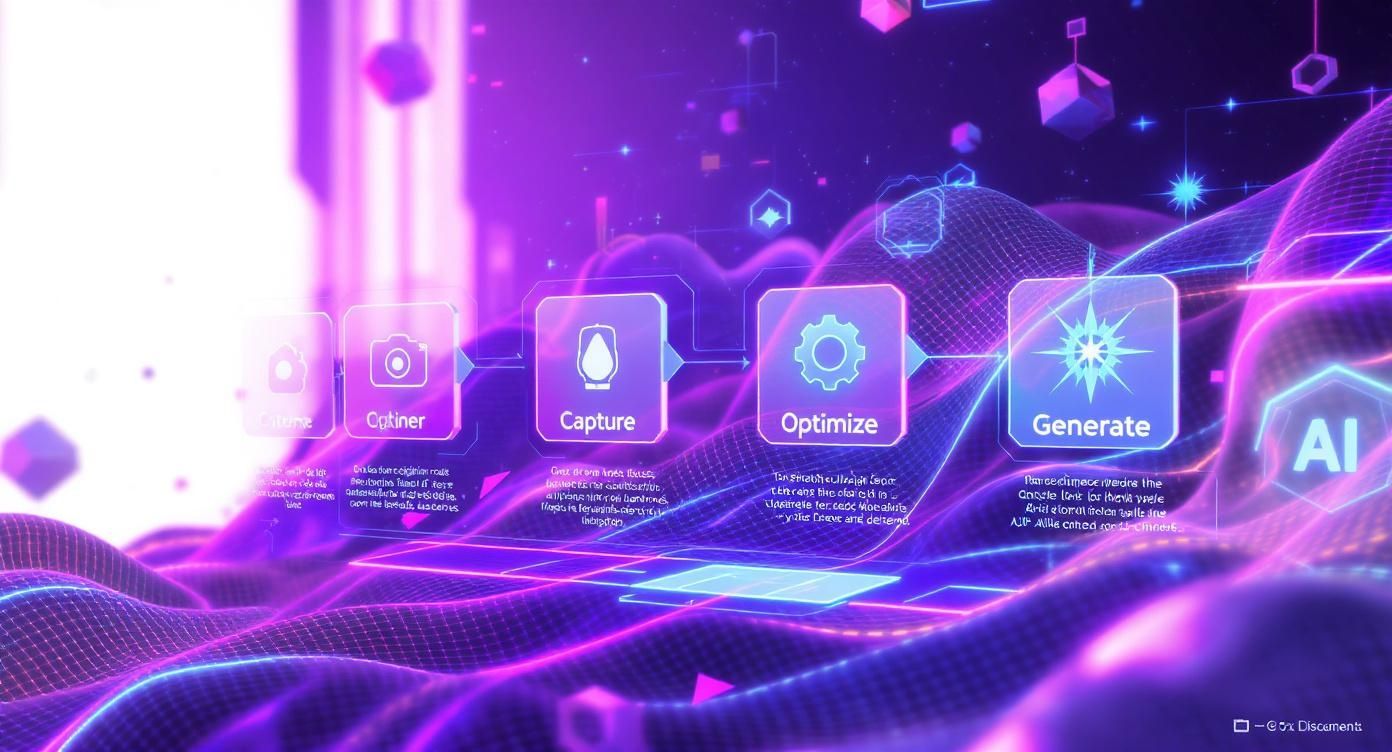
The process shown here, from the initial capture to generating endless variations, really drives home why getting that first shot perfect is so important for platforms like Look Atlas.
The impact of this prep work is felt across the industry. Just look at portrait photography, which is all about flawless styling—it's a massive $20.6 billion global market. This shows just how much weight wardrobe and styling carry in creating commercial images that actually sell. You can discover more insights about the photography industry and see how it all ties back to fashion. Following this checklist ensures your photoshoot assets are not just beautiful, but truly ready for any marketing challenge you throw at them.
A Few Common Questions, Answered
When you're prepping for a shoot, the little details can make or break your final images. I get asked a lot about the specifics of picking the right dress, so here are my go-to answers for the most common questions from e-commerce brands.
What Colors Are a Nightmare to Photograph?
While a skilled photographer can make almost any color work, some are just asking for trouble. It's usually best to steer clear of anything that creates technical headaches or pulls focus from the product itself.
Blinding Neons: These colors love to throw a weird, unnatural color cast onto the model's skin. They're also notorious for getting "blown out" in photos, which means you lose all the texture and detail in a blob of bright light.
Busy, Tight Patterns: Think tiny checks, super-thin pinstripes, or small houndstooth prints. These are famous for creating a bizarre visual distortion called a moiré effect. It looks like a wavy, shimmering pattern, and trust me, it’s a nightmare to try and fix later.
Pure black and stark white can also be surprisingly tricky. A black dress can easily turn into a shapeless void, swallowing up all the beautiful seams and textures you want to show off. And a pure white dress can lose its form if the lighting isn't absolutely perfect. Going with an off-white, cream, or a soft grey is a much safer (and often more flattering) choice.
How Do I Get That Perfect "In-Motion" Shot?
That effortless, scroll-stopping shot where the dress seems to float? It's all about the fabric and the cut. You need a dress that has its own life and knows how to move.
Look for lightweight, flowing materials. Fabrics like chiffon, silk, crepe de chine, and even a soft cotton voile are your best friends here—they catch the air beautifully and create those elegant, sweeping shapes.
The silhouette matters just as much.
Dresses with A-line or full circle skirts are built for amazing twirling shots.
Details like ruffles, tiers, or a long train add instant drama and movement that looks incredible on camera.
A great tip is to have your model do a quick practice run before the shoot. Ask them to walk, turn, and maybe give the skirt a gentle toss. This little rehearsal shows you exactly how the fabric will behave and helps you give better direction when it's time to get the shot.
Pro Tip: Never, ever show up to a shoot with just one dress. What looks incredible on the hanger might not hang right on the model, or the color could clash horribly with the lighting on location. Having a backup or two is non-negotiable.
Should I Really Bring More Than One Dress?
Yes, 100%. Showing up with a single "hero" dress is a rookie mistake that can derail the entire day. A photoshoot has too many moving parts—the lighting, the location, the way a garment fits a real person—to leave things to chance.
Maybe the dress doesn't drape on the model the way you pictured, or the color looks totally different under the studio lights versus the concept. A backup gives you the freedom to pivot without wasting time or money. For any important dress for photoshoot day, having two or three solid options is just standard professional practice.
Ready to create stunning on-model campaigns without the cost and complexity of a traditional photoshoot? With Look Atlas, you can generate thousands of hyper-realistic images from a single photo of your dress.
