The honest comparison · Last updated August 12, 2026
Look Atlas vs Flair AI
Flair hands you a canvas, a model builder, and a $8 to $38 price tag, then lets you direct every shot yourself. Fun if you have the time and the eye. The catch lives in the fine print: fast generations burn 4x credits, so the 150-image Scale plan behaves like 37 when you use it the way everyone uses it. Look Atlas skips the canvas and ships the finished shot: curated casting, editorial direction, flat credits that mean what they say.
The scoreboard
Side by side, no spin
| Look Atlas | Flair AI | |
|---|---|---|
| What it is | Finished-shot photography studio | AI design canvas: staging, ads, video |
| Sticker price | $49 to $399 per month | ✓ $8 to $38 per month |
| Credit honesty | ✓ Resolution-based, published, and unused credits roll over | Instant and ad generations cost 4x |
| Casting | ✓ 100+ editorial models + unlimited private custom models, every plan | Build your own; 15 customs on Scale |
| Direction | ✓ Editorial lighting and sets, built in | You direct everything on the canvas |
| Ad templates, canvas, bulk | Not our lane | ✓ Strong. Their real moat |
| First-pass usability | ✓ Publish-ready by default | Iterate until it looks right |
Competitor details verified from public pricing pages, July 2026. Check ✓ marks the stronger side per row, including theirs.
The math
Effective cost per image, fast path
Flair Scale lists 150 images at $38, but instant and ad generations burn 4x credits: about 37 effective images ($1.03 each). Look Atlas Pro: $99 for 200 credits, about 100 photos at default 2K ($0.99 each), rollover included; on Business ($399) photos are simply unlimited. Flair pricing from flair.ai/pricing, July 2026.
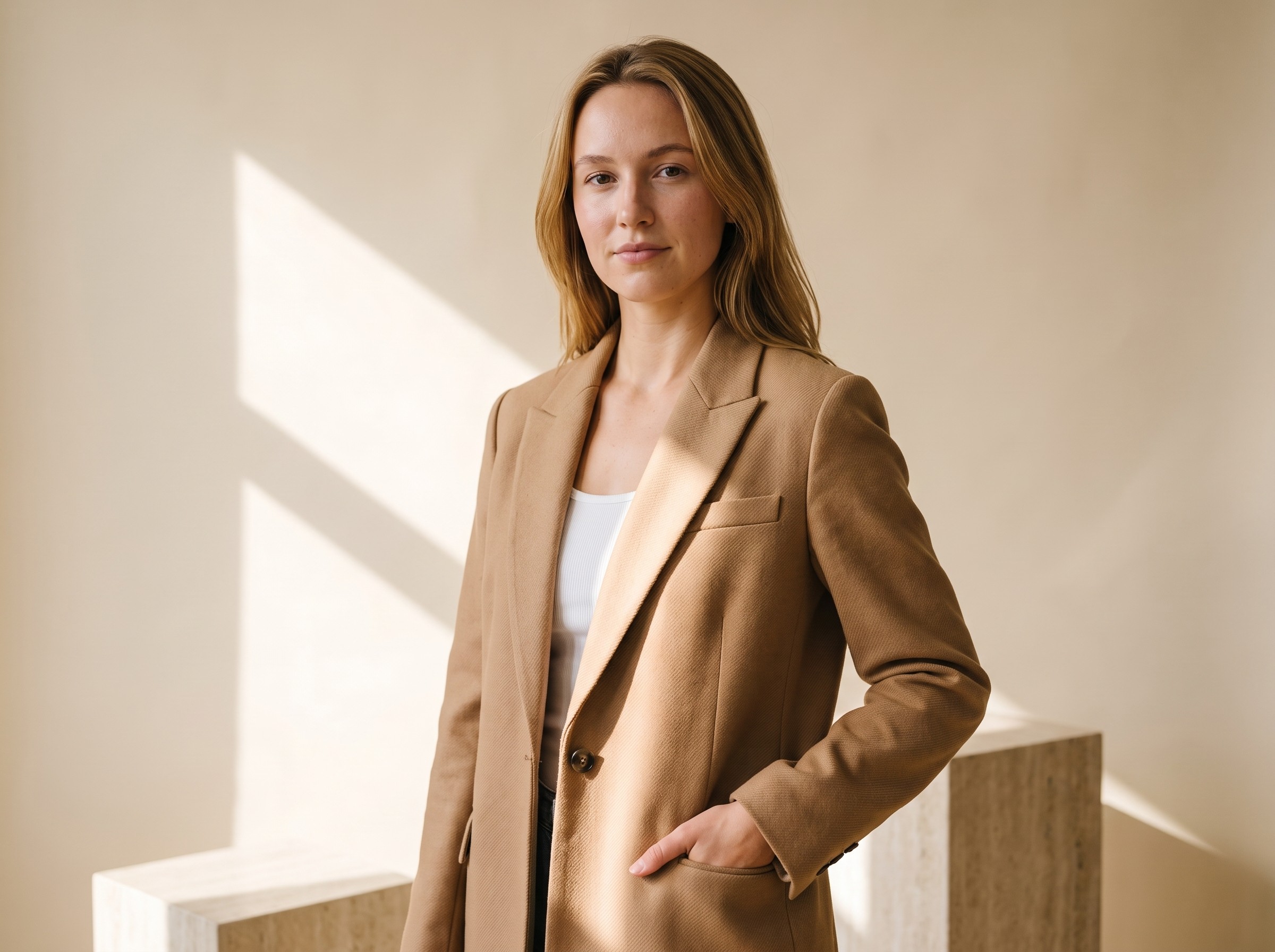
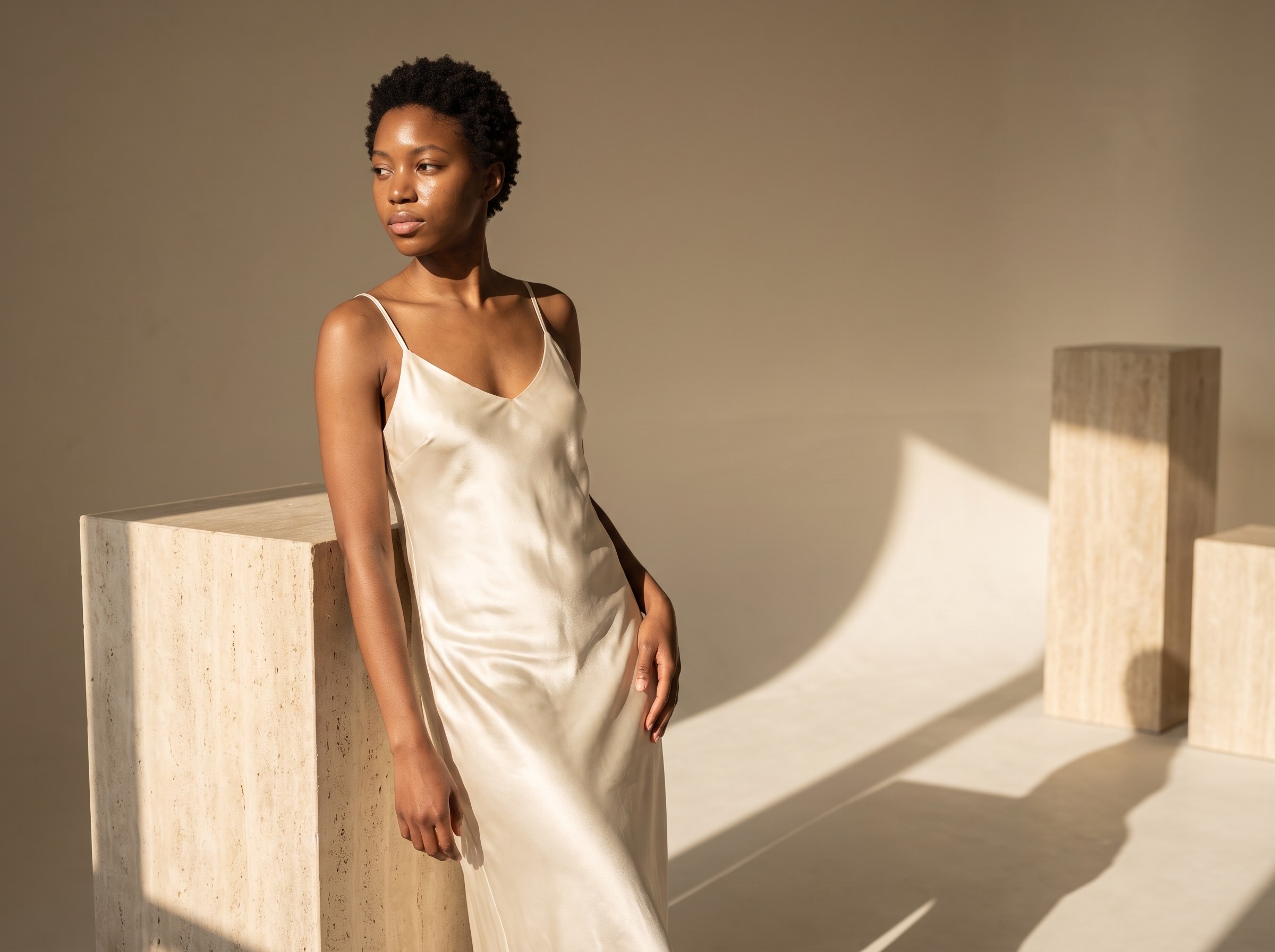
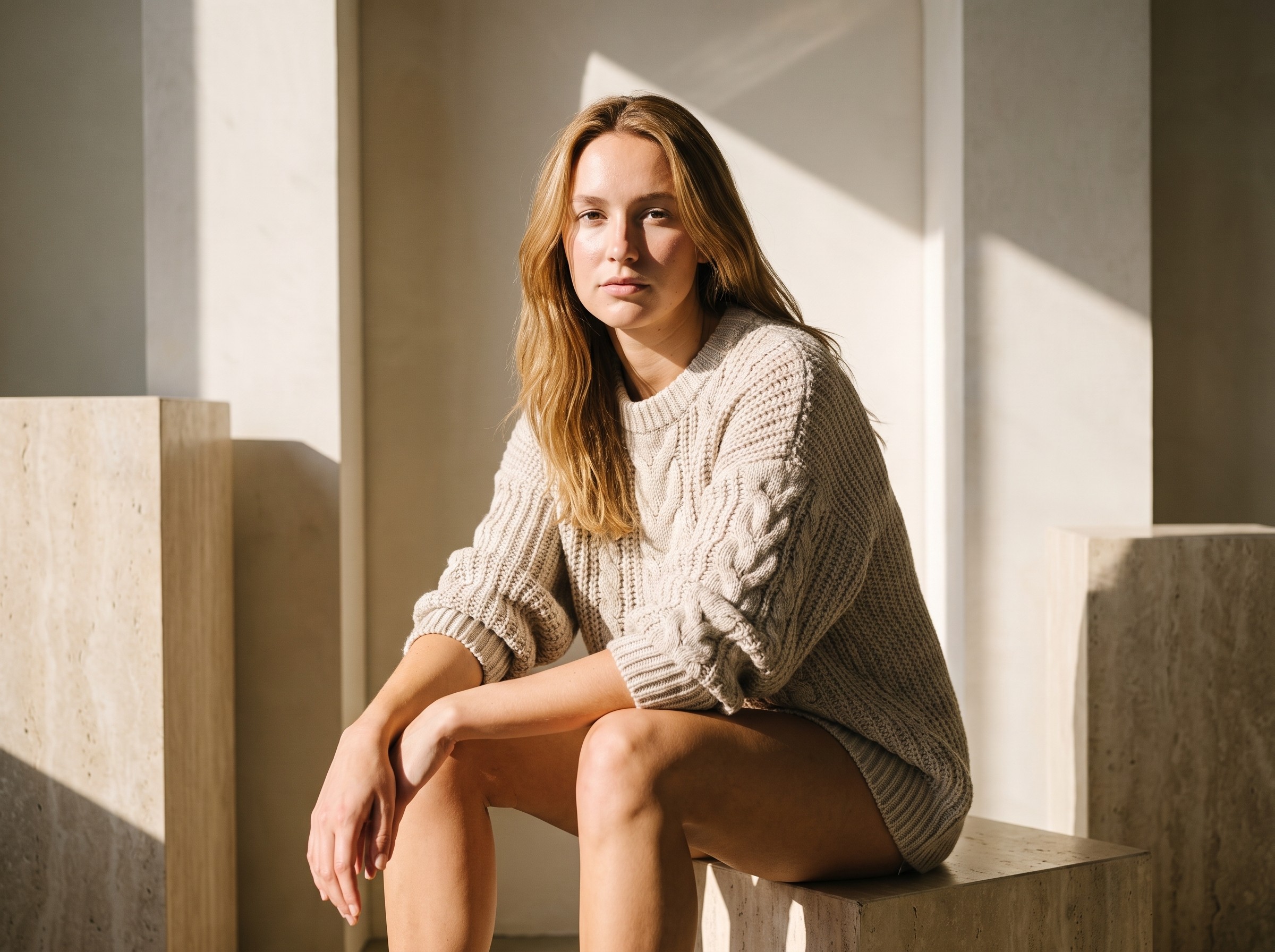
Unretouched Look Atlas output. One product photo in, campaign photography out.
The core split
A canvas sells control. A studio sells finish
Flair's bet: give people layers, prompts, and templates, and they will compose great product imagery themselves. For ad-creative teams with design chops, that bet often pays.
Our bet: a working brand does not want to art-direct four hundred renders. It wants to upload a flat lay, pick a model, and ship the drop. The direction (light, set, pose, styling) is the hard part, so we build it into the pipeline instead of handing it back to you as homework.
Control is a gift for the one shot you obsess over. It is a tax on the four hundred you just need done.
The meter
Read the 4x clause before comparing prices
Flair's list prices deserve their reputation: $8, $26, $38. The asterisk is the credit multiplier. Route your work through instant or ad generation, which is how the tool is meant to be used at speed, and each image bills 4x. The $38 Scale plan's 150 images become about 37. Suddenly the specialist at $49 for a flat 80 is not the expensive option.
None of this is hidden; it is in their pricing mechanics. It is just not on the pricing headline, which is why we put it on ours.
The honest split
Who should pick which
Pick Flair AI if
- ○Budget is capped under $40 and you can spend time iterating.
- ○You want canvas compositing and ad templates, which we do not build.
- ○You enjoy directing and want control over every pixel.
- ○You need cheap concept exploration, not finished campaign assets.
Pick Look Atlas if
- ✓You want the first render to be the shipped render.
- ✓You want credits that mean what they say. No multipliers.
- ✓You want curated casting, not a model construction kit.
Quick answers
Frequently asked
On sticker, clearly: $8 to $38 against $49 to $399, August 2026. On effective cost the 4x fast-path credit burn narrows it sharply: Flair Scale's 150 listed images become about 37 in fast-path use, against a flat 80 on our $49 plan.
The two-minute test
Your product. A real model. Two minutes.
Upload one photo and judge the output against Flair AI yourself. That settles it faster than any comparison page.
Start Your First Shoot FreeKeep comparing