
Outline Structure for “Lifestyle Commercial Photography”

1. Introduction: Why Lifestyle Commercial Photography Matters
Lifestyle photography is more than just pretty pictures, it’s a powerful way to connect your products with real-life experiences, emotions, and stories. Unlike standard product shots, lifestyle images show your offerings in context, helping customers imagine using them in their own lives. This emotional connection builds trust, engagement, and desire, which can significantly boost sales and brand loyalty.
In this guide, you’ll learn everything you need to master lifestyle commercial photography, from the basics of composition and lighting to advanced setups and strategies for scaling visuals for ecommerce and marketing campaigns. By the end, you’ll understand how to create images that tell a story, resonate with your audience, and drive results.
2. What Is Lifestyle Commercial Photography?
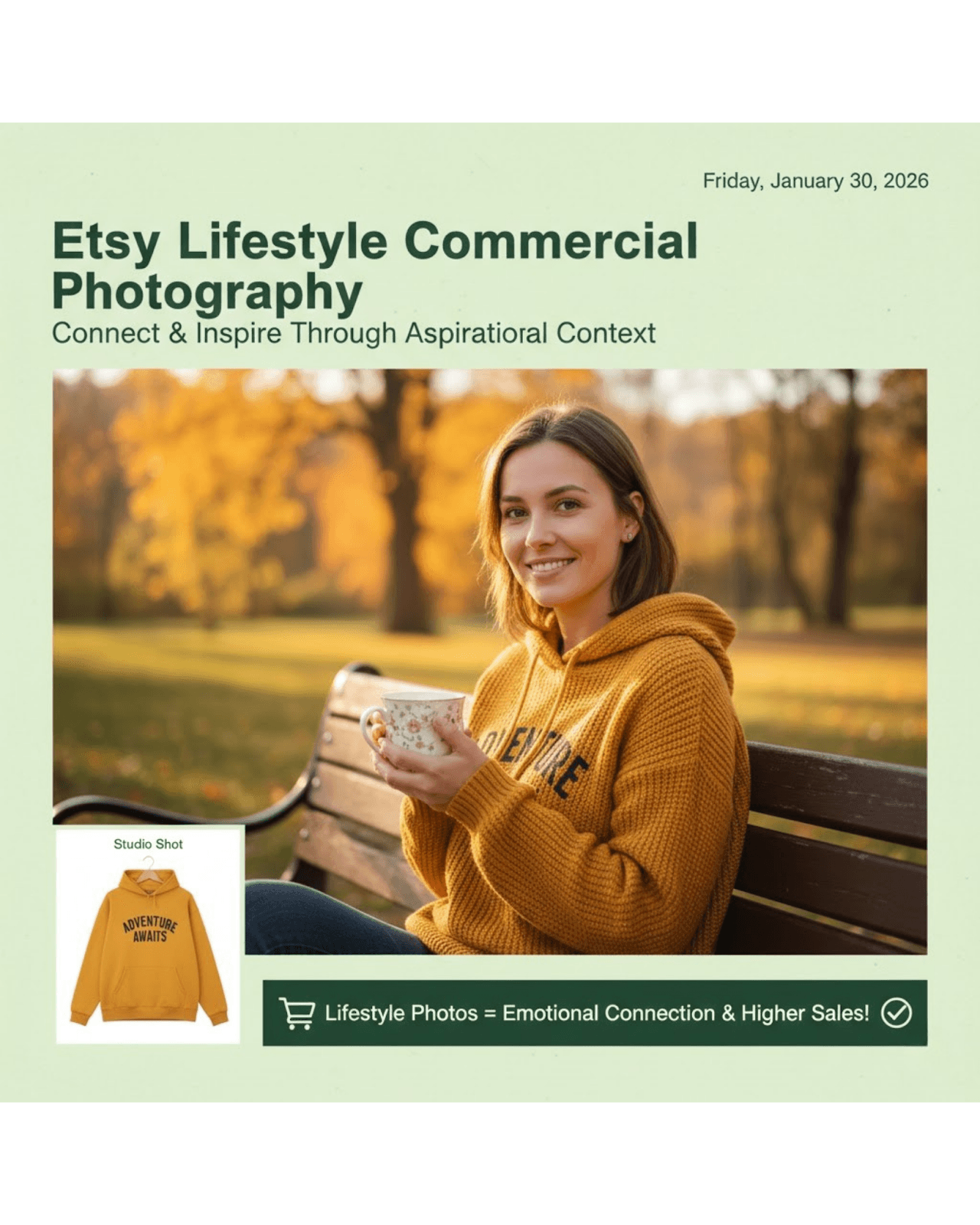
Lifestyle commercial photography is the practice of capturing products or services in real-life scenarios, showing them in use rather than just on a plain background. Unlike standard product or studio photography, which focuses solely on clarity and detail, lifestyle images tell a story, highlight context, and evoke emotion.
The benefits are clear: lifestyle photography helps create an emotional connection with your audience, builds trust in your brand, and presents products in an aspirational, relatable context that encourages buyers to imagine ownership and take action.
3. How Lifestyle Photography Impacts Sales & Marketing
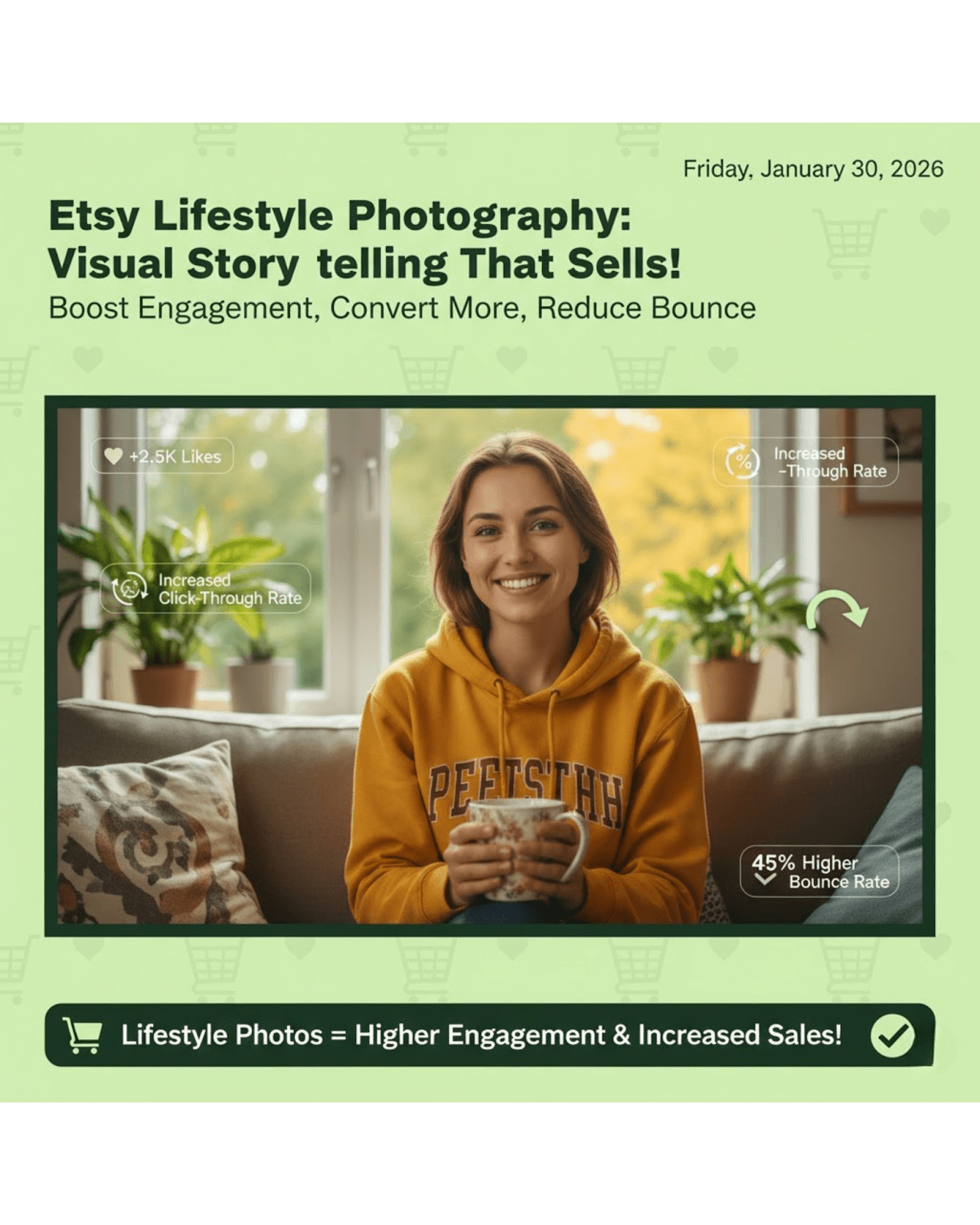
Lifestyle photography directly influences buyer psychology by using visual storytelling to capture attention and spark desire. When customers see products in relatable, real-life scenarios, they engage emotionally, making them more likely to explore, trust, and ultimately purchase.
This approach works across channels: on social media, lifestyle images increase likes, shares, and saves; in ads, they drive higher click-through rates (CTR); and on ecommerce product pages, they improve conversion and reduce bounce rates. By connecting products to real-life use and emotion, lifestyle photography becomes a powerful tool for driving measurable sales and marketing results.
4. Types of Lifestyle Commercial Photography
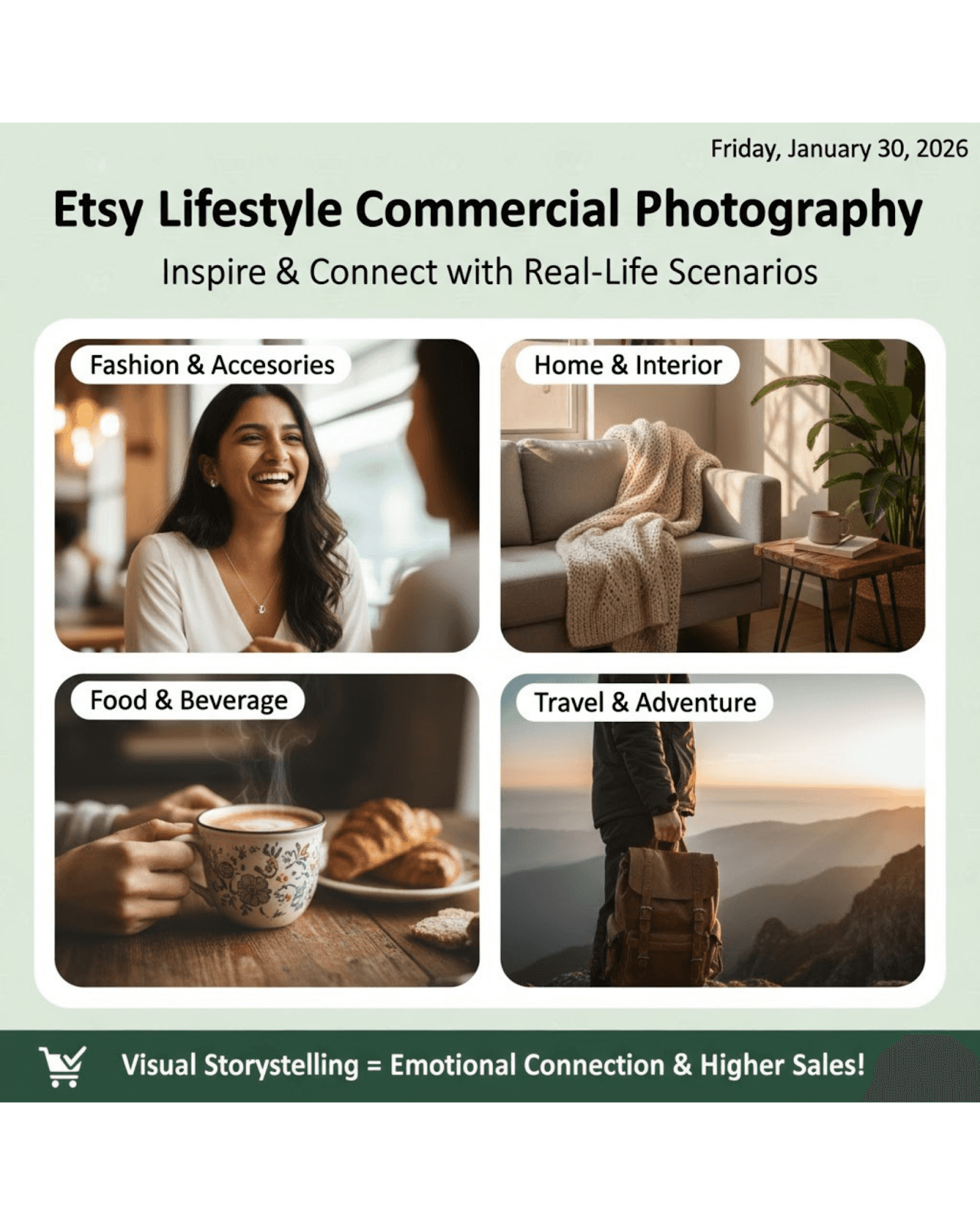
Lifestyle commercial photography can take many forms, depending on your product and audience. Common types include:
On-model fashion & accessories: Show clothing, jewelry, or wearables in real-life use to highlight fit, style, and scale.
Home & interior setups: Place home goods, decor, or furniture in realistic living spaces to showcase function and aesthetic appeal.
Food & beverage in context: Capture meals, drinks, or packaged goods being enjoyed to evoke appetite, comfort, and lifestyle.
Travel & adventure product placement: Feature gear, apparel, or accessories in outdoor or travel scenarios, emphasizing experience and aspiration.
Each type tells a story, builds context, and helps buyers imagine ownership, which strengthens engagement and boosts conversion.
5. Planning Your Lifestyle Shoot
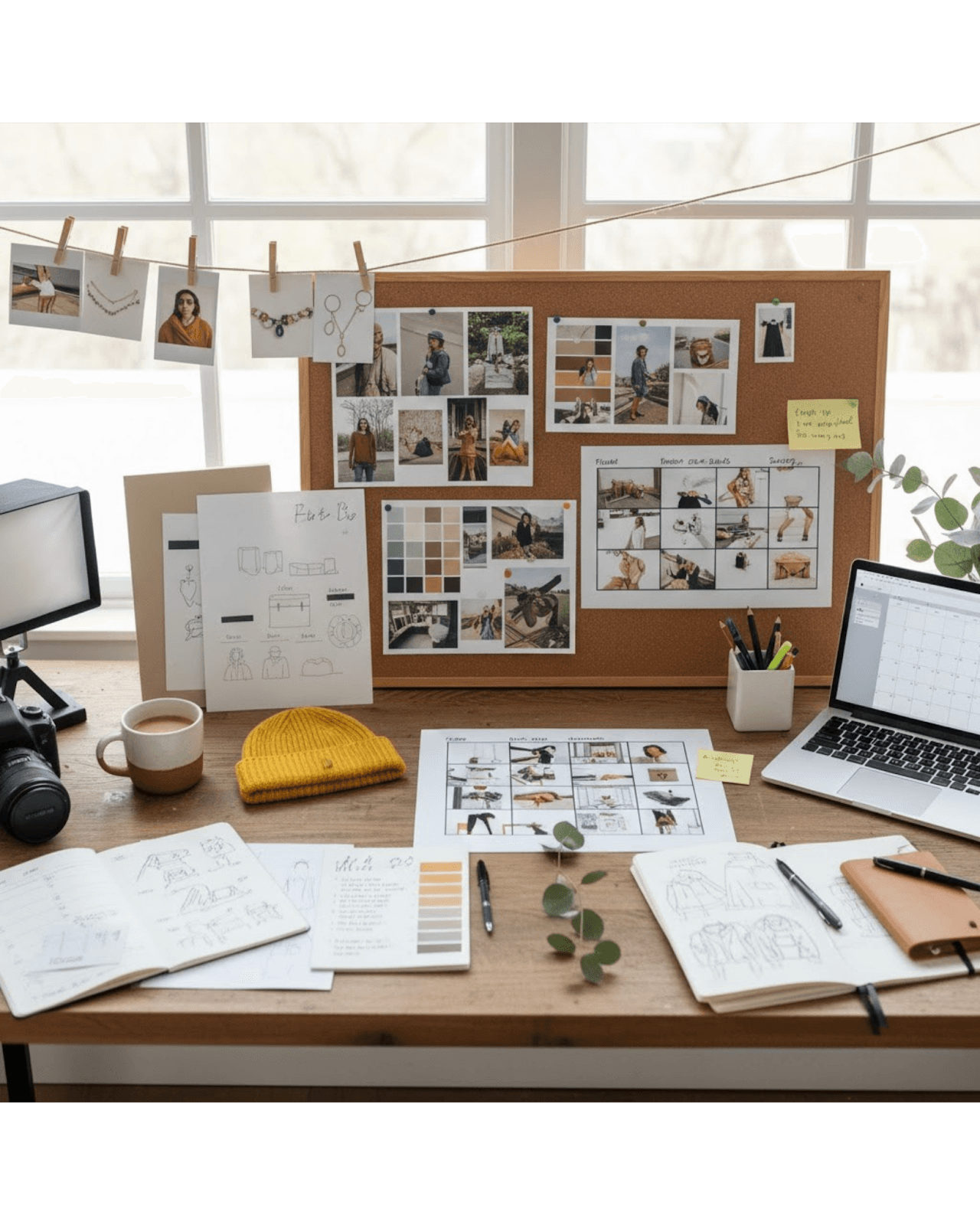
A successful lifestyle shoot starts long before the camera comes out. Storyboarding and concept creation help you plan the narrative, mood, and key shots that will tell your product’s story effectively.
Understanding your audience and product story ensures every image resonates with the people most likely to buy, highlighting benefits, use cases, and emotional appeal.
Finally, location scouting and props set the stage, choosing environments and supporting elements that enhance your product without distracting from it. Thoughtful planning ensures your shoot runs smoothly and produces cohesive, compelling visuals that connect with viewers.
6. Equipment & Tools for Lifestyle Photography
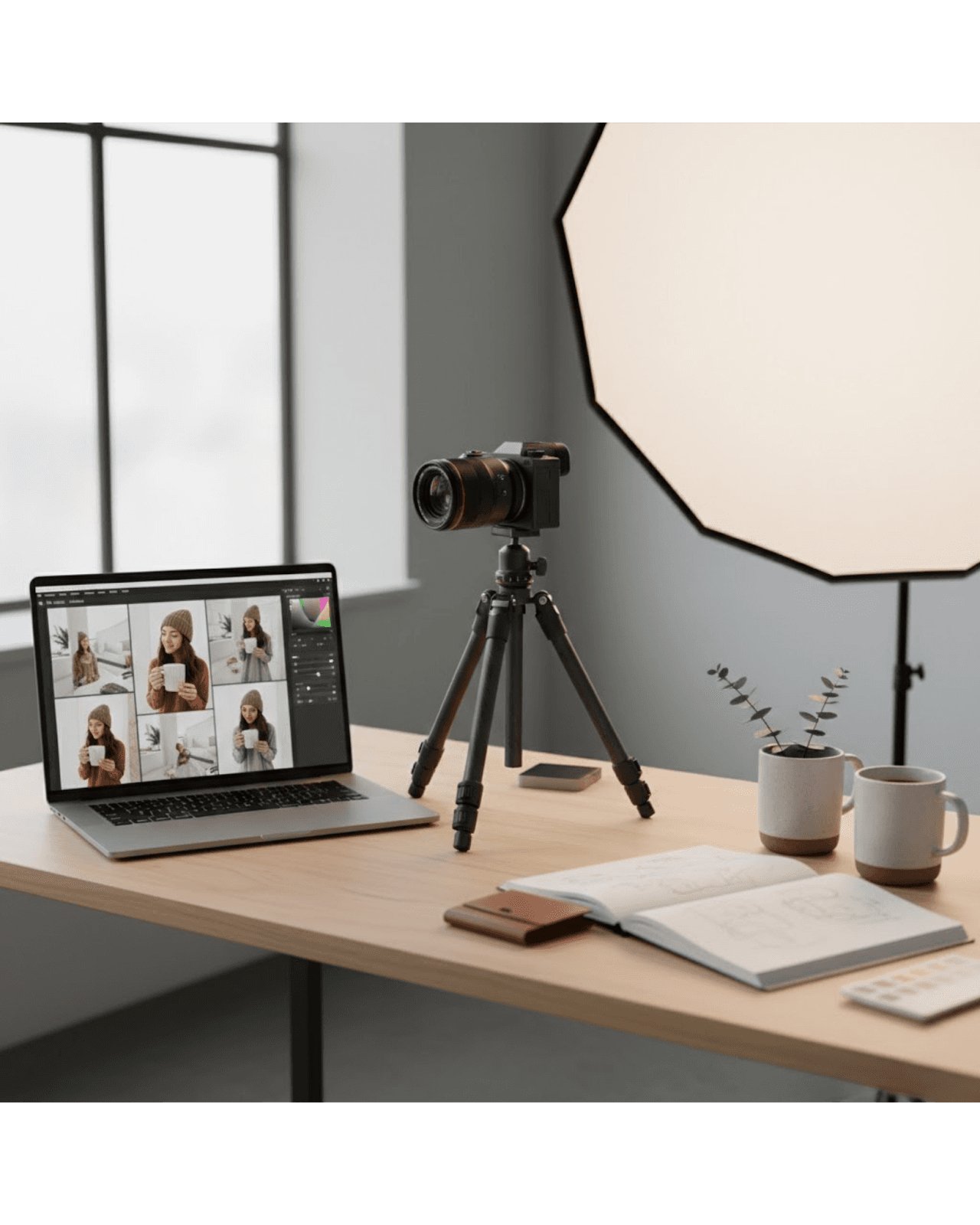
Having the right gear makes a big difference in capturing professional-looking lifestyle images. Essential equipment includes:
Cameras & lenses: DSLR or mirrorless cameras offer flexibility, while lenses with wide apertures create depth and focus.
Tripods: Keep shots steady and consistent, especially for detailed or low-light setups.
Lighting setups: Natural light is ideal for soft, flattering illumination, while artificial light (softboxes, LED panels) gives control and consistency.
Optional but helpful software and tools for post-processing, which allow you to adjust exposure, color, sharpness, and composition, ensuring your final images are polished, cohesive, and ready for ecommerce, ads, or social media.
7. Lighting Techniques That Work Best for Lifestyle Shoots
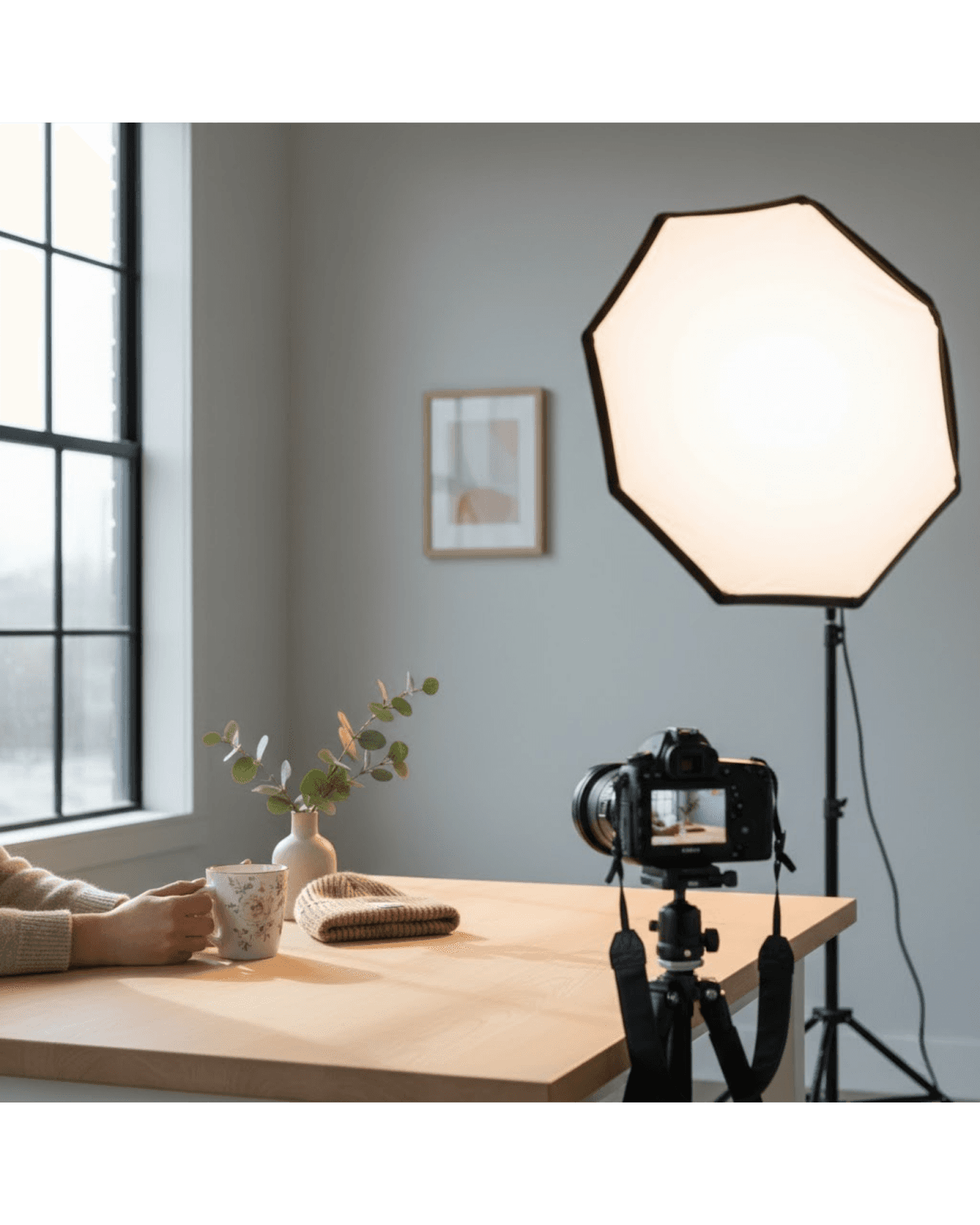
Lighting is the foundation of any great lifestyle photo. Choosing between natural light and studio lighting depends on your environment, schedule, and desired aesthetic. Natural light creates soft, flattering tones, while studio setups give full control over direction, intensity, and color temperature.
Pay attention to direction and intensity to highlight product details without harsh shadows or overexposure. Soft, diffused shadows help maintain a natural, approachable look, while consistent lighting across your shots ensures a cohesive visual style that strengthens your brand and builds trust with viewers.
8. Composition & Styling Tips
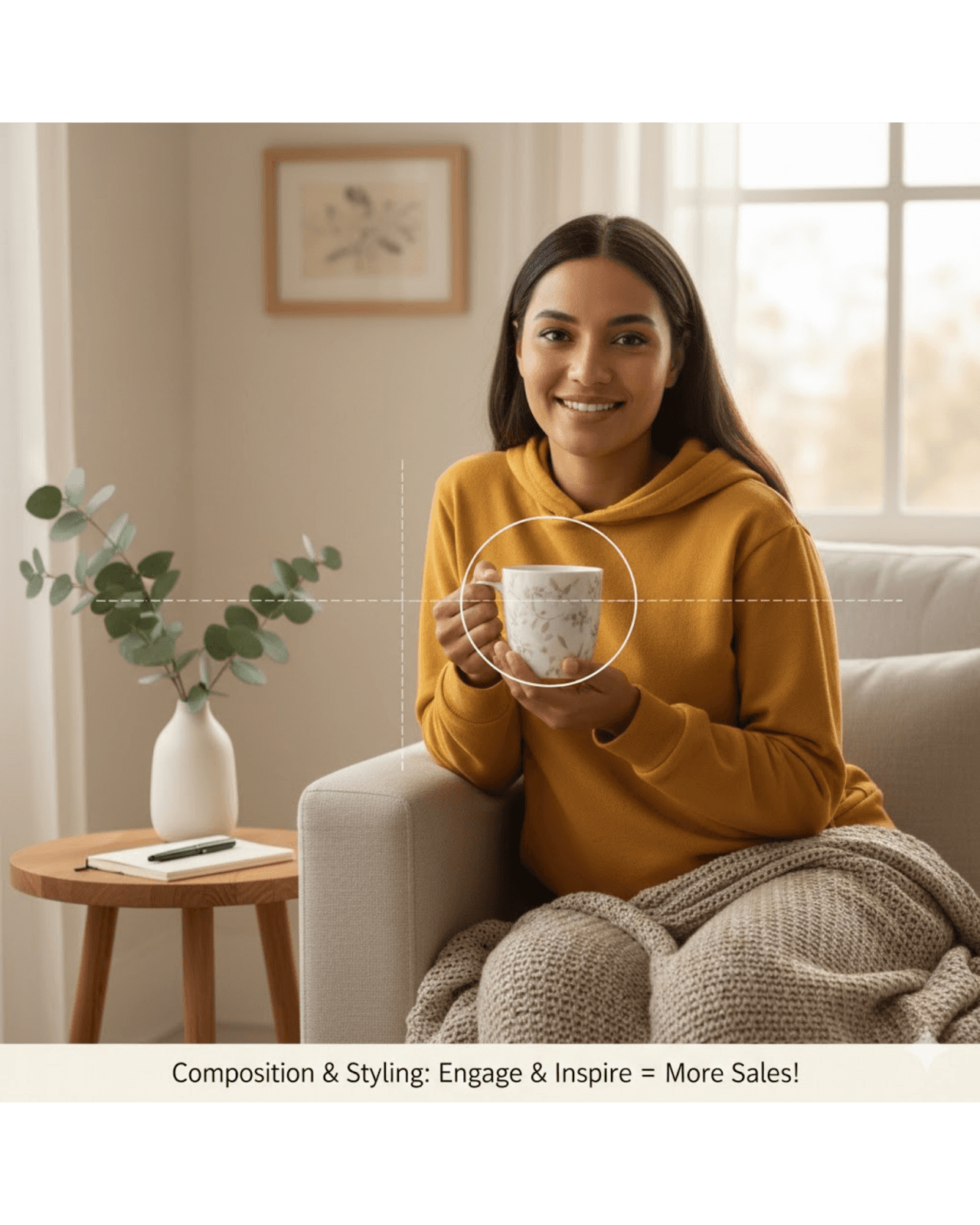
Strong composition and thoughtful styling make lifestyle photos engaging and effective. Using the rule of thirds, focus, and framing helps guide the viewer’s eye to the product, ensuring it remains the centerpiece of the image.
Styling adds context, props, clothing, and backgrounds should complement the product and tell a story, without overwhelming the shot. The goal is to showcase the product naturally, helping viewers imagine it in their own life, while maintaining a clean, visually appealing composition that communicates quality and brand identity.
9. Capturing Authentic Moments & Emotion
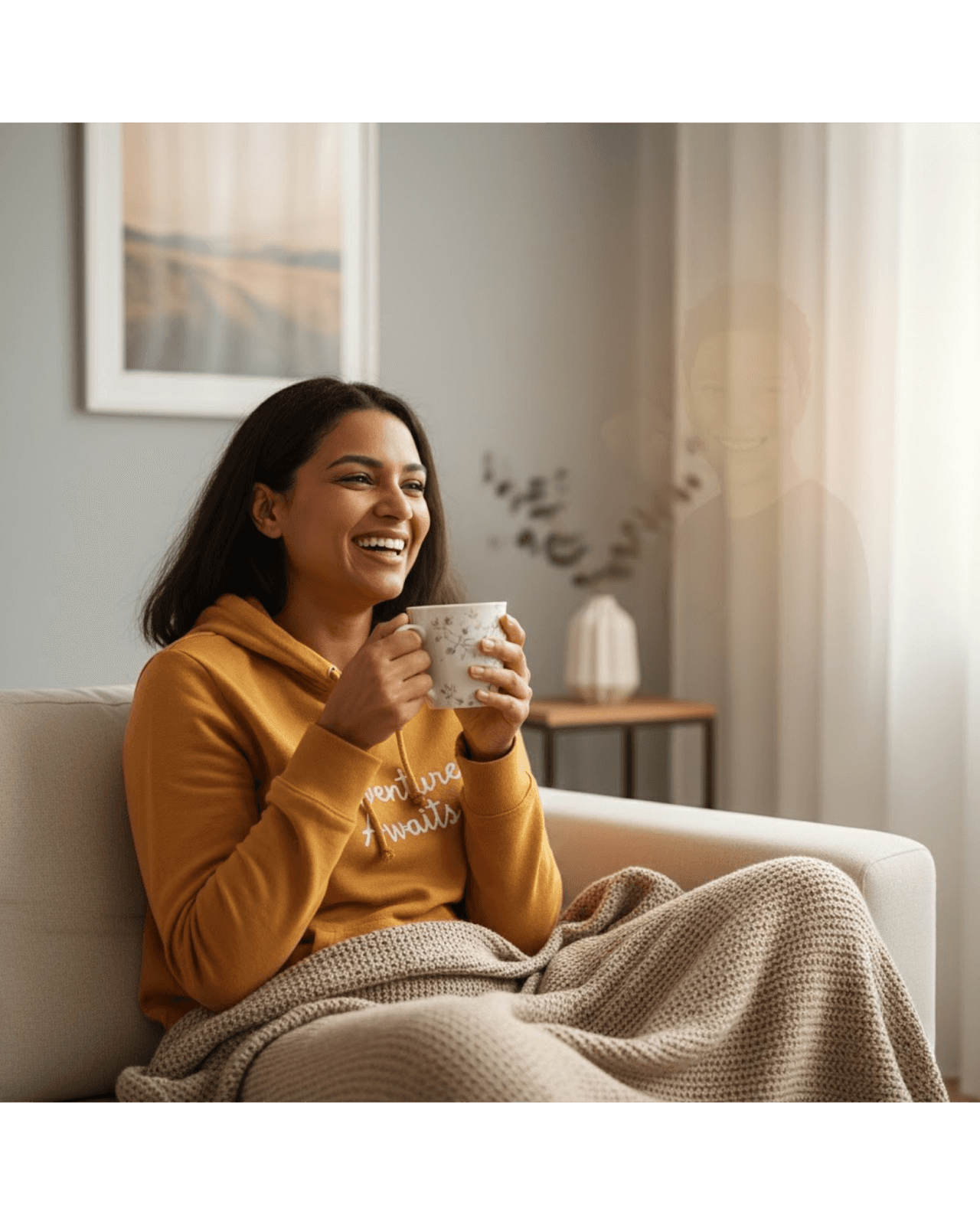
Lifestyle photography works best when it feels real and relatable. Striking a balance between posed shots and candid moments helps convey authenticity, making products feel accessible rather than staged.
Use imagery to tell a story, show your product being used in everyday life, highlight interactions, or capture genuine reactions. Emotion drives attention: when viewers connect with the scene, they are more likely to engage, remember your brand, and make a purchase, turning visual storytelling into a powerful sales tool.
10. Editing & Post-Processing
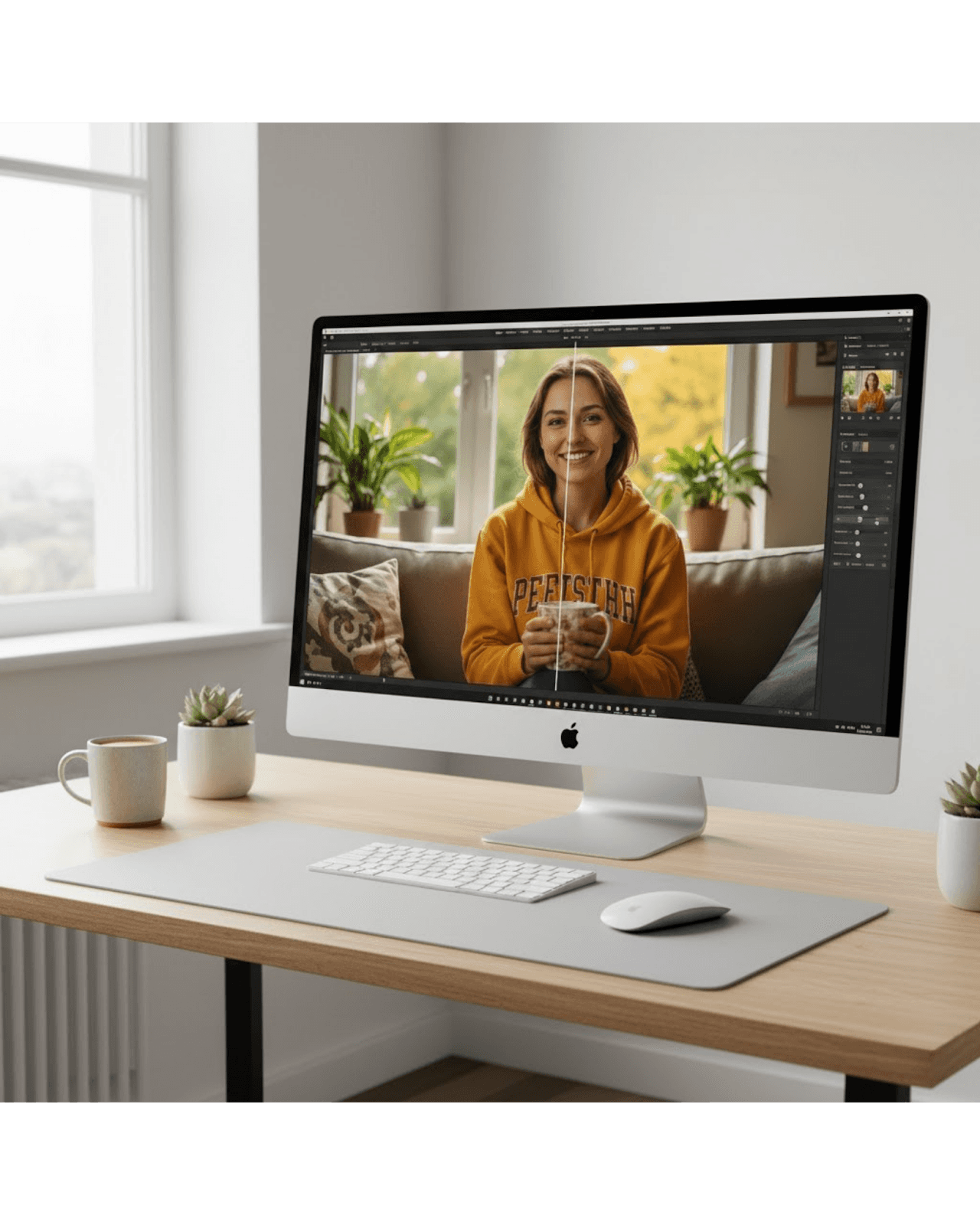
Post-processing enhances the quality of your lifestyle photos while maintaining authenticity. Focus on color correction, exposure, and contrast to ensure your images are vibrant, clear, and true to life.
Retouching carefully, removing distractions or minor imperfections is fine, but avoid over-editing, heavy filters, or unrealistic enhancements that could misrepresent the product. Subtle, consistent editing keeps your visuals professional, trustworthy, and visually appealing, helping buyers connect with the product and your brand.
11. Scaling Lifestyle Commercial Photography for Brands
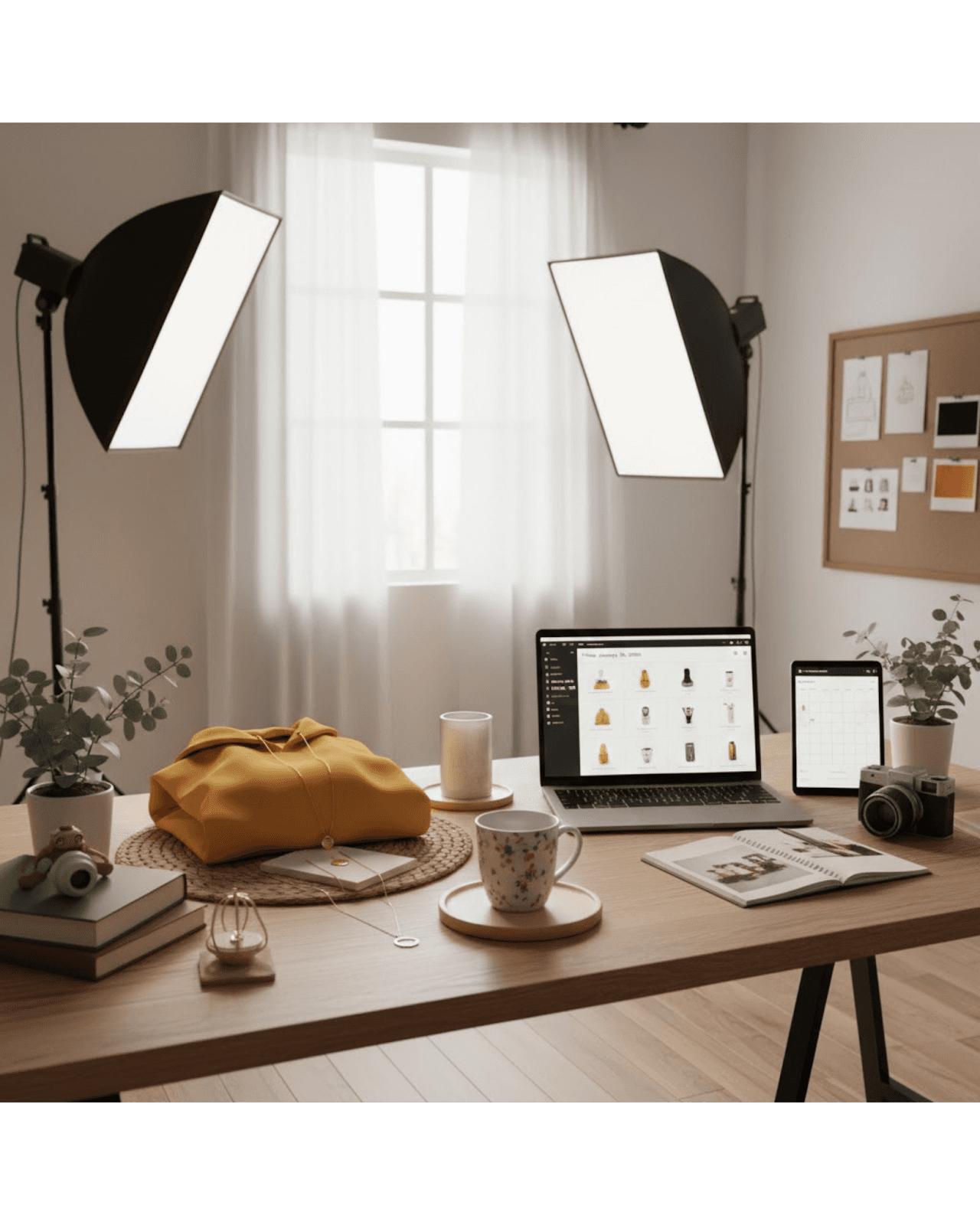
As brands grow, producing lifestyle images for frequent product launches or multiple SKUs can become a major challenge. Traditional photoshoots often require models, studios, and professional setups, which take time, increase costs, and make it difficult to maintain consistency across listings.
Many modern brands are finding ways to scale visuals without starting from scratch. Tools like Look Atlas allow sellers to transform simple product photos into realistic, lifestyle-ready images, helping maintain consistency, speed, and quality without the need for full, traditional shoots. This approach makes scaling lifestyle photography more efficient, cost-effective, and sustainable for growing businesses.

12. How Brands Use AI-Generated On-Model & Lifestyle Imagery
Many brands are now using AI-generated imagery to create on-model and lifestyle photos from existing product shots. This approach allows for faster production, maintaining consistent visuals across multiple listings and campaigns without needing repeated photoshoots.
AI tools also let brands experiment with different models, poses, and backgrounds, helping them showcase products in diverse contexts and appeal to a wider audience. For example, tools like Look Atlas enable sellers to scale visuals efficiently, producing professional, on-model images quickly while keeping their brand aesthetic cohesive.
13. Common Mistakes in Lifestyle Commercial Photography
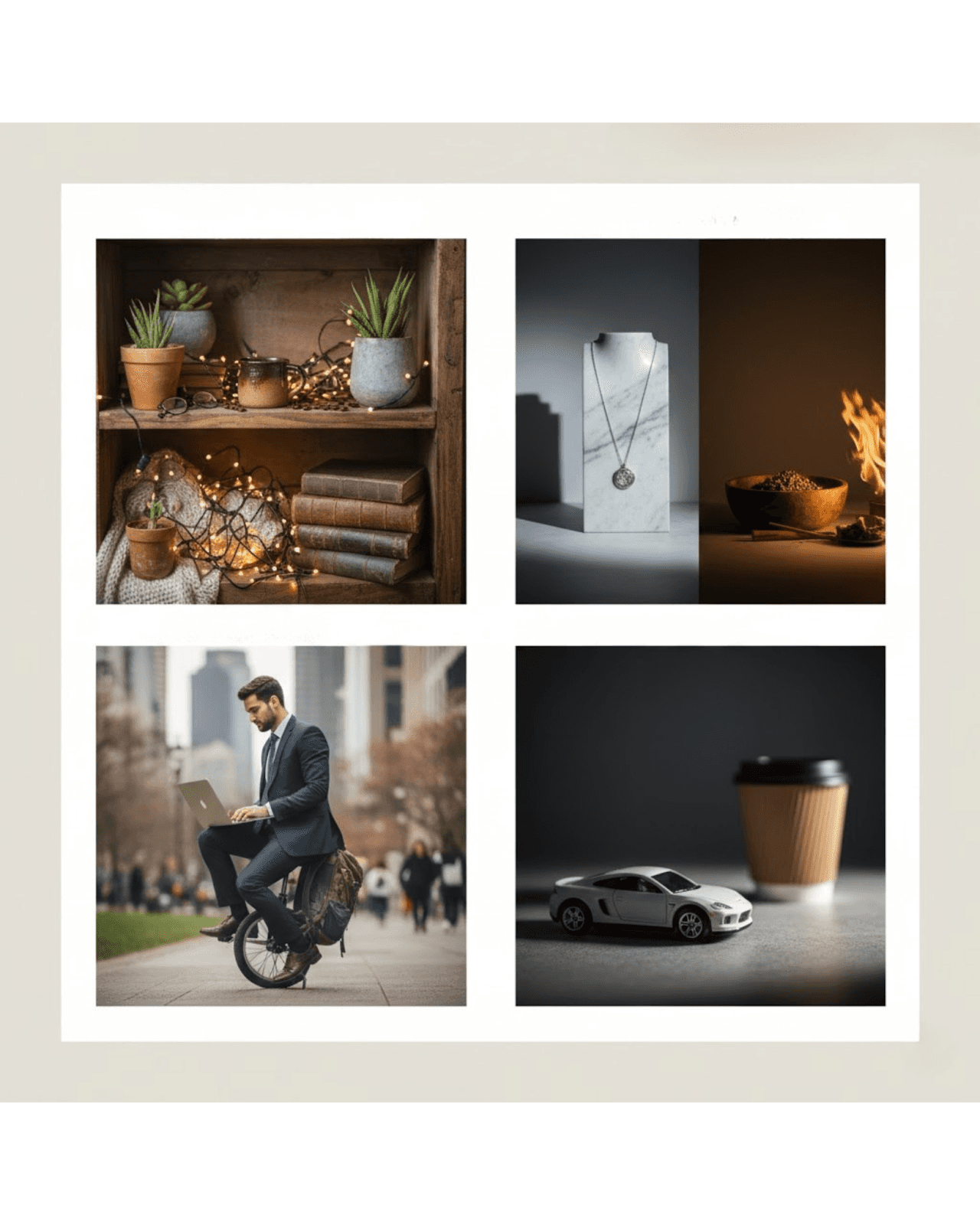
Even well-planned lifestyle shoots can fall short if a few common mistakes creep in. Overcrowded images with too many props or elements can distract viewers and pull attention away from the product.
Inconsistent lighting or brand style across images makes campaigns feel disjointed and less professional, weakening brand trust. Similarly, misleading contexts or unrealistic staging can confuse audiences or set the wrong expectations about how a product is used.
Finally, poor scaling or perspective issues, where products appear larger, smaller, or distorted, can reduce credibility. Avoiding these pitfalls helps lifestyle imagery feel authentic, cohesive, and conversion-focused.
14. Mobile Optimization & Social Media Usage
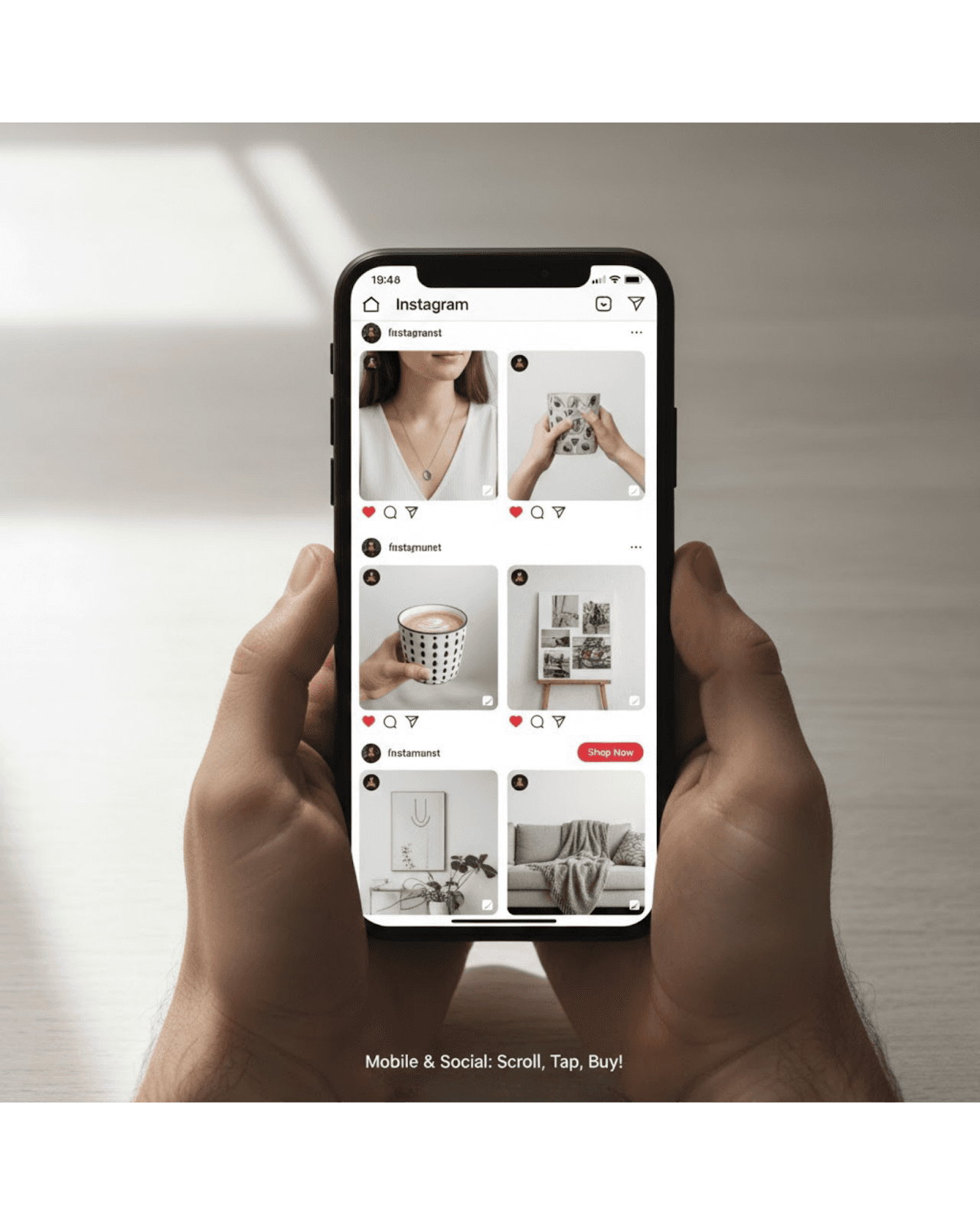
Most lifestyle images are viewed on mobile screens, especially across social platforms. This means visuals need to be instantly readable and attention-grabbing, even at a small size. Centered compositions, clear focal points, and thoughtful cropping help ensure your product remains visible in fast-scrolling feeds.
Short attention spans on platforms like Instagram, Pinterest, and TikTok make first impressions critical. Images that are clean, well-composed, and optimized for vertical or square formats perform better, helping your content stop the scroll, communicate value quickly, and drive engagement across social channels.

15. Measuring Impact: Analytics & Conversion
To understand how lifestyle photography affects performance, track key metrics like click-through rate (CTR), engagement, and conversion rate. These signals show whether your visuals are attracting attention and convincing viewers to take action.
Pay close attention to the feedback loop: identify which images generate more clicks, longer time on page, or higher sales. Use these insights to iterate and optimize, refining composition, styling, and context over time. Continuous testing and improvement ensure your visuals don’t just look good, but consistently drive measurable results.
16. Building a Consistent Visual Brand Through Lifestyle Imagery
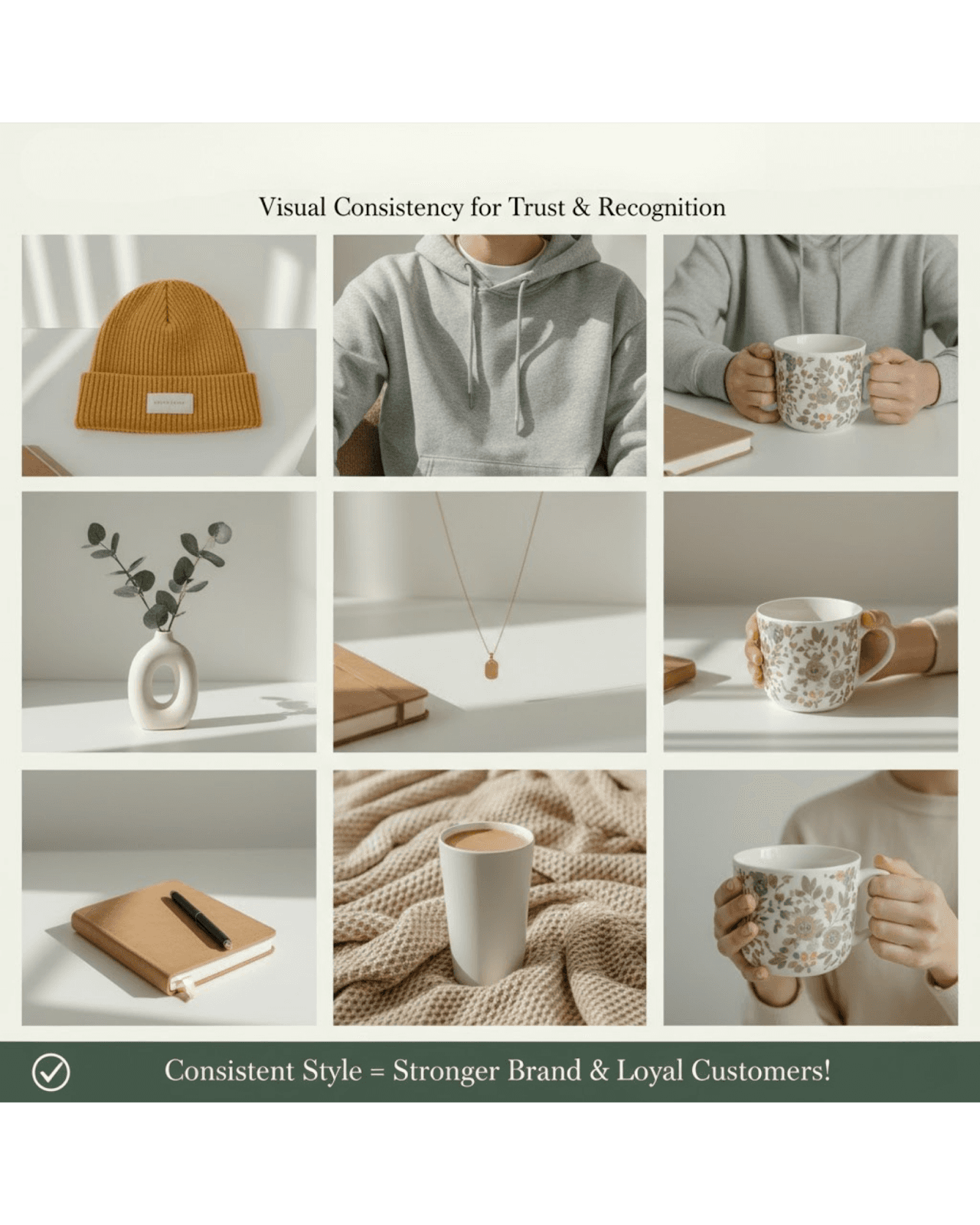
A strong visual brand is built on consistency in color, mood, and style. Using the same tones, lighting approach, backgrounds, and styling choices across your lifestyle imagery helps create a recognizable look that buyers associate with your brand.
Repeating this visual language across campaigns and product lines reinforces familiarity, making your brand easier to remember in crowded feeds and marketplaces. Over time, this consistency builds recognition and trust, helping customers feel confident returning to your brand and choosing your products again.
17. Final Takeaways: Elevating Your Brand with Lifestyle Commercial Photography
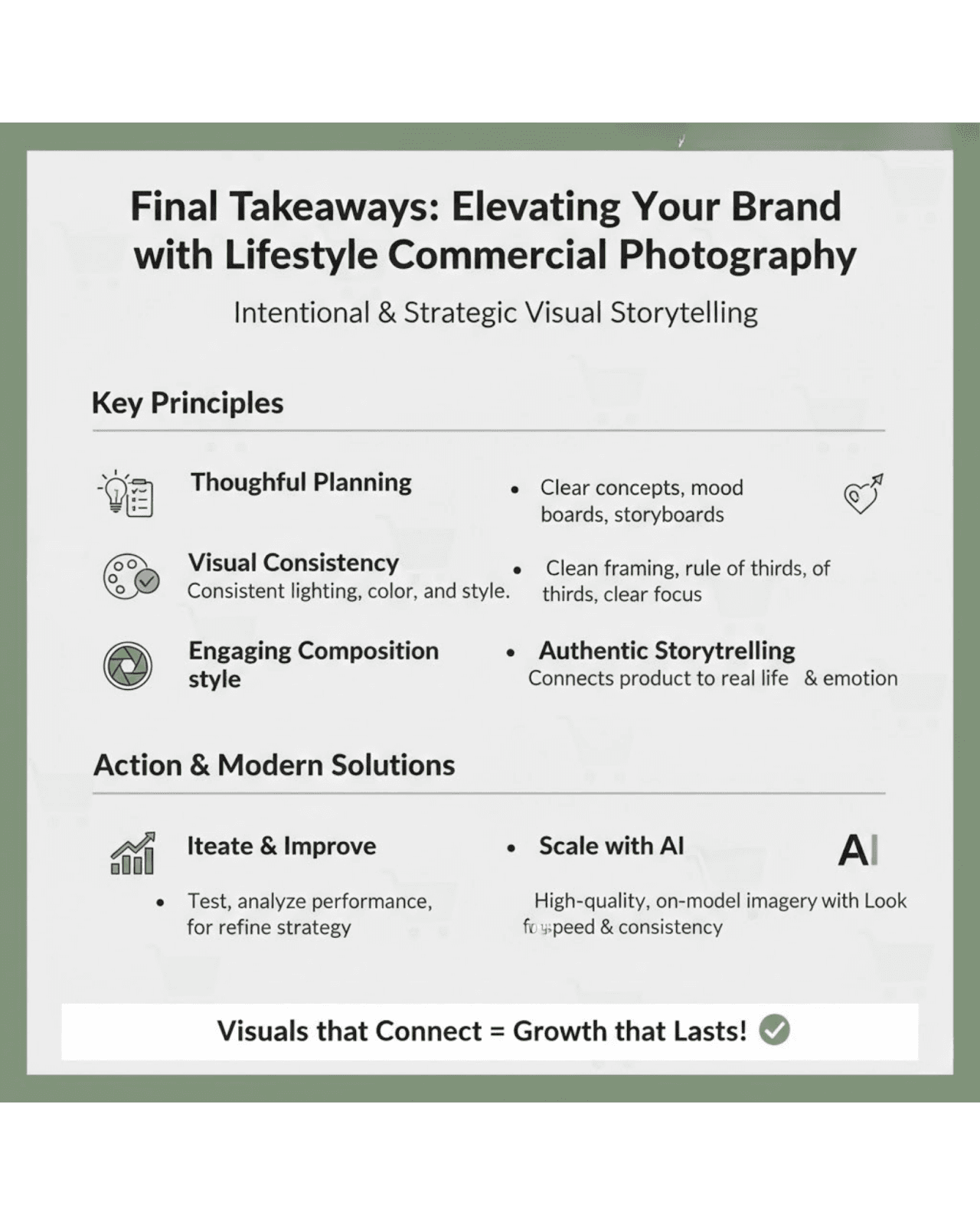
Lifestyle commercial photography is most effective when it’s intentional and strategic. Strong results come from thoughtful planning, consistent lighting, clean composition, and storytelling that connects products to real-life moments and emotions.
The key is action: start with clear concepts, refine your setups, test what resonates with your audience, and continuously improve based on performance. As brands scale and visual demands grow, many now look to modern solutions like Look Atlas to create high-quality, lifestyle-ready imagery efficiently, helping maintain consistency, speed, and visual impact without relying solely on traditional photoshoots.
