
Blog Outline: How to Take Photos for Etsy (That Actually Sell)

1. Introduction: Why Etsy Product Photos Matter More Than Ever
Etsy has become a visual-first marketplace. Buyers scroll quickly, compare multiple listings side by side, and make snap decisions in seconds,often before reading a single word of the description. In most cases, your photos do the selling long before your copy gets a chance.
Strong product images don’t just look good, they drive clicks, trust, and conversions. Clear, professional visuals help buyers understand the product instantly, imagine owning it, and feel confident enough to purchase. In today’s competitive Etsy landscape, great photos aren’t optional anymore, they’re one of the most powerful growth levers a seller has.

2. Understanding How Etsy Buyers Look at Photos
Etsy buyers rarely read every detail before deciding, they scan images quickly, forming first impressions in seconds. Their brains make snap judgments about quality, fit, and value based solely on what they see.
When shoppers browse, they’re not just evaluating the product, they’re assessing trust and professionalism. A well-lit, clear, and context-rich image signals quality and reliability, while blurry, inconsistent, or generic photos create doubt. Since buying decisions on Etsy are often emotional as well as practical, your images must instantly communicate value and help buyers imagine owning the product.
3. How Etsy Uses Product Images in Search & Ranking
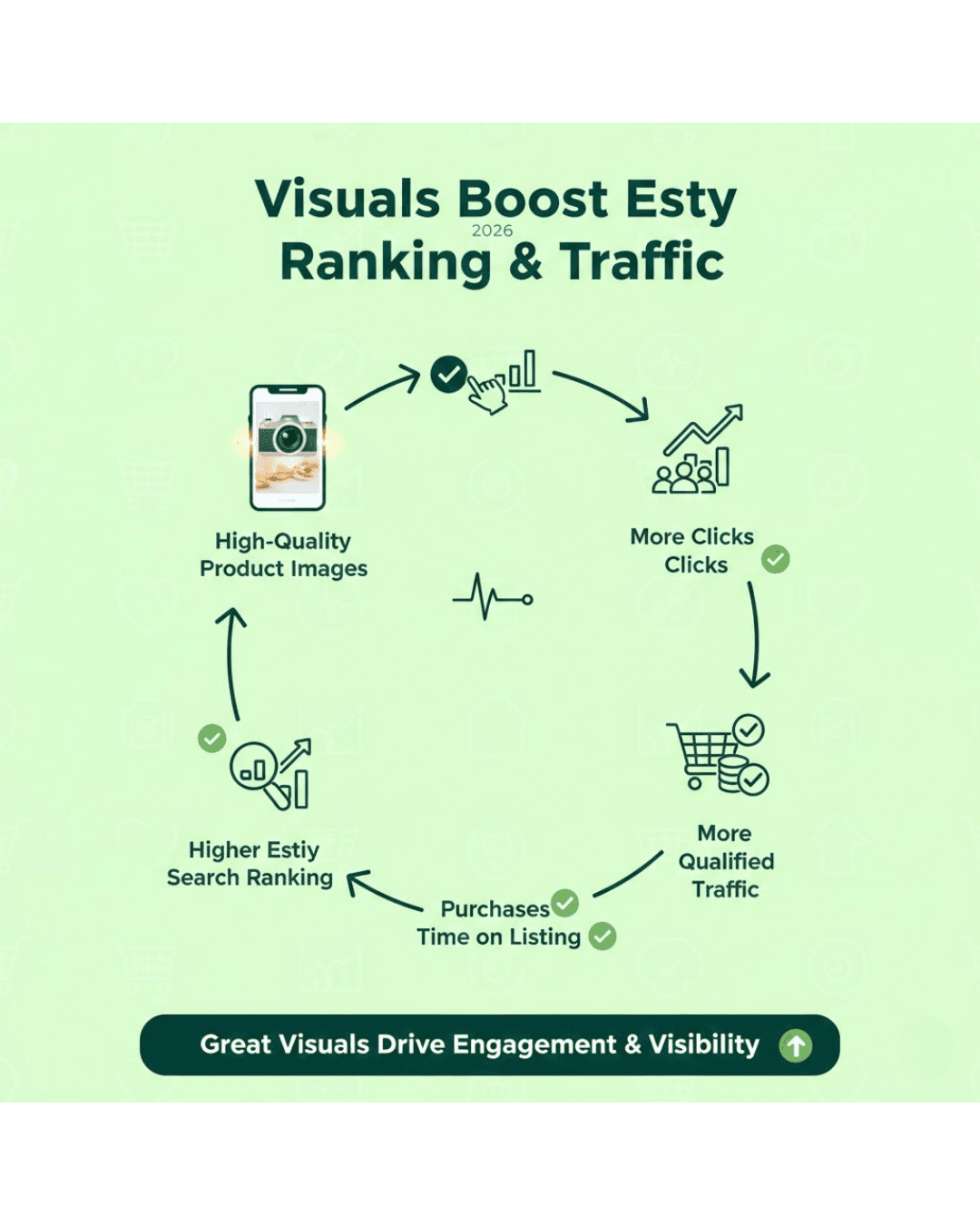
On Etsy, product images don’t just attract buyers, they influence your search ranking. The algorithm tracks how shoppers interact with your listings: how often they click, how long they stay, and whether they make a purchase.
High-quality, engaging images increase click-through rates and keep buyers on your page longer, which signals to Etsy that your listing is relevant and appealing. This boosts your visibility in search results, creating a positive feedback loop: better photos lead to more engagement, more engagement improves ranking, and higher ranking brings even more qualified traffic. In essence, great visuals aren’t just for buyers, they help your shop get discovered and seen by more people.
4. Etsy Image Requirements You Must Follow
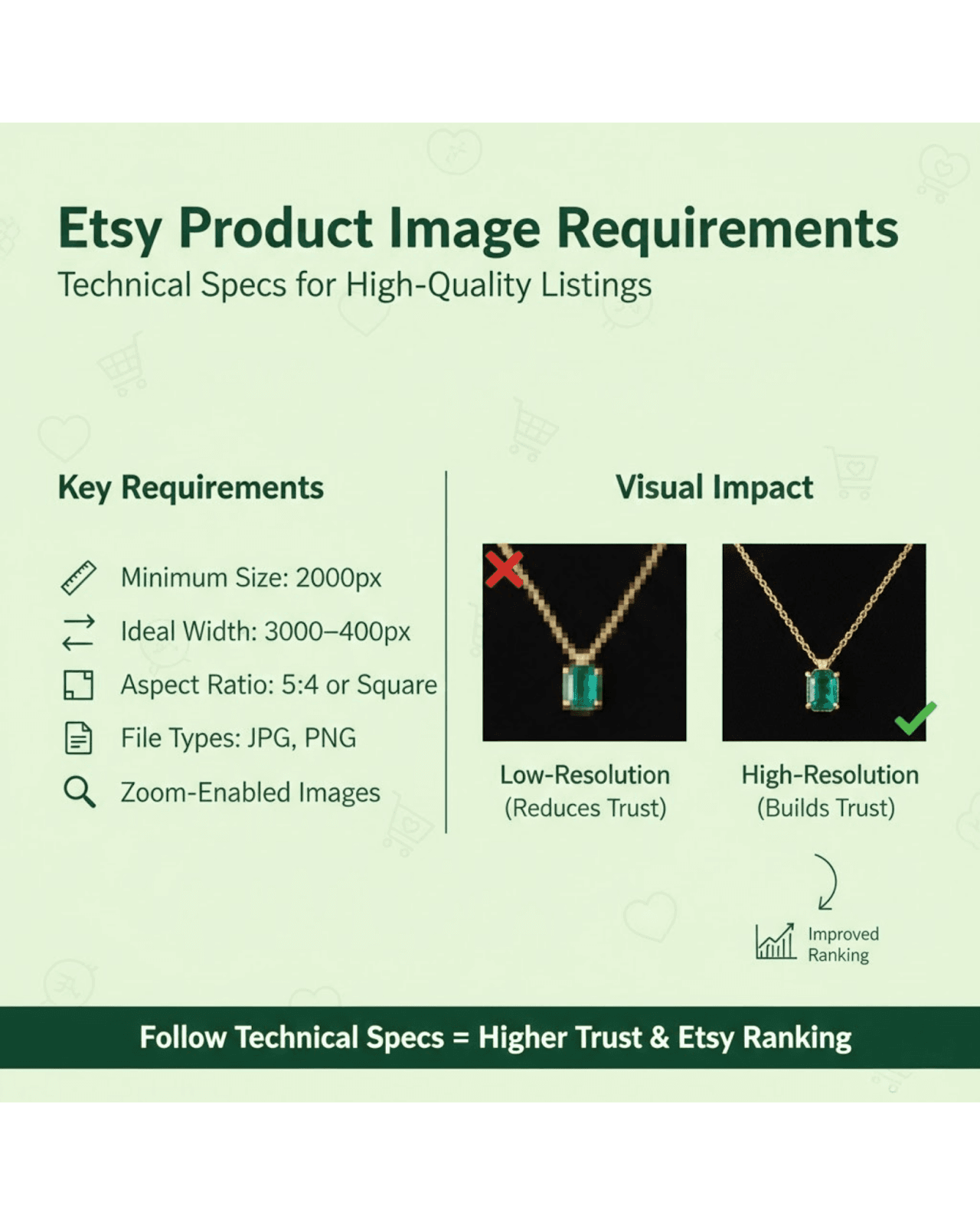
To make your listings look professional and perform well, it’s essential to follow Etsy’s image guidelines. Etsy recommends images that are at least 2000 pixels wide, with a square or 4:3 aspect ratio, and in JPEG or PNG format. Proper sizing ensures that your images support the zoom feature, allowing buyers to inspect details closely.
Blurry, pixelated, or small images not only look unprofessional, they reduce buyer trust and can negatively affect your click-through and conversion rates. Following Etsy’s requirements ensures your products look their best, appear trustworthy, and rank higher in search results.
5. Essential Equipment for Taking Etsy Photos (Beginner to Advanced)
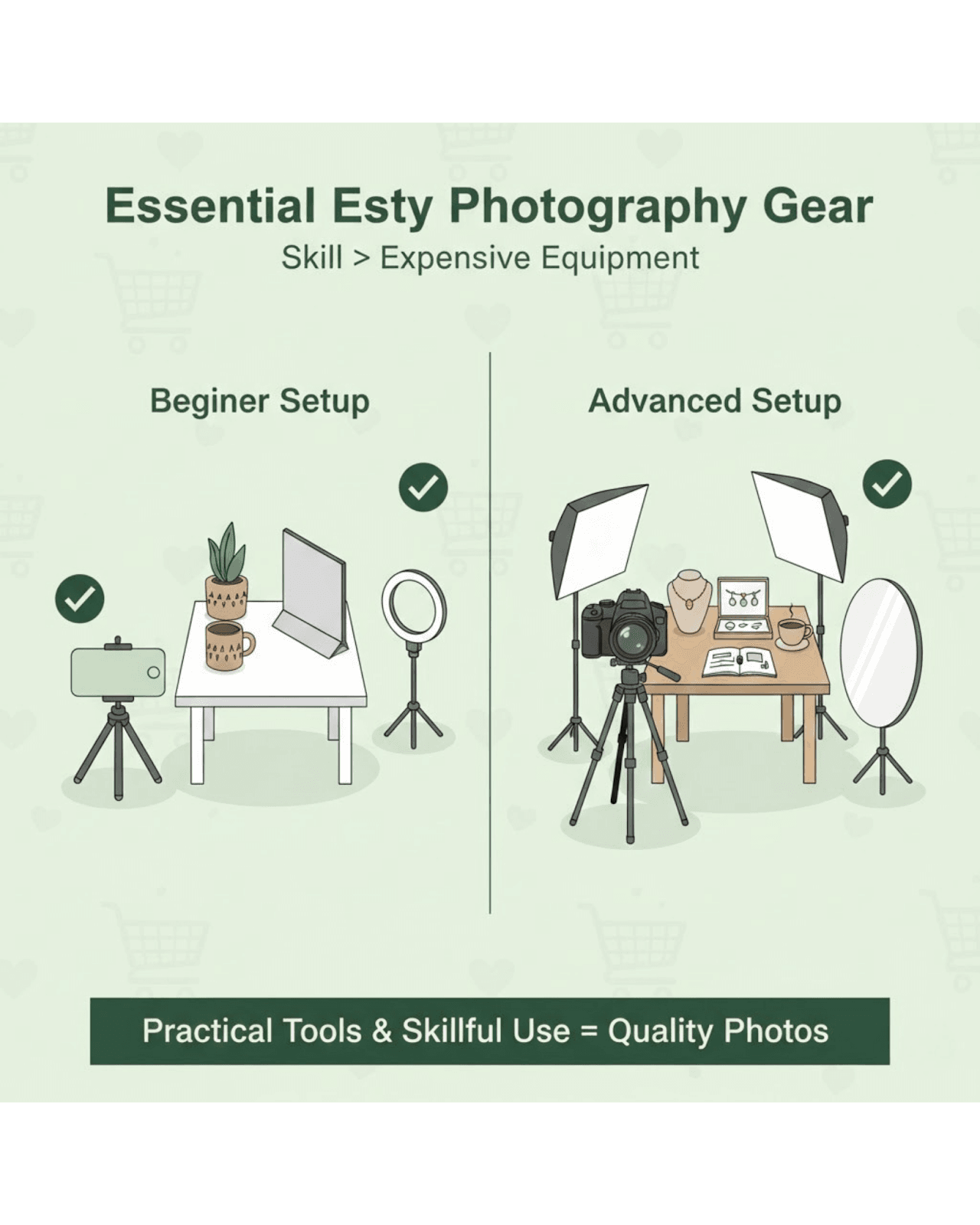
You don’t need a professional studio to take great Etsy photos, but having the right tools helps. Smartphones with good cameras can produce excellent results for beginners, while DSLR or mirrorless cameras offer more control for advanced sellers. A stable tripod keeps shots sharp, and basic lighting setups, natural light or affordable softboxes, ensure your products are well-lit and colors appear true.
Reflectors or whiteboards help bounce light and reduce shadows, making images look polished. While equipment matters, skill and technique are far more important than expensive gear. Learning composition, angles, and lighting can transform even simple tools into professional-looking photos that grab attention and drive sales. Following Etsy’s requirements ensures your products look their best, appear trustworthy, and rank higher in search results, just as sellers now use AI-based visual platforms like Look Atlas.
6. Lighting Setup: The Foundation of Good Etsy Photography
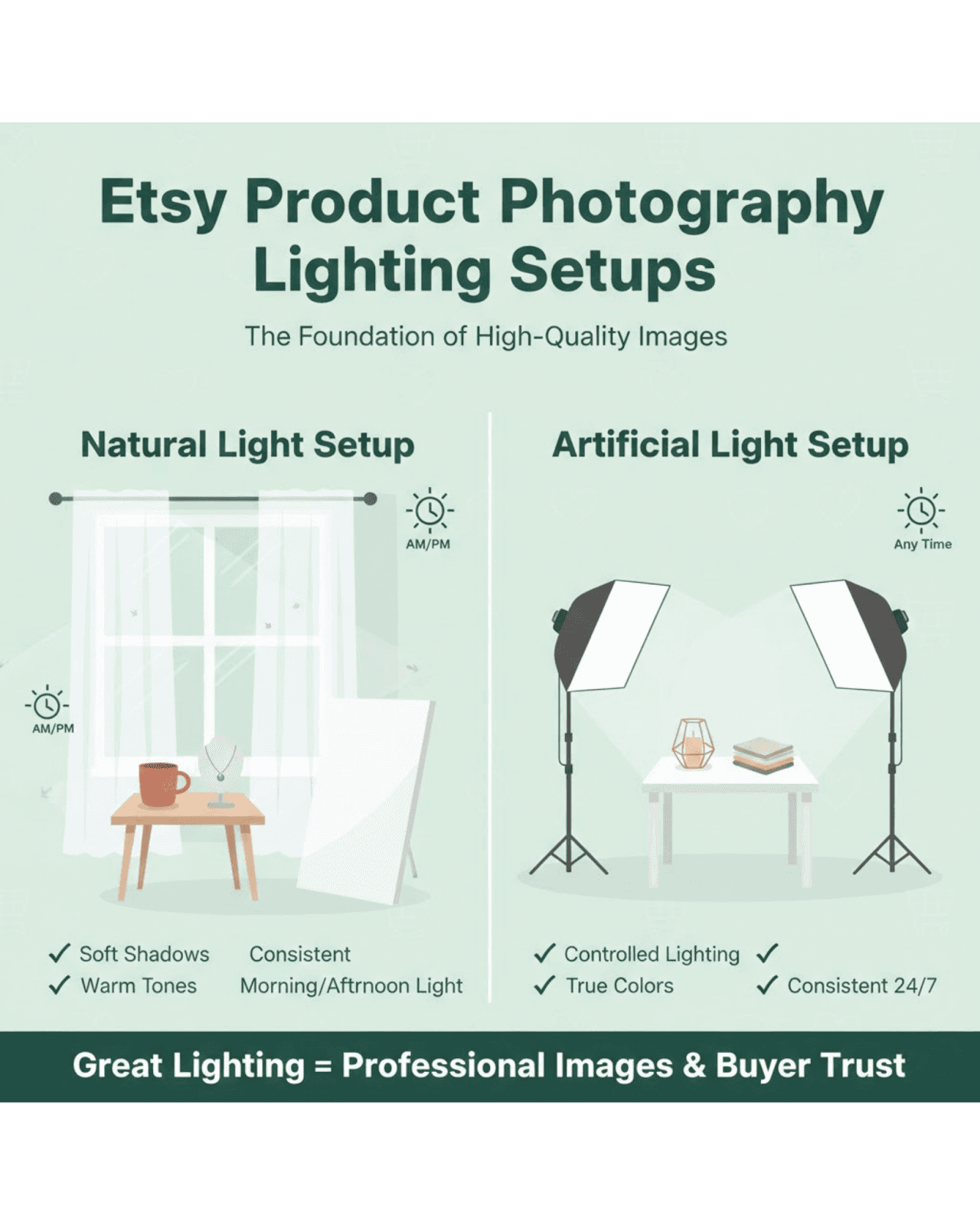
Lighting is the most important factor in creating high-quality Etsy photos. Natural light is ideal for most sellers, window setups during the morning or late afternoon provide soft, even illumination that highlights product details without harsh shadows.
Artificial lighting, like softbox or LED panels, is useful when natural light isn’t available, offering control and consistency. The goal is to create soft, diffused shadows that enhance textures and colors while avoiding glare or blown-out highlights.
Consistency is key: using the same lighting setup across all listings gives your shop a professional, cohesive look, builds buyer trust, and makes your products easier to compare for potential customers.
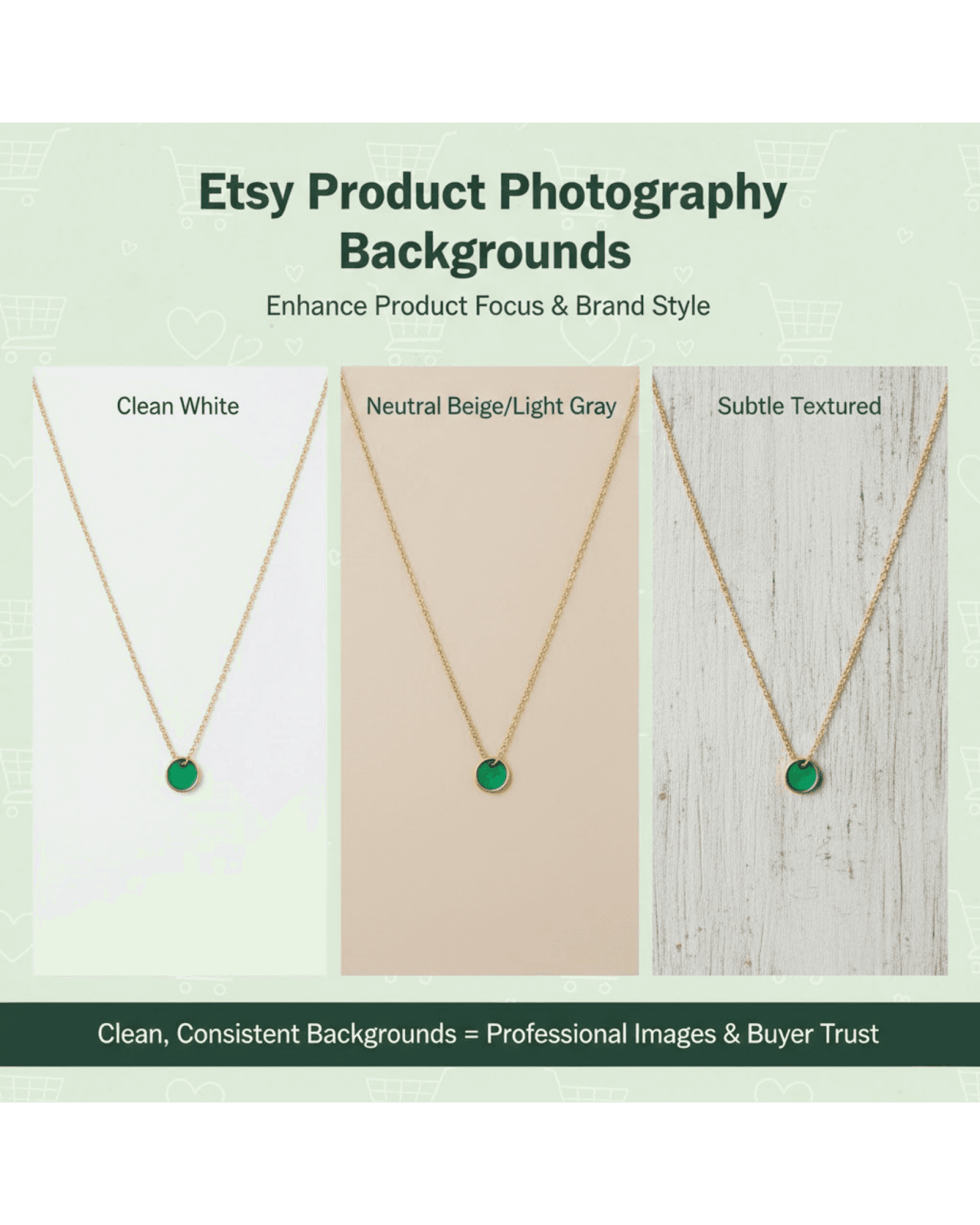
7. Choosing the Right Background for Etsy Product Photos
The background of your product photos plays a major role in how buyers perceive quality and brand style. Clean, uncluttered backgrounds help your product stand out and prevent distractions, while neutral colors like white, beige, or soft pastels create a professional, timeless look.
Textures such as wood, fabric, or subtle surfaces can add context and interest, but they should complement, not compete with, your product. The right background not only highlights your item but also communicates your brand’s personality and aesthetic, making listings feel cohesive, trustworthy, and visually appealing to potential buyers.
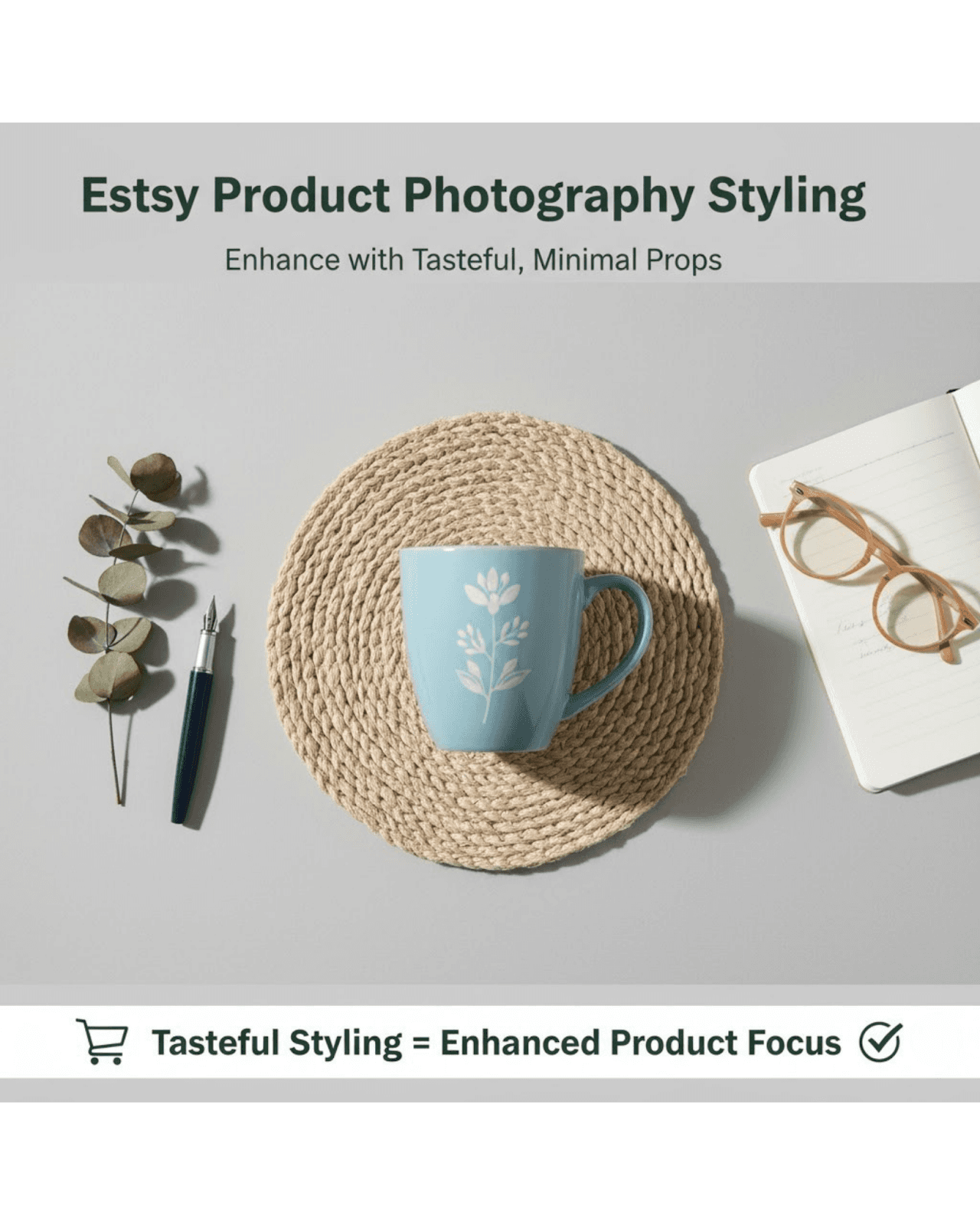
8. Styling Your Product for Etsy Photos
How you style your product can make or break a listing. Props are useful to show scale, context, or lifestyle, but they should enhance the product, not distract from it. Keep the focus on the item you’re selling, ensuring it remains the star of the shot.
Consistency is key: use similar styling elements, colors, and props across listings to reinforce your brand identity. Avoid cluttered setups or too many competing objects, as they can confuse buyers and reduce the perceived value of your product. Simple, thoughtful styling helps your listings feel polished, professional, and engaging.

9. The Most Important Etsy Product Photo: Your Hero Image
The first image in your listing, your hero image, is the single most important photo on Etsy. It’s what shoppers see in search results and galleries, and it largely determines whether they click to view your listing or scroll past.
A strong hero image should have clear composition, strong contrast, and sharp clarity so the product stands out immediately. Center the item, minimize distractions, and ensure colors and details are true to life. Since this image sets the first impression, investing time in making it visually striking and professional can dramatically improve click-through rates and drive more qualified traffic to your shop.

10. Taking Lifestyle Photos That Help Buyers Visualize Ownership
Lifestyle photos show your product in real-use scenarios, helping buyers imagine how it fits into their everyday life. By placing items in relatable settings, on a desk, worn by a model, or styled in a living space, you create an emotional connection that flat or studio-only photos can’t achieve.
When buyers can visualize themselves using the product, they’re more likely to trust its quality and make a purchase. While traditional lifestyle photos often require models, studios, or complex setups, many modern sellers now use tools such as Look Atlas that enhance simple product images into realistic lifestyle or on-model visuals, making it easier and faster to create engaging, high-converting photos without a full photoshoot.

11. Flat Lay vs On-Model vs In-Use Photos: What Works Best on Etsy
Different photo styles serve different purposes on Etsy, and knowing when to use each can maximize engagement and conversions.
Flat lay photos: Great for showing all product details clearly, especially for small items or sets. They’re easy to produce and work well for listings where context isn’t critical.
On-model photos: Essential for wearable items like clothing, accessories, or jewelry. Seeing the product on a person helps buyers understand fit, scale, and style, making it easier to imagine ownership.
In-use photos: Show products in real-life scenarios, like a mug on a desk or a journal being written in, to create emotional context and inspire desire.
While traditional photoshoots can be time-consuming and costly, modern sellers are increasingly exploring techniques that transform simple product images into on-model or in-use visuals, creating professional, engaging listings without extensive setups.
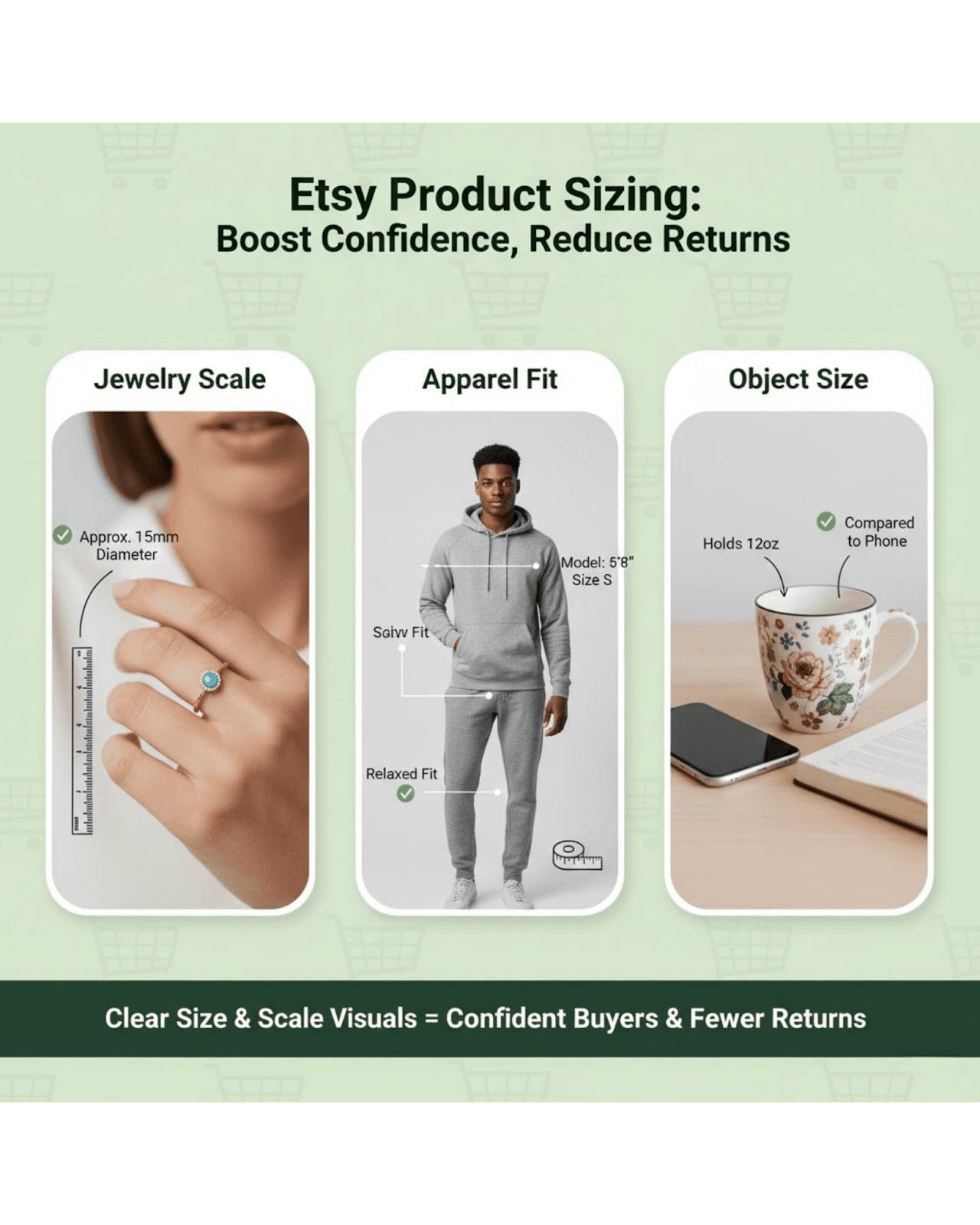
12. How to Show Size, Scale, and Fit Clearly
One of the biggest challenges for Etsy buyers is understanding a product’s size and fit. Without clear visual cues, shoppers may feel uncertain, leading to abandoned carts or returns.
Simple visual references can make a huge difference: include objects of known size (like a hand, coin, or ruler), show the product being worn, or display it in context with other items. These cues help buyers accurately gauge scale, reducing hesitation and increasing confidence. Clear size and fit visuals not only improve conversion but also build trust and lower the risk of dissatisfied customers.
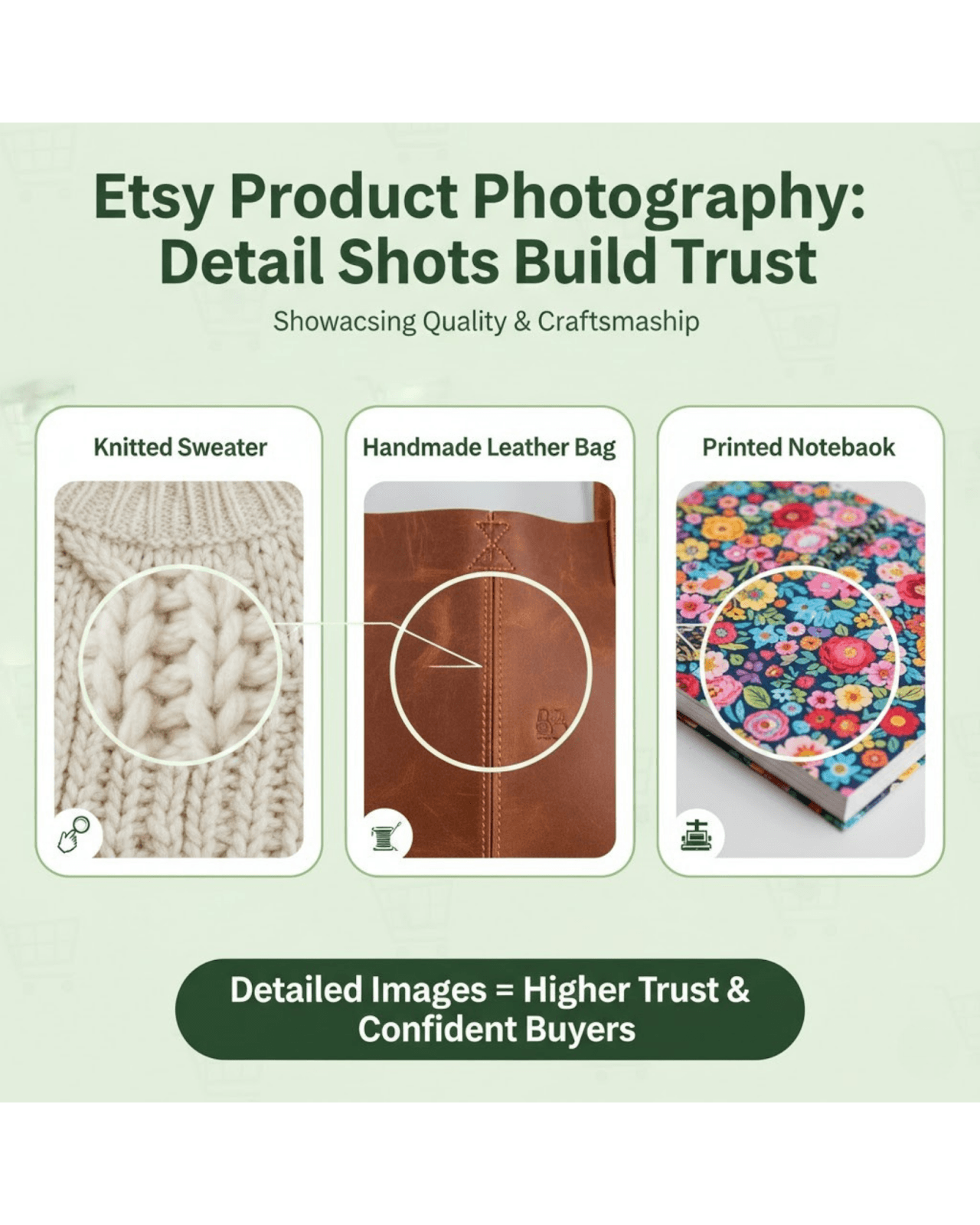
13. Close-Up & Detail Shots That Build Trust
Close-up photos are essential for showcasing the quality and craftsmanship of your products. Buyers want to see textures, materials, stitching, or print details that prove your item is well-made.
Providing zoomable, high-resolution images lets shoppers inspect every detail, giving them confidence that the product matches your description. When buyers can verify quality visually, they’re more likely to trust your shop, feel confident in their purchase, and complete the sale, making detail shots a critical part of any high-converting Etsy listing.
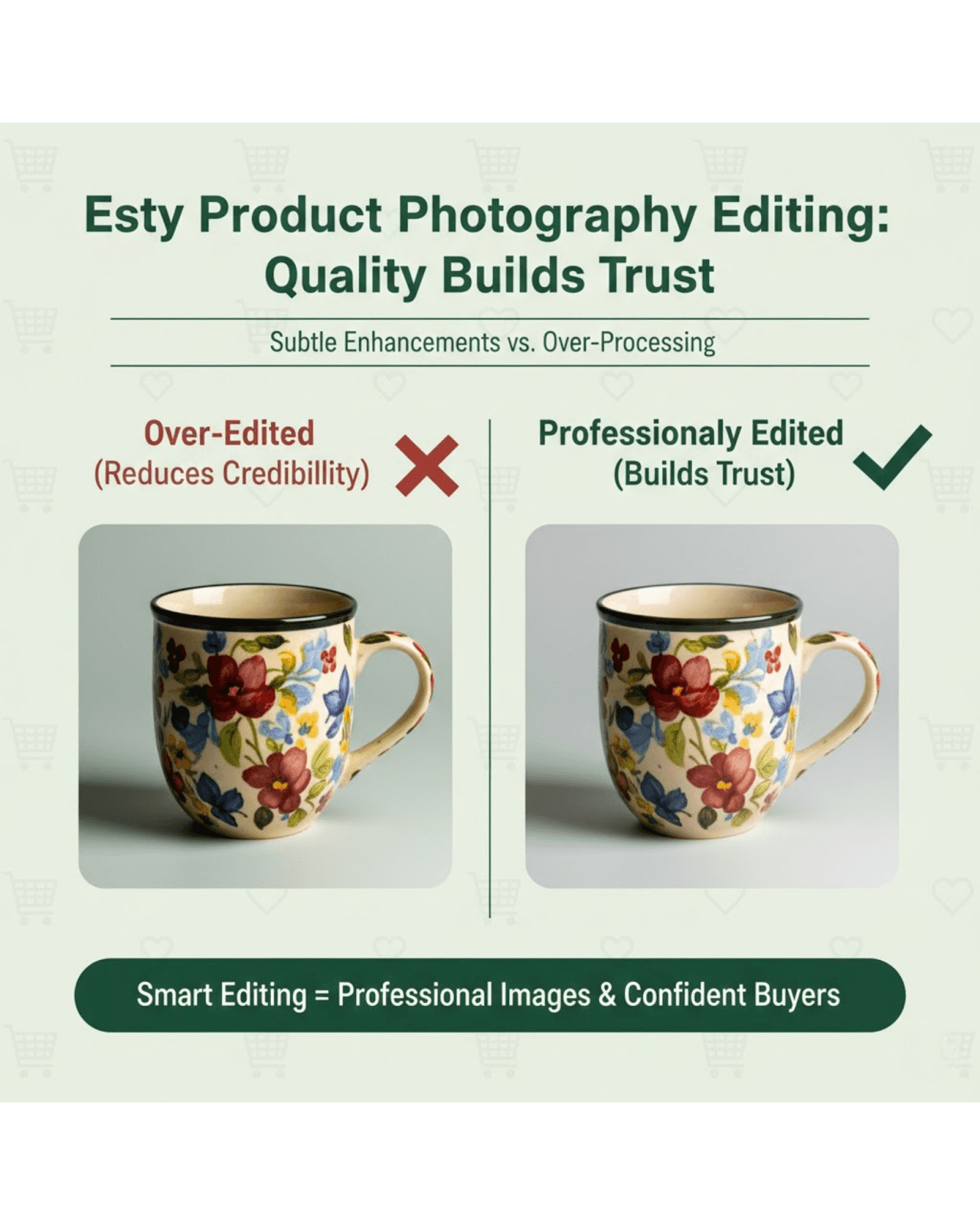
14. Editing Etsy Product Photos (Without Overdoing It)
Editing your photos can enhance clarity and appeal, but it’s important not to overdo it. Focus on small adjustments like correcting exposure, sharpening details, and ensuring color accuracy so that your images reflect the product truthfully.
Avoid heavy filters, unrealistic colors, or excessive retouching, these can mislead buyers and hurt credibility. Subtle, consistent editing helps your listings look polished, professional, and trustworthy, giving shoppers the confidence to click, explore, and ultimately purchase.

15. Mobile Optimization: Taking Photos That Work on Small Screens
Over 60% of Etsy traffic comes from mobile devices, which means your photos must look great on small screens. Shoppers scroll quickly, so images need to grab attention instantly.
Use centered compositions and clear focal points to make your product the star, and avoid cluttered backgrounds that can get lost on tiny screens. Ensure details, colors, and textures remain readable even when images are cropped in search results or previews. Optimizing your photos for mobile helps buyers see, understand, and trust your product quickly, increasing the likelihood they’ll click and explore your listing further.
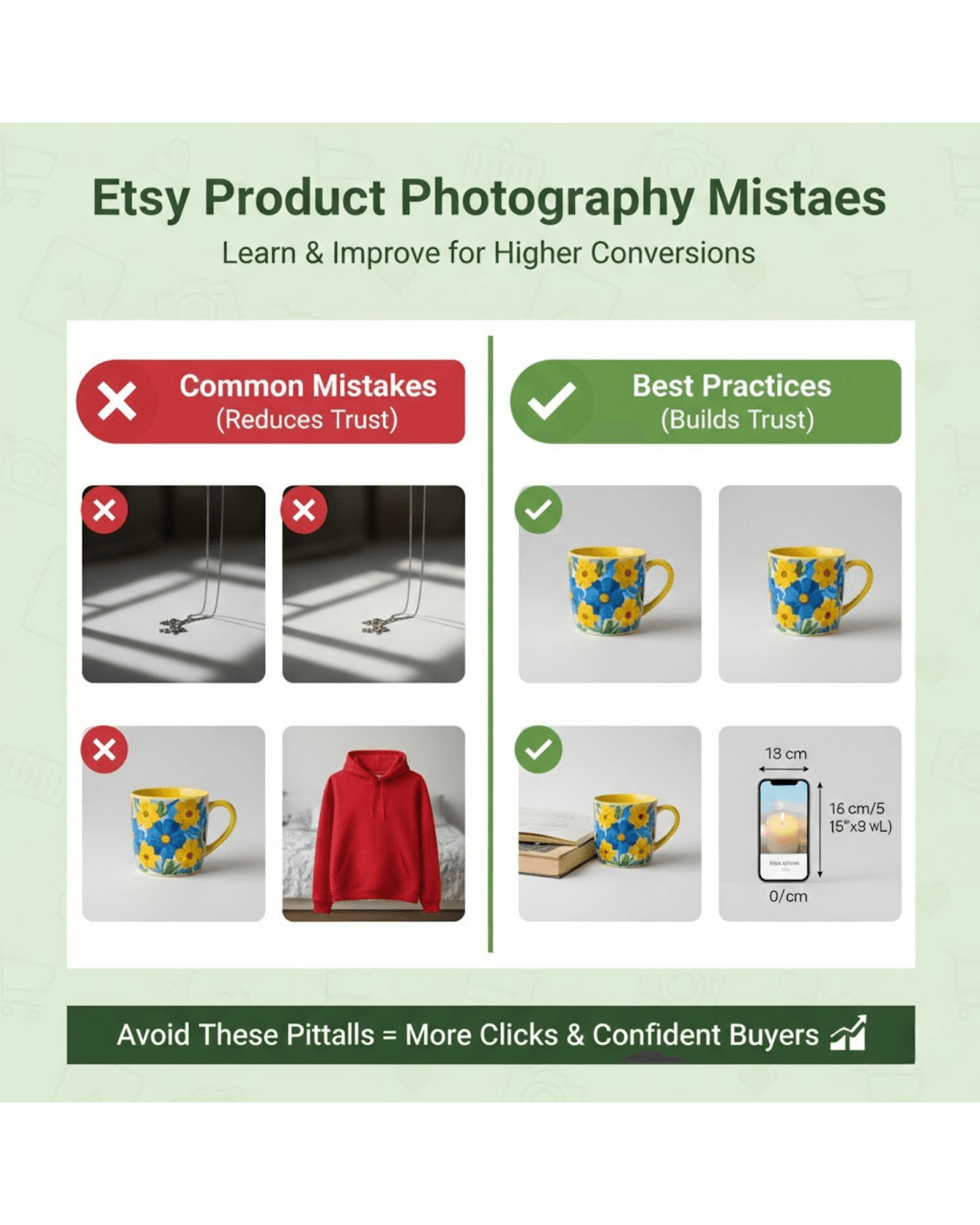
16. Common Etsy Product Photography Mistakes to Avoid
Even small photography mistakes can hurt clicks and conversions on Etsy. Some of the most common issues include:
Dark or blurry images that make products hard to see
Inconsistent lighting across listings, reducing shop cohesion
Misleading colors that don’t match the actual product
Busy or cluttered backgrounds that distract from the item
Poor cropping or composition that cuts off details or looks unprofessional
Avoiding these mistakes helps your listings appear trustworthy, polished, and visually appealing, giving buyers confidence to click and purchase. Some sellers now use AI-based visual platforms, such as Look Atlas, to turn existing product photos into clean, on-model or lifestyle visuals without repeating full photoshoots.
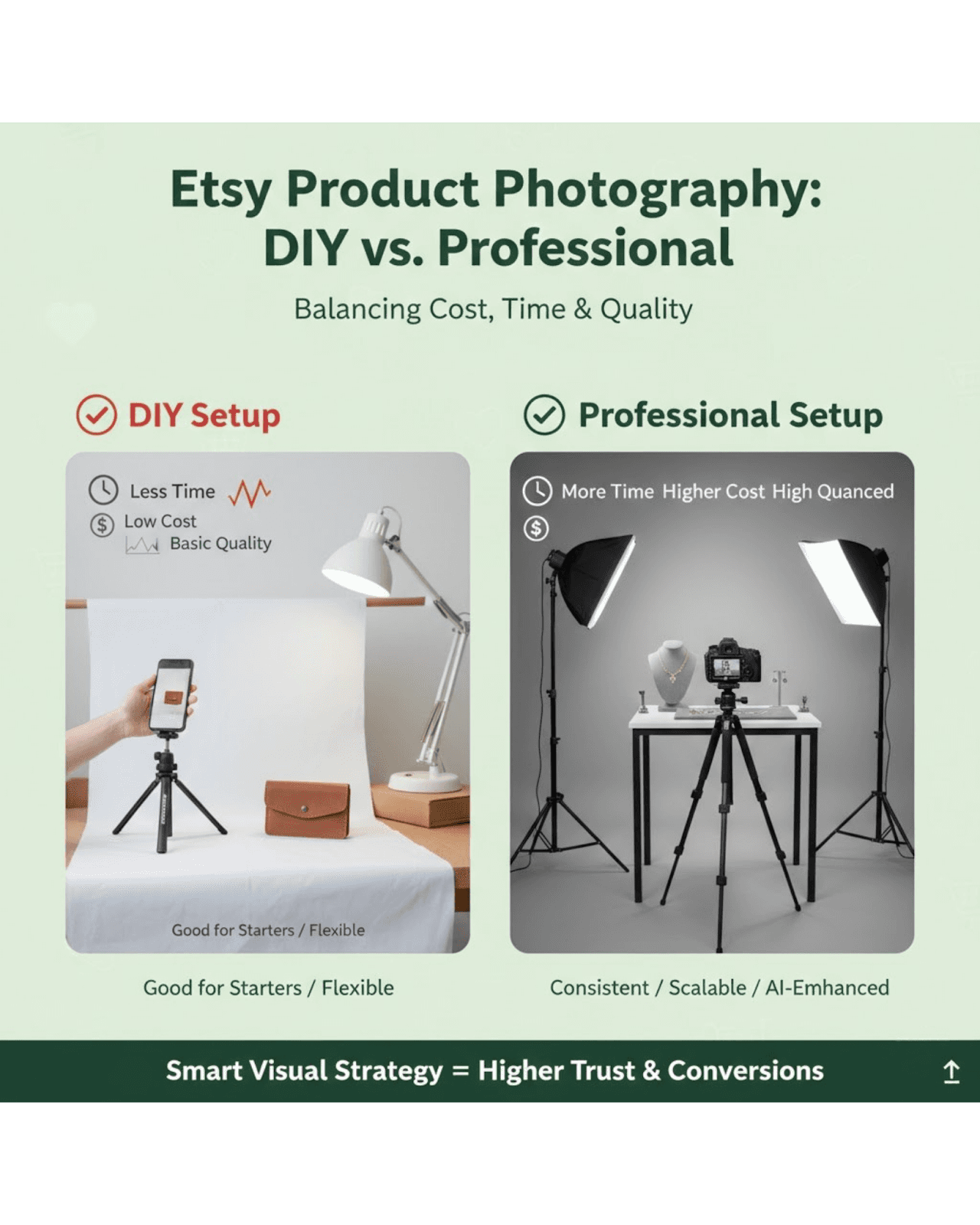
17. DIY vs Professional Etsy Photography: What Makes Sense?
Choosing between DIY and professional photography depends on cost, time, flexibility, and quality.
DIY photography is low-cost and flexible, letting sellers update listings quickly. With good lighting, props, and basic equipment, DIY shots can look professional, but it requires time, skill, and consistency.
Professional photography offers high-quality, polished results, but it can be expensive and less flexible, making frequent updates or seasonal changes difficult.
Many Etsy sellers struggle to scale visuals traditionally, as producing consistent, high-quality photos for dozens of listings takes significant resources. Finding the right balance, using DIY techniques efficiently or leveraging modern solutions, can help shops maintain quality without burning time or budget.

18. Scaling Etsy Photos Without Re-shooting Everything
As your Etsy shop grows, managing photos for multiple listings, product variants, or new launches can become overwhelming. Reshooting every item for each change is time-consuming, expensive, and difficult to keep consistent.
Many modern sellers are finding ways to scale visuals efficiently without starting from scratch. For example, tools like Look Atlas allow sellers to transform existing product photos into on-model or lifestyle-ready images, creating multiple versions quickly while maintaining a cohesive, professional look across all listings.
This approach saves time, reduces costs, and ensures your shop remains visually consistent, even as your product catalog expands.
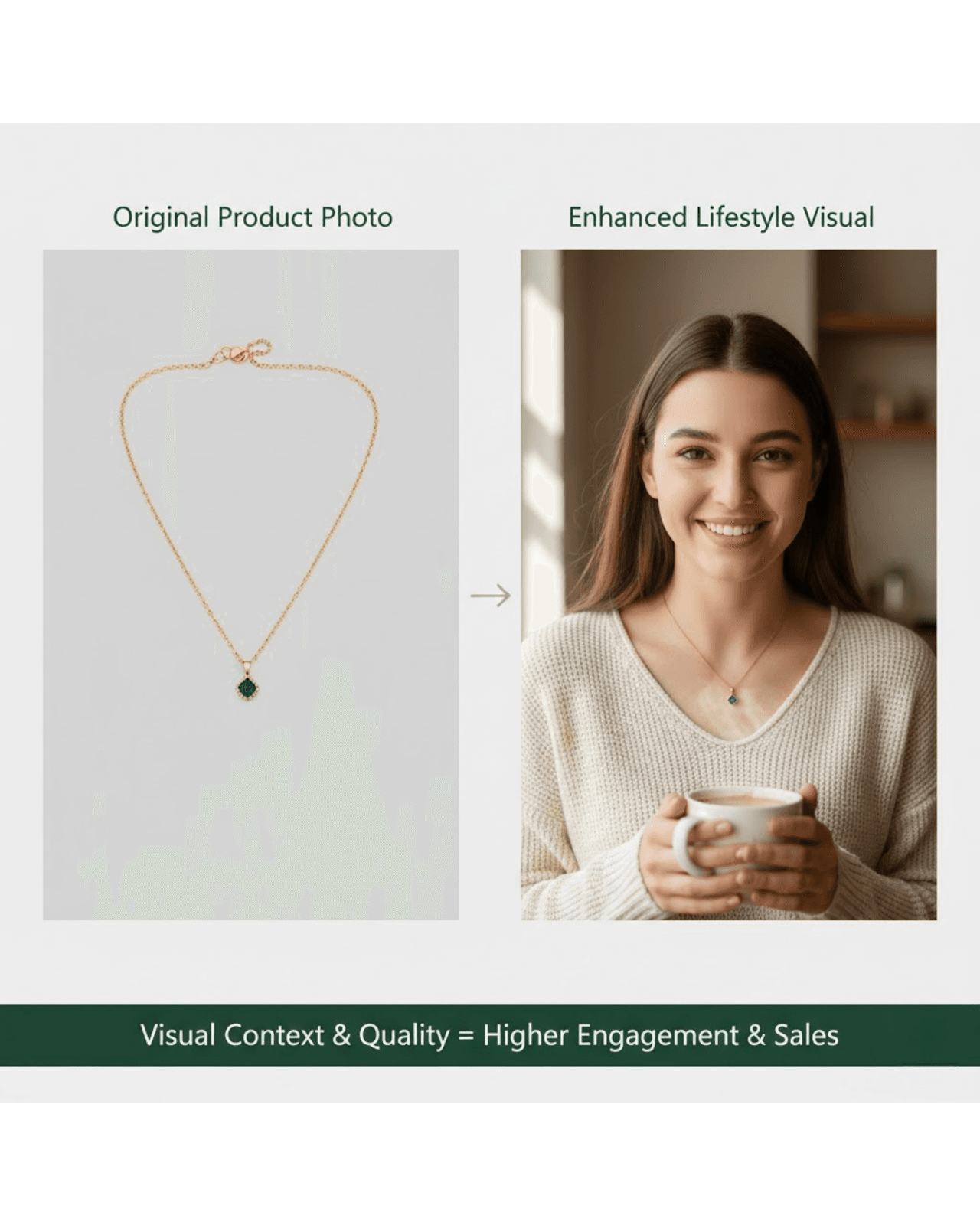
19. A Smarter Way Sellers Upgrade Etsy Photos Today
Many Etsy sellers are finding new ways to enhance their product visuals like using Look Atlas, without relying on traditional photoshoots. By starting with a simple product image, they can now use modern tools to create realistic, on-model or lifestyle-ready photos quickly and consistently.
This approach allows shops to show products in context, maintain visual consistency, and refresh listings faster, all while keeping production simpler and more cost-effective. It’s not about replacing creativity, it’s about removing friction from the process and making professional-looking images more accessible.

20. Building a Consistent Visual Brand on Etsy
Consistency is key to creating a professional, trustworthy Etsy shop. Using the same lighting style, backgrounds, composition, and model presentation across all listings helps your shop feel cohesive and polished.
When buyers see a uniform visual style, they subconsciously recognize your brand and associate it with quality. Consistent visuals not only build trust with first-time shoppers but also encourage repeat buyers, making it easier for your shop to stand out in a crowded marketplace.
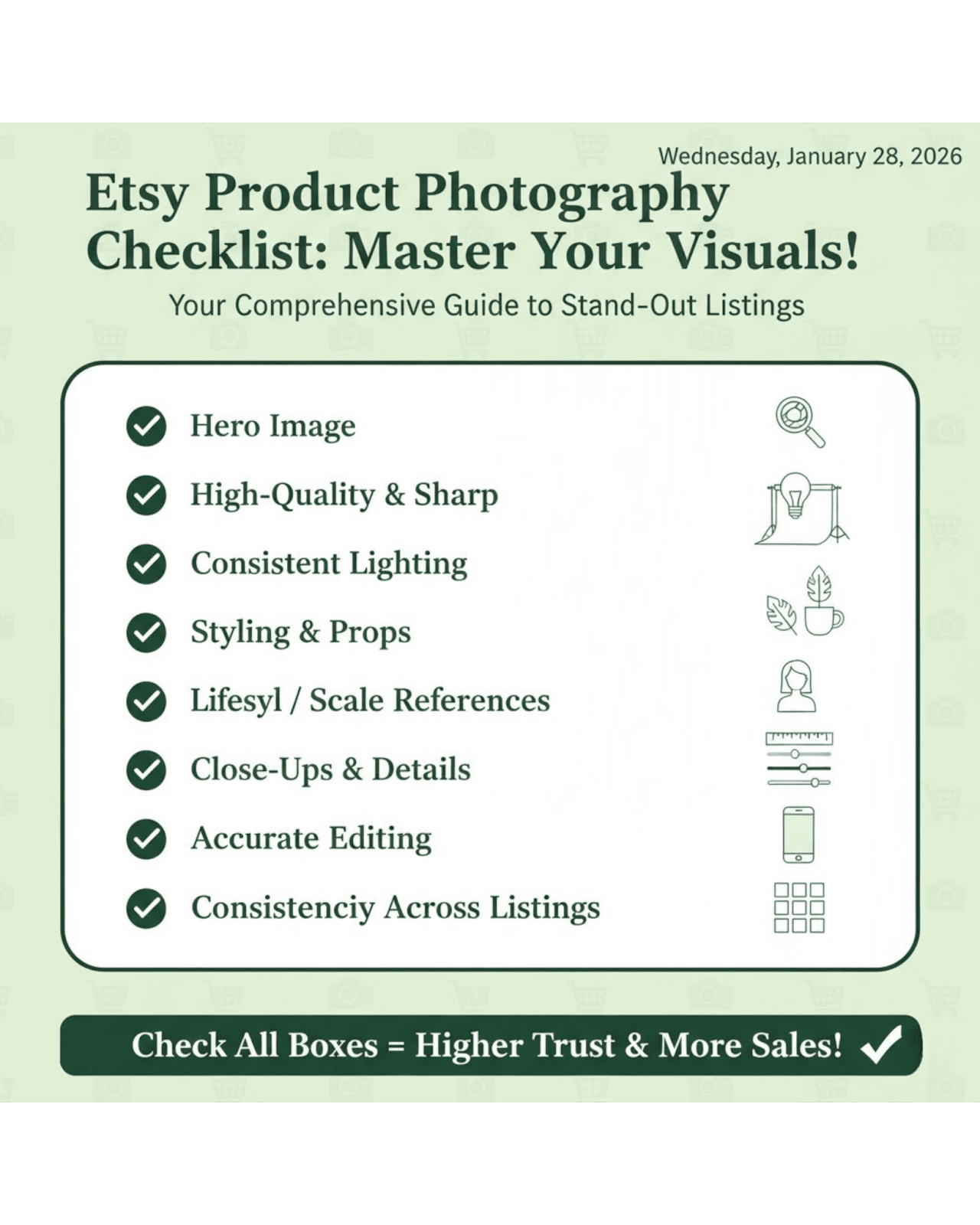
21. Final Checklist: How to Take Photos for Etsy That Convert
Use this checklist to ensure your Etsy photos grab attention, build trust, and drive sales:
Hero Image First: Make the first photo clear, centered, and eye-catching.
High-Quality & Sharp: Avoid blurry or pixelated images.
Consistent Lighting: Use natural or controlled light for even exposure across listings.
Clean Backgrounds: Neutral or simple textures to highlight the product.
Styling & Props: Add context, scale, or lifestyle cues without clutter.
Lifestyle & On-Model Shots: Show how the product is used or worn.
Size & Scale References: Include hands, coins, rulers, or in-context objects.
Close-Ups & Details: Highlight texture, craftsmanship, and material quality.
Accurate Editing: Adjust exposure, sharpness, and color—avoid misleading filters.
Mobile-Ready Composition: Ensure clarity and focus for small screens.
Consistency Across Listings: Keep brand style uniform to build trust.
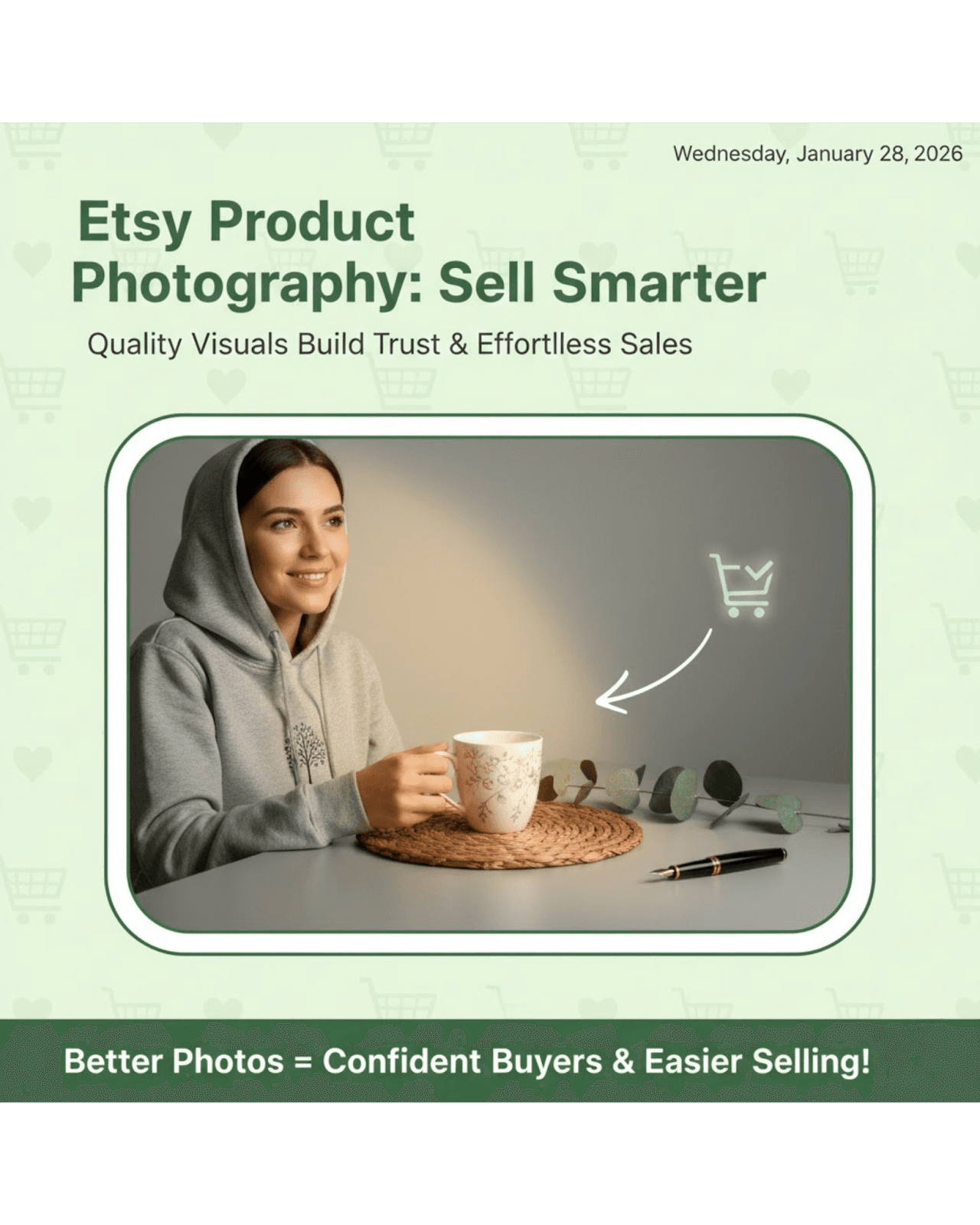
22. Final Thoughts: Better Photos Make Selling Easier
On Etsy, great photos do the selling for you. Clear, consistent, and well-styled images reduce buyer doubt, increase confidence, and make the decision to purchase feel effortless.
Instead of relying solely on descriptions or explanations, focus on showing your product in context, highlighting details, and creating an emotional connection. When buyers can see, trust, and imagine owning your item instantly, sales become easier, more predictable, and sustainable, making strong visuals one of the most powerful tools in your Etsy shop.
