
Apparel Photo Retouching Services: The Complete Guide for Fashion Ecommerce
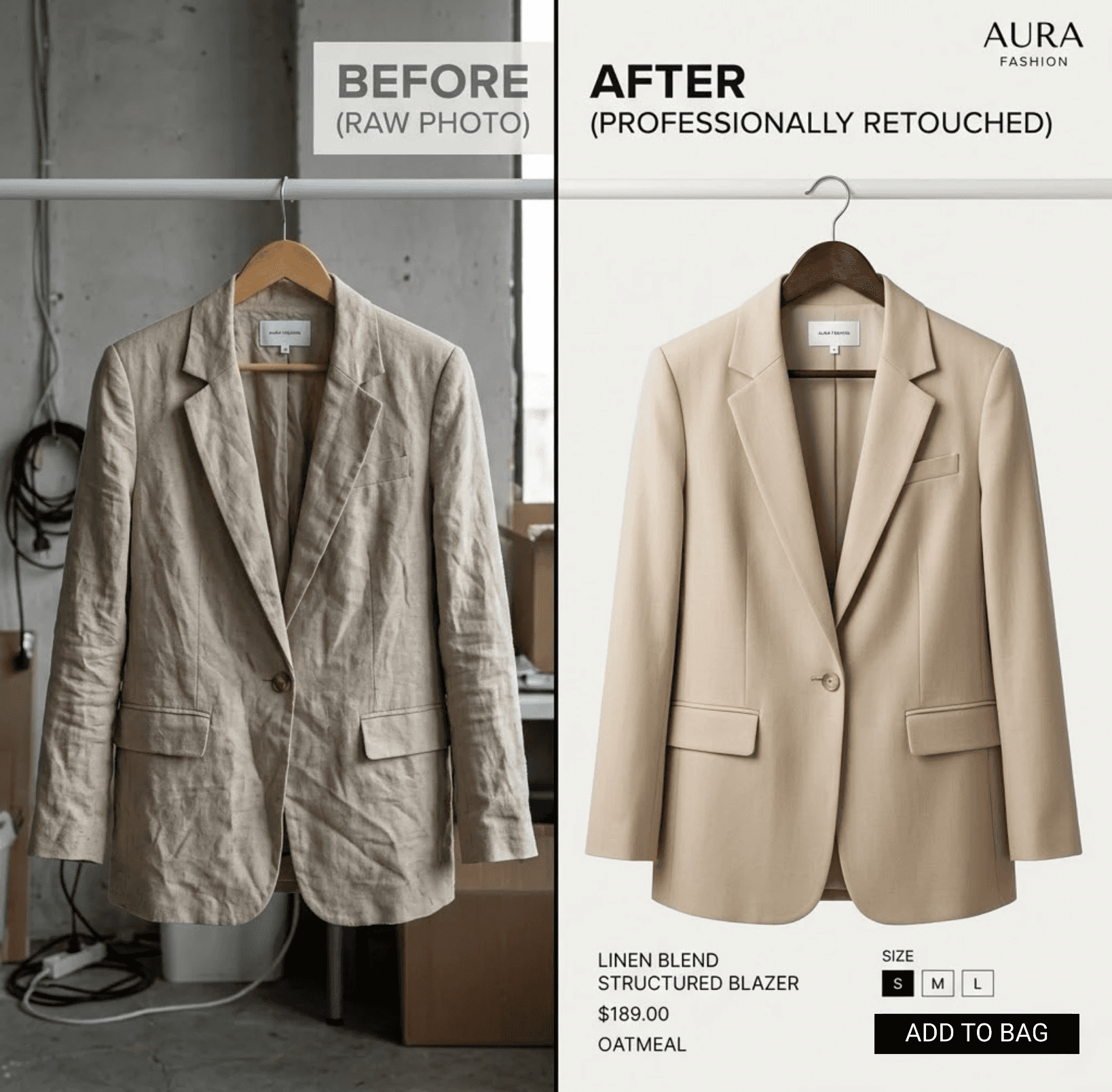
1. Introduction: Why Apparel Photo Retouching Matters in Fashion Ecommerce
In fashion ecommerce, visuals are one of the most important factors influencing purchasing decisions. Unlike physical retail stores where customers can touch fabrics, try on garments, and examine details closely, online shoppers rely entirely on product images to evaluate clothing items.
This makes high-quality apparel imagery essential for online success. Product photos must accurately display the garment’s color, texture, stitching, and fit while maintaining a clean and professional appearance across the entire catalog.
However, raw images captured during photoshoots rarely look perfect. Clothing can appear wrinkled, lighting may distort colors, and backgrounds might contain distractions. Even with professional photography equipment, garments often require post-production editing before they are ready for ecommerce use.
This is where apparel photo retouching services play a critical role.
Professional retouching transforms raw clothing images into polished visuals suitable for:
Ecommerce product pages
Fashion catalogs
Marketplace listings
Advertising campaigns
Social media marketing
In this guide, we’ll explore what apparel photo retouching services include, how they work, typical pricing structures, and how fashion brands scale visual production efficiently in modern ecommerce environments.
2. What Are Apparel Photo Retouching Services?
Apparel photo retouching services involve editing clothing product images to enhance visual quality while preserving the original details of the garment.
These services focus on improving elements such as lighting, color accuracy, fabric texture, and overall presentation without making the clothing appear unrealistic.
Apparel retouching is commonly used by:
Fashion brands
Online clothing stores
Apparel manufacturers
Marketplace sellers
Direct-to-consumer ecommerce brands
The goal is to create clean, consistent, and attractive product photos that accurately represent the clothing item.
Unlike generic image editing, apparel retouching requires specialized knowledge of textiles, lighting, and garment structure to maintain authenticity while improving visual quality.
3. Why Fashion Brands Use Apparel Photo Retouching
Fashion photography often requires extensive post-production work. Even well-organized photoshoots cannot eliminate every visual issue.
For example, garments may arrive at the studio with wrinkles from packaging or transportation. Lighting conditions may alter the perceived color of the fabric, and small imperfections may become noticeable when images are viewed at high resolution.
Apparel retouching helps brands address these challenges by:
Improving Color Accuracy
Lighting conditions during photoshoots can slightly alter the appearance of garment colors. Retouching ensures the product images reflect true-to-life color tones, which helps prevent customer dissatisfaction and returns.
Removing Wrinkles and Imperfections
Clothing often develops wrinkles during handling or transportation. Retouching can smooth these imperfections while maintaining the natural look of the fabric.
Enhancing Fabric Textures
Professional editors highlight textile details such as stitching, weaving patterns, and fabric structure, making garments appear more appealing and realistic.
Maintaining Consistent Visual Style
Fashion brands often maintain strict visual standards across their product catalogs. Retouching helps ensure consistent lighting, backgrounds, and presentation styles across hundreds or thousands of images.
High-quality visuals not only improve the overall look of a store but also increase buyer confidence and conversion rates.
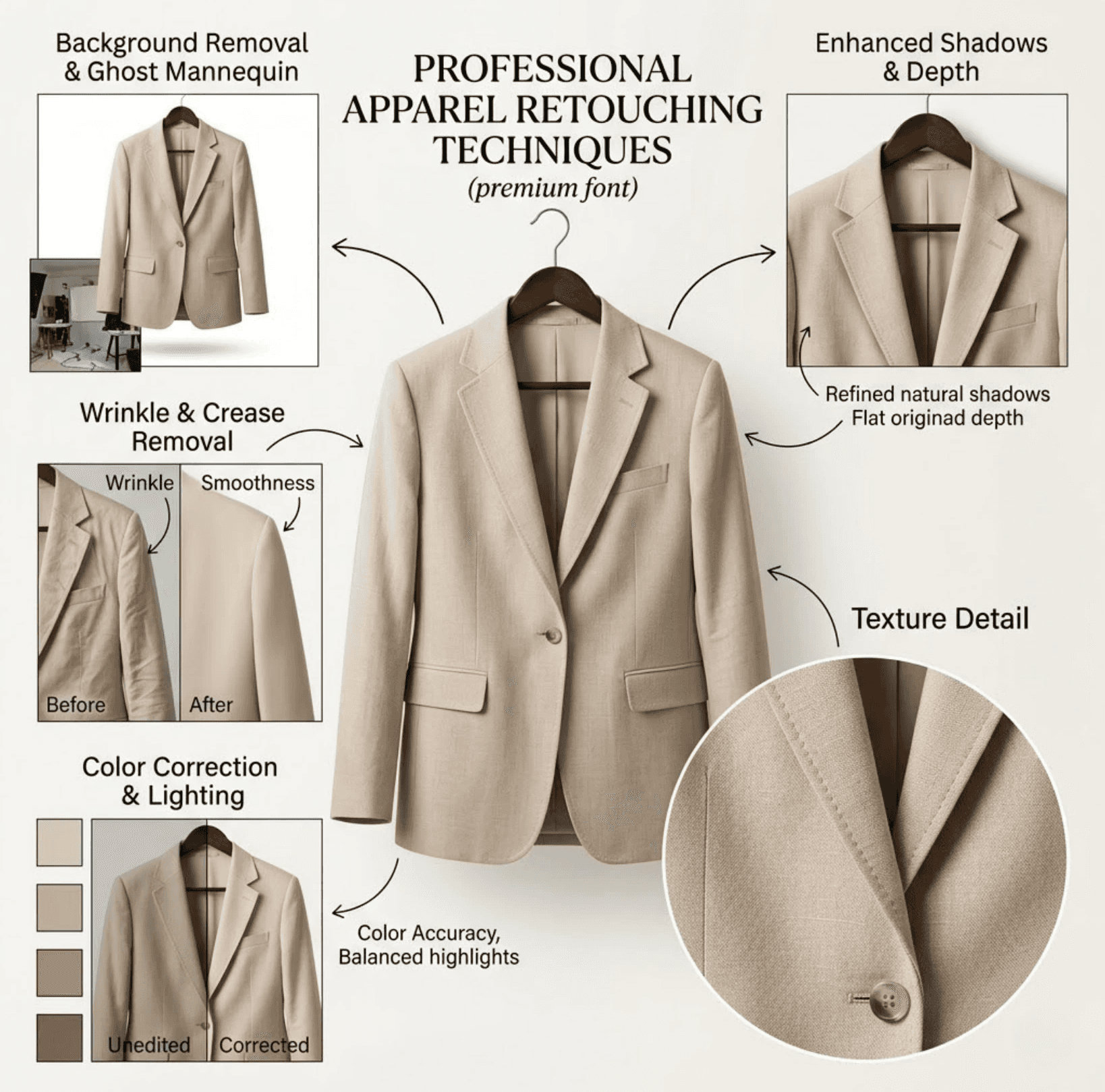
4. Key Services Included in Apparel Photo Retouching
Apparel retouching involves several different editing techniques designed to enhance clothing images.
Background Removal
Background removal is one of the most common editing services. It involves removing distracting backgrounds and replacing them with clean white or neutral backgrounds.
This is particularly important for marketplaces like Amazon and other ecommerce platforms, which often require pure white backgrounds for product listings.
Wrinkle and Crease Removal
Garments frequently develop wrinkles during shipping or styling. Retouching helps smooth these wrinkles while maintaining the natural structure and texture of the fabric.
The goal is to make the garment look clean and well-presented without appearing artificially altered.
Color Correction
Color correction ensures the clothing appears accurate and consistent across different images.
Editors adjust lighting, contrast, and white balance so the garment reflects the real product as closely as possible.
Shadow and Lighting Adjustments
Proper shadows add depth and realism to product images. Retouching professionals often adjust or recreate shadows to give clothing images a three-dimensional appearance.
Fabric Texture Enhancement
High-quality apparel photography highlights important textile details such as:
Stitching patterns
Fabric grain
Embroidery
Material structure
Texture enhancement ensures these details remain visible and attractive in the final image.
5. Ghost Mannequin Editing for Apparel
One of the most widely used techniques in fashion ecommerce is ghost mannequin editing.
During product photography, garments are often photographed on mannequins to maintain their shape. However, mannequins can distract from the garment itself.
Ghost mannequin editing removes the mannequin from the photo while preserving the natural shape of the clothing.
This creates the illusion that the garment is floating or being worn by an invisible model.
Benefits of ghost mannequin editing include:
Clean and professional product presentation
Clear visibility of garment structure
Consistent catalog-style imagery
Focus entirely on the clothing item
Because of these advantages, ghost mannequin editing is widely used by fashion retailers and ecommerce brands.
6. Apparel Photo Retouching for Model Photography
Many fashion brands also photograph clothing on professional models.
While model photography adds lifestyle appeal, it also introduces additional editing requirements.
Typical retouching tasks for model photography include:
Skin Retouching
Minor skin corrections help maintain a polished appearance while preserving a natural look.
Garment Shape Correction
Clothing may shift during photoshoots, requiring adjustments to maintain clean garment lines.
Removing Distractions
Small distractions such as lint, stray threads, or background imperfections may be removed.
Lighting Adjustments
Editors may refine highlights and shadows to enhance the garment’s appearance.
Background Cleanup
Lifestyle shoots often require additional editing to maintain visual consistency across images.
The goal is to ensure both the model and the clothing look polished while still appearing natural and realistic.
7. Pricing for Apparel Photo Retouching Services
Pricing for apparel retouching services varies depending on editing complexity and image volume.
Typical pricing ranges include:
Basic Apparel Retouching
$2 to $5 per image
This usually includes simple tasks like background removal, color correction, and minor wrinkle removal.
Advanced Editing or Ghost Mannequin Work
$5 to $15 per image
More complex edits such as ghost mannequin creation or detailed fabric adjustments fall into this range.
High-End Fashion Retouching
$20 to $50+ per image
Luxury brands and editorial campaigns often require extensive retouching and precision editing.
Factors that influence pricing include:
Editing complexity
Number of images
Turnaround time
Revision requirements
For large ecommerce catalogs, brands may need hundreds or even thousands of images, which makes efficient editing workflows essential.
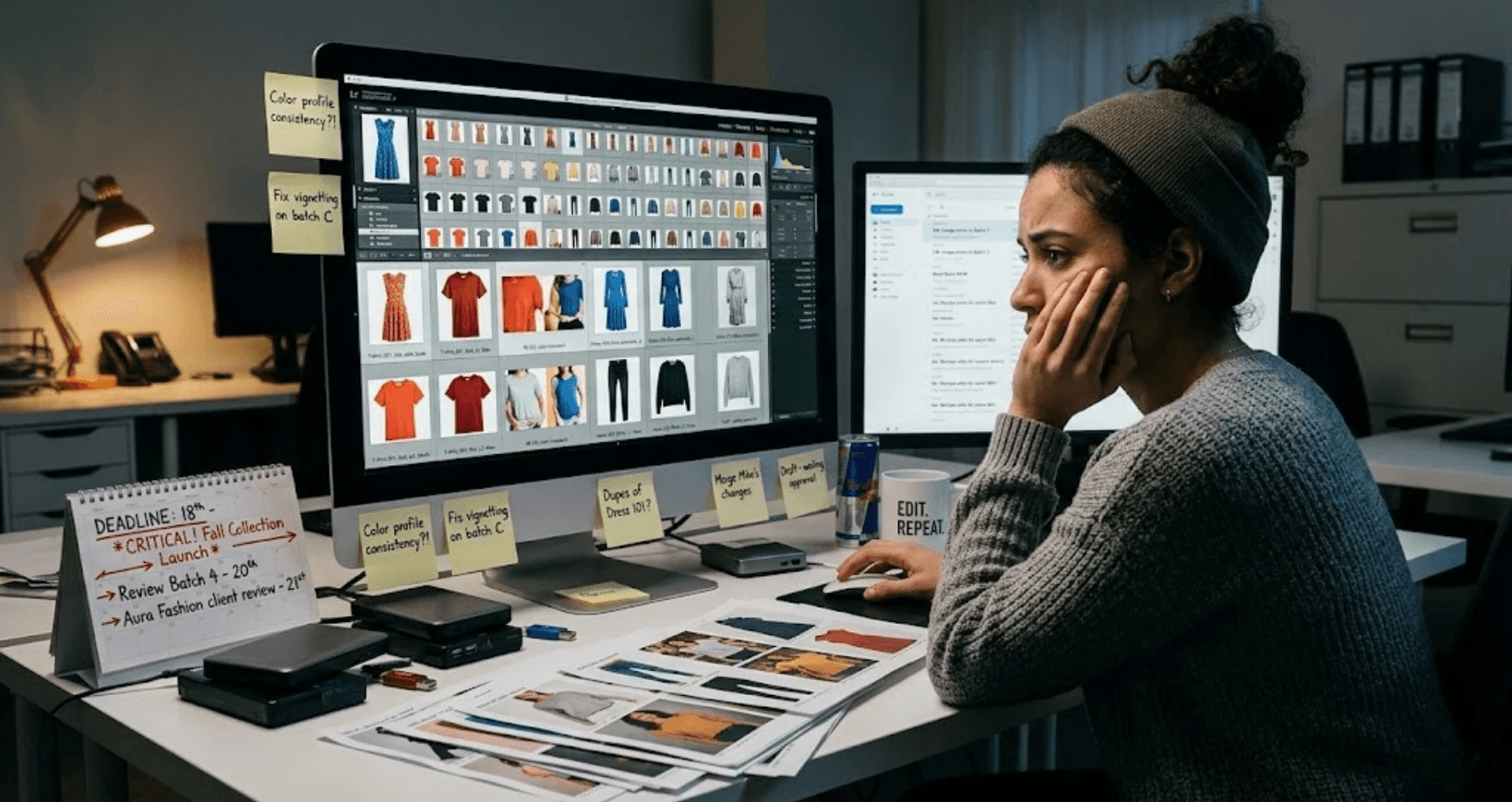
8. Challenges of Scaling Apparel Image Editing
Fashion brands regularly release new collections and seasonal product lines. This creates significant challenges when managing visual production.
Common issues include:
Large Image Volumes
Major collections may include dozens or hundreds of products, each requiring multiple images.
Maintaining Consistent Editing Style
When multiple editors work on a project, maintaining consistent visual quality can be difficult.
Meeting Tight Launch Deadlines
Fashion product launches often operate on strict schedules, requiring fast turnaround times.
Coordinating Multiple Editors
Managing large editing teams can create workflow bottlenecks.
Traditional manual editing workflows can become slow and expensive when scaling large product catalogs.
9. How Fashion Brands Are Scaling Visual Production
To manage visual production more efficiently, many fashion brands are adopting modern workflows that combine traditional editing with automated tools.
Common strategies include:
Batch Editing Workflows
Batch processing allows editors to apply similar adjustments across multiple images simultaneously.
Automated Background Removal
Advanced software can quickly remove backgrounds, reducing manual editing time.
AI-Assisted Retouching Tools
Artificial intelligence tools help speed up tasks such as wrinkle removal and color correction.
Digital Visual Generation
Some platforms now generate additional visual content directly from existing images.
These modern approaches allow brands to reduce production time while maintaining professional-quality visuals.
10. From Flat Product Photos to On-Model Visuals
Traditional apparel retouching focuses on improving existing images. However, many fashion brands now want on-model visuals to better showcase how garments look when worn.
Model photography helps customers understand:
Fit and proportions
Fabric movement
Styling possibilities
However, organizing model photoshoots can be expensive and time-consuming.
Typical requirements include:
Hiring professional models
Booking photography studios
Coordinating stylists and photographers
Managing production schedules
These factors significantly increase production costs.
11. Tool Spotlight: Generating Apparel Model Photos from Product Images
Modern visual generation tools are changing how fashion brands create product imagery.
Platforms like Look Atlas allow brands to transform standard product photos into photorealistic model images.
Instead of organizing large photoshoots, brands can upload product images and generate visuals that show garments worn by models.
These tools preserve important product details such as:
Logos
Fabric textures
Stitching patterns
Material structure
Generated visuals can be used for:
Ecommerce product pages
Advertising campaigns
Social media content
Fashion catalogs
This approach allows brands to produce scalable visual content while maintaining professional quality. With tools like Look Atlas, even simple apparel photos can be transformed into realistic on-model visuals, making it easier to showcase products consistently and at scale.

12. Choosing the Right Apparel Photo Retouching Service
Selecting a reliable retouching provider is essential for maintaining consistent product imagery.
When evaluating services, brands should consider:
Portfolio Quality
Review examples of previous apparel editing work.
Fashion Photography Experience
Editors familiar with fashion imagery understand garment details and textile textures.
Turnaround Time
Fast production cycles are essential for product launches.
Pricing Transparency
Clear pricing structures help avoid unexpected costs.
Editing Consistency
Consistency across large image sets is critical for ecommerce catalogs.
Working with experienced editors ensures clothing images appear accurate, attractive, and professionally presented.
13. Common Apparel Photo Retouching Mistakes
While editing improves image quality, excessive retouching can make clothing appear unrealistic.
Common mistakes include:
Over-Smoothing Fabrics
Removing too much texture can make garments appear artificial.
Unrealistic Color Adjustments
Incorrect color grading can misrepresent the product.
Removing Too Much Garment Texture
Important details such as stitching or fabric grain should remain visible.
Inconsistent Shadows
Improper shadows can make garments appear unnatural.
Maintaining realism is essential because customers rely on images to judge product quality.
14. Future Trends in Fashion Product Imagery
Fashion ecommerce continues to evolve as technology improves visual production processes.
Key industry trends include:
AI-Assisted Photo Editing
Artificial intelligence is helping automate repetitive editing tasks.
Automated Background Generation
AI can generate studio-style backgrounds quickly.
Scalable Model Photography
Digital tools allow brands to create on-model visuals without organizing full photoshoots.
Faster Visual Production Pipelines
Modern workflows allow brands to produce large volumes of images quickly.
Brands that adopt these technologies can launch collections faster and maintain consistent branding across platforms.
15. Final Thoughts
Apparel photo retouching services play a vital role in fashion ecommerce by transforming raw product photos into polished visuals that attract buyers.
High-quality product imagery helps communicate fabric details, garment structure, and overall product quality, which improves buyer confidence and strengthens brand perception.
However, as ecommerce catalogs grow larger and product launches become more frequent, many fashion brands are combining traditional retouching workflows with scalable visual production tools.
By blending professional editing with modern technology, brands can maintain high-quality imagery while producing content efficiently and supporting long-term ecommerce growth.
