
Etsy Product Photography: The Ultimate Guide to High-Converting Listings (2026)
1. Introduction
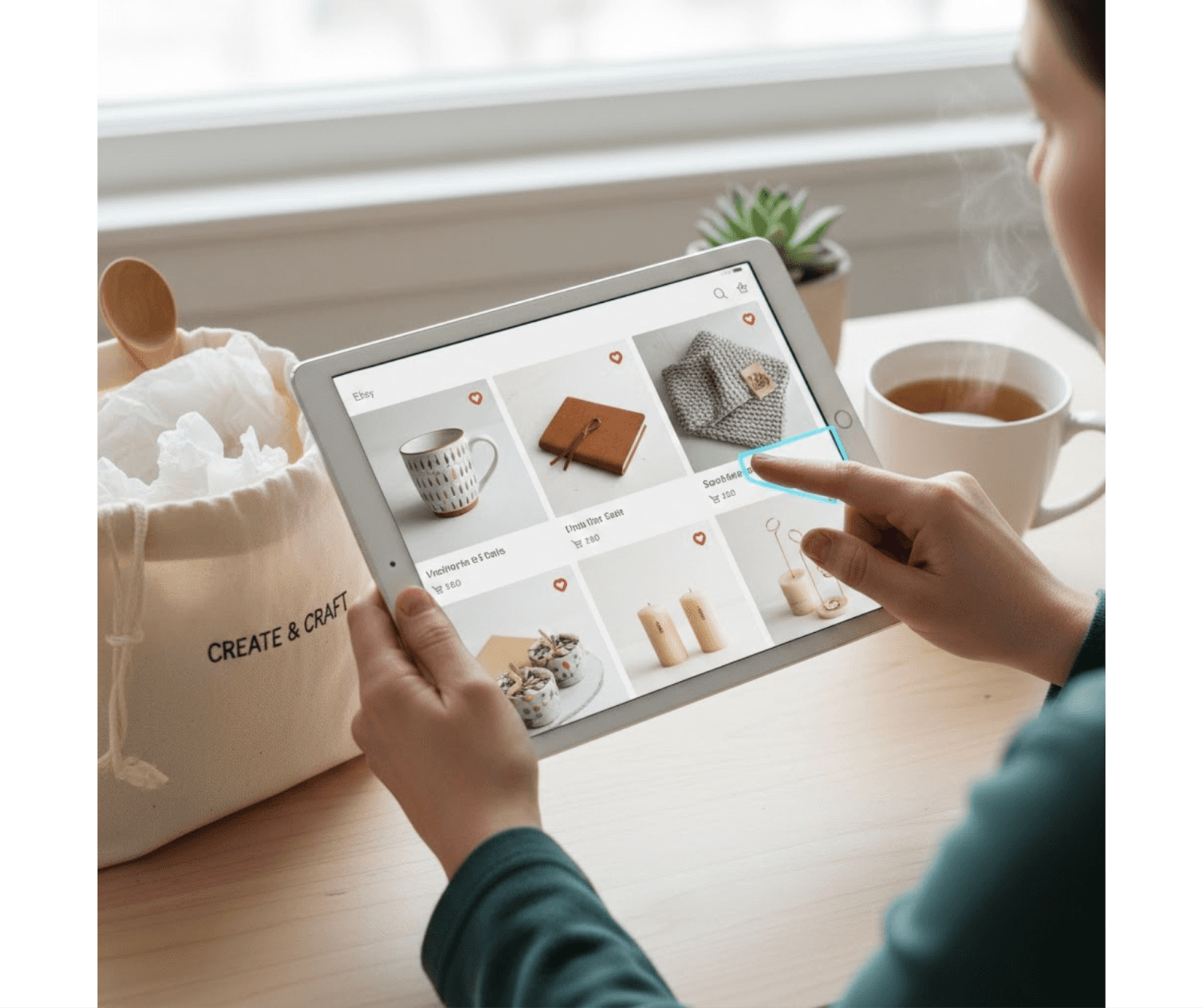
Etsy is a visual-first marketplace. Buyers don’t scroll slowly: they skim, compare multiple listings side by side, and often make decisions before reading titles or descriptions. That means your product photos do more than show your item, they sell it.
Even the best product can struggle if your images fail to communicate quality, scale, use, and emotion instantly.
In this guide, you’ll learn everything you need to know about Etsy product photography: the essential types of images, styling and background tips, lighting setups, editing best practices, common mistakes to avoid, and SEO strategies.
E-commerce brands are drastically reducing overhead by swapping expensive studio days for AI-driven solutions. Tools like Look Atlas allow sellers to turn basic product shots into premium on-model imagery, maximizing visual impact while minimizing production costs.
Whether you’re just starting or looking to scale your Etsy shop, this guide will help you create photos that rank higher and convert more visitors into buyers.
2. Why Etsy Product Photography Matters
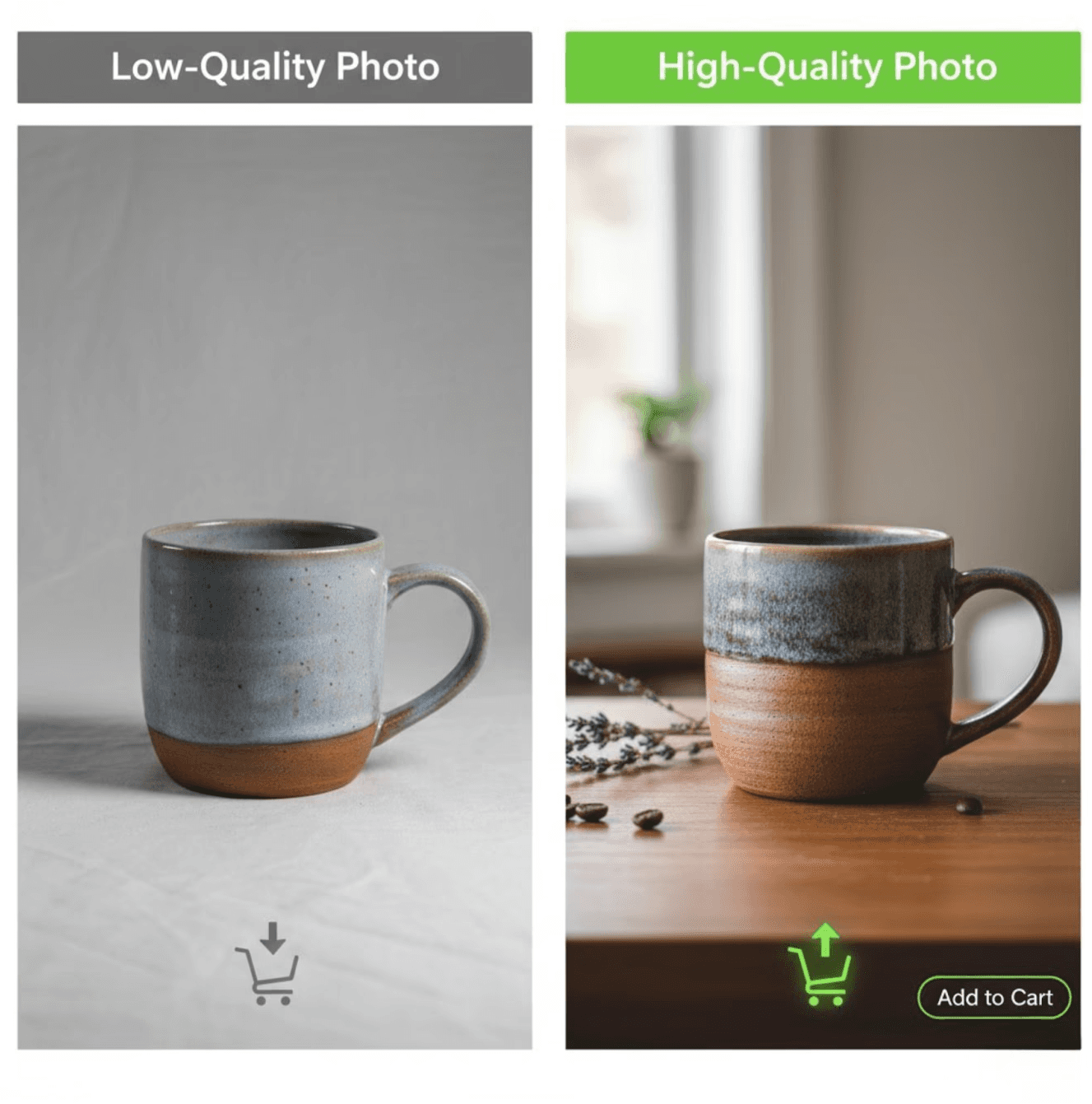
On Etsy, your photos are often the first, and sometimes the only, thing buyers see. Strong visuals:
Influence trust and perceived quality
Help justify pricing
Directly impact your conversion rate, which indirectly boosts search ranking
Etsy listings with polished, high-quality photos consistently outperform similar products with weaker visuals. Simply put: your photos sell your product before your words do.
3. How Etsy Uses Product Images (Algorithm + Buyer Behavior)
Understanding Etsy’s algorithm and buyer behavior is key to optimizing your listings.
Etsy Search Behavior
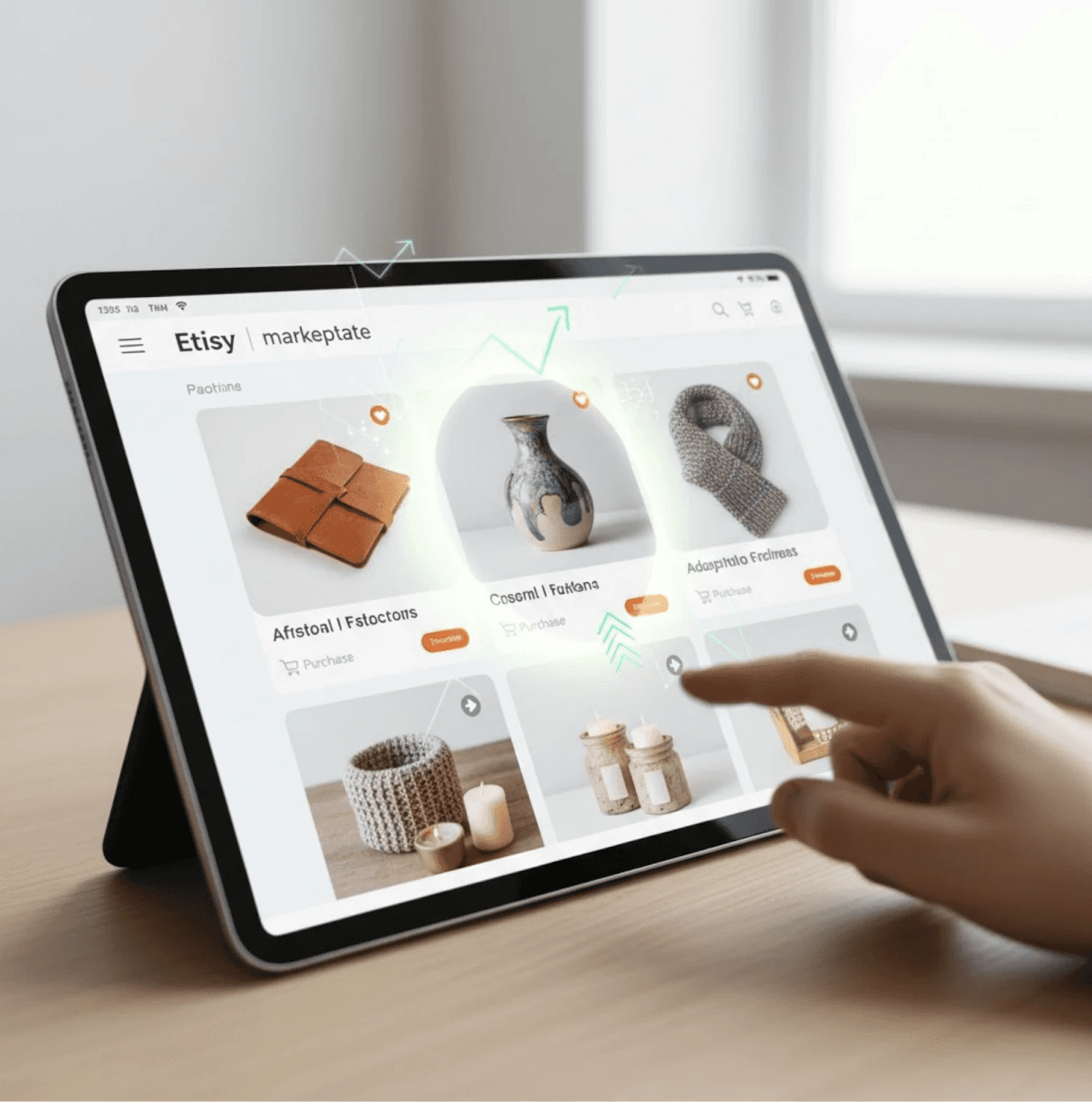
Etsy favors listings with high engagement: clicks → favorites → purchases
Better images get more clicks
Listings that convert well gain more visibility in search
Buyer Behavior
Buyers typically scroll quickly, compare images visually, and click the listing that stands out
Decisions happen in 5 to 10 seconds, so your main image must capture attention instantly
If your hero image doesn’t stand out, the rest of your listing might never be seen.
4. Etsy Image Requirements (Technical Guidelines)
Before diving into creative styling, make sure your images meet Etsy’s technical standards:
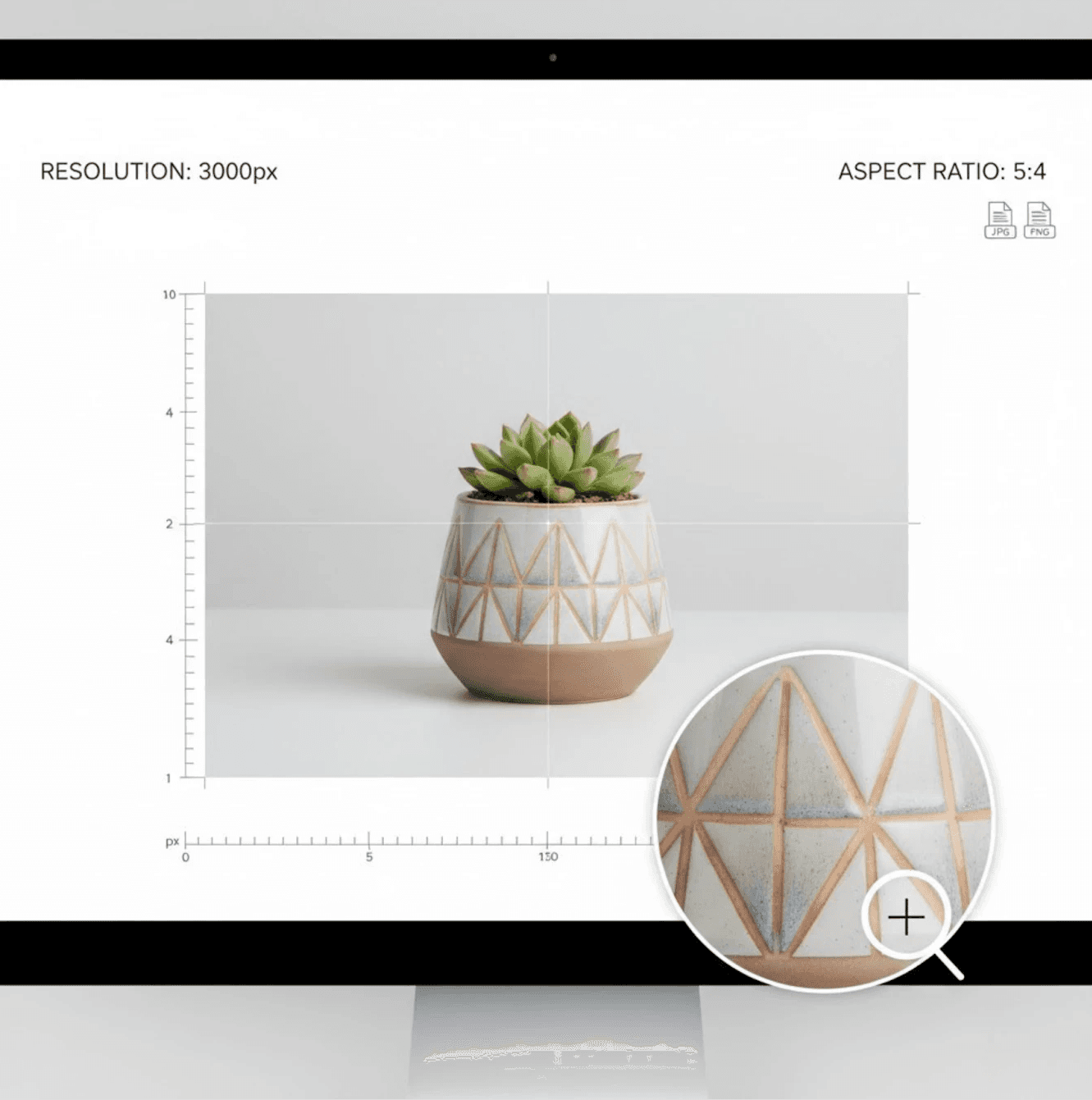
Minimum size: 2000px on the shortest side
Ideal size: 3000 to 4000px wide
Aspect ratio: 5:4 or square
Format: JPG or PNG
Resolution: 72 DPI (web optimized)
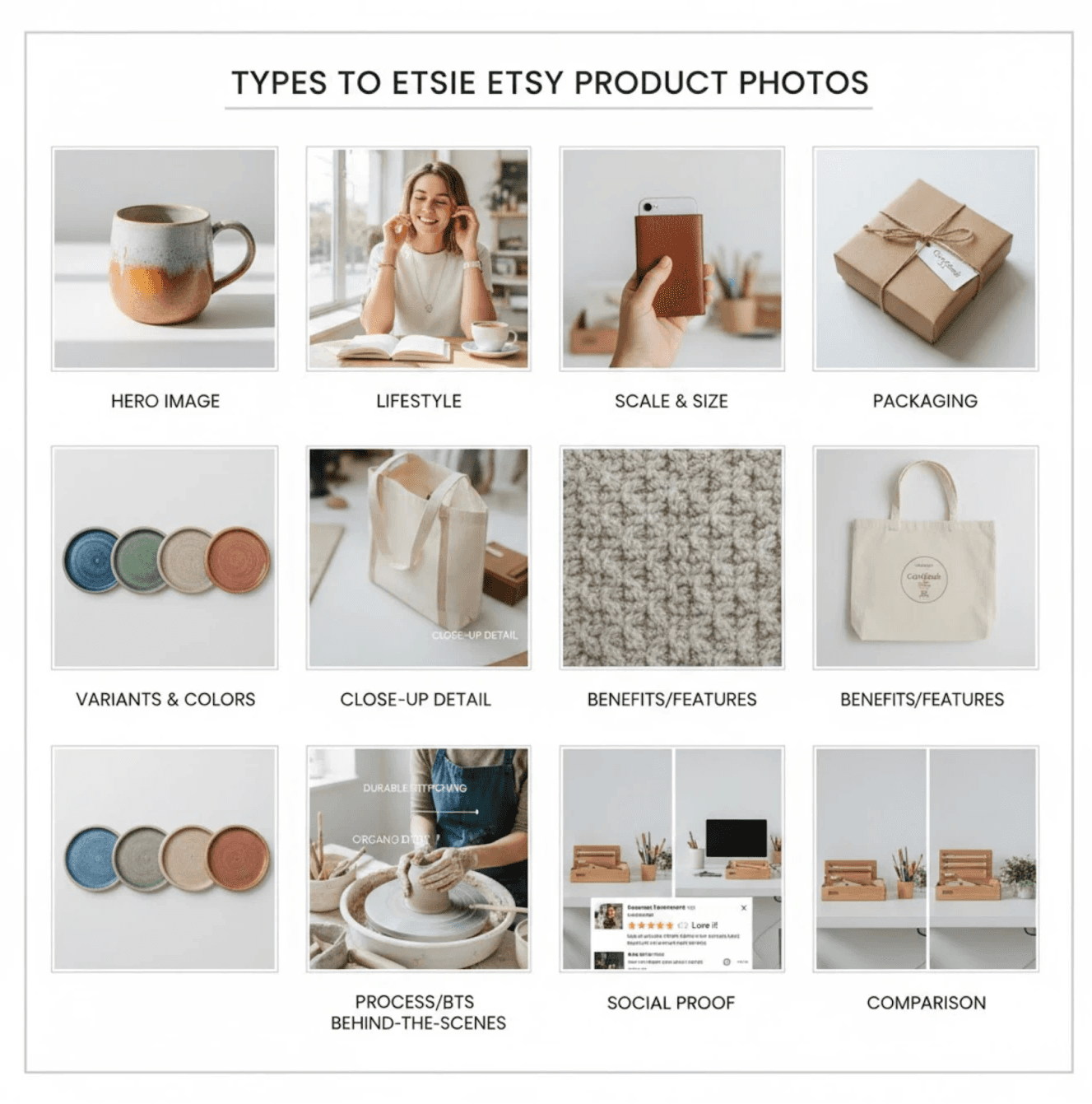
5. The 10 Essential Types of Etsy Product Photos
A high-converting Etsy listing usually includes 8 to 10 images, each answering a key buyer question and showcasing your product from different angles and contexts.
1. Hero Image (Main Thumbnail)
Clean, uncluttered background
Strong, natural lighting
Product fully visible
This is the image that stops the scroll and encourages clicks.
2. Lifestyle Image
Show the product in real-life settings (jewelry worn by a model, wall art in a room, clothing styled naturally)
Helps buyers imagine ownership and boosts emotional connection.
3. Close-Up Detail Shots
Highlight textures, materials, prints, or craftsmanship
Builds trust in quality.
4. Scale & Size Reference Image
Product in hand or next to familiar objects
Jewelry on a body or clothing on a model
Never rely on measurements alone, visual context matters.
5. Packaging Image
Show beautiful packaging to increase perceived value, especially for gifts or premium items.
6. Variant & Color Options Image
Display all variations clearly
Label each visually
Reduces confusion and support requests.
7. Process or Behind-the-Scenes Image
Show how your product is made
Highlight materials or studio setup
Adds authenticity and supports handmade credibility.
8. Benefits or Feature Graphic
Subtle text overlays for care instructions or key features
Keep text minimal and mobile-friendly.
9. Social Proof or Use Case Image
Product in real homes or daily life scenarios
Increases relatability and trust.
10. Comparison Image (Optional)
Compare sizes, materials, or quality
Helps buyers justify their purchase decision.
Pro Tip: In a visually driven marketplace, the quality of your assets defines your brand authority.
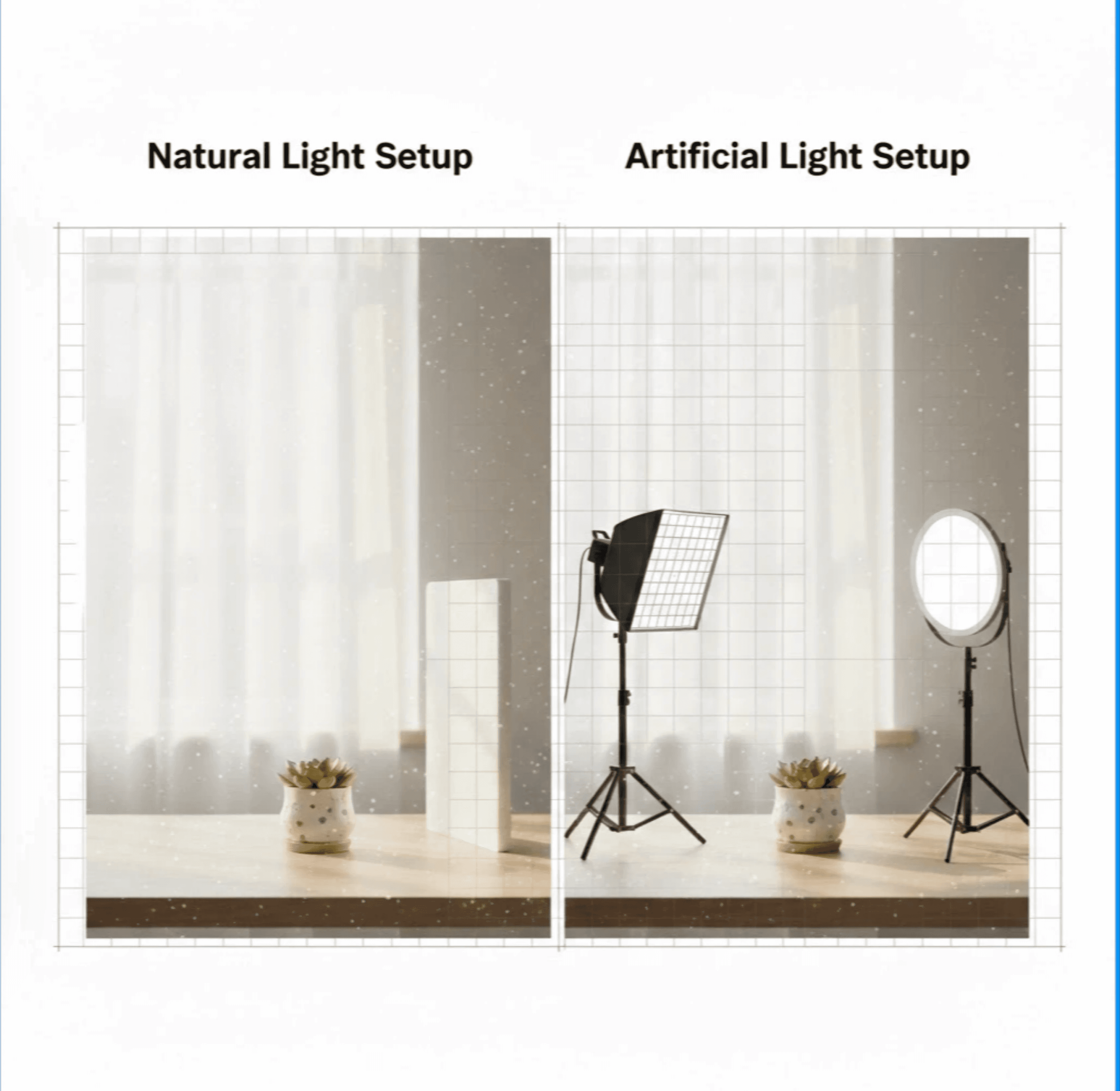
6. Lighting for Etsy Product Photography
Natural Light Setup (Beginner-Friendly)
Shoot near a large window
Use sheer curtains to soften light
Morning or late afternoon is best
White foam boards act as reflectors
Avoid harsh midday sunlight that creates shadows.
Artificial Light Setup (Professional)
Softbox or LED panels at a 45° angle
Keep lighting consistent across all images
Avoid mixed color temperatures
Consistency builds trust.
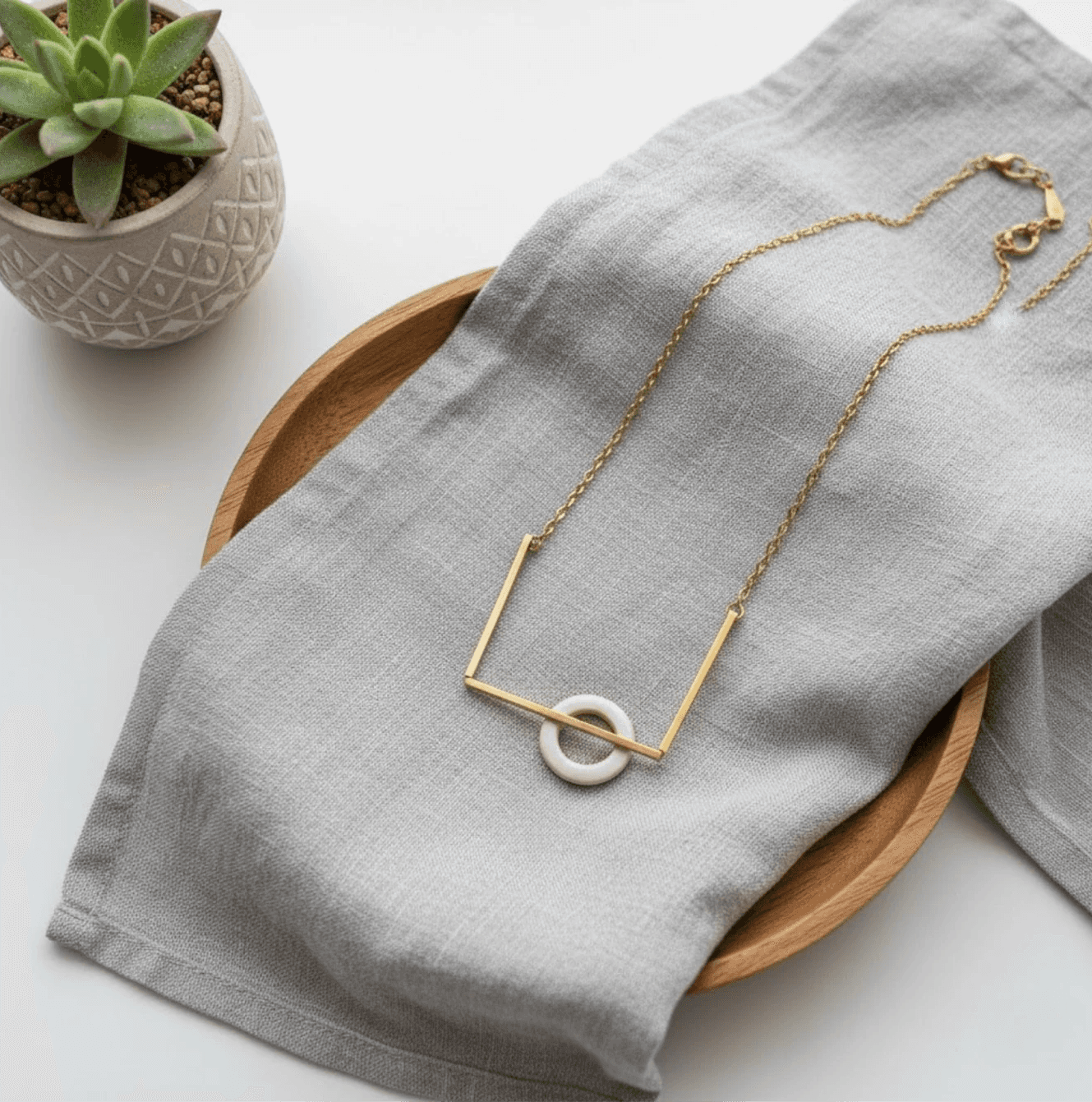
7. Background & Styling Tips
Best Backgrounds:
White, light gray, or neutral beige
Soft textures like linen or wood
Avoid busy or distracting patterns
Styling Best Practices:
Use props that support the product, not compete
Align props with your brand style
Keep a consistent color palette
Remember: minimalism converts better
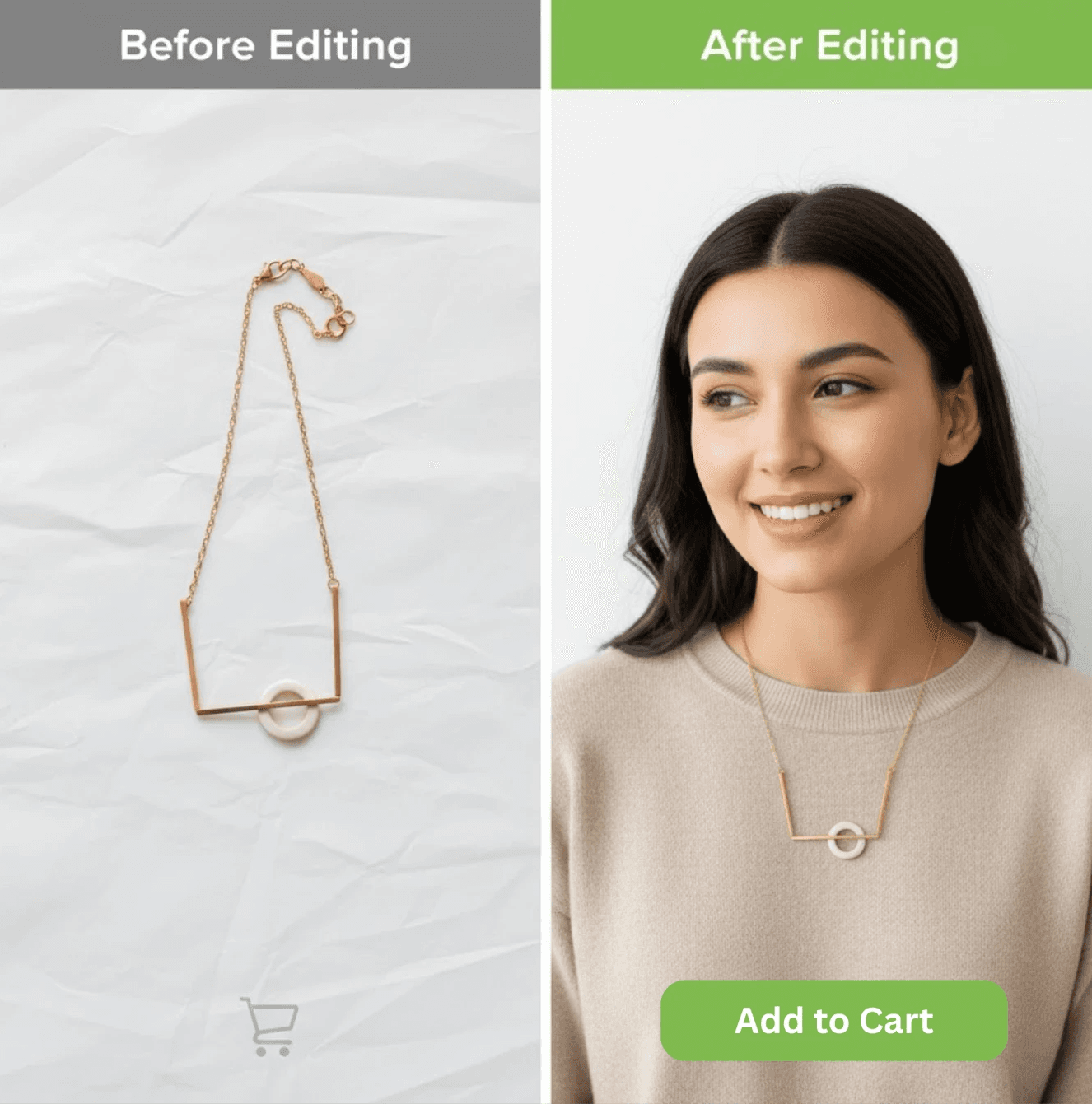
8. Editing Etsy Product Photos
Editing should enhance your product without misleading buyers. Correct exposure, white balance, and sharpness make your items look professional, while minor dust removal cleans up distractions. Avoid over-saturation, heavy filters, or misrepresenting colors, accuracy builds trust and reduces returns,
Streamline your content pipeline by integrating advanced AI synthesis like Look Atlas. Empowers brands to transform flat-lay assets into realistic model renders, significantly reducing time-to-market while maintaining a high-converting aesthetic.

9. Mobile Optimization for Etsy Images
Over 60% of Etsy traffic comes from mobile devices, so your images need to communicate instantly and clearly.
Tips for mobile-friendly photos:
Center your product for immediate focus
Avoid tiny details in the main image, they may not be visible on small screens
Use bold compositions that stand out while scrolling
Keep any text large, clear, and readable
10. SEO Optimization for Etsy Product Photography
Even though Etsy doesn’t “read” images the way Google does, image SEO still impacts visibility and conversions.
Key tips:
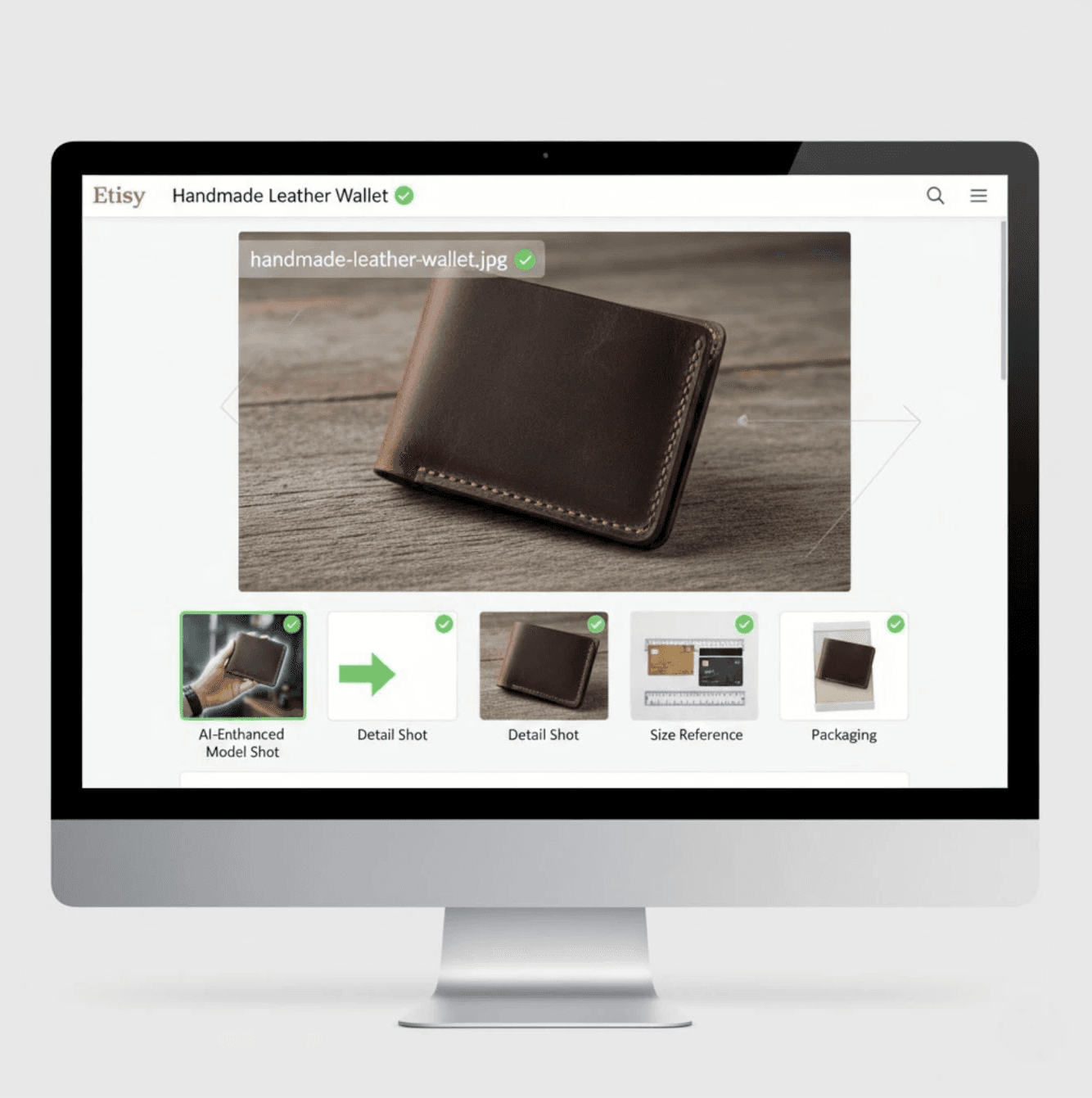
File naming: Use descriptive, keyword-rich names
Example:etsy-product-photography-handmade-leather-wallet.jpgImage order strategy: Lead with your most persuasive images, followed by informational or supporting shots
Visual relevance: Make sure images reflect your title, category, and listing keywords
Maximize conversion rates by helping customers visualize fit and form. AI tools like Look Atlas bridges the visual disconnect by placing products on realistic models, creating a more immersive and persuasive browsing experience.
11. Common Etsy Product Photography Mistakes
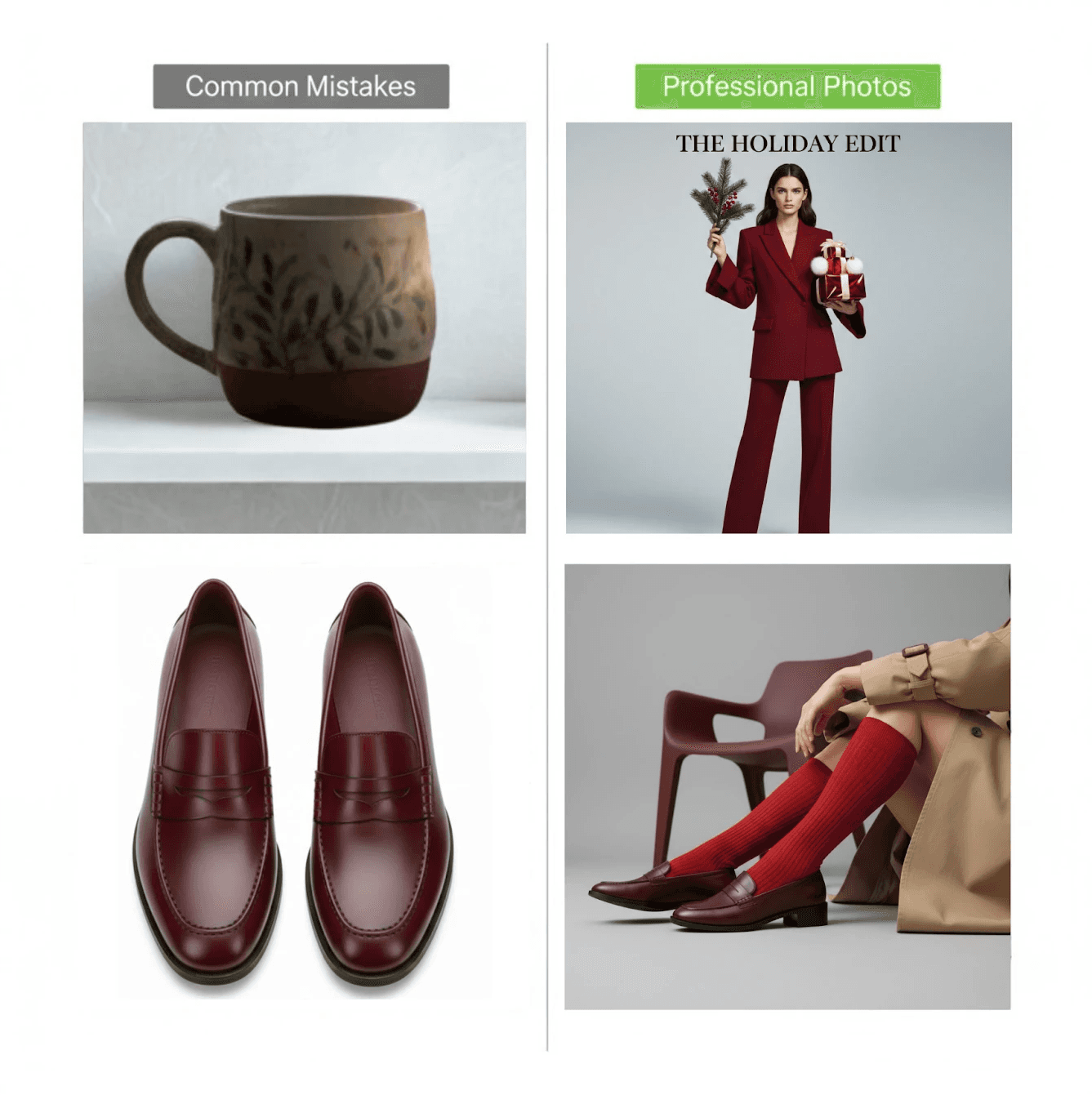
Even small errors can reduce buyer trust and lower conversions. Avoid these common mistakes:
Dark or blurry photos - ensure your product is always well-lit and sharp
Inconsistent lighting - keep lighting uniform across all images
Busy props or backgrounds - distractions take attention away from your product
Misleading colors - always represent your product accurately
Low-resolution images - pixelated photos look unprofessional
12. DIY vs Professional Photography
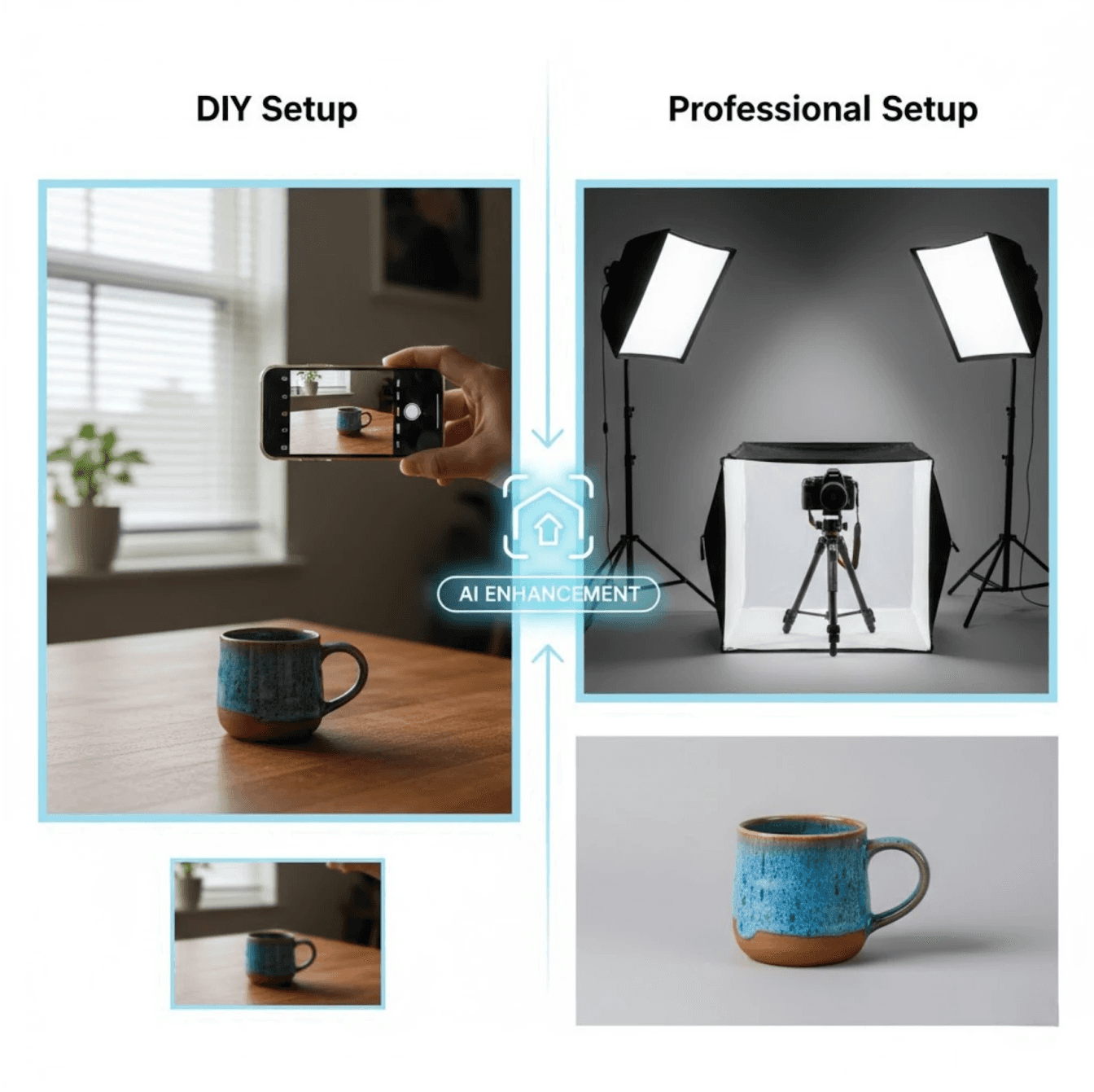
When it comes to product photos, sellers often weigh DIY vs professional approaches.
DIY Photography
Pros: Low cost, full creative control, easy to update quickly
Cons: Steeper learning curve, limited by equipment and lighting
Professional Photography
Pros: High-quality images, consistent branding, saves time
Cons: Higher cost, less flexibility for quick updates
Tip:Many sellers start DIY and later explore AI tools to achieving a polished look without the expense of a full studio.

13. Using AI Tools for Etsy Product Photography
AI tools can help Etsy sellers elevate their product visuals without a full studio setup. Key benefits include:
Cleaning up backgrounds for a polished look
Creating lifestyle mockups to show products in real-life contexts
Generating on-model images for better scale and fit visualization
Producing professional scenes quickly and consistently
When used thoughtfully, AI can reduce costs while maintaining high visual standards.
14. Building a Consistent Visual Brand on Etsy
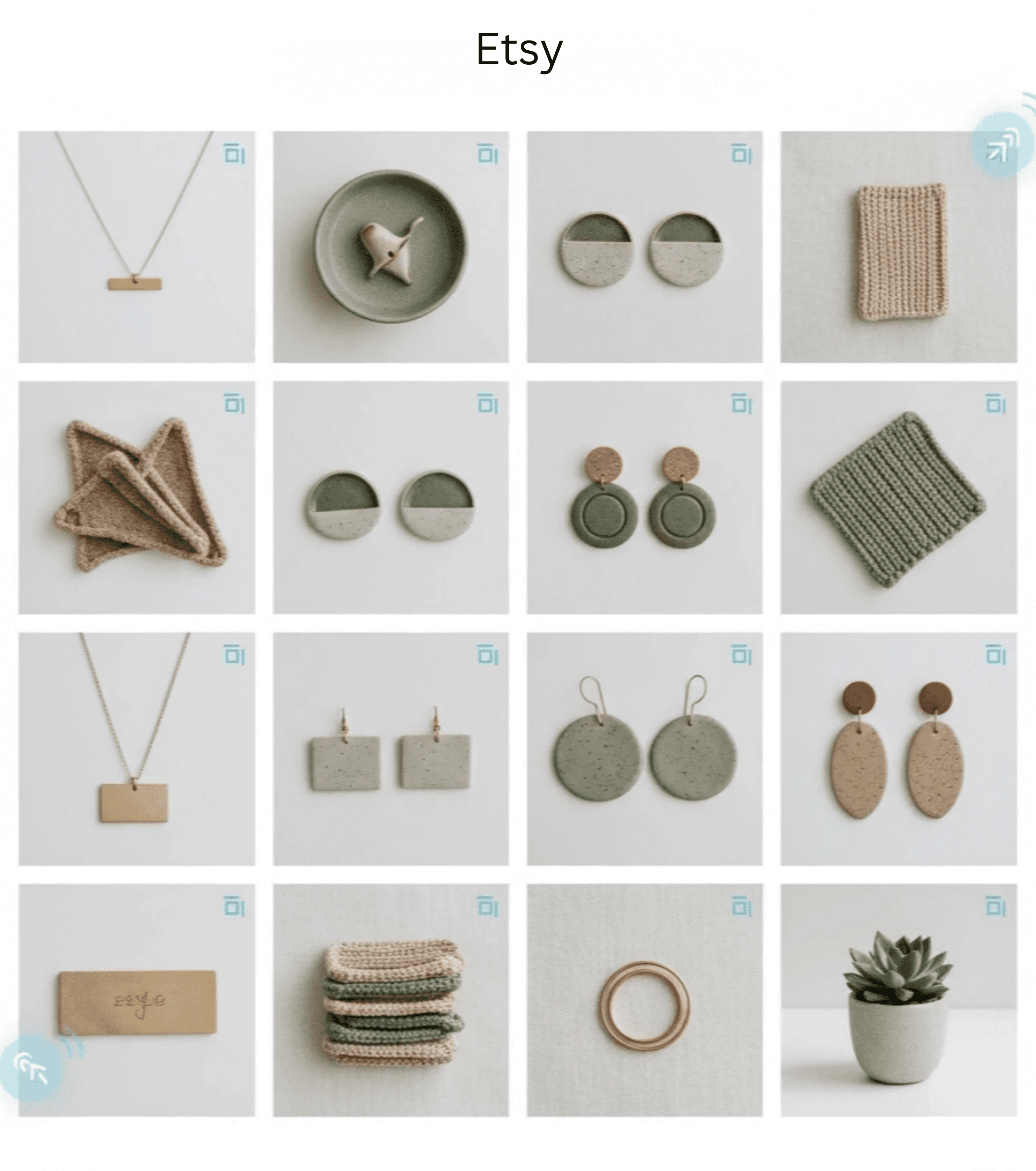
Consistency is key to recognition, trust, and repeat purchases. Focus on:
Same lighting style across all listings
Similar backgrounds for a cohesive look
Unified color palette that matches your brand
Repeatable compositions to make your shop visually organized
Many sellers use AI-powered tools to maintain consistent lighting, backgrounds, and styling across large inventories, helping their shop look professional and trustworthy without manual effort.
15. Using AI to Upgrade Product Photography (Without Expensive Photoshoots)
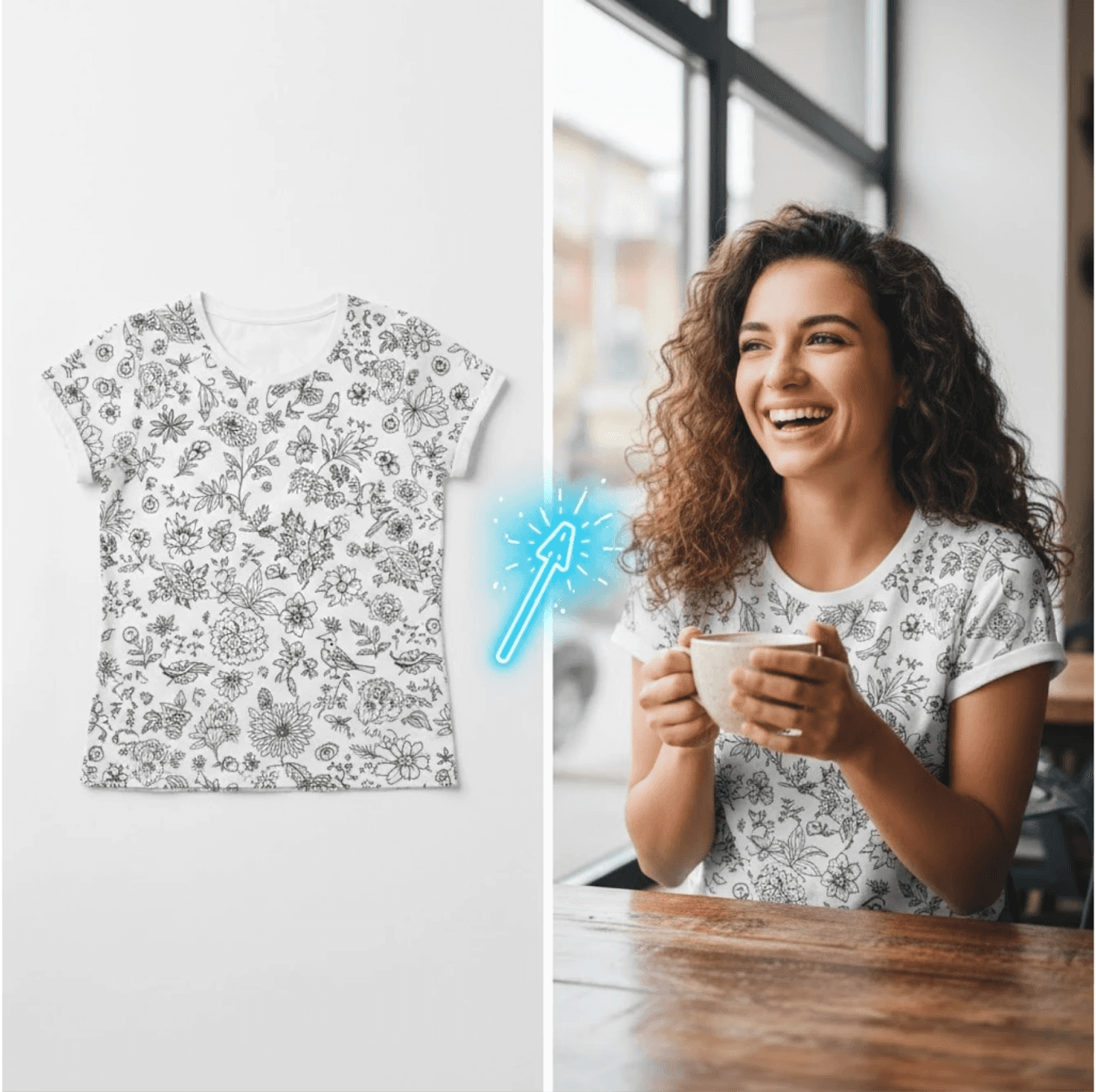
For Etsy categories like fashion, eyewear, and lifestyle, buyers want to see products worn or in real-life contexts. Traditional photoshoots can be costly and time-consuming, especially for shops with large or fast-moving catalogs.
AI tools now offer a solution:
Convert flat product photos into photorealistic on-model images
Preserve fine details like logos, textures, and patterns
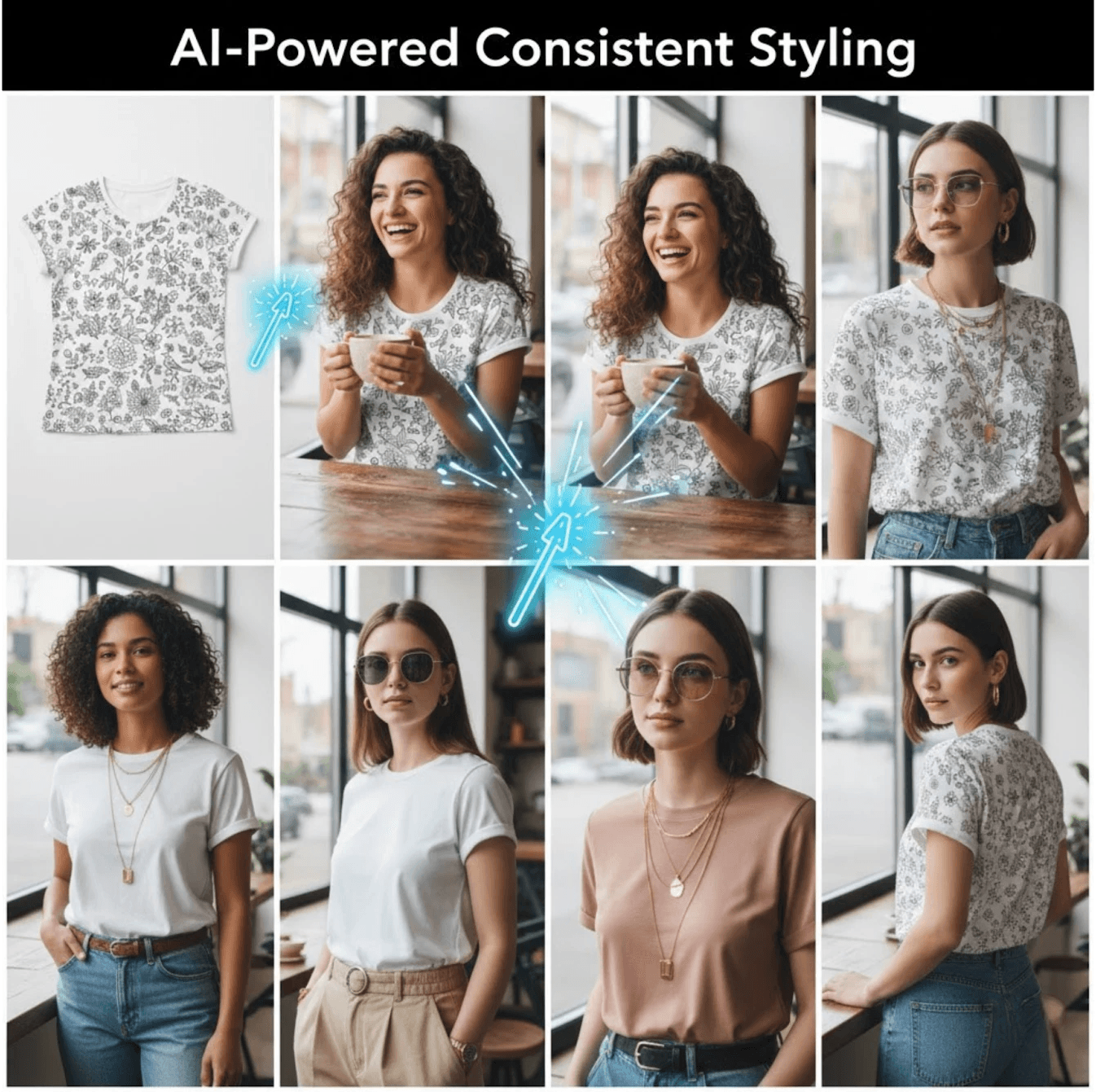
Control model type, pose, background, and lighting
Produce images suitable for listings, ads, catalogs, and social media
16. When AI Makes Sense for Etsy Sellers
AI-powered tools are especially useful for sellers who:
Sell clothing, eyewear, or wearable accessories
Need multiple model styles or poses for a single product
Launch new products frequently
Want consistent visuals across the shop
Want to test new products before investing in full photoshoots
AI tools like Look Atlas, doesn’t replace creativity, it removes friction and scales your visuals efficiently, helping sellers maintain professional, high-converting listings without the cost and effort of traditional photography.
17. Final Thoughts
Etsy product photography isn’t just about pretty pictures, it’s about communicating value, quality, and context instantly.
High-performing listings typically combine:
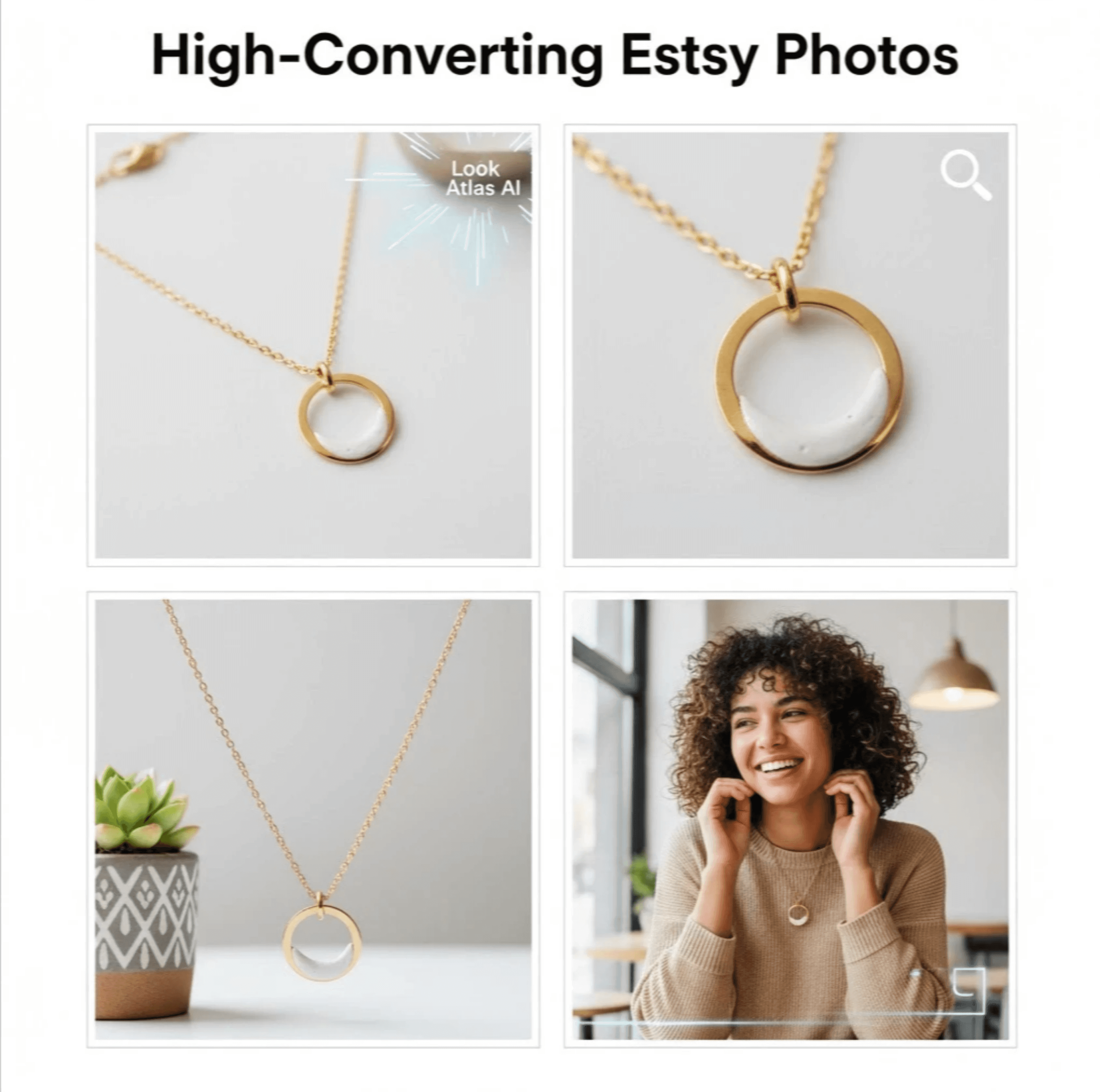
Clean hero images
Close-up detail shots
Clear scale references
Lifestyle or on-model visuals
Modern AI tools, bridging the gap between simple photos and high-converting visuals without the cost of traditional shoots.
In a competitive marketplace, your photos are your strongest sales asset. Clear, consistent, and professional imagery can make the difference between a scrolling buyer and a completed purchase.
