
How to Increase Etsy Traffic: A Practical Guide for Sustainable Shop Growth
1. Introduction: Why Etsy Traffic Is the Real Growth Lever
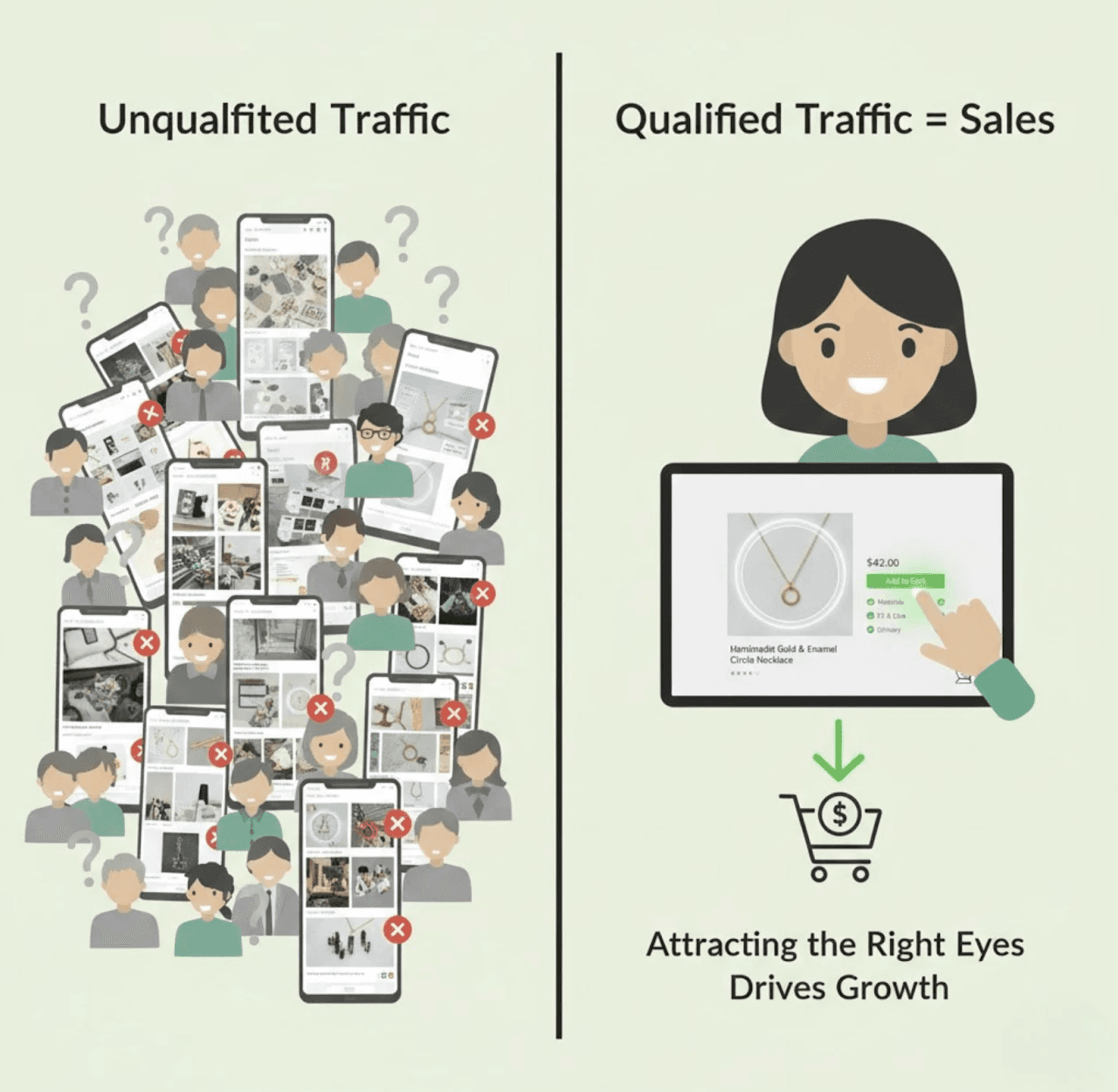
Many Etsy sellers assume that slow sales are a sign of poor product quality. In reality, most shops offer well-made, thoughtful, and competitively priced items, yet still struggle to generate consistent sales. The main challenge? Traffic. Not just any traffic, but the right traffic, visitors who are actively looking for what you sell and are ready to buy.
Why Most Etsy Sellers Struggle With Traffic:
A common mistake is focusing on more views rather than qualified traffic. High traffic numbers might look impressive, but if visitors aren’t the right audience or your listing doesn’t meet their expectations, those clicks rarely convert into sales. That’s why some shops with fewer views outperform stores with thousands of visitors.
Views vs. Qualified Traffic:
It’s important to understand the difference:
Views are simply impressions, people scrolling past or clicking briefly.
Qualified traffic comes from buyers who are searching for your type of product, understand its value, and feel confident enough to purchase.
The key to Etsy success is attracting qualified visitors, so when they land on your listing, they immediately think: “This is exactly what I’m looking for.”
What This Article Will Cover
In this guide, we’ll break down how successful Etsy sellers attract qualified traffic and turn it into sales. You’ll learn:
How SEO and search intent drive the right visitors.
How high-quality product images and visuals influence buying decisions.
Why mobile optimization is crucial for modern Etsy shoppers.
How buyer psychology and trust signals boost conversions.
The Core Takeaway
Etsy growth doesn’t come from hacks, shortcuts, or chasing algorithms. It comes from alignment, matching keywords, visuals, and buyer expectations. When all these elements work together, traffic becomes predictable, conversions rise, and sales follow naturally.
2. How Etsy’s Search Algorithm Actually Works (Simplified)
Understanding Etsy SEO is essential for attracting the right buyers. While it shares some similarities with Google SEO, Etsy has its own rules and priorities. The platform isn’t just about showing your listing, it’s about matching buyers with products they are most likely to purchase.
Etsy SEO vs. Google SEO
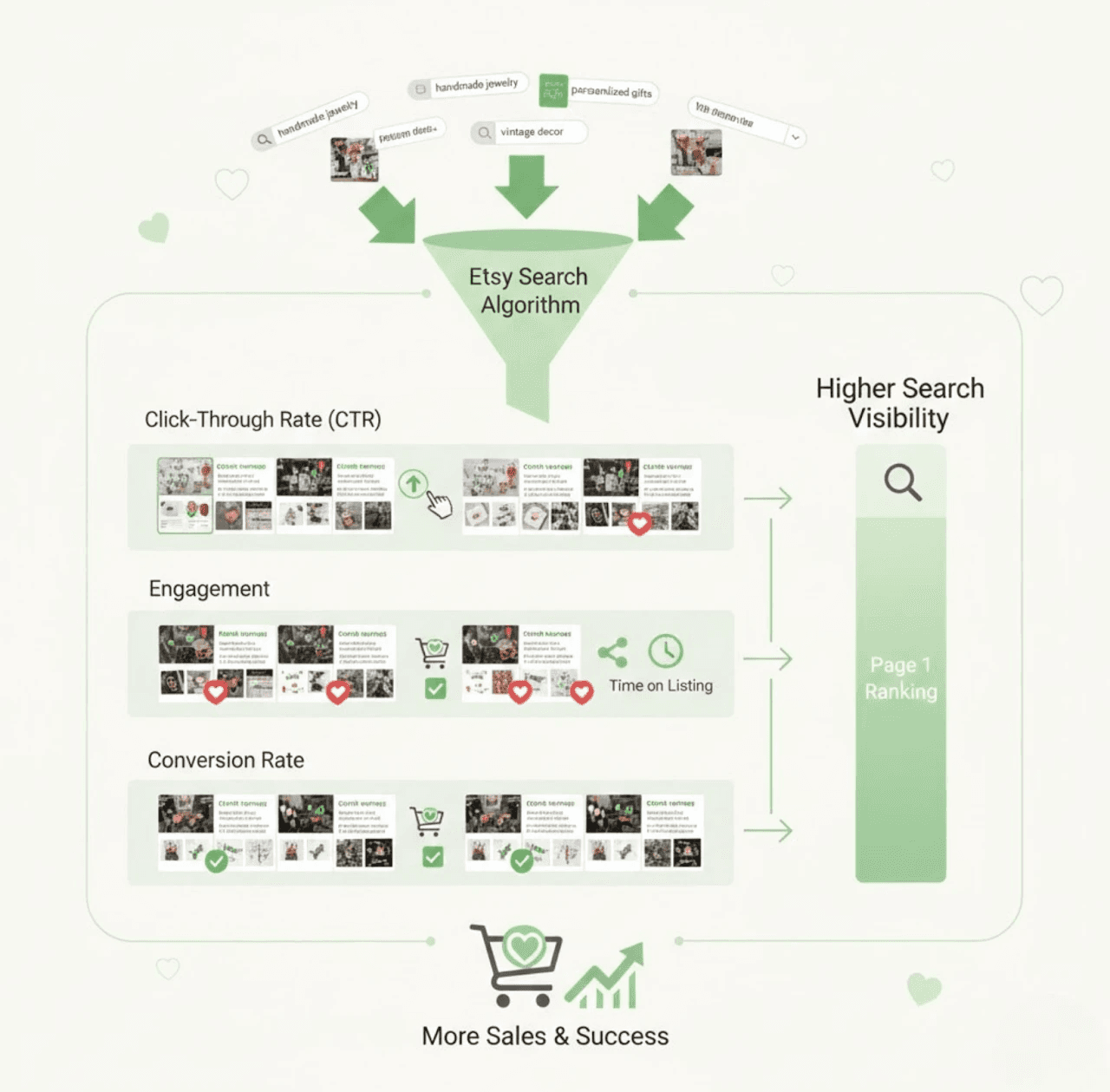
Unlike Google, which prioritizes overall content quality and backlinks, Etsy’s algorithm focuses on shop and listing performance. In simple terms, Etsy rewards listings that not only match search keywords but also get clicked, engaged with, and purchased.
Key Ranking Signals
Several factors determine how your listing ranks in Etsy search results:
Keywords – Titles, tags, and descriptions that match buyer searches.
Click-Through Rate (CTR) – How often shoppers click your listing when it appears in search.
Engagement – Actions like favorites, shares, and time spent on your listing.
Conversion Rate – How often clicks turn into actual purchases.
Why Etsy Rewards Clicks and Conversions
Etsy’s goal is to show buyers products they are likely to buy. Listings that attract clicks and convert signal to Etsy that your product is relevant and appealing, which boosts your search ranking.
The Connection Between Traffic and Conversion
High traffic alone doesn’t guarantee sales. The algorithm favors listings that not only get views but also convince buyers to take action. That’s why improving both visibility and conversion is essential: attracting the right traffic and converting it fuels long-term Etsy success.
3. Understanding Buyer Intent on Etsy
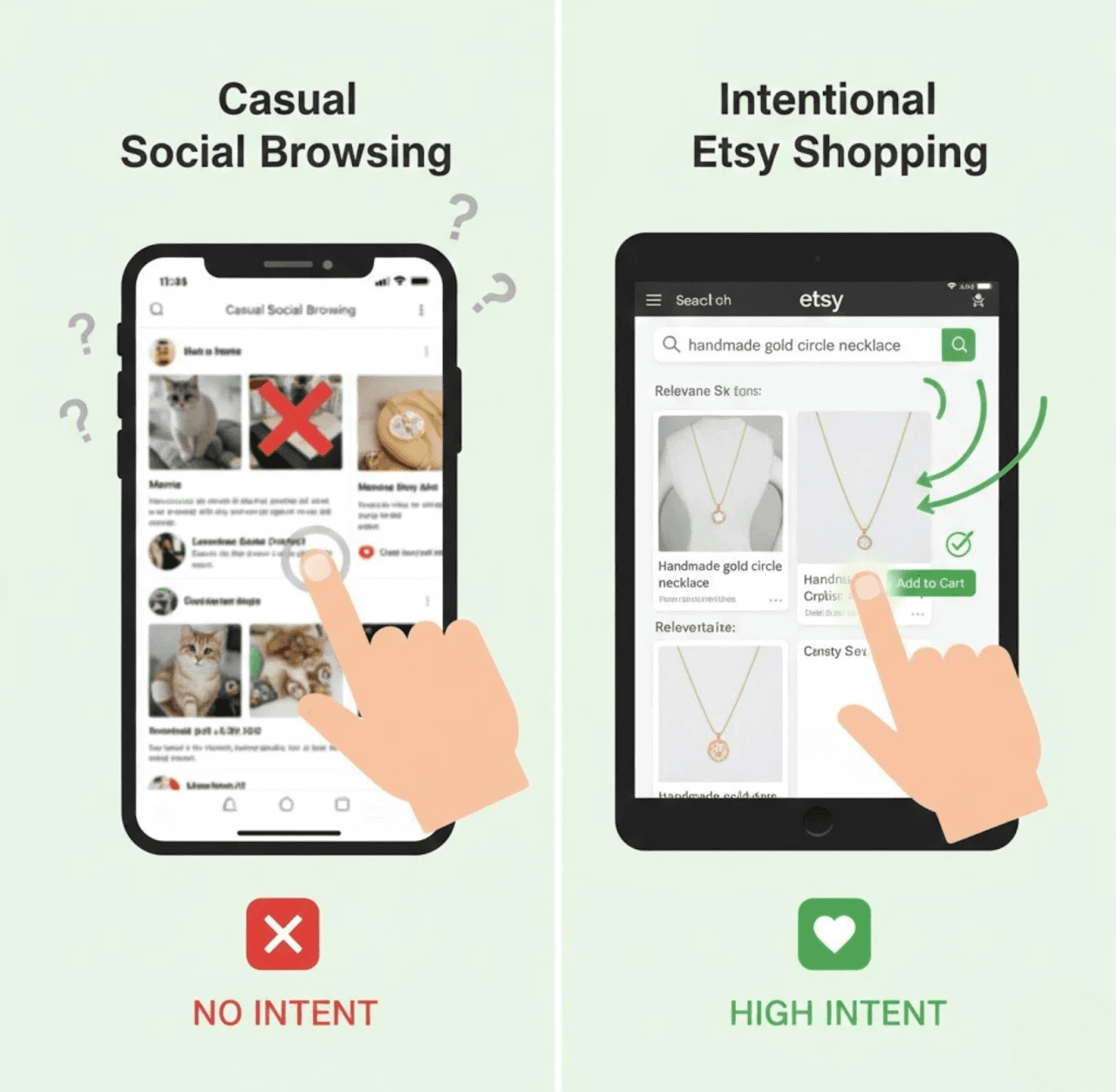
Selling on Etsy successfully isn’t just about traffic, it’s about understanding how buyers think and behave. Etsy shoppers behave differently than social media users, where scrolling is casual and impulse-driven. On Etsy, most visitors are search-driven, actively looking for products they want to buy.
Search-Based Intent vs. Browsing Intent
Search-based intent: Buyers type in keywords with a clear goal, like “handmade leather journal.” They’re ready to purchase if they find the right match.
Browsing intent: Some shoppers explore categories or collections casually. They may click, favorite, or return later, but they’re not ready to buy immediately.
Understanding this distinction helps sellers focus on attracting qualified traffic—shoppers who are ready to purchase rather than just browse.
Why Relevance Matters More Than Volume
Getting a lot of visitors means little if they aren’t looking for what you sell. Etsy favors listings that are highly relevant to the search query. The right audience clicking and converting signals the algorithm that your listing is valuable, boosting your ranking over time.
Matching Listings to Buyer Expectations
To maximize conversions, your listing should deliver exactly what the buyer expects. Titles, photos, and descriptions must align with the search intent so that when a shopper clicks, they immediately recognize your product as the solution to their need.
By understanding buyer intent, you can create listings that attract the right people, increase trust, and convert traffic into sales, the foundation of long-term Etsy growth.
4. Keyword Research That Brings the Right Traffic
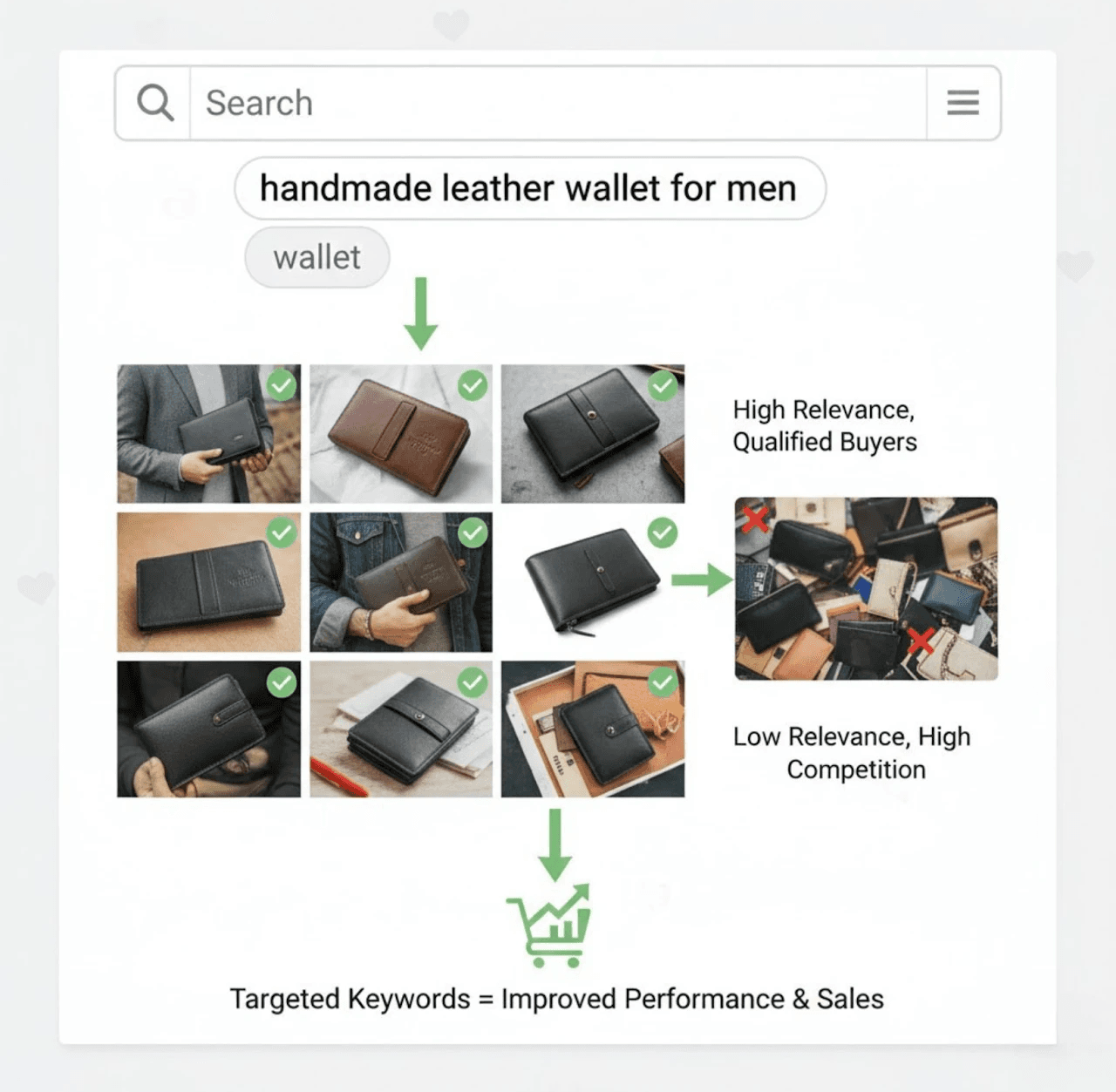
Attracting traffic on Etsy isn’t just about chasing the most popular keywords. In fact, high-traffic keywords often fail because they bring broad, unfocused visitors who may not be ready to buy. The goal is to target keywords that attract the right buyers, shoppers actively looking for your type of product.
Long-Tail vs. Short-Tail Keywords
Short-tail keywords are broad and competitive, like “jewelry” or “bag.” They get high search volume but low conversion because intent is unclear.
Long-tail keywords are more specific, like “handmade leather crossbody bag.” They attract buyers with clear intent, which increases your chances of converting clicks into sales.
Where to Find Etsy Keyword Ideas
Etsy Search Bar: Start typing your product name and see what autocomplete suggestions appear, they reflect real buyer searches.
Categories & Filters: Explore related categories to find phrases buyers use to narrow their searches.
Buyer Language: Read product reviews and competitor listings to understand how buyers describe your product.
Mapping Keywords to Listings
Once you have your list, align each keyword to the right listing. Use them naturally in your:
Titles
Tags
Descriptions
This ensures your listings match buyer intent, attract qualified traffic, and increase the likelihood of sales.
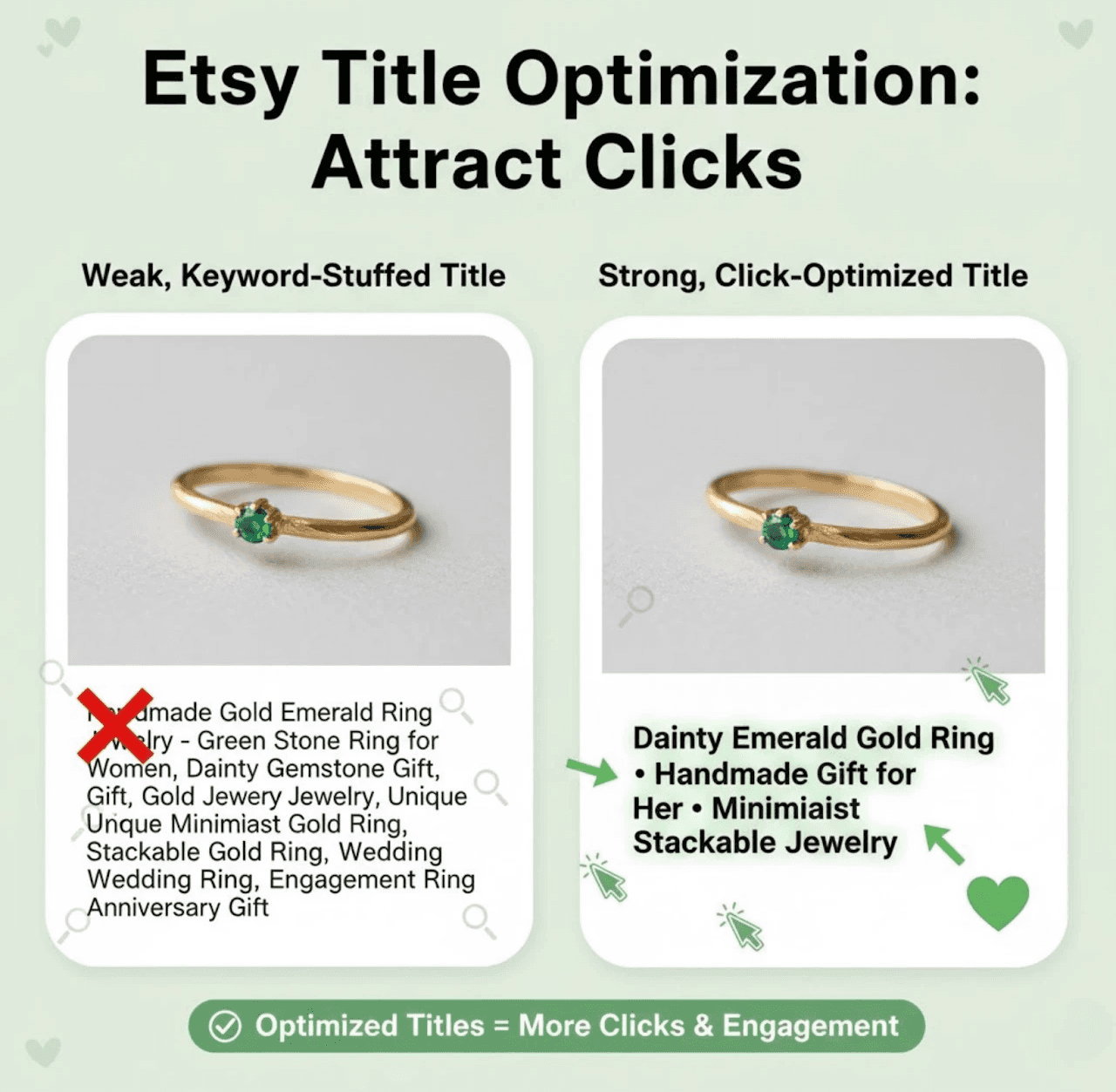
5. Optimizing Etsy Titles for Clicks (Not Just Keywords)
Your Etsy title does more than help the algorithm, it directly influences whether buyers click on your listing. A well-optimized title can improve both visibility and conversion by showing shoppers that your product matches their search intent.
Etsy Title Structure That Increases CTR
A strong Etsy title balances keywords for SEO with phrasing that appeals to humans. A simple structure to follow is:
Primary keyword + Secondary keyword + Descriptive details
This ensures your listing appears in searches while clearly communicating what the product is. Many sellers I’ve spoken with mention that pairing a clear, engaging title with professional-looking visuals really boosts clicks. Some even use Look Atlas to turn simple product shots into on-model or styled images, it’s a game-changer for making listings look polished without hiring a photographer.
Front-Loading Important Phrases
Place your most important keywords at the beginning of your title. Etsy gives more weight to the first few words, and buyers scanning search results notice them first. Front-loading the main phrase increases the chances that a shopper will stop scrolling and click on your product.
Writing for Humans First, Algorithm Second
While it’s tempting to stuff every keyword, readability is key. Titles should make sense to buyers at a glance and convey value or uniqueness. A readable, appealing title encourages clicks, something the algorithm rewards indirectly through higher engagement.
Strong vs. Weak Titles
Weak Title: “Journal, notebook, diary, handmade”
Strong Title: “Handmade Leather Journal – Refillable Notebook for Travel & Notes”
The strong title uses targeted keywords, front-loads the main search phrase, and clearly communicates the product’s purpose, making buyers more likely to click. And if you want your listing to really stand out.
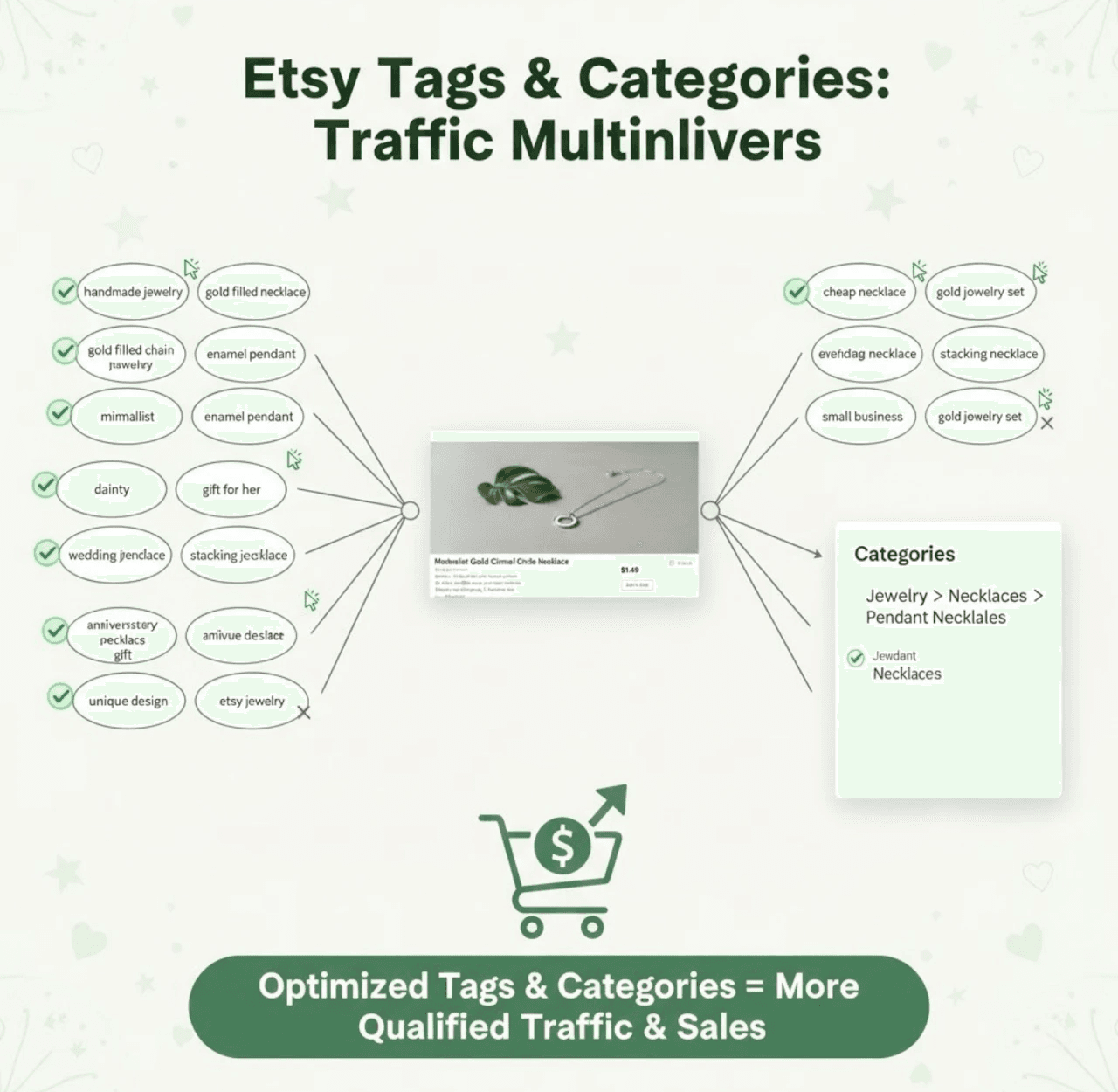
6. Etsy Tags & Categories: Hidden Traffic Multipliers
Many Etsy sellers underestimate the power of tags and categories, but when used correctly, they can significantly boost your visibility and attract qualified traffic. Etsy relies on these signals to match your listings with buyers’ searches, making them critical for long-term growth.
How Etsy Uses Tags and Categories Together
Tags and categories work hand-in-hand to help Etsy understand your product. Categories give context, while tags provide search-specific phrases. Together, they ensure your listing shows up for relevant queries, increasing both visibility and click-through rate.
Common Mistakes Sellers Make
Using generic tags like “gift” or “jewelry” without context
Repeating the same keywords in multiple tags
Choosing irrelevant categories that confuse buyers or the algorithm
Leaving tags incomplete or underutilized
How to Fully Use All 13 Tags Effectively
Etsy allows up to 13 tags per listing, and each one is an opportunity to attract the right buyer. Tips to maximize them:
Include a mix of short-tail and long-tail keywords
Use phrases buyers are likely to type, not just single words
Avoid duplicates and irrelevant terms
Think like your customer: what would they search for?
Matching Categories to Buyer Expectations
Choose categories that accurately reflect your product. Misaligned categories confuse shoppers and reduce CTR. When your category matches the buyer’s expectation, it increases trust and improves the likelihood of conversion.
By fully optimizing tags and categories, you turn hidden metadata into a traffic multiplier, helping your listings get seen by buyers who are most likely to purchase.
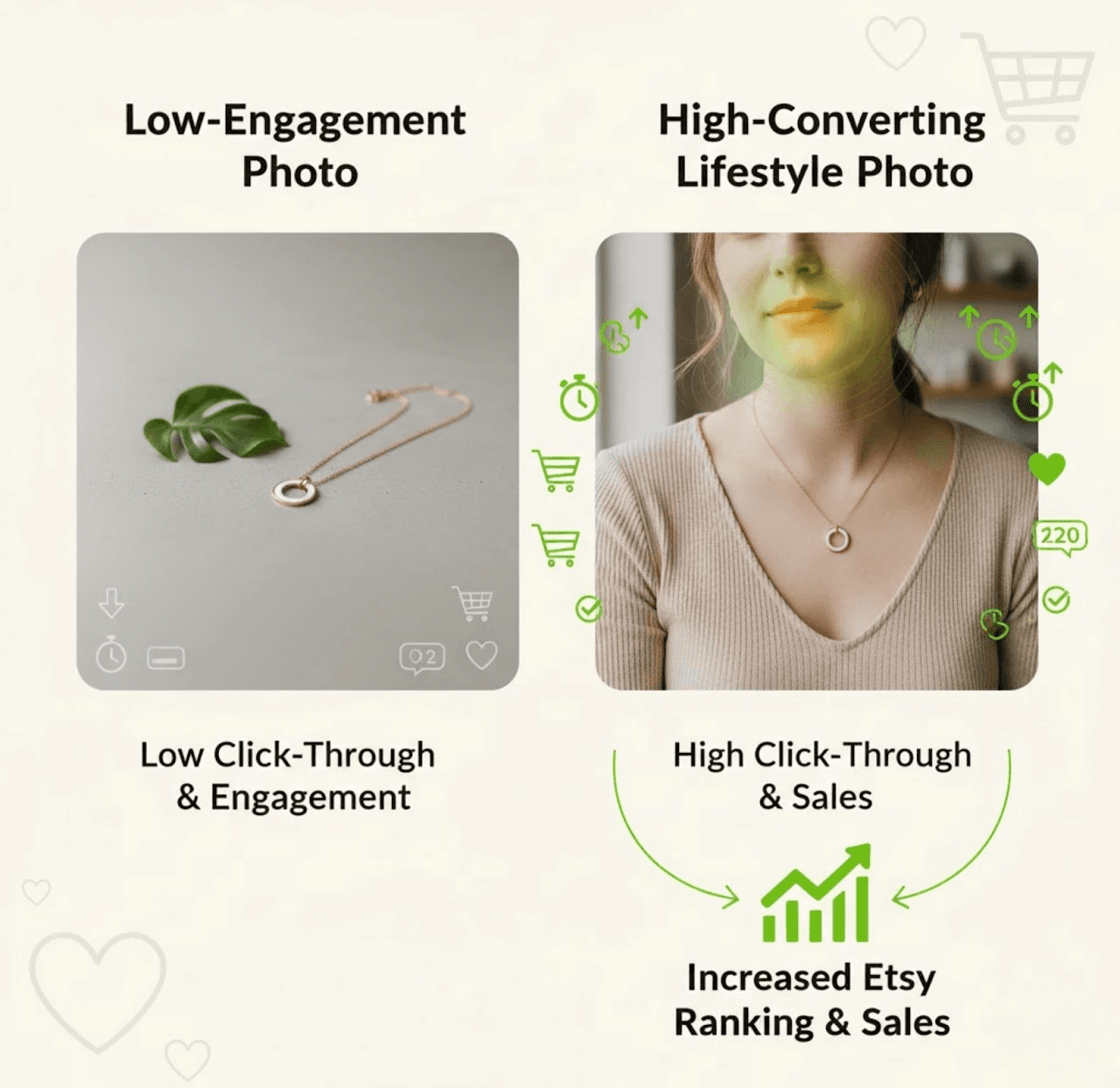
7. Product Photography: The Biggest Traffic Lever Most Sellers Ignore
On Etsy, images are more than decoration, they’re a primary driver of traffic and sales. Buyers make split-second decisions, and the photos you use can dramatically impact how your listing performs.
Why Images Matter
High-quality visuals influence three critical factors:
Click-through rate (CTR): Attractive photos get shoppers to click your listing in search results.
Time on listing: Engaging images keep buyers browsing your page longer, increasing the chance of conversion.
Etsy ranking: Listings that attract clicks and engagement signal relevance to Etsy’s algorithm, boosting search position.
How Buyers Scan Listings
Etsy shoppers rarely read descriptions first. They scan images, sizing, color, and context before reading text. A clear, visually compelling listing tells buyers: “This is exactly what I’m looking for.”
Lifestyle vs. Flat Photos
Flat photos: Simple, top-down shots on a plain background. Useful for clarity, but often fail to engage.
Lifestyle or “on-model” photos: Show the product in real-world use, helping buyers imagine ownership. These visuals consistently outperform plain shots, boosting CTR and conversions.
Transition to Modern Visual Solutions
As visual standards rise, many sellers are rethinking how they present products. Beyond traditional photography, new approaches, like enhancing simple images into realistic lifestyle visuals, are becoming essential for Etsy success.
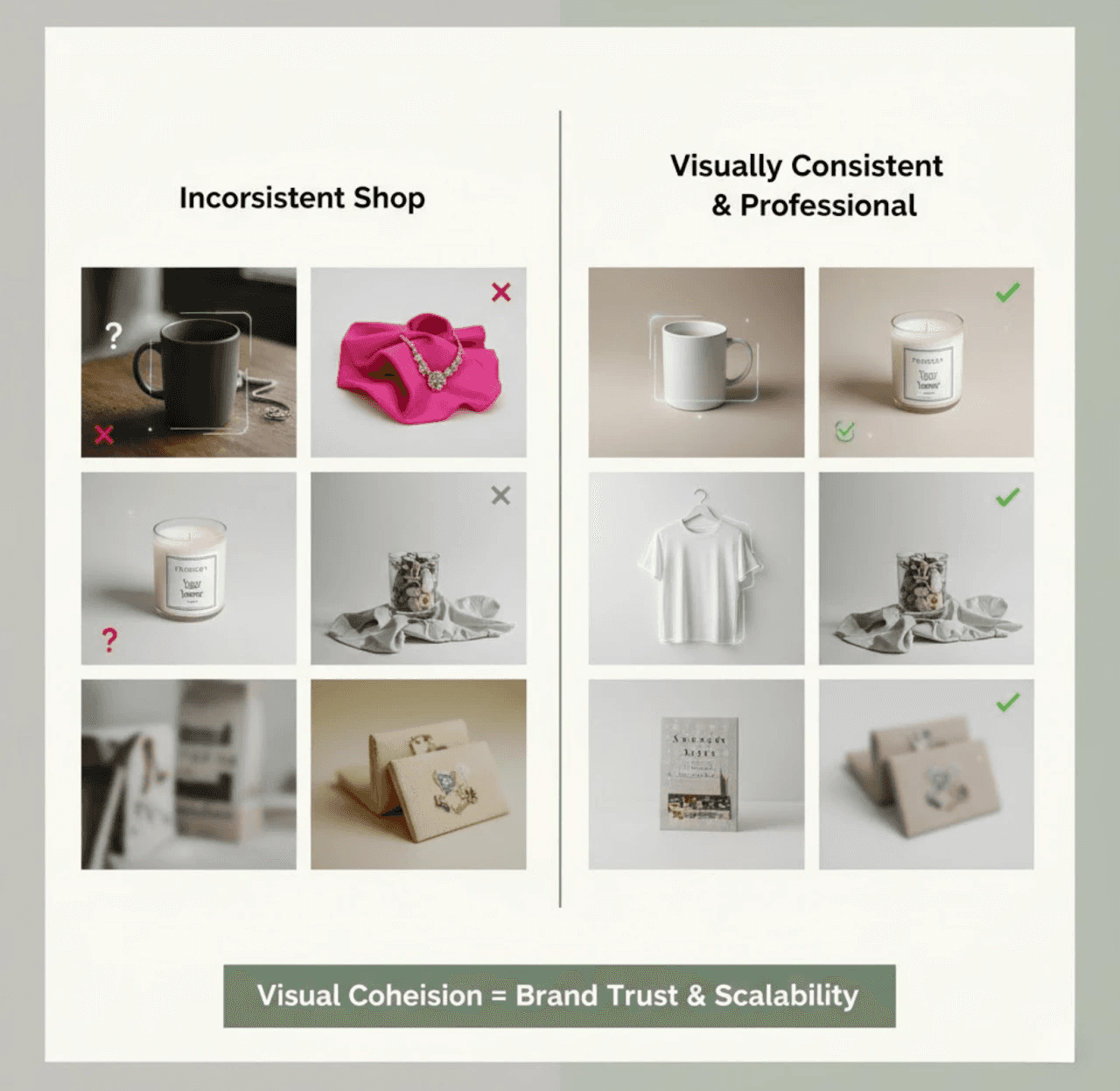
8. How Visual Consistency Builds Brand Trust on Etsy
On Etsy, visual consistency is more than aesthetics, it’s a trust signal. Buyers subconsciously judge a shop by how polished and uniform the listings look. Inconsistent photos can create doubt, reducing engagement and long-term traffic.
Why Inconsistent Photos Reduce Traffic
Shoppers comparing multiple listings can quickly spot inconsistencies in:
Backgrounds and lighting
Product presentation
Image quality
Listings that feel “messy” or unprofessional discourage clicks and purchases, even if the product itself is excellent.
How Cohesive Visuals Improve Shop Authority
A cohesive visual style communicates professionalism, reliability, and attention to detail. When all your listings share the same look and feel, buyers recognize your brand and trust your products more. This not only increases conversion but also encourages repeat visits.
Scaling Visuals Without Scaling Costs
Maintaining consistency across dozens of products can be challenging, especially for small shops. Many sellers now leverage AI-assisted on-model imagery to create realistic, uniform visuals quickly. This approach helps shops stay visually consistent without the time or expense of traditional photoshoots.

9. Listing Descriptions That Support Traffic Growth
While images grab attention, your listing description plays a critical role in both SEO and conversions. A well-crafted description helps Etsy understand your product, boosts search visibility, and convinces buyers that your item is exactly what they need.
Why Descriptions Still Matter
Even in a visual-first marketplace, Etsy uses the text in your title, tags, and description to match listings with relevant searches. Additionally, clear descriptions help buyers make confident decisions, reducing hesitation and abandoned carts.
Structuring Descriptions for Scanners
Most shoppers skim rather than read. Organize your descriptions with:
Clear headings
Bullet points for features and benefits
Short, digestible paragraphs
This structure makes it easy for buyers to quickly understand your product.
Using Buyer Language Naturally
Write descriptions in the language your target customers use. Incorporate keywords naturally and explain benefits in terms buyers care about. For example, instead of “high-quality leather,” say “durable leather that lasts for years.”
Formatting for Mobile Users
With over 60% of Etsy traffic coming from phones, mobile-friendly formatting is essential:
Keep sentences short
Use line breaks and spacing for readability
Highlight key features at the top
A well-structured, buyer-focused description supports your SEO efforts and reinforces trust, helping to convert traffic into actual sales.
10. Increasing Etsy Traffic Through Higher Conversion Rates
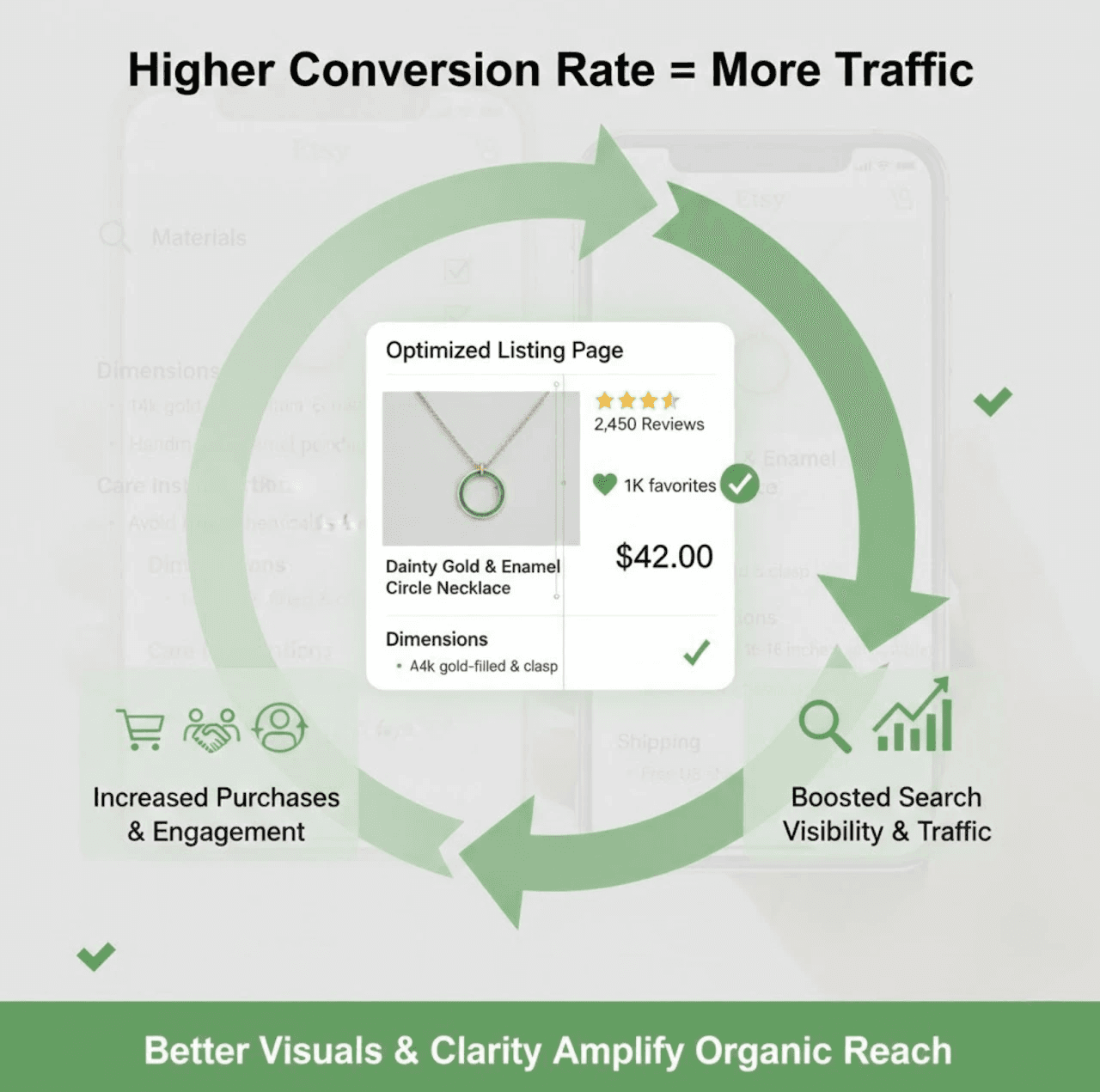
On Etsy, traffic and conversion are closely connected. Listings that convert well don’t just generate sales, they also attract more organic visibility, creating a positive feedback loop that grows your shop over time.
Why Conversion Rate Boosts Organic Reach
Etsy’s algorithm favors listings that get clicks and convert into purchases. High-performing listings signal relevance, which improves your search ranking and exposes your products to even more potential buyers.
Etsy’s Feedback Loop Explained
When a listing performs well:
More clicks and purchases → Etsy recognizes the listing as valuable.
Improved ranking → Listing appears higher in search results.
Increased visibility → More clicks and purchases, repeating the cycle.
Small Changes That Improve Conversion
Even minor adjustments can significantly increase sales:
Clear visuals: High-quality, lifestyle-ready images help buyers imagine ownership.
Social proof: Reviews, favorites, and ratings build trust and credibility.
Pricing clarity: Transparent pricing and shipping reduce hesitation.
Better visuals, in particular, reduce buyer doubt, helping visitors feel confident and motivated to make a purchase.
By focusing on conversion first, Etsy sellers don’t just improve sales, they also drive more organic traffic, creating a sustainable growth cycle.

11. External Traffic Sources That Actually Work for Etsy
While Etsy search drives most traffic, external sources can significantly boost visibility and sales, if used correctly. The key is sending the right audience to the right listings.
Pinterest: Why It Pairs Well With Etsy
Pinterest is a visual discovery platform, making it ideal for Etsy products. Pins with high-quality, lifestyle images can drive highly qualified traffic to your shop, especially when they link to your listings directly. Tailor pins to showcase product benefits, and include keywords in pin descriptions for search visibility.
Instagram: What Works vs. What Doesn’t
Instagram can drive traffic, but only if you showcase products effectively. Avoid generic posts, focus on:
Lifestyle images that show products in context
Stories or reels that highlight usage
Links in bio or swipe-up options for easy access
Avoid posting low-quality or overly promotional content, which rarely converts.
Email Lists for Repeat Traffic
Building an email list is a powerful way to bring buyers back. Share new product launches, promotions, or curated collections to drive repeat visits and encourage repeat purchases.
Why Sending Traffic to Low-Quality Listings Fails
Traffic alone isn’t enough. Sending buyers to poorly optimized or unclear listings wastes effort and budget. High-quality images, clear descriptions, and strong presentation are essential for converting any external traffic.
By combining Etsy search with targeted external sources, sellers can drive both qualified traffic and repeat customers, increasing visibility, engagement, and sales.
12. Why Visual Quality Matters Even More for Off-Etsy Traffic
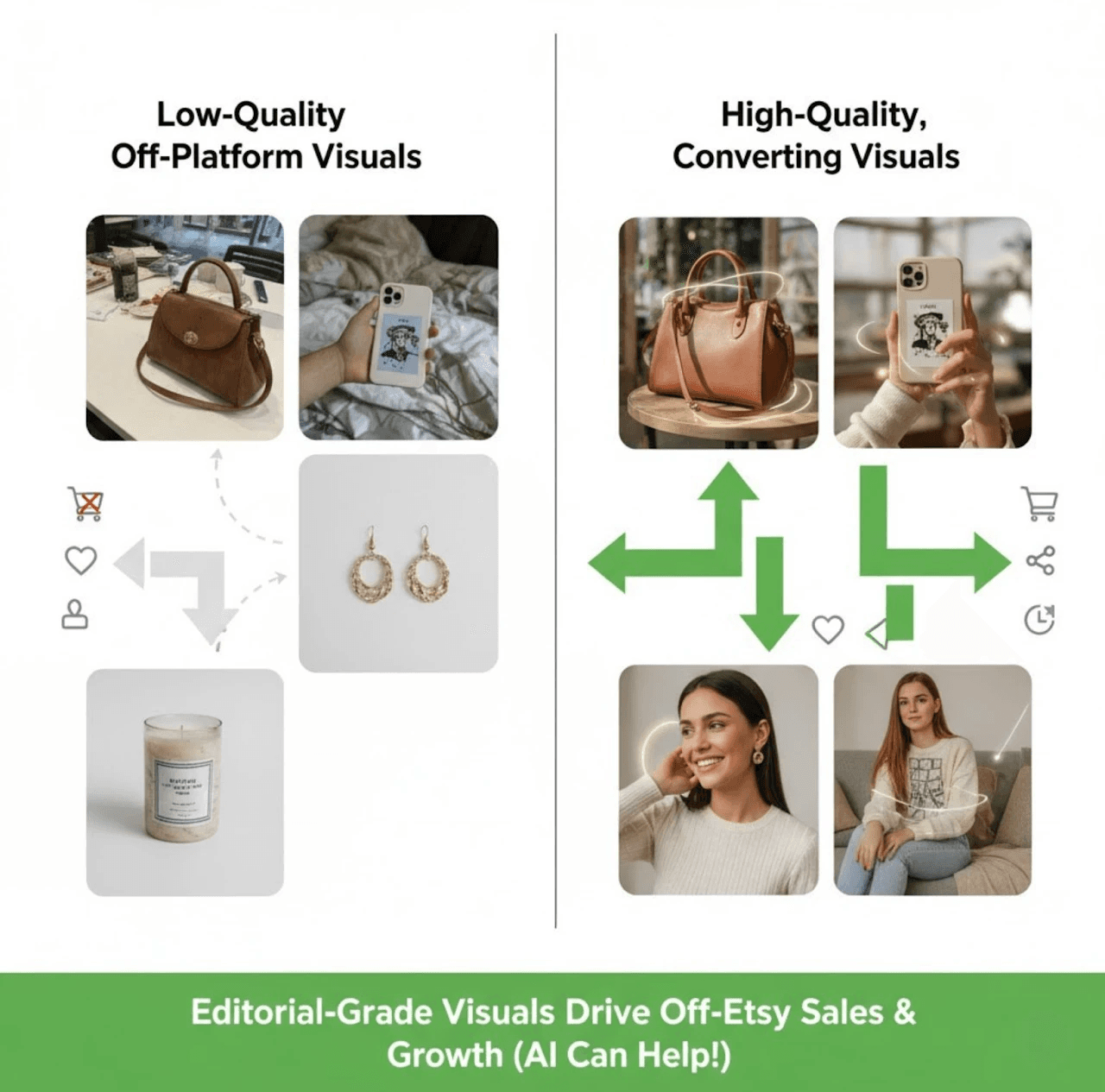
When driving traffic from outside Etsy, through Pinterest, Instagram, or ads, visuals become the first and often only impression buyers get of your product. Unlike Etsy search, where buyers are already browsing with intent, off-platform traffic arrives with no built-in trust or context.
How Off-Platform Traffic Behaves Differently
Buyers clicking from social media or ads are often scrolling quickly, comparing multiple options. They make split-second judgments, so your visuals must immediately communicate quality and relevance.
The First-Impression Problem
A poor-quality image or generic flat photo can instantly reduce clicks and engagement. Off-platform traffic requires editorial-grade visuals that look professional and appealing to stand out in crowded feeds.
Why High-Quality Images Matter for Ads and Pins
Ads and social pins compete for attention against high-quality content everywhere.
Lifestyle or on-model images perform significantly better than plain product shots, increasing both clicks and conversions.
Tools That Help Without Expensive Photoshoots
Modern sellers often leverage AI-assisted tools to generate model-style or lifestyle visuals from simple product photos. This approach lets you create professional, consistent images quickly, without hiring models, studios, or expensive photographers, perfect for off-Etsy traffic campaigns.
By investing in high-quality visuals, sellers can maximize the value of every click from external sources, converting casual visitors into buyers and driving sustainable growth.
13. Scaling Traffic Without Burning Out
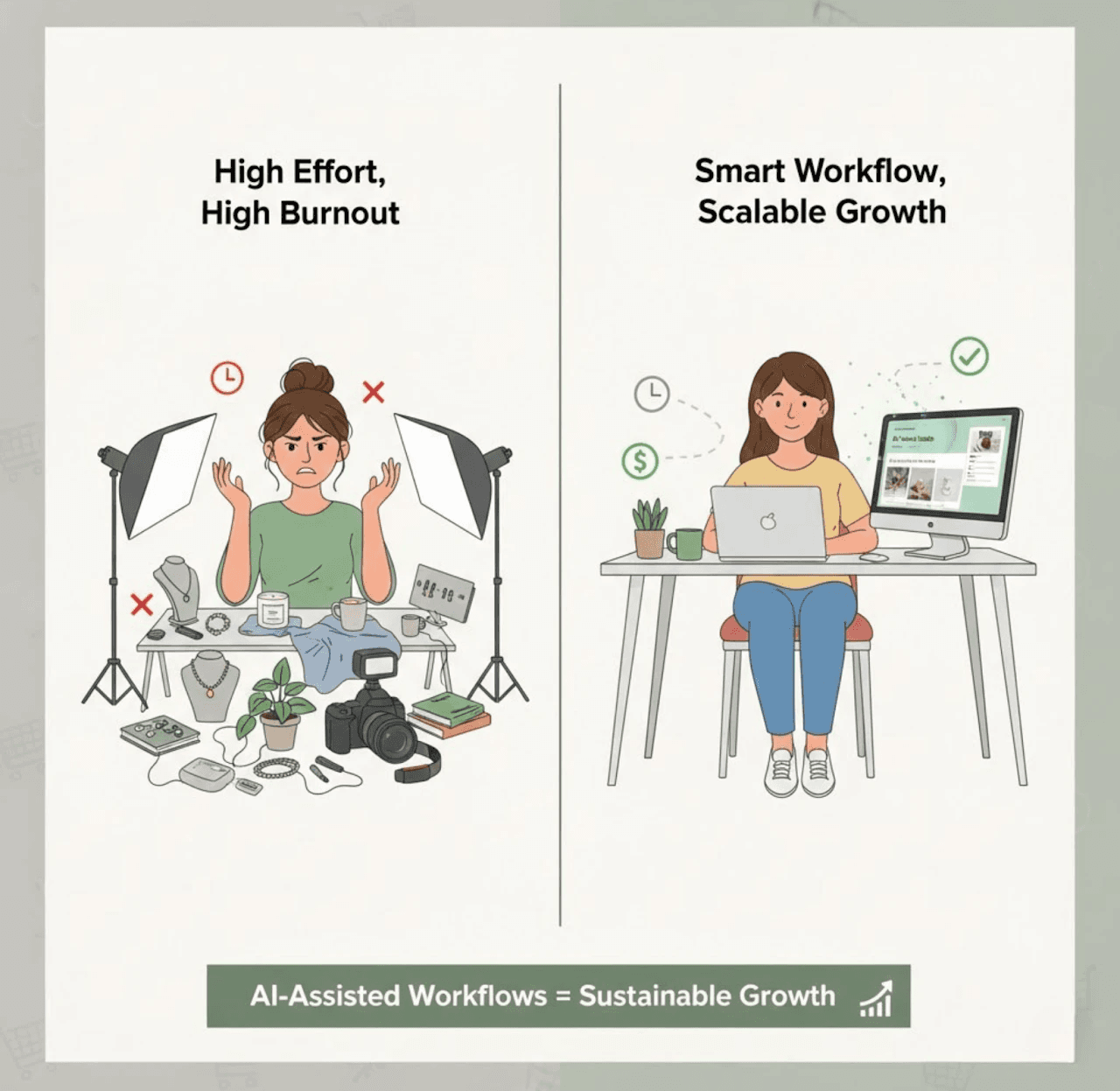
Growing an Etsy shop is one thing, scaling it efficiently is another. Many sellers hit a wall when trying to produce more listings or refresh visuals manually. Traditional photoshoots are time-consuming, expensive, and hard to keep consistent, making it difficult to scale your shop without burning out.
The Challenges of Manual Photoshoots
Time: Setting up, shooting, and editing images takes hours per product.
Cost: Hiring models, studios, or professional photographers quickly adds up.
Consistency: Maintaining a uniform look across dozens of listings is nearly impossible with manual processes.
Automating the Creative Workflow
Modern sellers are finding ways to automate parts of their creative workflow, allowing them to produce high-quality visuals faster and more consistently. By leveraging tools that can transform simple product photos into lifestyle or model-ready images, shops can scale listings without sacrificing quality or exhausting resources.
A Modern Approach
While traditional methods still work, the new wave of sellers is exploring smart solutions that streamline visual creation. These approaches help maintain brand consistency, reduce costs, and accelerate listing updates, enabling Etsy shops to scale traffic and conversions efficiently.
14. Helpful Tool for Etsy Sellers Looking to Increase Traffic
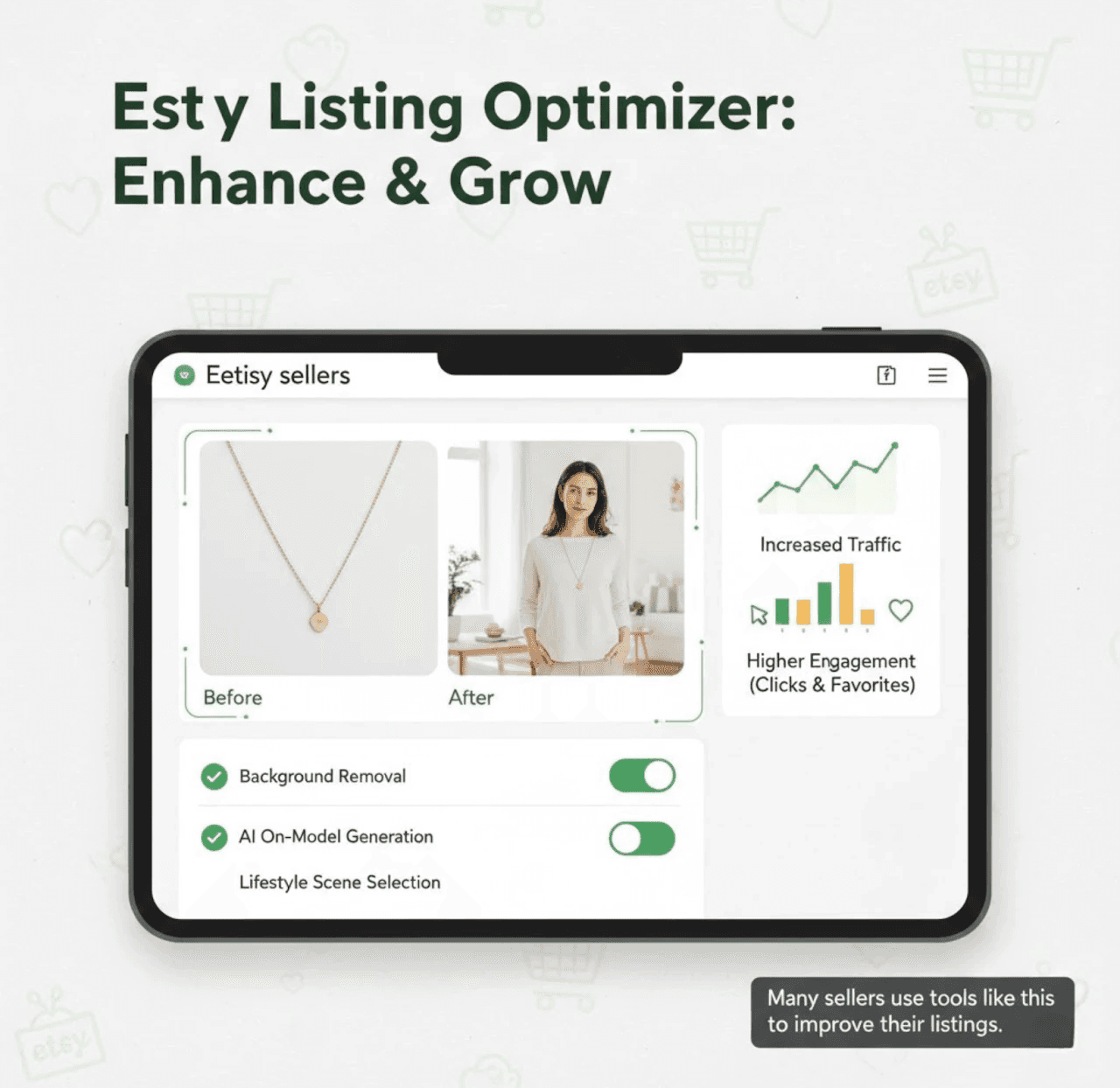
Growing your Etsy shop often means upgrading your visuals to attract more qualified traffic and boost conversions. Many sellers use tools like this to turn simple product photos into professional, lifestyle-ready images without the time, cost, or hassle of traditional photoshoots.
One tool that fits perfectly here is Look Atlas. It helps sellers generate consistent, on-model visuals from plain product photos, making it easier to maintain a polished shop aesthetic, improve click-through rates, and ultimately drive more traffic.
The best part? It’s framed as a practical resource, not a gimmick, helping sellers save time and focus on growing their business while keeping visuals high-quality and engaging. Some sellers use AI to create high-quality, engaging images for their Etsy listings.
15. Common Etsy Traffic Myths That Hold Sellers Back
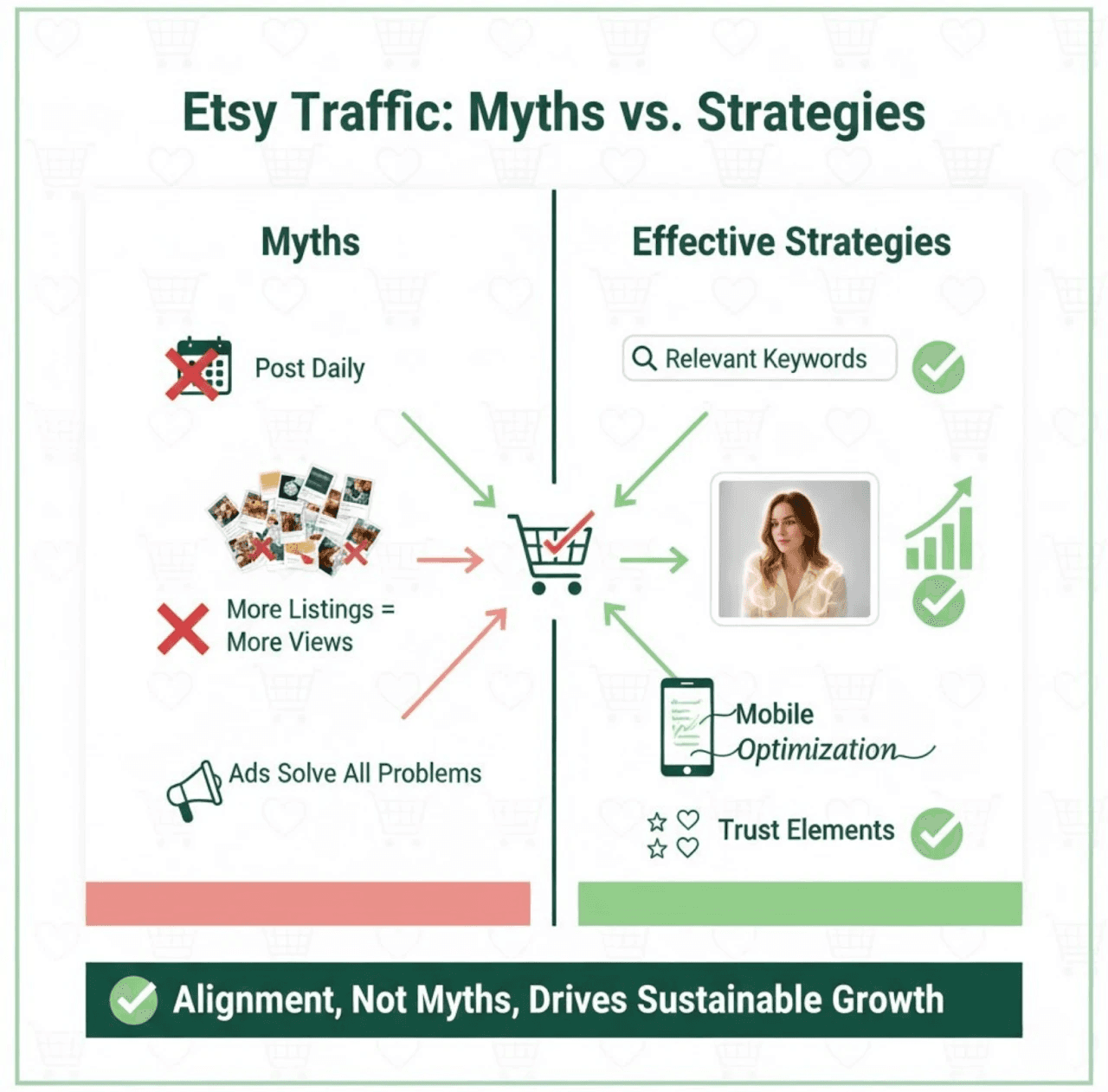
There’s a lot of advice floating around Etsy forums, but not all of it actually helps sellers grow. Some common myths include:
Posting daily increases traffic – While frequent updates can help, traffic grows mainly from visibility, relevance, and conversions, not sheer posting volume.
More listings = more views – Quantity alone doesn’t guarantee qualified traffic. A few well-optimized listings often outperform dozens of low-quality or misaligned ones.
Ads fix traffic problems – Paid ads can supplement visibility, but they won’t solve underlying issues like weak SEO, poor visuals, or low conversion rates.
What Actually Moves the Needle
The listings that consistently drive traffic and sales focus on alignment: relevant keywords, clear and compelling visuals, mobile optimization, and trust-building elements. When these factors work together, traffic grows naturally, clicks convert into sales, and your Etsy shop can scale sustainably.
16. A Sustainable Etsy Traffic Strategy for 2026 and Beyond
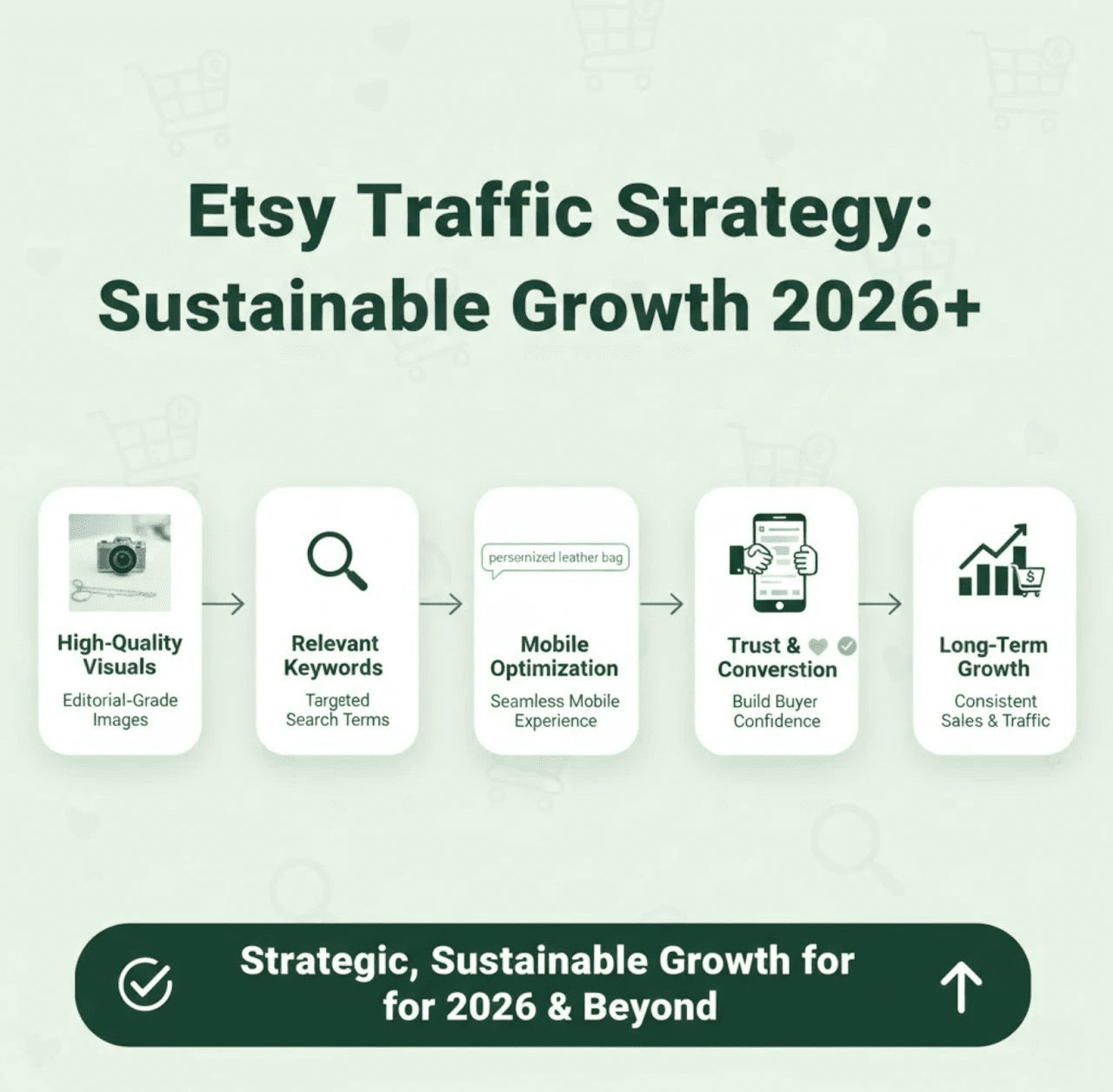
Etsy is becoming increasingly visual and competitive, which means that simply having a good product isn’t enough to stand out. Shoppers now expect professional, lifestyle-ready images, clear descriptions, and listings that match their search intent perfectly.
Presentation + Relevance Are Key
Traffic and sales aren’t just about clicks, they’re about aligning your presentation with buyer expectations. Listings that are visually appealing, relevant, and easy to understand perform better in search and convert more visitors into buyers.
Think Long-Term, Not Short-Term
Quick hacks might provide a temporary boost, but sustainable Etsy growth comes from a long-term approach:
Optimize your SEO thoughtfully
Maintain visual consistency across listings
Build trust through clear descriptions and social proof
By focusing on alignment, quality, and buyer confidence, your Etsy shop can achieve predictable, scalable, and sustainable growth well into 2026 and beyond.
17. Final Thoughts: Traffic Comes From Clarity
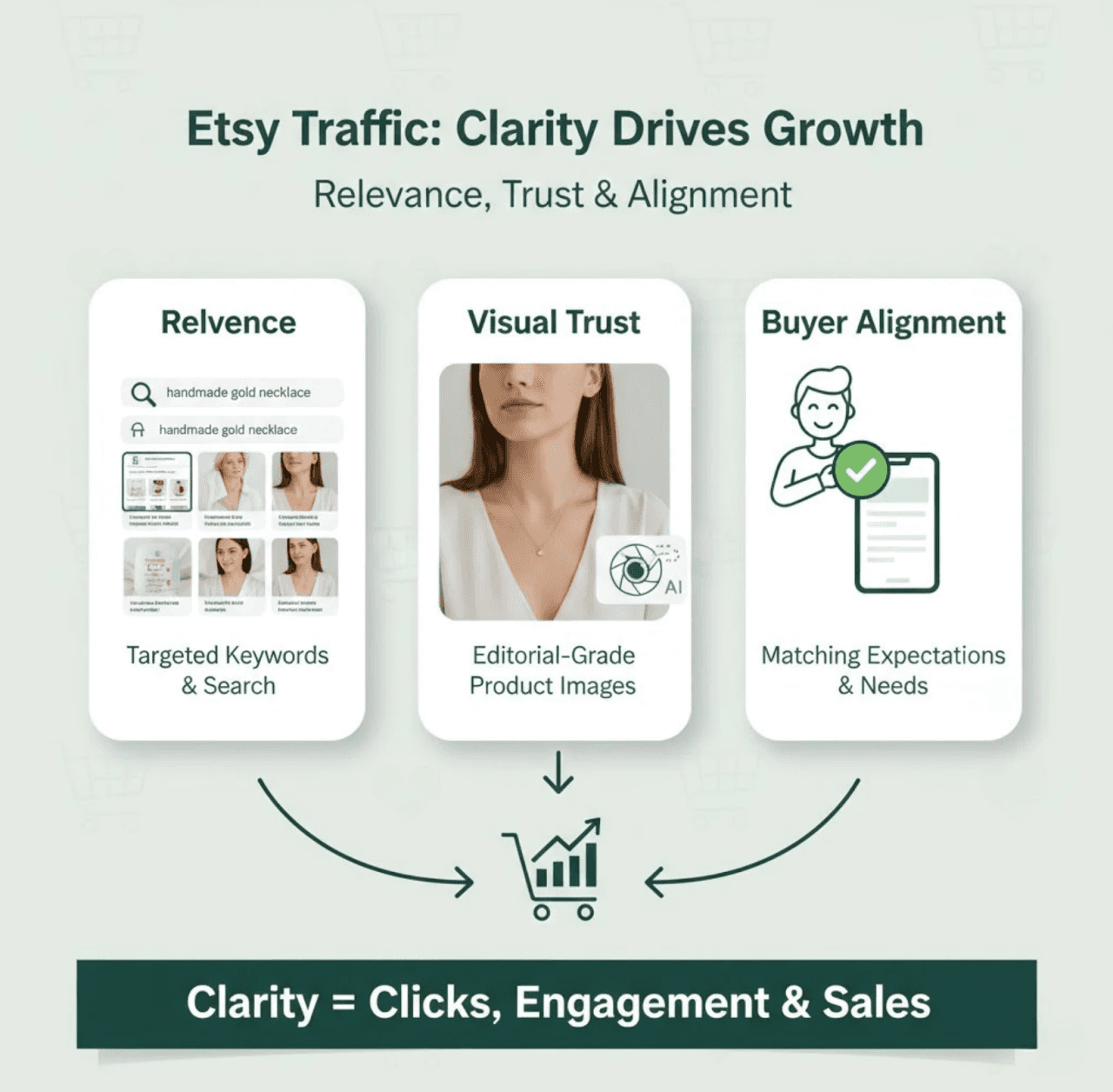
Growing Etsy traffic isn’t about shortcuts or hacks, it’s about clarity and alignment. The shops that succeed consistently focus on three key elements:
Relevance: Listings match what buyers are actively searching for.
Visual trust: High-quality, consistent images help shoppers feel confident.
Buyer alignment: Titles, descriptions, and presentation deliver exactly what the customer expects.
Modern Etsy sellers know that investing in better visuals and cohesive presentation isn’t just aesthetic, it’s a practical strategy to attract qualified traffic, increase conversions, and build sustainable growth over time.
