
How to Get Sales on Etsy: A Practical Guide for Turning Views Into Orders (2026)

1. Introduction: Why Getting Sales on Etsy Is Harder Than It Looks
Etsy is often described as an easy marketplace to start selling on, but getting consistent sales is where most sellers struggle.
Thousands of new shops launch every day. Search results are crowded. Buyers scroll fast. And while traffic may increase, conversions don’t always follow. Many sellers experience the same frustration: views go up, favorites grow, but orders stay flat.
The problem usually isn’t demand. It’s confidence.
Etsy buyers need to feel sure, sure about the product, the quality, the fit, the value, and the seller, before they click Add to cart. If your listing doesn’t communicate that confidence quickly, buyers simply move on.
This is why successful shops focus heavily on visual presentation. Clear, well-styled images help buyers understand the product instantly and reduce hesitation. Some sellers even use newer tools like Look Atlas to create consistent, on-model visuals from simple product photos, making it easier for buyers to imagine ownership without relying solely on text.
In this guide, you’ll learn how to get sales on Etsy by understanding buyer behavior, improving listing presentation, and applying modern visual strategies that today’s top-performing sellers rely on.
2. How Etsy Buyers Actually Make Purchase Decisions
Etsy shoppers don’t browse like traditional retail customers. They scan.
Most buying decisions happen in seconds, not minutes. Before reading your title or description, buyers subconsciously ask:
Is this what I’m looking for?
Does this look trustworthy?
Can I imagine myself using or wearing this?
Does the price feel justified?
If your listing answers these questions visually and instantly, buyers stay. If not, they leave, often without realizing why.
This is why Etsy is a visual-first marketplace. Images are not decoration; they are decision-making tools.
3. What “Getting Sales” Really Means on Etsy (Conversion Rate Explained)
Getting sales on Etsy isn’t just about traffic, it’s about conversion rate.
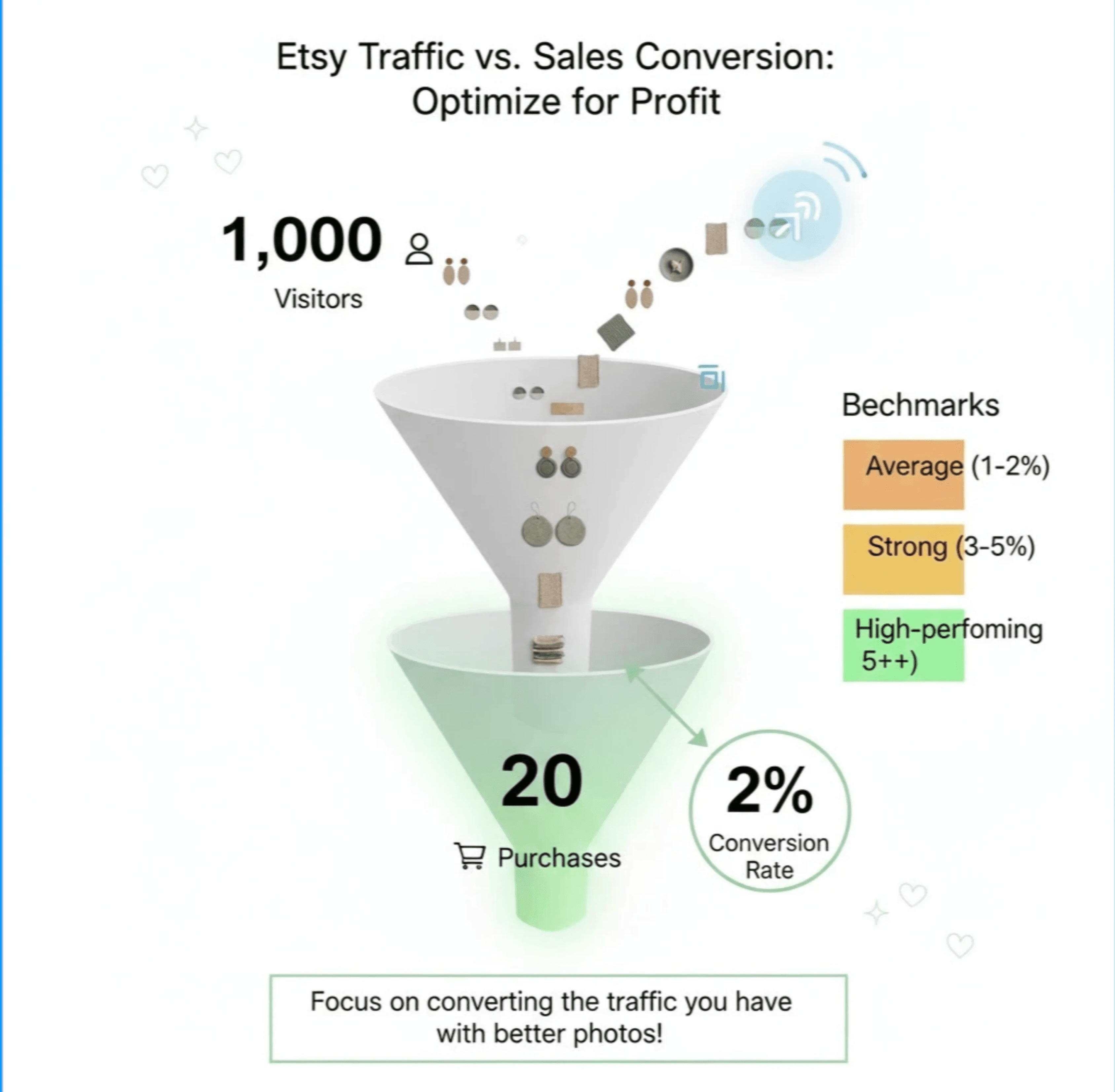
Etsy Conversion Rate Formula:
(Orders ÷ Visits) × 100
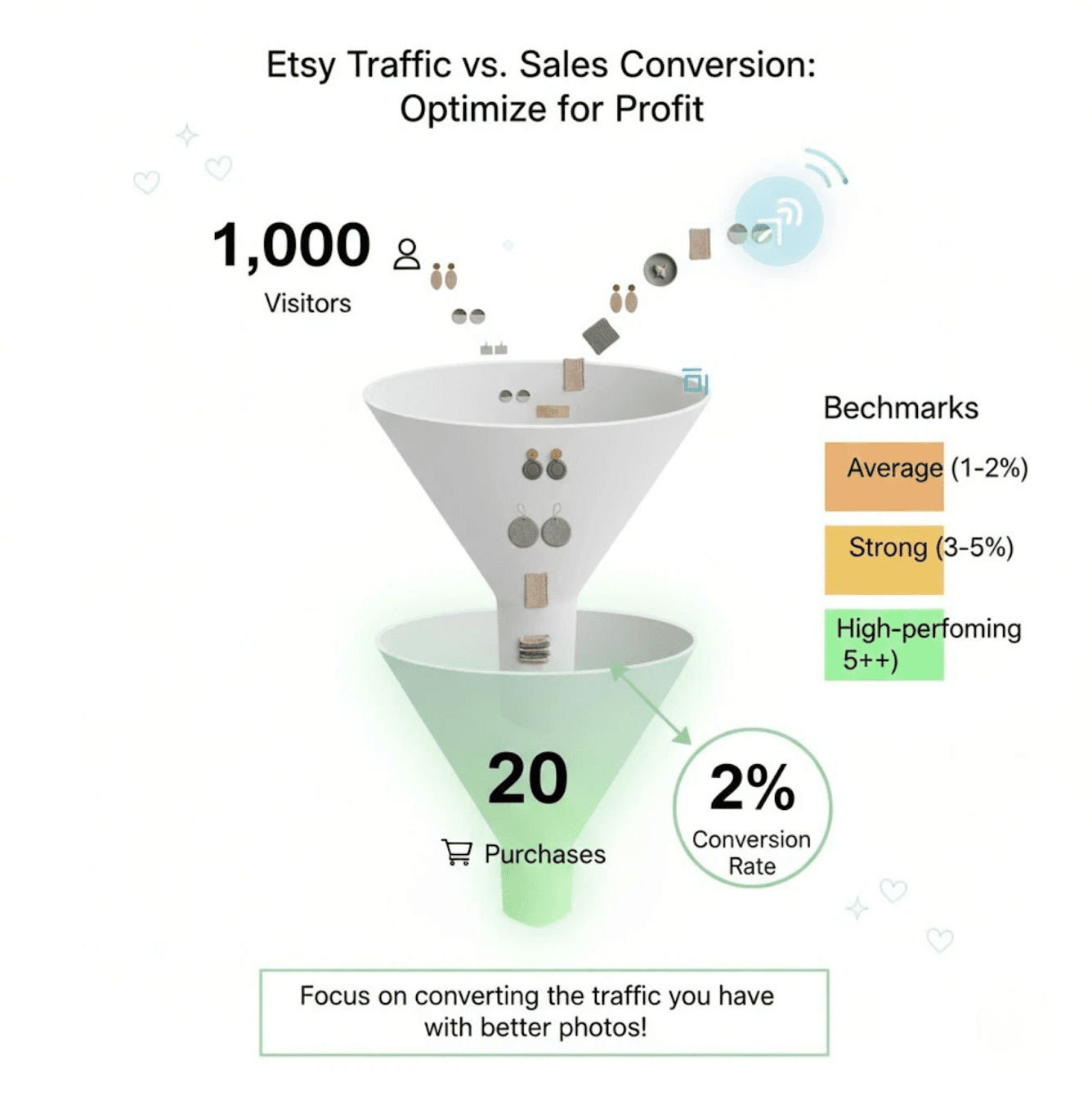
If 1,000 people visit your listing and 20 purchase, your conversion rate is 2%.
Typical benchmarks:
1 to 2%: Average
3 to 5%: Strong
5%+: High-performing shops
If your conversion rate is low, Etsy’s algorithm notices. Listings that don’t convert gradually lose visibility, even if they get clicks.
So when sellers ask how to get sales on Etsy, the real answer is: optimize for conversion, not just traffic.
4. Why Most Etsy Shops Get Views but No Sales
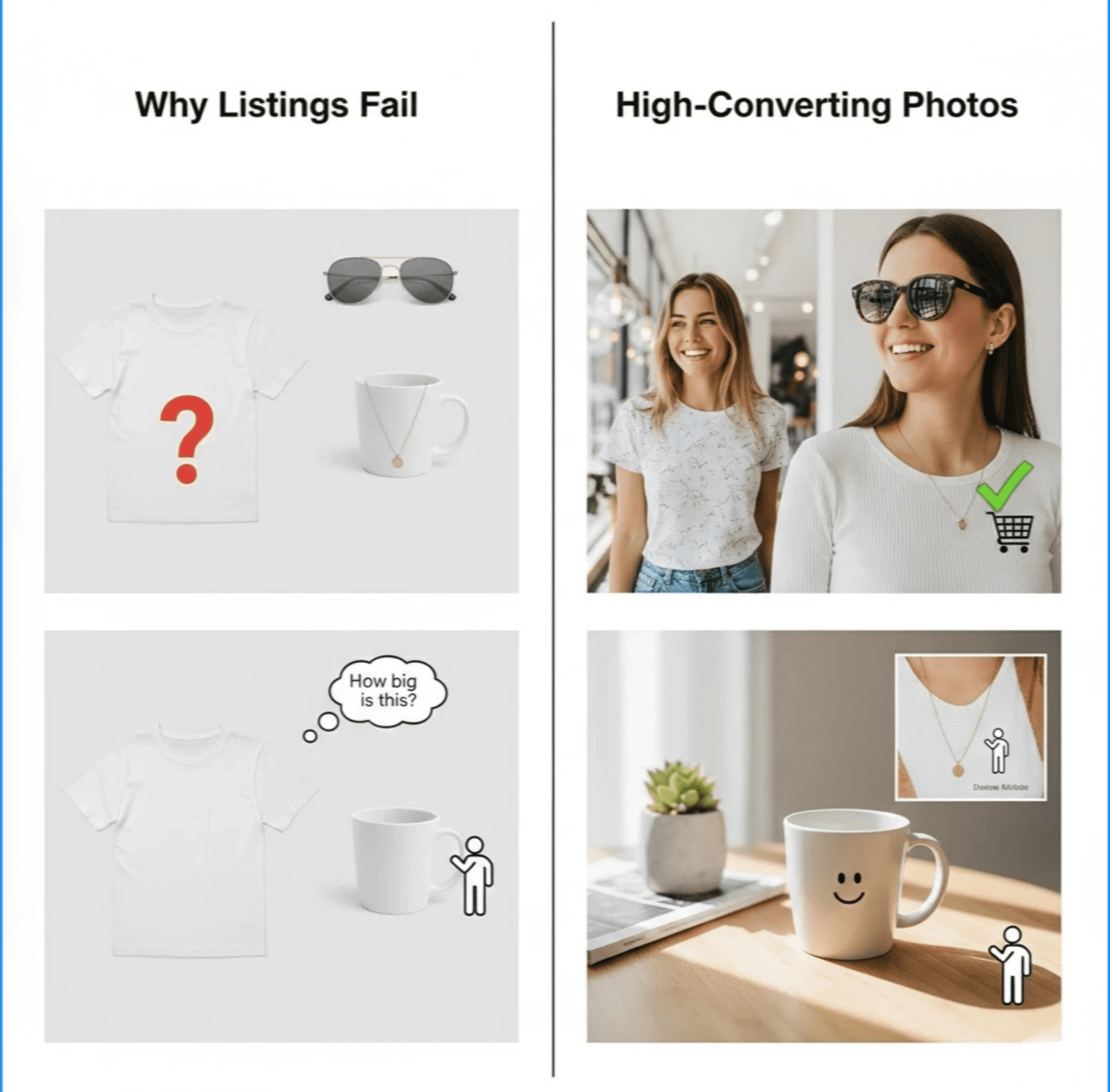
Many Etsy listings look “fine” but fail to convert. Common reasons include:
Images that show the product but not its use
Lack of scale or fit reference
Flat, generic presentation
Visuals that don’t match buyer expectations
Listings that feel unfinished or inconsistent
Buyers don’t consciously analyze these issues, they simply feel unsure. And hesitation is the enemy of conversion.
5. The Role of Product Photography in Etsy Sales
Among all listing elements, price, reviews, descriptions and product images carry the most weight.
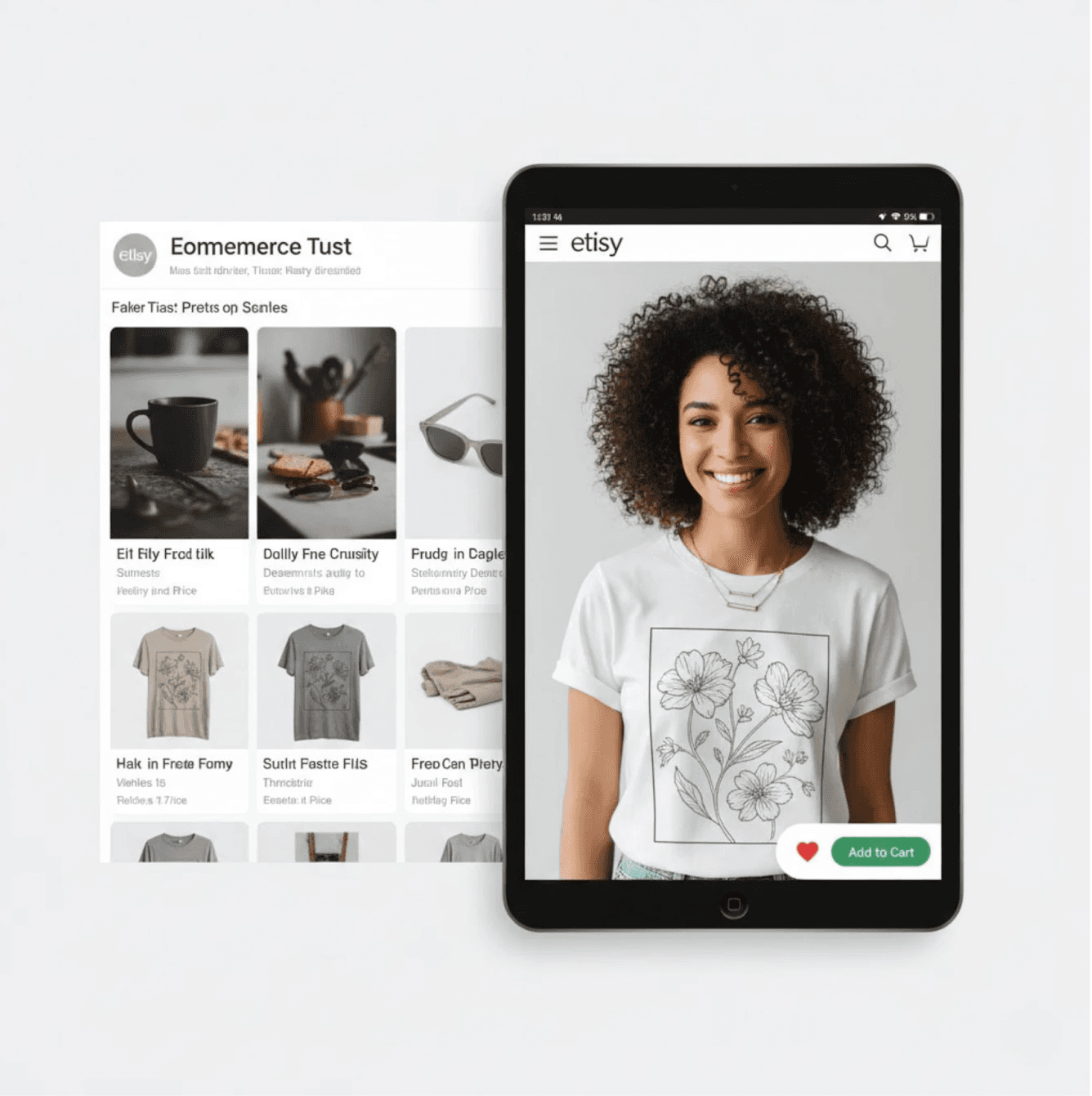
Etsy displays photos before titles in search. Buyers compare multiple listings side-by-side. The most visually compelling option usually wins the click.
Strong photography:
Builds trust
Communicates quality
Justifies pricing
Reduces buyer doubt
This matters most in categories like:
Clothing & apparel
Eyewear & accessories
Jewelry
Home décor
Lifestyle products
In these categories, buyers want to see before they believe.
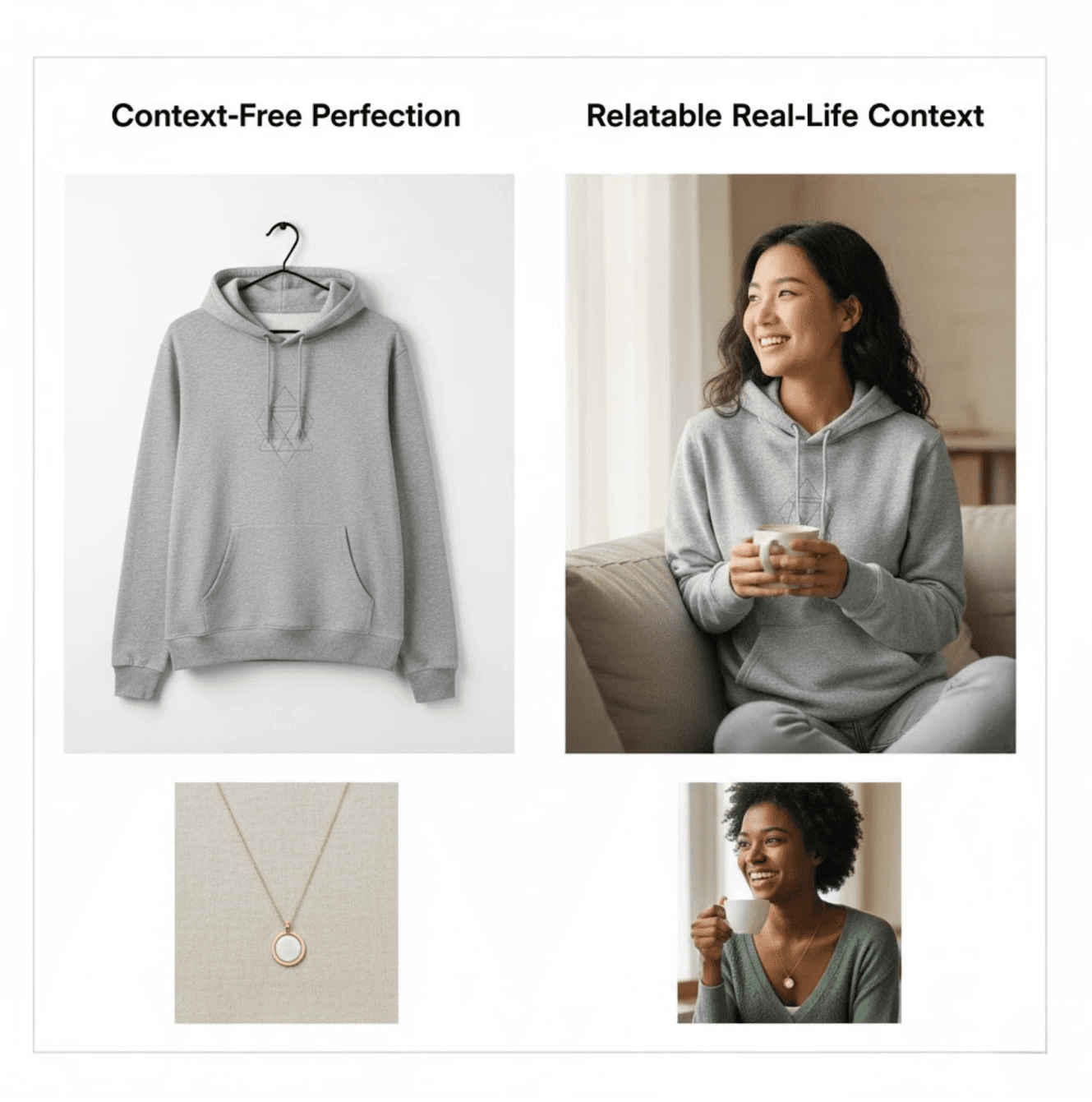
6. Context Sells Better Than Perfection
Perfect flat-lay photos aren’t always enough.
Buyers want context. They want to see:
How a product fits on a body
How large it looks in real life
How it works in everyday use
A hoodie on a hanger answers fewer questions than a hoodie worn by a person. A necklace on a table feels less real than one styled naturally.
Context reduces imagination effort, and the less buyers have to imagine, the more likely they are to buy.
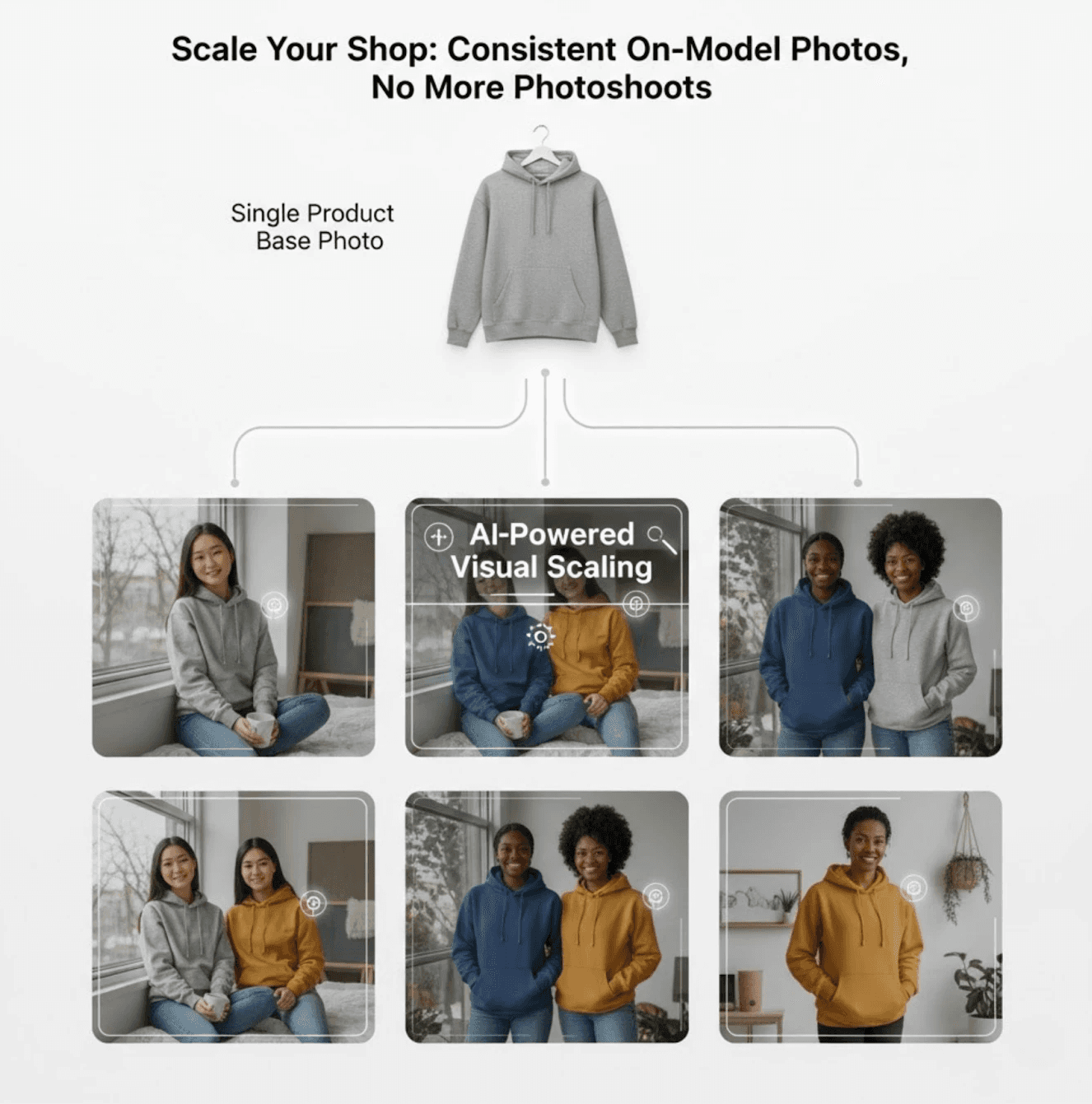
7. Scaling Visual Quality Without Constant Photoshoots
As Etsy shops grow, maintaining consistent product visuals becomes increasingly difficult. New variations, colors, and seasonal updates often mean more photoshoots, which are costly and time-consuming.
Because of this, many sellers reuse older images or skip lifestyle and on-model shots altogether. Over time, this can make listings feel inconsistent or outdated.
To solve this, some sellers now use AI-based visual platforms: such as Look Atlas, to turn existing product photos into clean, on-model or lifestyle visuals without repeating full photoshoots. This approach allows sellers to refresh listings quickly while keeping visual quality consistent at scale.
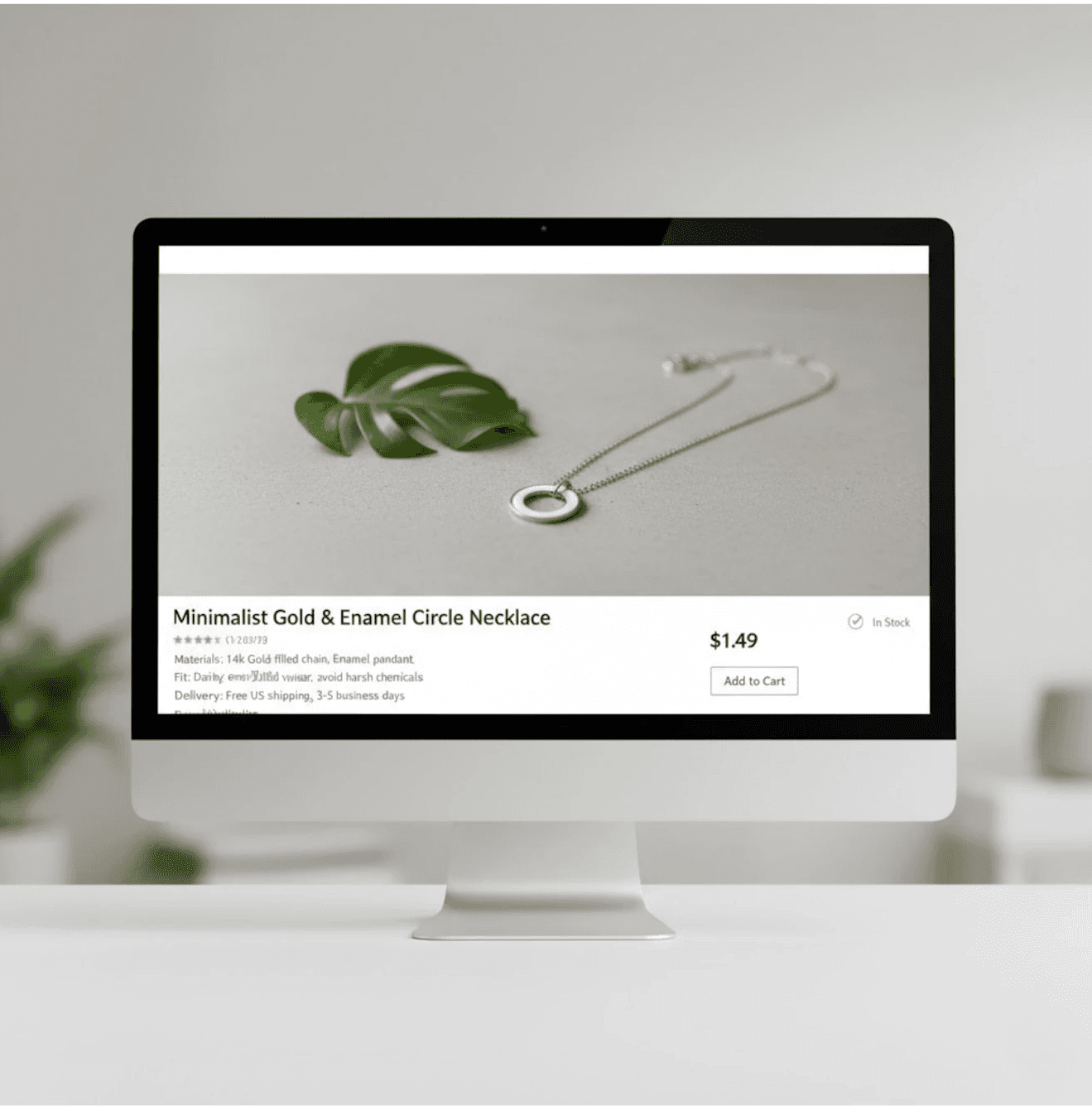
8. Writing Descriptions That Support (Not Replace) Your Images
Descriptions don’t sell on Etsy, they confirm.
Once images grab attention, descriptions should:
Reinforce quality
Answer practical questions
Reduce uncertainty
Set accurate expectations
Avoid over-explaining what your photos already show. Instead, focus on:
Materials
Fit details
Care instructions
Delivery timelines
When visuals and copy align, trust increases.
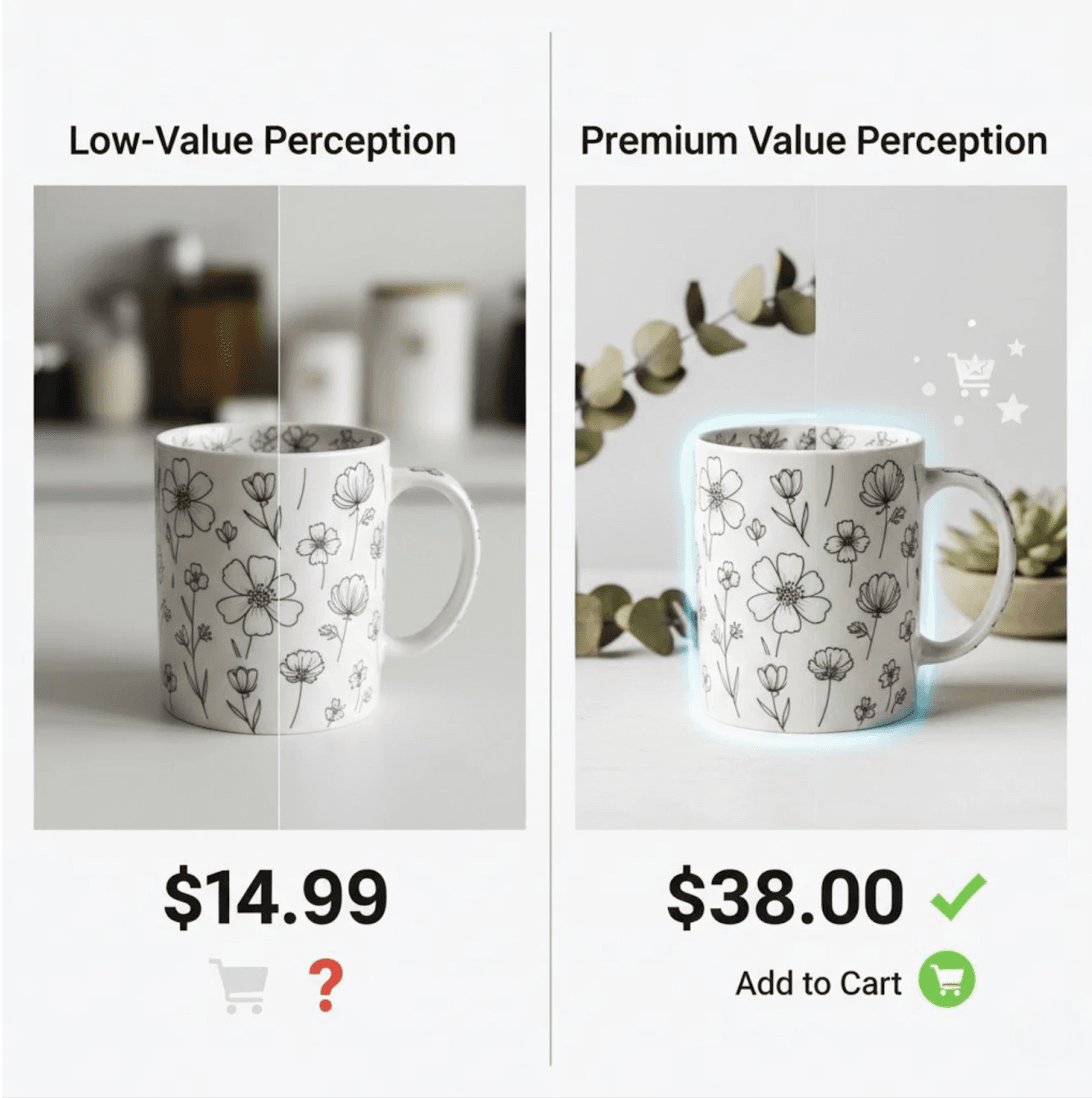
9. Pricing Psychology: How Presentation Affects Willingness to Pay
Many sellers assume price objections are about cost. Often, they’re about perceived value.
A $40 item can feel expensive with weak visuals, and reasonable with strong presentation.
Professional imagery:
Makes products feel premium
Signals legitimacy
Justifies pricing without explanation
If you’re constantly underpricing to compete, improving visuals may allow you to charge what your product is actually worth.

10. Building Shop-Level Trust (Beyond Individual Listings)
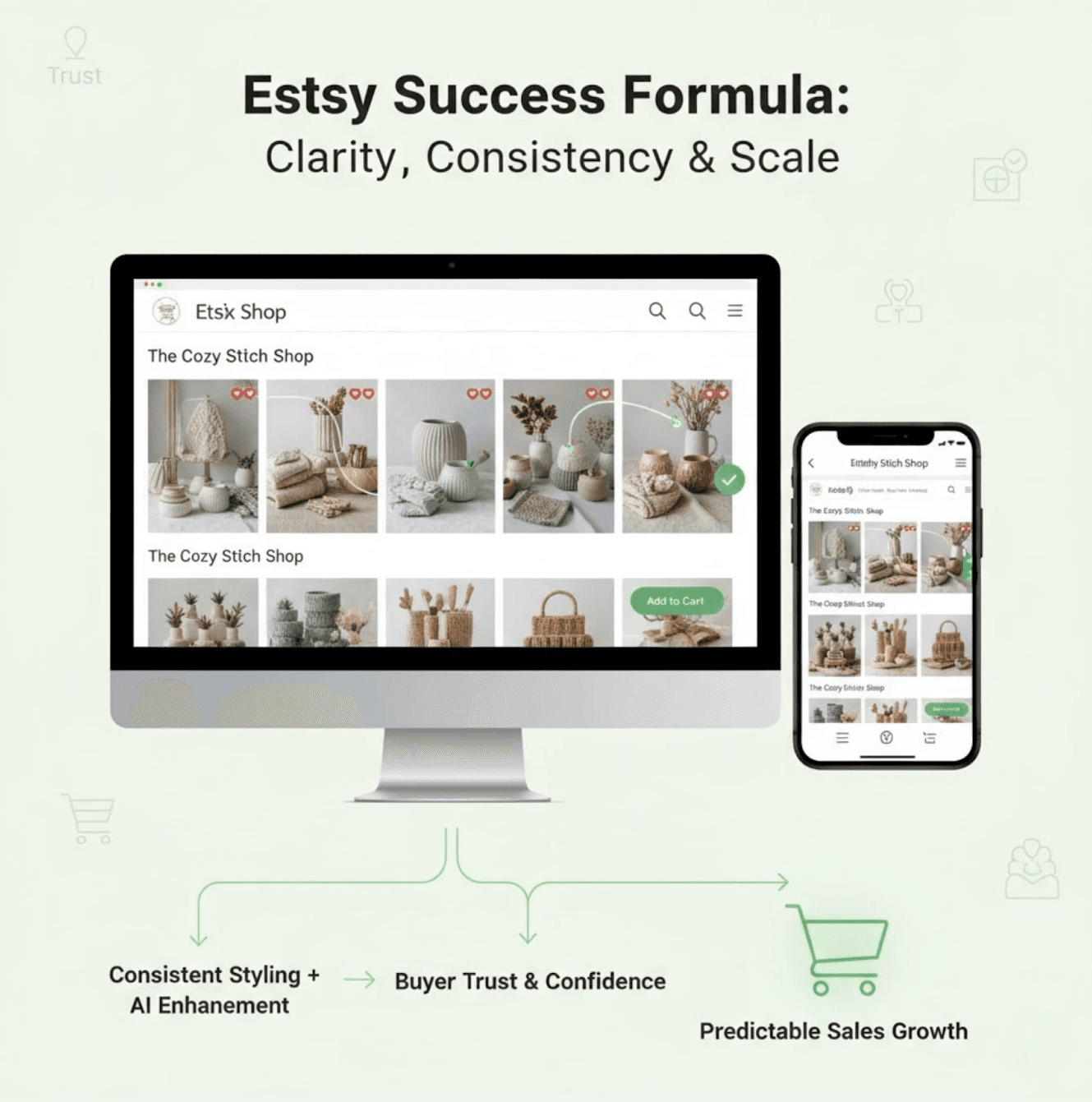
On Etsy, buyers aren’t just assessing a single product, they’re assessing your entire shop. A cohesive, professional presence communicates reliability and builds confidence, making shoppers more likely to purchase and return.
What buyers look for:
Visual consistency: Listings that share a common style, color palette, or photography approach signal professionalism.
Professional presentation: High-quality images, clean layouts, and readable fonts create trust.
Clear branding: A recognizable logo, banner, and consistent tone help shoppers remember your shop.
Cohesive style: Whether it’s rustic, minimalist, or colorful, maintaining a consistent aesthetic makes your shop feel polished and curated.
When your shop presents a unified visual identity, buyers perceive it as more reliable. This trust translates into tangible results:
Repeat purchases: Shoppers are more likely to return when they recognize and trust your brand.
Higher cart values: Confidence in your shop encourages buyers to explore more listings and buy multiple items.
Increased buyer confidence: Consistency reduces uncertainty, helping hesitant shoppers take action.
Visual consistency is one of the most overlooked yet powerful drivers of Etsy success. While individual listings matter, your shop’s overall appearance often determines whether a first-time visitor becomes a loyal customer. Investing in cohesive branding and professional imagery pays off in stronger trust, more sales, and long-term growth.
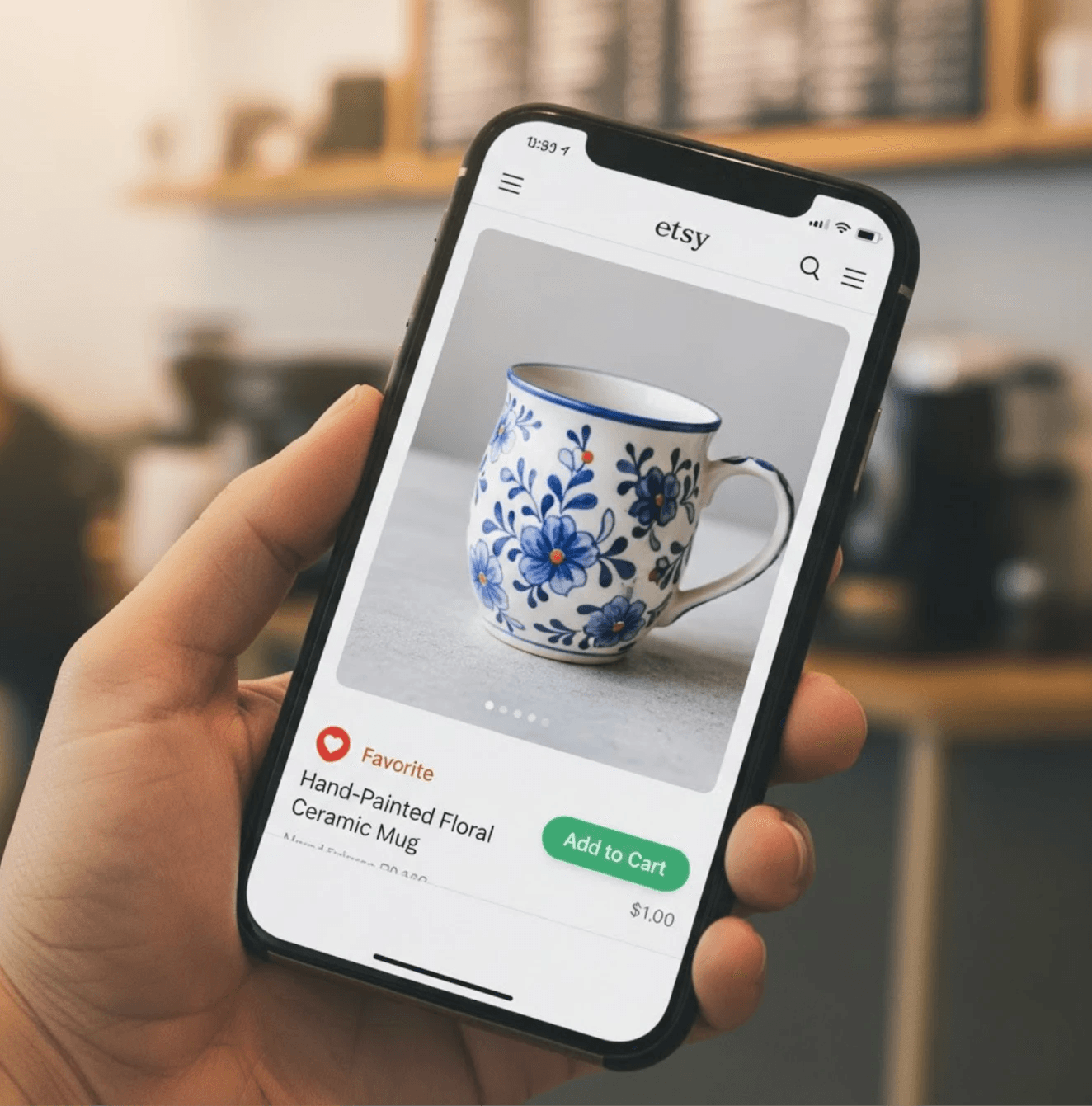
11. Mobile Optimization: Where Most Etsy Sales Are Decided
Did you know that over 60% of Etsy traffic comes from mobile devices? That means the majority of your potential buyers are scrolling through your listings on a phone, not a desktop. On mobile, the way your product appears can make or break a sale, often before a buyer even reads your title or description.
Why Mobile Matters for Etsy Sales
Mobile screens are small, which changes how shoppers interact with listings:
Images dominate the screen: On a mobile device, your product photo is the first thing a buyer notices. If it doesn’t grab attention immediately, they’ll scroll past.
Text is secondary: Buyers rarely read long descriptions on mobile. Clear, eye-catching visuals communicate quality and value faster than words.
Decisions happen quickly: Mobile users scroll quickly, often making purchase decisions in seconds. Every detail of your image counts.
How to Optimize Etsy Images for Mobile
To ensure your listings convert on mobile:
Centered compositions: Place your product in the middle of the frame so it’s immediately visible, even at small screen sizes.
Clear focal points: Highlight the key features of your product, avoid distractions that pull attention away.
Minimal clutter: Busy backgrounds or too many props can make your product hard to see on a tiny screen. Keep it simple. If you want to dive deeper, check out our previous article on:
Strong contrast: Make sure your product stands out against the background. High contrast ensures your images look crisp, even on lower-quality mobile screens.
The Bottom Line
Even the most beautiful desktop images won’t guarantee sales if they don’t perform on mobile. By focusing on mobile-friendly photography, you make it easy for buyers to notice, understand, and love your products instantly, leading to higher click-through rates, more favorites, and ultimately more sales.
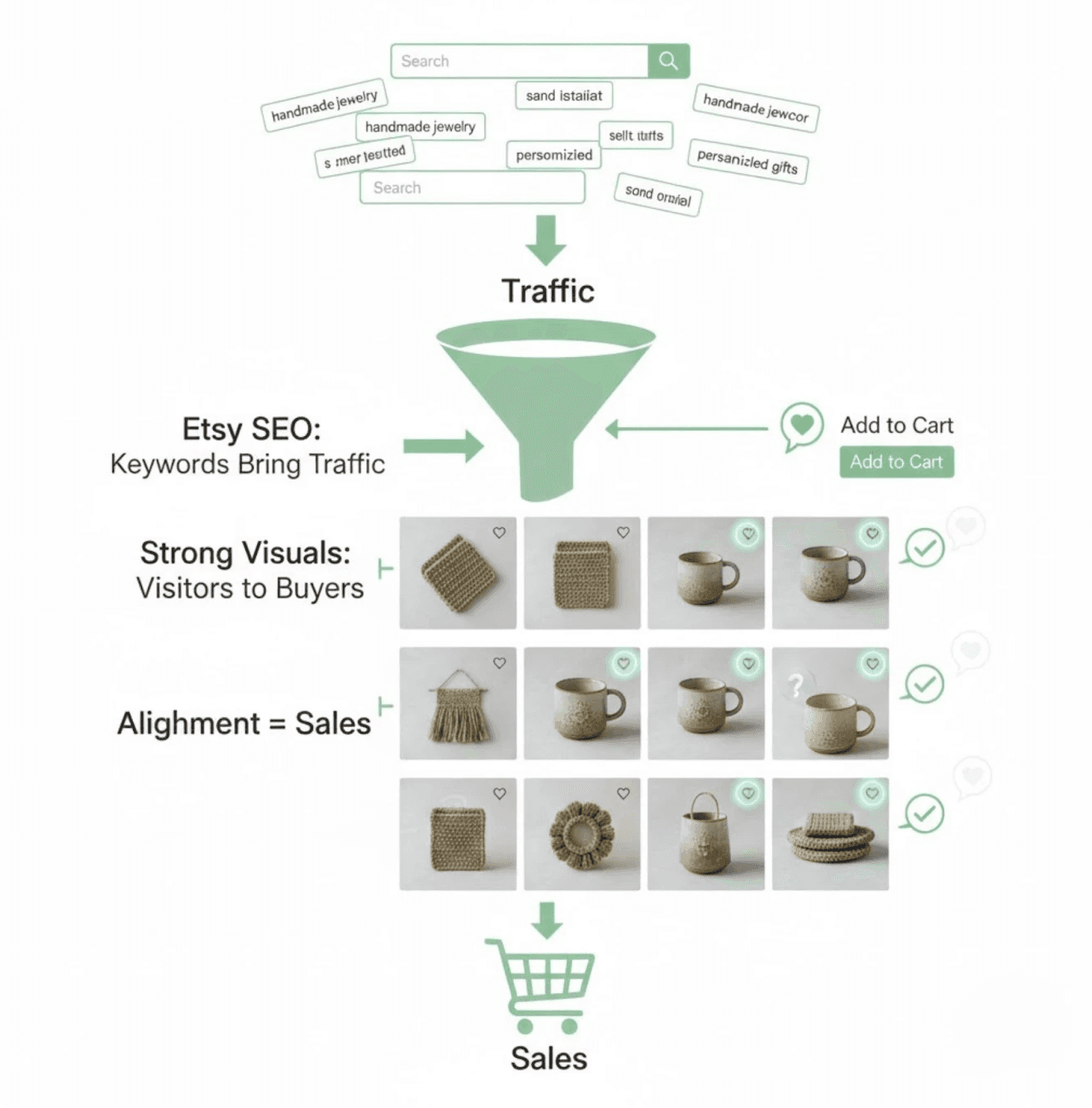
12. SEO Brings Traffic-Conversion Creates Sales
Search engine optimization (SEO) is essential for getting buyers to your Etsy listing, but it’s only half the equation. While strong keywords bring visitors in, it’s your product images and presentation that convince them to hit “Add to Cart.”
The Role of SEO
Etsy SEO ensures your listings appear in front of the right audience. Using relevant, high-performing keywords in your title, tags, and description helps attract shoppers actively searching for products like yours. But attracting clicks is only the first step, what happens after a visitor lands on your listing matters even more.
Why Visuals Are Key to Conversion
If your images don’t match buyer intent, even perfectly optimized listings can fail. Shoppers expect to see exactly what they imagined when they typed their search query. Clear, professional, and accurate visuals bridge the gap between curiosity and purchase, building trust instantly.
Aligning SEO, Visuals, and Buyer Expectations
The most successful Etsy listings align three elements:
Keywords: Attract the right audience.
Visuals: Communicate product quality, size, and usability.
Buyer Expectations: Ensure what shoppers see matches what they hope to get.
When these elements work together, your listings not only convert better but also send positive signals to Etsy’s algorithm. High conversion rates lead to better ranking, creating a cycle where traffic and sales continue to grow organically.
Takeaway
Think of SEO as the magnet that draws shoppers in, and visuals as the persuasive force that turns clicks into sales. Without both, your listing might get views, but it won’t generate revenue. True Etsy success comes from traffic + conversion synergy.
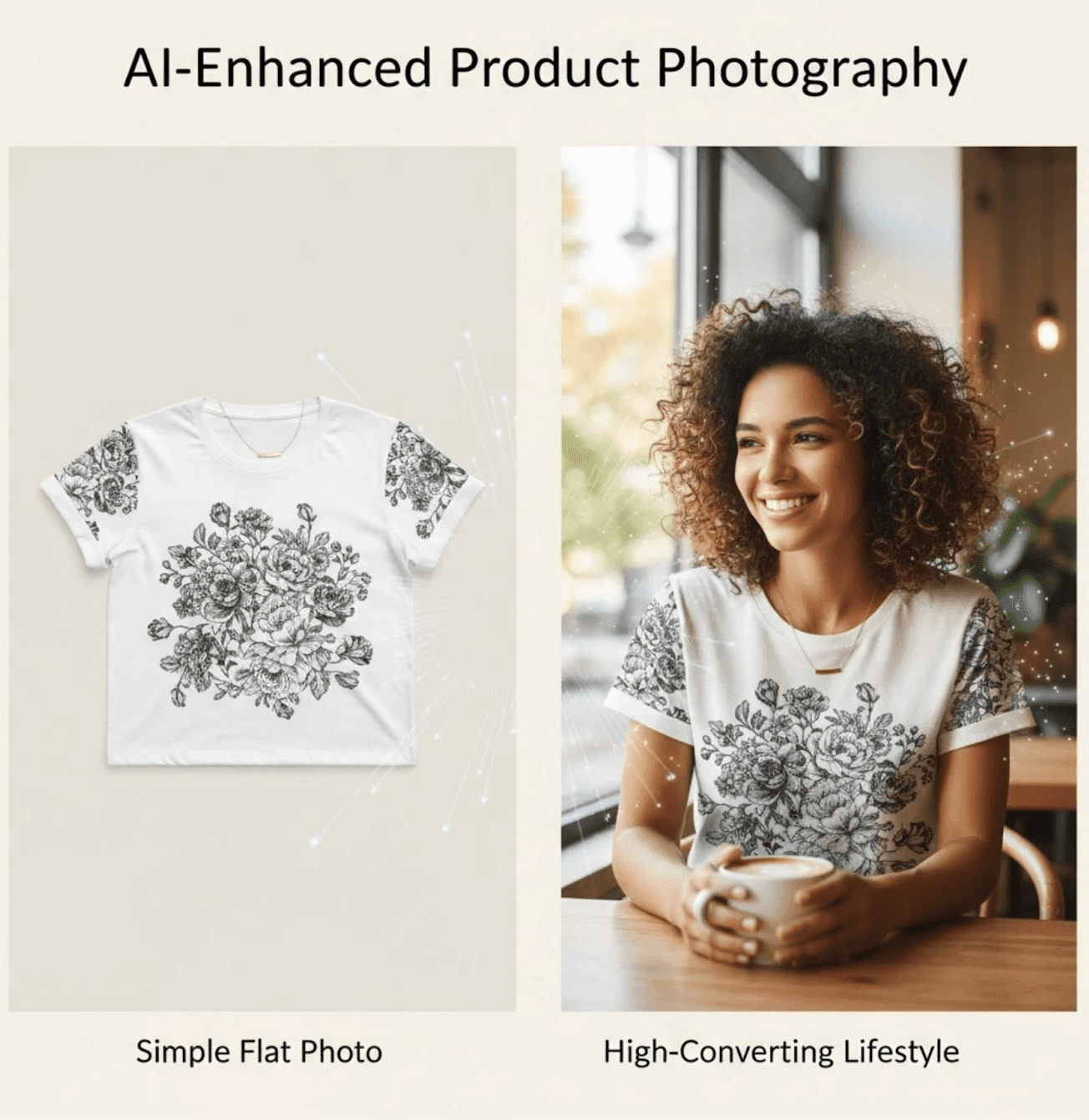
13. A Smarter Way to Improve Etsy Product Images
As buyer expectations rise, Etsy sellers are realizing that standard product photos aren’t enough. Shoppers now expect professional, lifestyle-oriented visuals that show products in real-world contexts, but organizing physical photoshoots for every listing update can be time-consuming and expensive.
From Simple Shots to High-Converting Visuals
A smarter approach starts small: begin with a simple product image and enhance it into lifestyle or on-model visuals. This strategy allows sellers to improve the perceived quality of their listings without the logistical headache of traditional photoshoots.
How Tools Like Look Atlas Help
Platforms like Look Atlas transform plain product photos into realistic, model-worn images, eliminating the need for models, studios, or elaborate setups. With these tools, Etsy sellers can:
Show products in context: Lifestyle images help buyers visualize the product in use, increasing trust and desire.
Maintain visual consistency: Consistent, professional imagery strengthens your brand identity across listings.
Upgrade listings faster: Digital enhancements let you refresh product visuals quickly, keeping your shop current.
Reduce production costs: No need for expensive photography equipment, studio time, or model fees.
Why This Matters for Etsy Sellers
For Etsy sellers, this method bridges the gap between basic product shots and high-converting visuals. It makes it easier to compete with top-performing shops that use professional lifestyle photography while keeping budgets and time commitments under control.
By leveraging smart image enhancement tools, you can turn every product into a visual star, attract more buyers, and ultimately boost sales without breaking the bank.
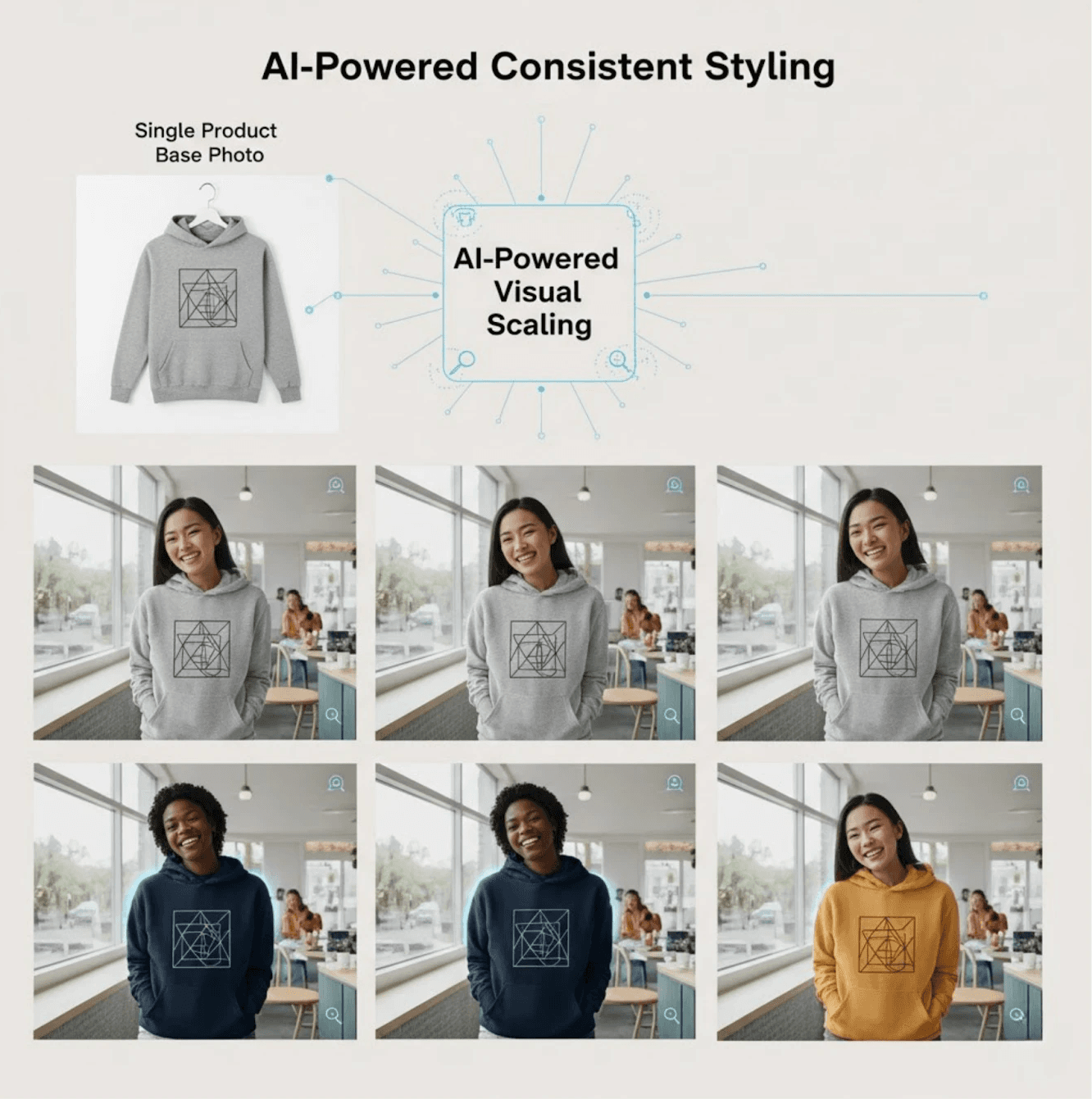
14. When AI-Based Product Imagery Makes Sense for Etsy Sellers
AI-assisted product imagery isn’t a gimmick, it’s a practical tool for modern Etsy sellers, especially in visually-driven categories. While traditional photography still has its place, AI can streamline your workflow, reduce costs, and help your listings convert faster.
Ideal Scenarios for AI Imagery
AI-based visuals are particularly useful when:
You sell clothing, eyewear, or wearable accessories: These categories benefit from seeing products “in use” on models.
You need multiple model styles or poses: Showcasing your product on different body types or in various scenarios is fast and easy with AI.
You launch new designs frequently: AI allows you to create professional images for each new variation without scheduling photoshoots.
You want consistent visuals across listings: Maintaining a cohesive style across your shop builds brand trust and professionalism.
You’re testing new products before investing in full shoots: AI imagery lets you validate buyer interest before committing to expensive photography.
Removing Friction, Not Creativity
AI-based imagery isn’t about replacing human creativity, it’s about removing the friction from the production process. By handling repetitive or resource-intensive tasks, AI frees you to focus on designing, marketing, and growing your Etsy shop, while still delivering high-quality, realistic product visuals that drive conversions. For a deeper dive.
15. Common Reasons Etsy Listings Fail to Convert
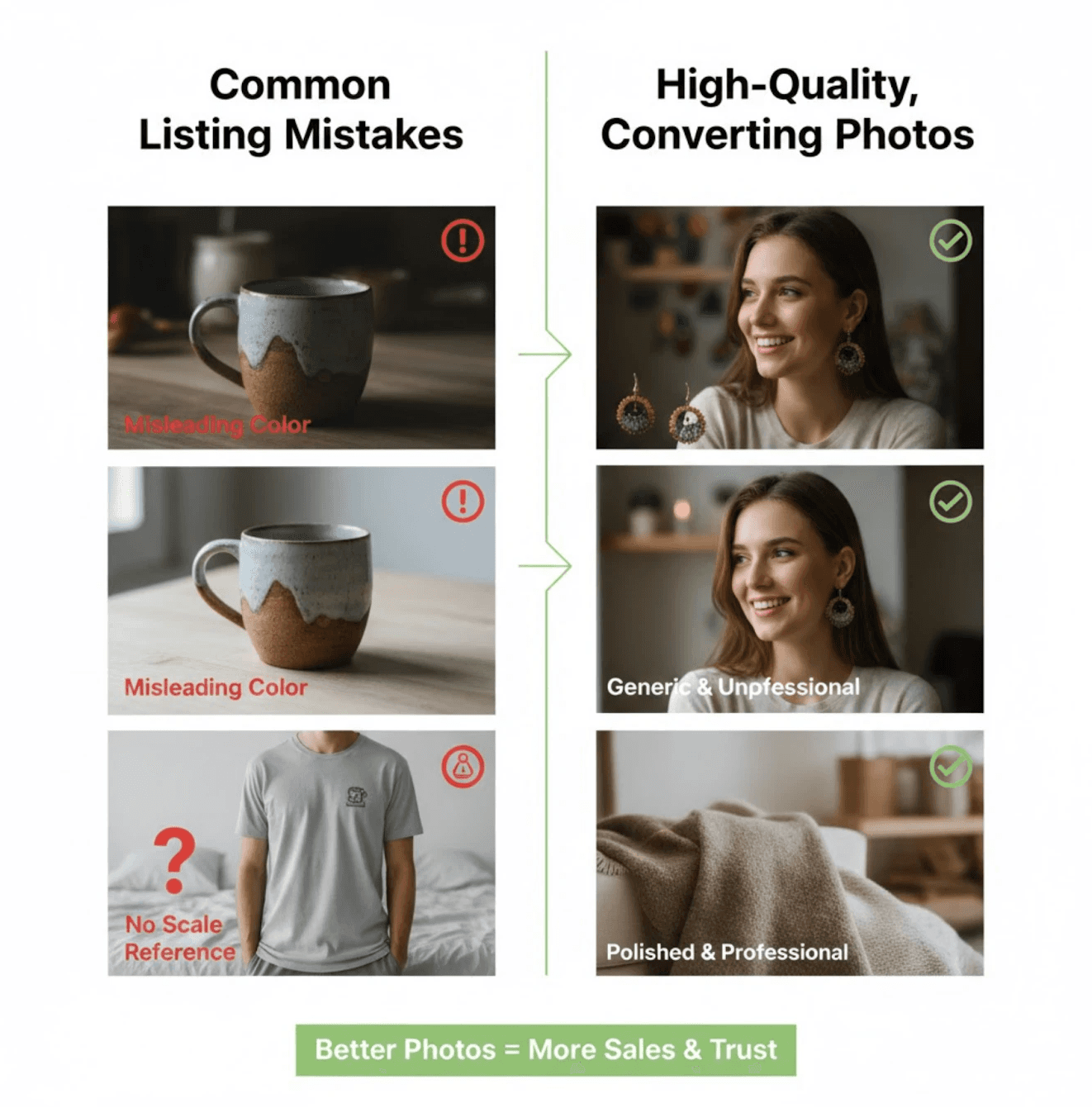
Even well-priced products with strong SEO can struggle to turn visitors into buyers if the visuals don’t inspire confidence. Many Etsy listings fail because of avoidable mistakes that increase buyer doubt.
Conversion Killers to Watch Out For
Dark or blurry images: Low-quality photos make products look cheap or unclear, turning buyers away instantly.
No scale reference: Without context, shoppers can’t tell the true size of your product, leading to hesitation or returns.
Inconsistent lighting: Uneven or unnatural lighting can distort your product and break visual trust.
Overcrowded backgrounds: Too many props or busy environments distract from the product and confuse buyers.
Misleading colors: Colors that look different online than in real life create disappointment and reduce trust.
Generic presentation: Standard, uninspired product shots fail to stand out in a sea of competitors.
The Bottom Line
Every misstep adds uncertainty in the buyer’s mind, and doubt kills sales faster than price or competition. Focusing on clarity, consistency, and context in your images helps build trust and encourages shoppers to click “Add to Cart.”
16. Long-Term Etsy Growth Is About Reducing Buyer Doubt
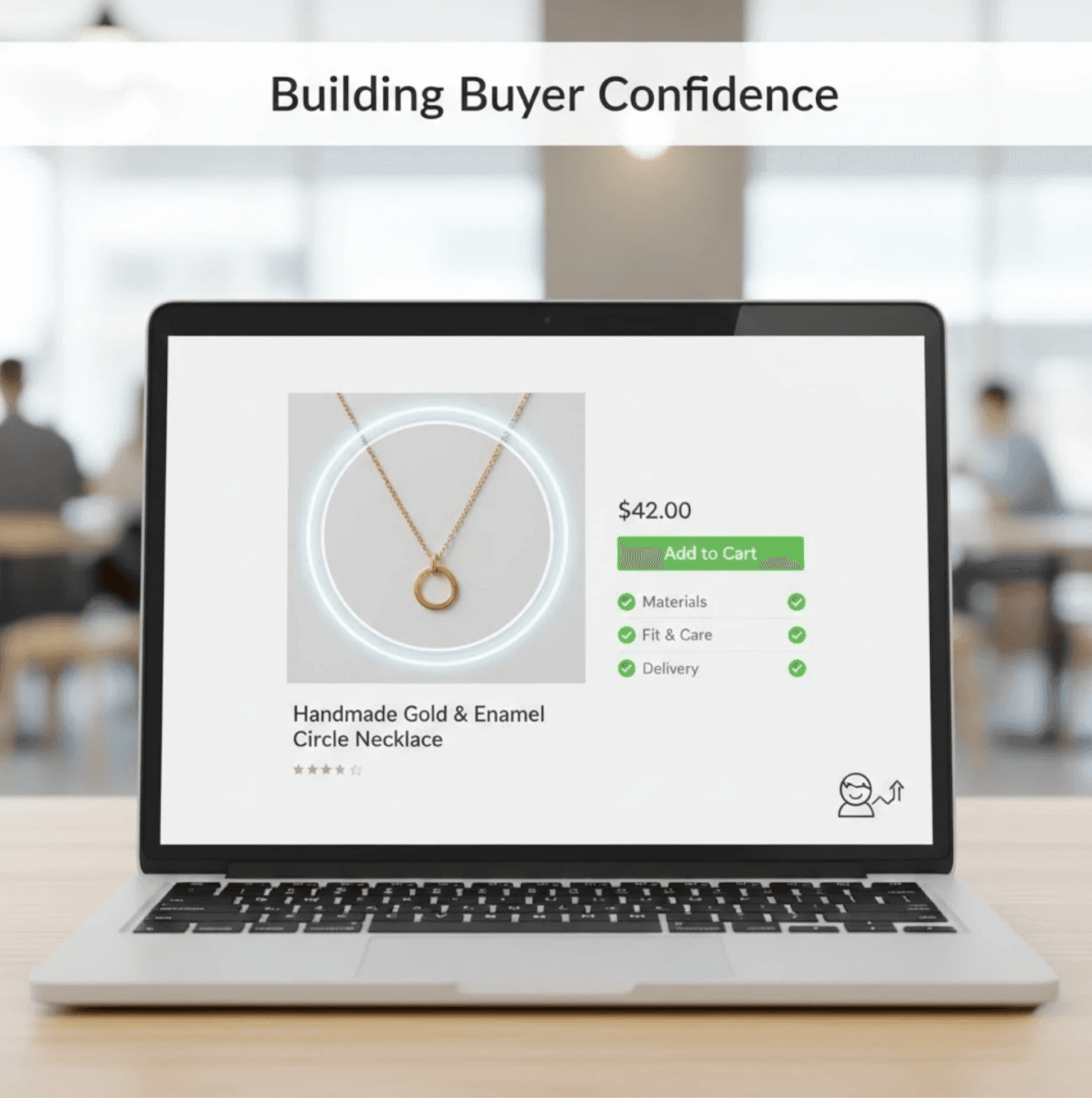
Successful Etsy shops don’t rely on luck, they focus on building buyer confidence at every step. Each listing improvement should answer one simple question:
“Does this make the buyer feel more confident?”
How to Build Confidence
Better images: Clear, professional, and realistic visuals reassure buyers about quality and authenticity. Some sellers even use tools like Look Atlas to elevate plain photos into on-model or lifestyle shots, maintaining consistency without repeated photoshoots.
Clear descriptions: Detailed product information, sizing, materials, and usage instructions eliminate guesswork.
Stronger presentation: Consistent branding, cohesive photography, and organized layouts signal professionalism and reliability.
Reducing doubt turns casual visitors into confident buyers. When buyers trust your shop, they’re more likely to purchase, return, and recommend your products. Over time, this confidence-driven approach drives sustainable growth, building a loyal customer base and boosting your shop’s reputation.
17. Final Thoughts: How to Get Sales on Etsy in 2026 and Beyond
Getting sales on Etsy in 2026 isn’t about shortcuts or tricks, it’s about clarity, trust, and presentation. Buyers make decisions in seconds, and the sellers who win are those who make the path to purchase simple and confident.
What Top Etsy Sellers Do Differently
Understand buyer psychology: They know how shoppers browse, what signals build trust, and how to match expectations.
Invest in visual presentation: High-quality, lifestyle-oriented, and consistent images turn curiosity into purchase intent.
Optimize for mobile: With over 60% of traffic coming from phones, mobile-first visuals and layouts are essential.
Reduce uncertainty at every step: Clear images, accurate colors, scale references, and detailed descriptions remove hesitation.
As Etsy competition grows, the advantage goes to sellers who show products clearly, professionally, and consistently. Whether using improved DIY photography or modern tools that transform simple product shots into on-model, lifestyle visuals, the goal remains the same: help buyers see the product, trust it, and imagine owning it.
Do that well, and your Etsy shop won’t just get occasional sales. It will achieve predictable, scalable, and sustainable growth, turning your store into a long-term business that thrives in a competitive marketplace.
