
Professional Jewelry Photographer: Costs, Studio Rates & Smarter Alternatives in 2026
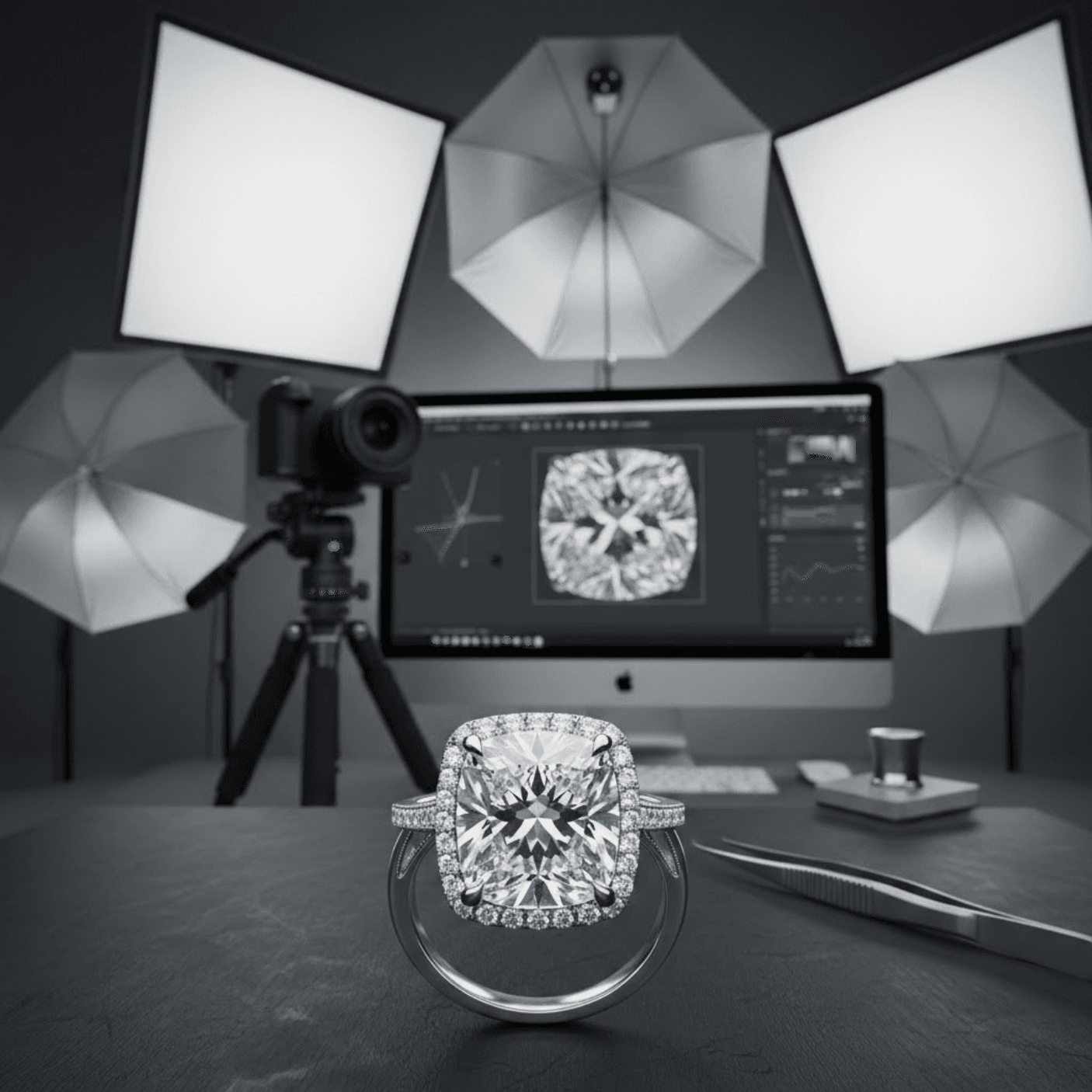
Jewelry is one of the most visually sensitive categories in ecommerce. When customers shop for rings, necklaces, bracelets, or earrings online, they rely almost entirely on images to judge shine, clarity, craftsmanship, and perceived value. A slight lighting mistake can make gold look dull, diamonds look cloudy, or gemstones appear off-color—directly impacting trust and sales.
Unlike standard product photography, jewelry photography is significantly more complex. Reflective surfaces, tiny details, transparency, and intricate settings require specialized lighting, macro lenses, careful retouching, and often advanced post-production techniques. Capturing sparkle without distortion is both technical and time-intensive.
For growing brands, this creates a serious cost concern. High production standards mean higher studio rates, longer editing times, and expensive reshoots—making it difficult to scale catalogs with multiple designs, metals, and stone variations.
In this guide, we’ll break down jewelry photography pricing, uncover hidden fees most brands overlook, and explore modern, scalable alternatives that help you maintain premium visuals without overwhelming your budget.
1. Why Jewelry Photography Requires a Specialist
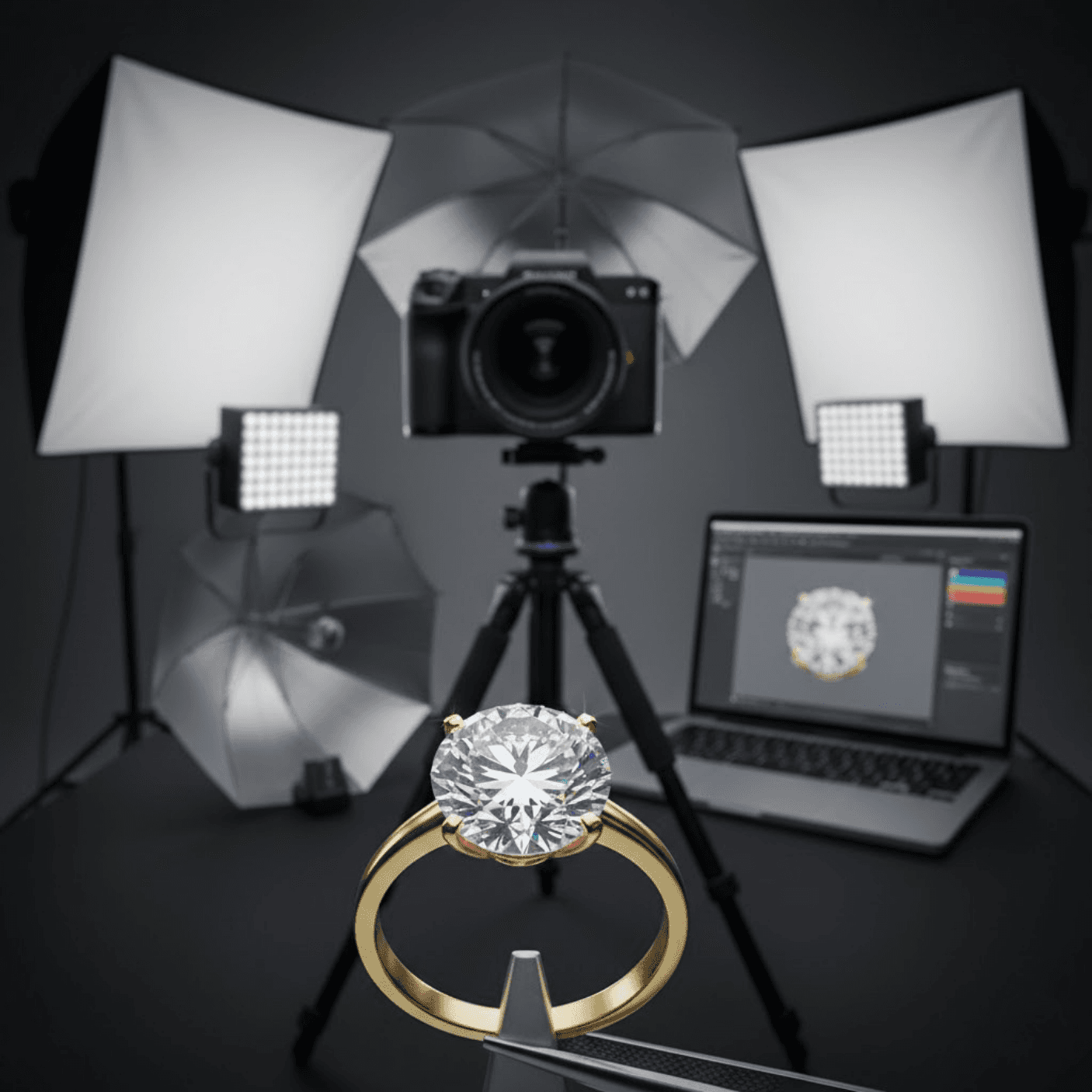
Jewelry is one of the most technically demanding products to photograph. Unlike apparel or packaged goods, metal surfaces, diamonds, and gemstones are highly reflective. They capture not only light, but everything around them. Without the right studio lighting setup, unwanted reflections, glare, or dullness can ruin the final image.
Capturing brilliance and sparkle requires precise lighting angles, diffusers, and controlled highlights. Even a slight shift in positioning can dramatically change how a diamond refracts light or how gold reflects warmth. This is why jewelry photographers rely on macro precision, specialized lenses, and controlled environments designed specifically for small, reflective objects.
Another key factor is focus stacking, a technique where multiple images are combined to ensure the entire piece is sharp from front to back. Because jewelry is small and detailed, achieving full clarity in a single shot is often impossible. The final image then goes through high-end retouching to enhance sparkle, remove dust or micro-scratches, and perfect color accuracy.
These additional technical steps significantly affect the cost per image, making jewelry photography more expensive than standard product shoots. General photographers may produce decent results, but without specialized experience in lighting, macro capture, and advanced post-production, the final visuals may fail to communicate the premium quality customers expect.
2. What Does a Professional Jewelry Photographer Cost?
Jewelry photography sits at the higher end of ecommerce production pricing due to its technical complexity and post-production demands. Costs vary based on the level of detail required, brand positioning, and whether the shoot involves models or lifestyle setups.
Here’s a practical pricing breakdown for 2026:
Per-Image Pricing
$30 to $80 per image – Simple product-on-white shots (basic rings, studs, minimal retouching)
$80 to $200 per image – Detailed macro shots with focus stacking and enhanced sparkle
$200 to $500+ per image – Luxury jewelry requiring advanced retouching and precision lighting
Studio Day Rates
$800 to $2,500 per day – Specialized jewelry studio with professional lighting setup
$2,500 to $6,000+ per day – High-end production including stylists, art direction, and advanced post-production
Campaign Package Pricing
$1,500 to $5,000 – Small collection shoots (multiple SKUs, clean backgrounds)
$5,000 to $15,000+ – Luxury campaigns with models, lifestyle visuals, and social media assets
Simple vs. Luxury Jewelry Cost Differences
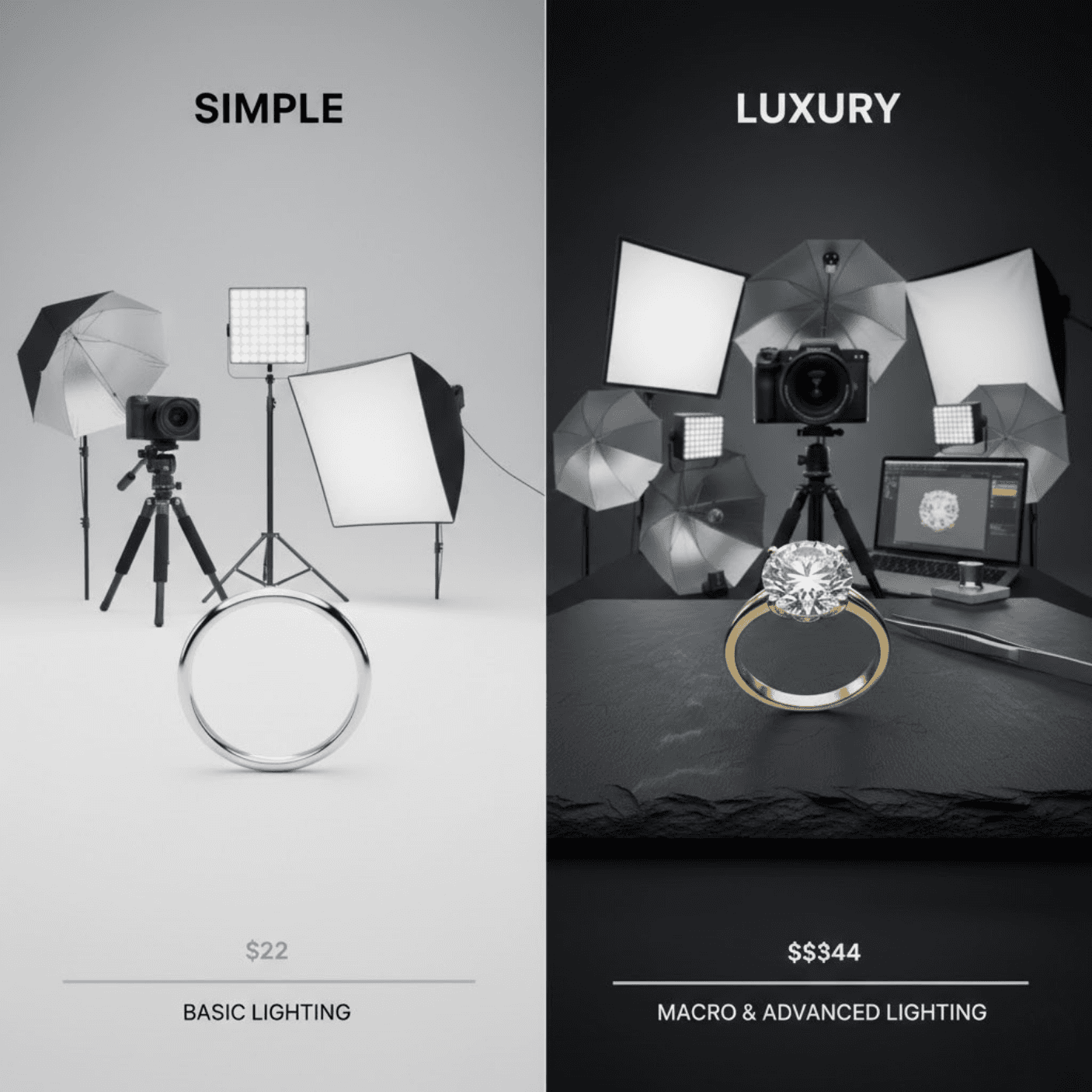
Simple jewelry (minimal metalwork, fewer stones) typically requires less retouching and lighting complexity.
Luxury or diamond-heavy pieces demand extensive macro precision, focus stacking, and high-end retouching, significantly increasing cost per image.
Because jewelry visuals directly influence perceived value, brands often invest more per image compared to other product categories. The difference between a $50 image and a $300 image can dramatically affect how premium the product appears online.
3. Jewelry Photography Pricing Models Explained
Jewelry photography studios and freelancers offer several pricing models to suit different catalog sizes, campaign goals, and budget levels. Understanding these options helps brands choose the most efficient approach.
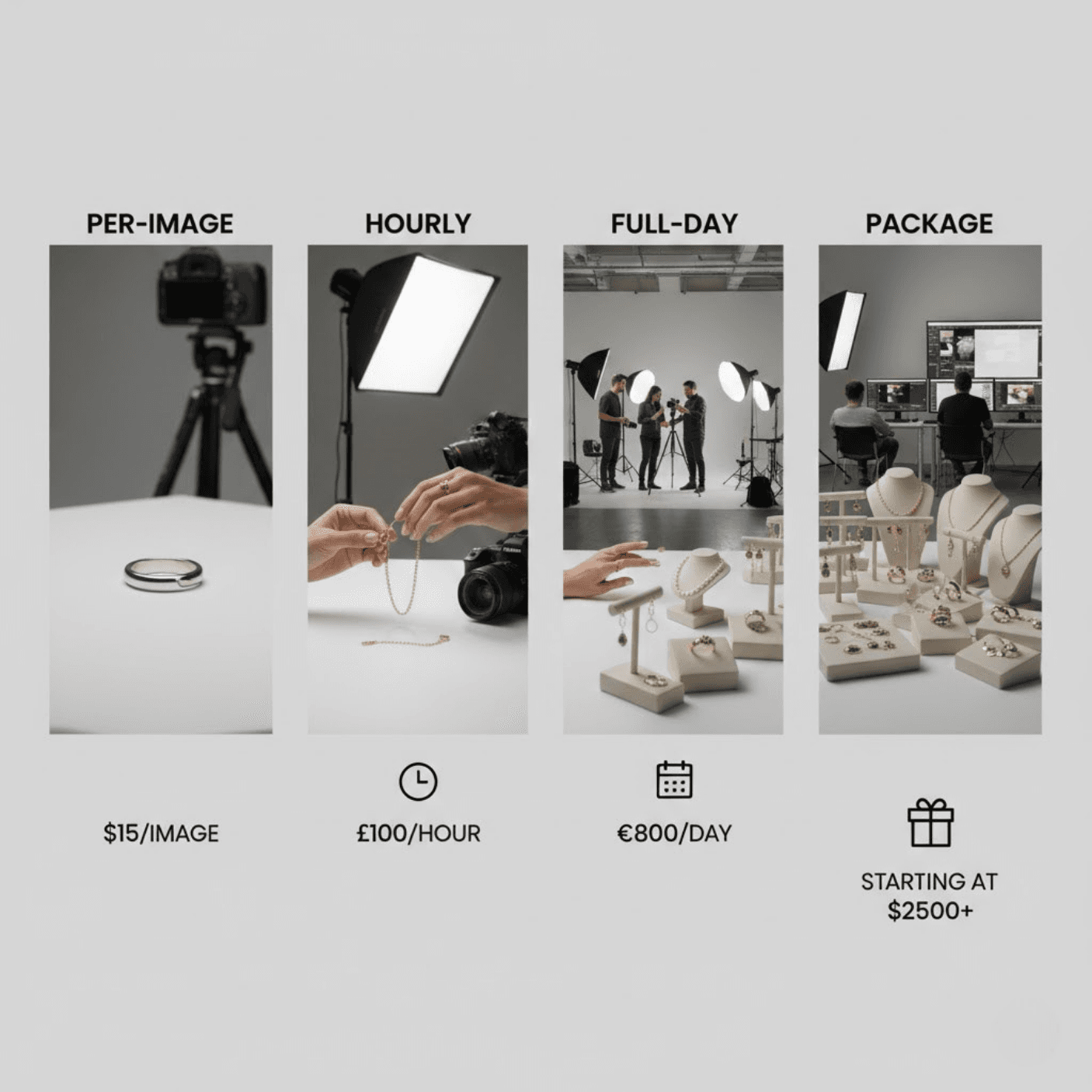
Per-Image Pricing
When it makes sense: Ideal for small collections, individual products, or brands testing new designs. You pay for each final image, which is straightforward but can get expensive for larger catalogs.
Pros: Easy to budget for a few products; no long-term commitment.
Cons: Doesn’t scale well for growing inventories with multiple variants.
Hourly Studio Rates
Best for small batches: Some photographers charge by the hour, offering flexibility for quick product shoots or limited SKUs.
Pros: Cost-effective for a few items or trial runs.
Cons: Setup time, lighting adjustments, and retouching can make costs rise unexpectedly.
Full-Day Studio Production
Best for collections and campaigns: Full-day rates cover studio rental, models, lighting, and assistants. Perfect for capturing multiple products efficiently.
Pros: Efficient for shooting larger collections and creating consistent visuals.
Cons: High upfront investment, which may not be cost-effective for single pieces.
Retainer or Package Pricing
For brands with frequent launches: Packages combine multiple images and services for a set period or volume, ideal for seasonal collections or recurring campaigns.
Pros: Predictable costs and better value for bulk or ongoing shoots.
Cons: Less flexible for ad-hoc products outside the package scope.
Summary:
Per-image pricing works for small or one-off products, hourly rates suit limited batches, full-day studio production is ideal for collections and campaigns, and retainer or package pricing benefits brands with recurring launches. Selecting the right model depends on your catalog size, launch frequency, and desired image quality.
4. Hidden Costs Jewelry Brands Often Overlook
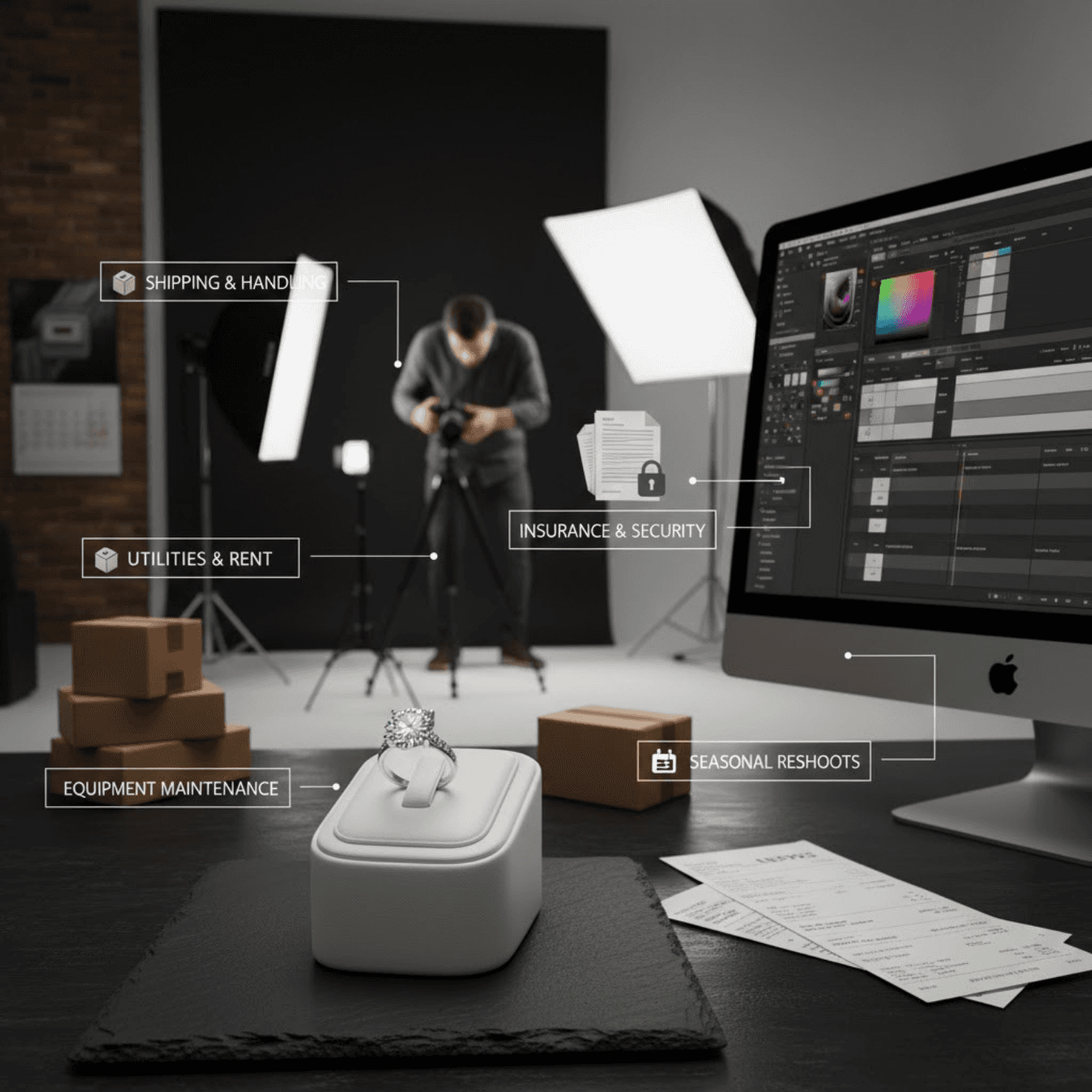
When budgeting for jewelry photography, the base rate is only part of the picture. The “true cost of ownership” often includes several hidden expenses that can quickly add up:
Advanced retouching fees: High-end jewelry shots require meticulous post-production to enhance sparkle, remove dust, and perfect color.
Focus stacking charges: Macro photography often involves combining multiple images to ensure full sharpness, which can incur extra fees.
Model hiring: Lifestyle or on-model shoots increase costs for fees, scheduling, and contracts.
Studio rental: Specialized lighting setups and macro equipment often require professional studio space.
Insurance & secure shipping: Valuable jewelry pieces must be insured and transported safely to avoid damage or loss.
Reshoots for seasonal collections: New designs, color variations, or updated campaigns may require additional photography sessions.
Considering these factors helps brands plan more accurate budgets and understand the full investment required to maintain high-quality jewelry visuals at scale.
5. Is Hiring a Professional Jewelry Photographer Worth It?
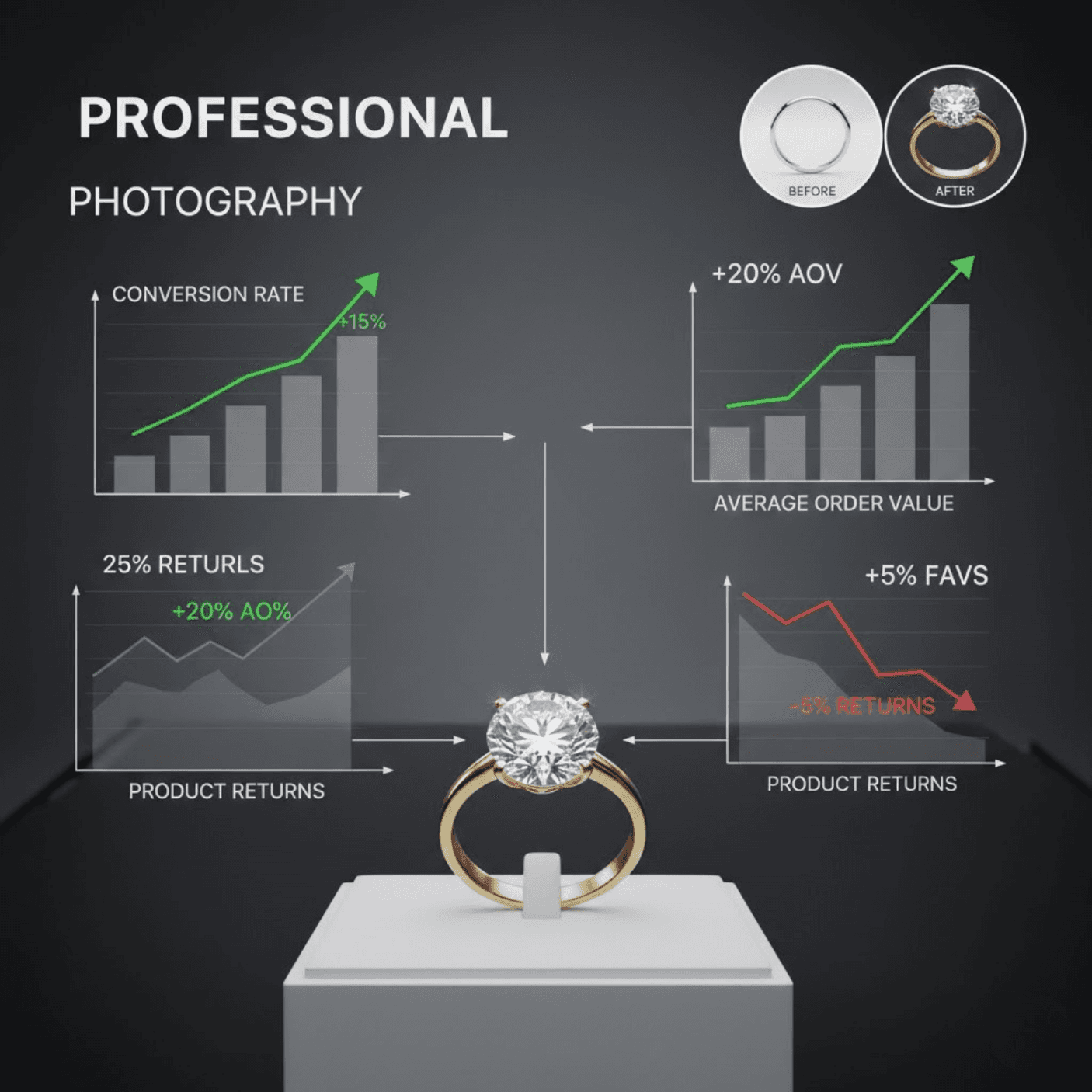
Investing in professional jewelry photography is more than just paying for pretty images, it’s a strategic decision that drives ROI.
Conversion rate impact: High-quality, detailed visuals help shoppers understand sparkle, color, and craftsmanship, increasing click-to-purchase likelihood.
Brand perception: Professional photos signal premium quality and build trust, positioning your brand as high-end and reliable.
Increased average order value (AOV): Shoppers are often willing to pay more when products are showcased clearly and attractively.
Reduced returns: Accurate images reduce buyer uncertainty, minimizing dissatisfaction and costly product returns.
For jewelry brands, the cost of hiring a specialist is directly tied to revenue growth, making professional photography a measurable investment rather than a discretionary expense.
6. The Scalability Challenge for Growing Jewelry Brands
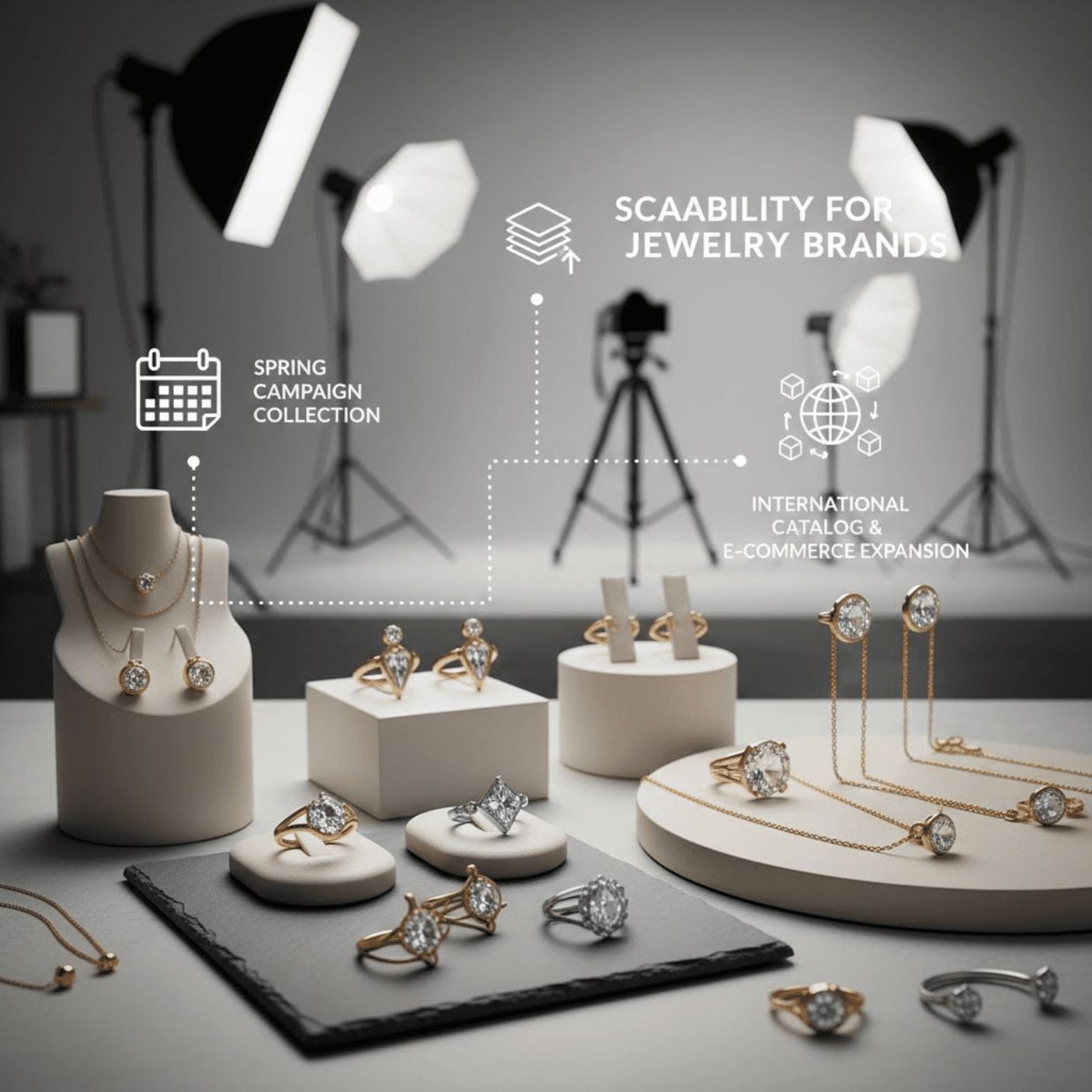
As jewelry brands expand, traditional photography workflows quickly hit their limits:
Expanding collections: More rings, necklaces, bracelets, and sets require exponentially more images.
New gemstone variations: Each stone type, cut, or color often needs separate shots to capture its unique sparkle.
Seasonal campaigns: Holidays, limited editions, and special collections demand timely, fresh visuals.
International catalog updates: Global marketplaces often require multiple angles, close-ups, and compliant images for different regions.
Traditional studio workflows, relying on models, specialized lighting, and extensive retouching, become time-consuming and costly, especially when scaling catalogs or running frequent campaigns.
This growing complexity has led brands to explore modern, scalable solutions that reduce cost and speed up production without compromising visual quality.
7. Traditional Jewelry Photography vs Scalable Visual Workflows
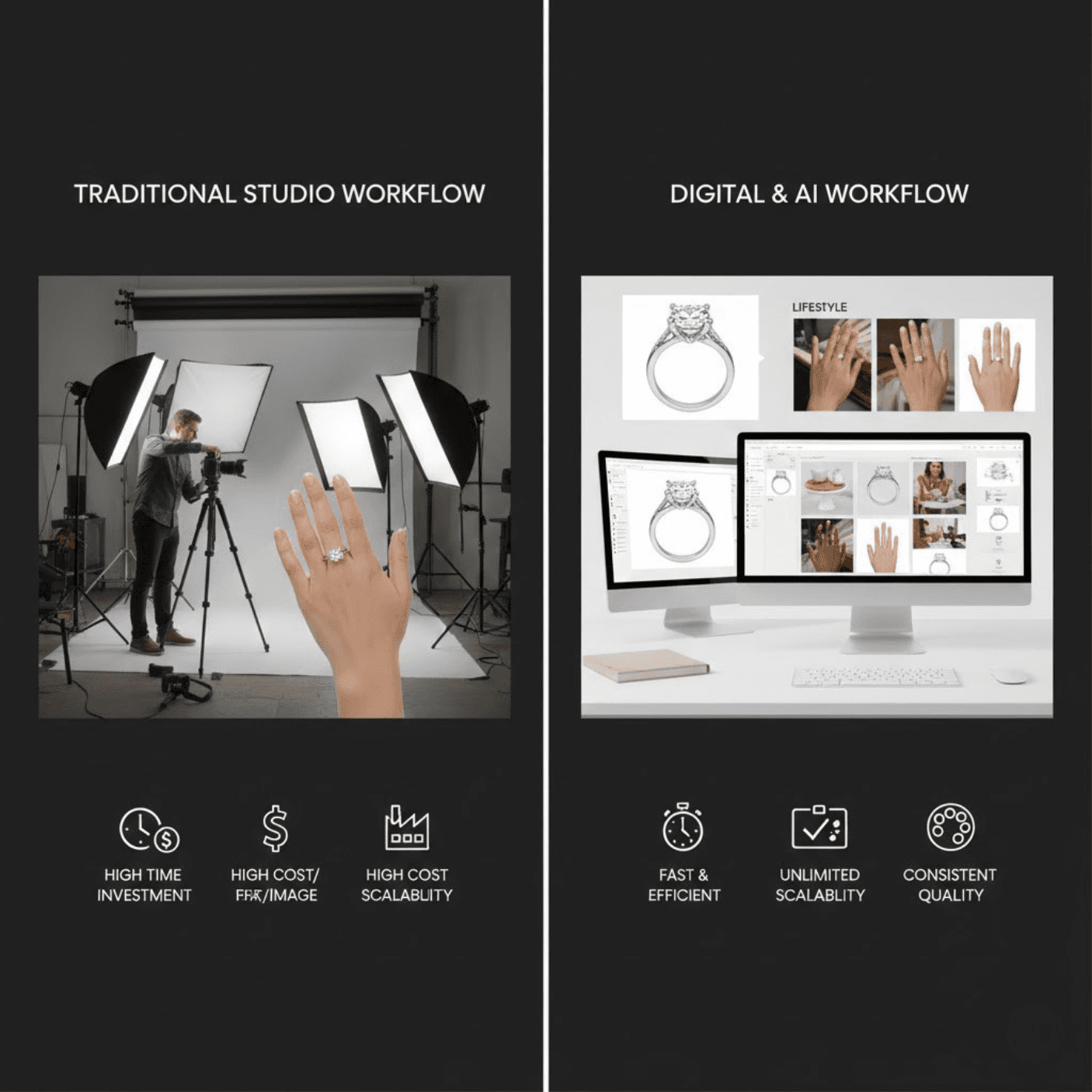
Relying solely on traditional studios presents several challenges for jewelry brands:
Studio-only limitations: Scheduling, model availability, and specialized lighting setups create bottlenecks.
Time delays: Preparing, shooting, and retouching each piece can take days or weeks, slowing product launches.
Rising cost per image: High-end retouching, focus stacking, and multiple angles quickly add up, especially for large catalogs.
In contrast, scalable visual workflows, which combine a single flat product shot with digital or AI-assisted image generation, allow brands to produce multiple on-model and lifestyle variations quickly. This hybrid approach maintains quality while reducing costs and accelerating time-to-market, making it ideal for growing jewelry catalogs and seasonal campaigns.
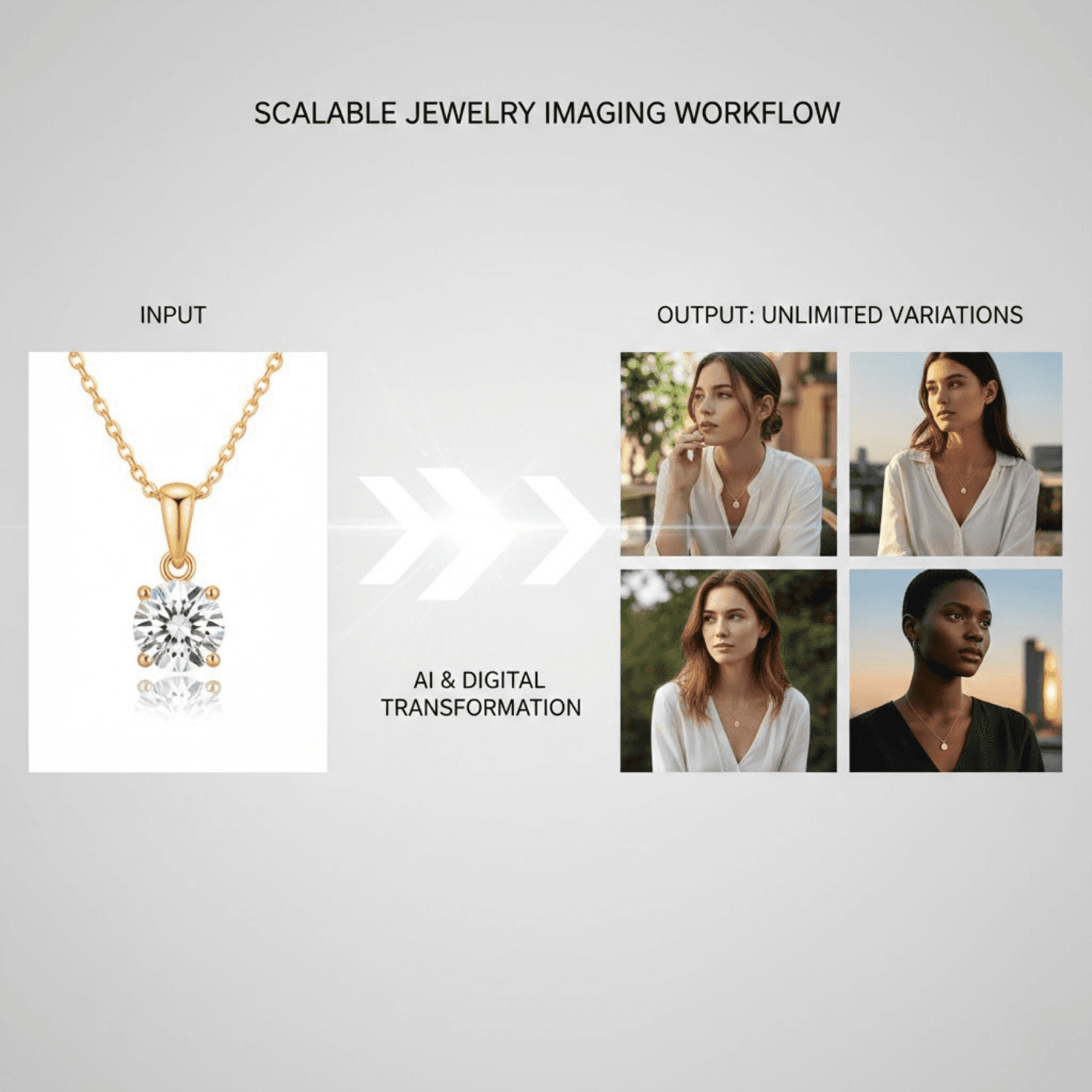
8. A Smarter Way to Create On-Model Jewelry Images
On-model jewelry shoots are often expensive and time-consuming. Coordinating models, stylists, specialized lighting, and post-production for every ring, necklace, or bracelet quickly becomes a logistical challenge. For brands with dozens—or hundreds—of SKUs, full studio production for each item is rarely justified.
A smarter approach is to capture a single high-quality product image and use scalable digital workflows to generate realistic on-model visuals. Tools like Look Atlas allow brands to transform flat jewelry images into photorealistic, on-model shots, preserving details like sparkle, texture, and metal finish. This method reduces operational complexity, keeps production consistent, and lets brands scale catalog imagery without sacrificing quality or blowing up budgets.
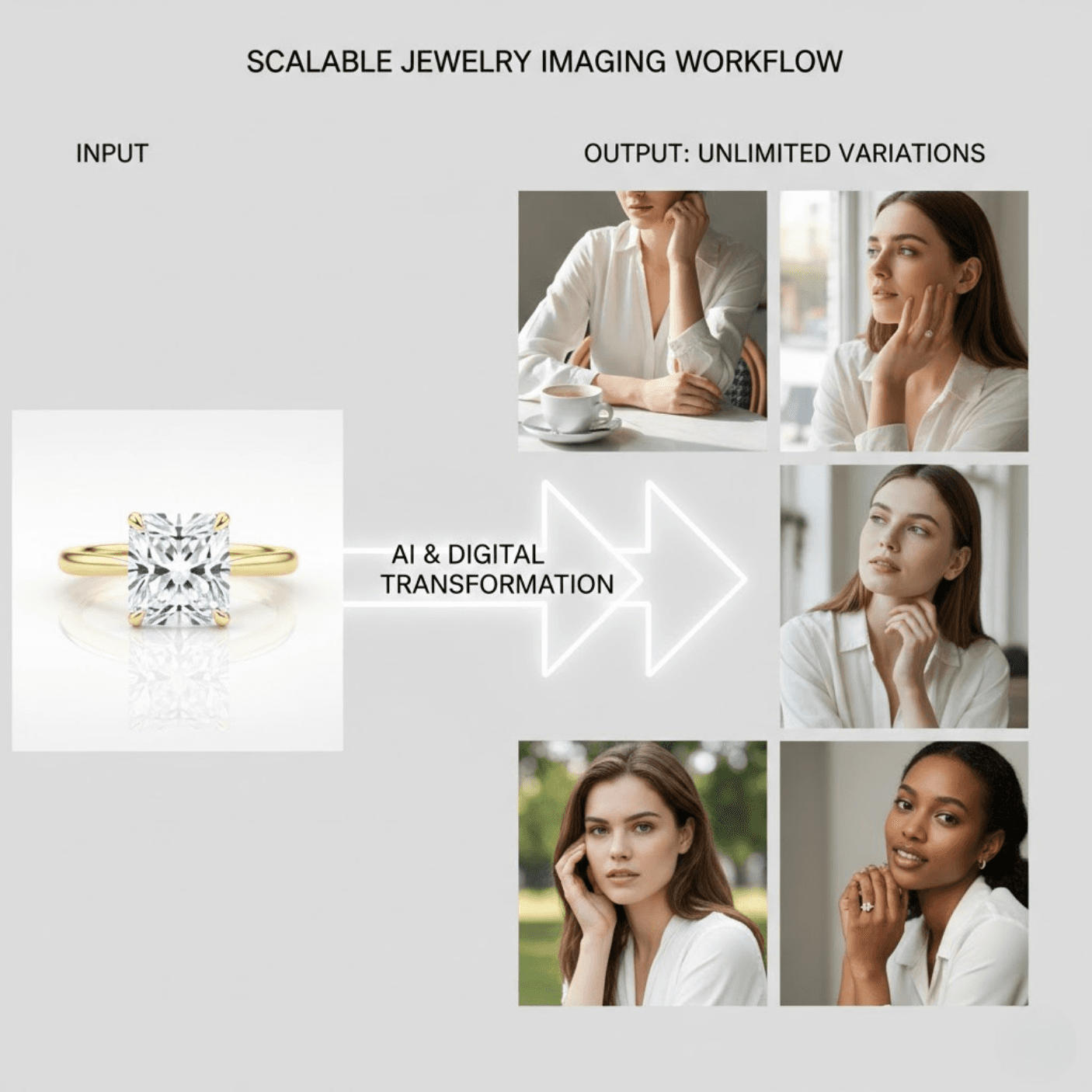
9. Scale Jewelry Imagery Without Booking Another Shoot
The key to scaling jewelry visuals efficiently starts with a single, high-quality flat product image. From there, modern workflows can generate multiple photorealistic on-model images that showcase each piece in context without the need for additional studio sessions.
These digital or AI-assisted methods ensure that metal tones, gemstone sparkle, and intricate details remain true to the original product, preserving the premium look your customers expect. Brands can also control lighting, model type, background, and overall shoot style, tailoring visuals for different campaigns or channels.
The resulting images are ready to use across product pages, ads, and social media, providing consistent, high-quality visuals that scale with your catalog, all without repeated studio costs or scheduling headaches.
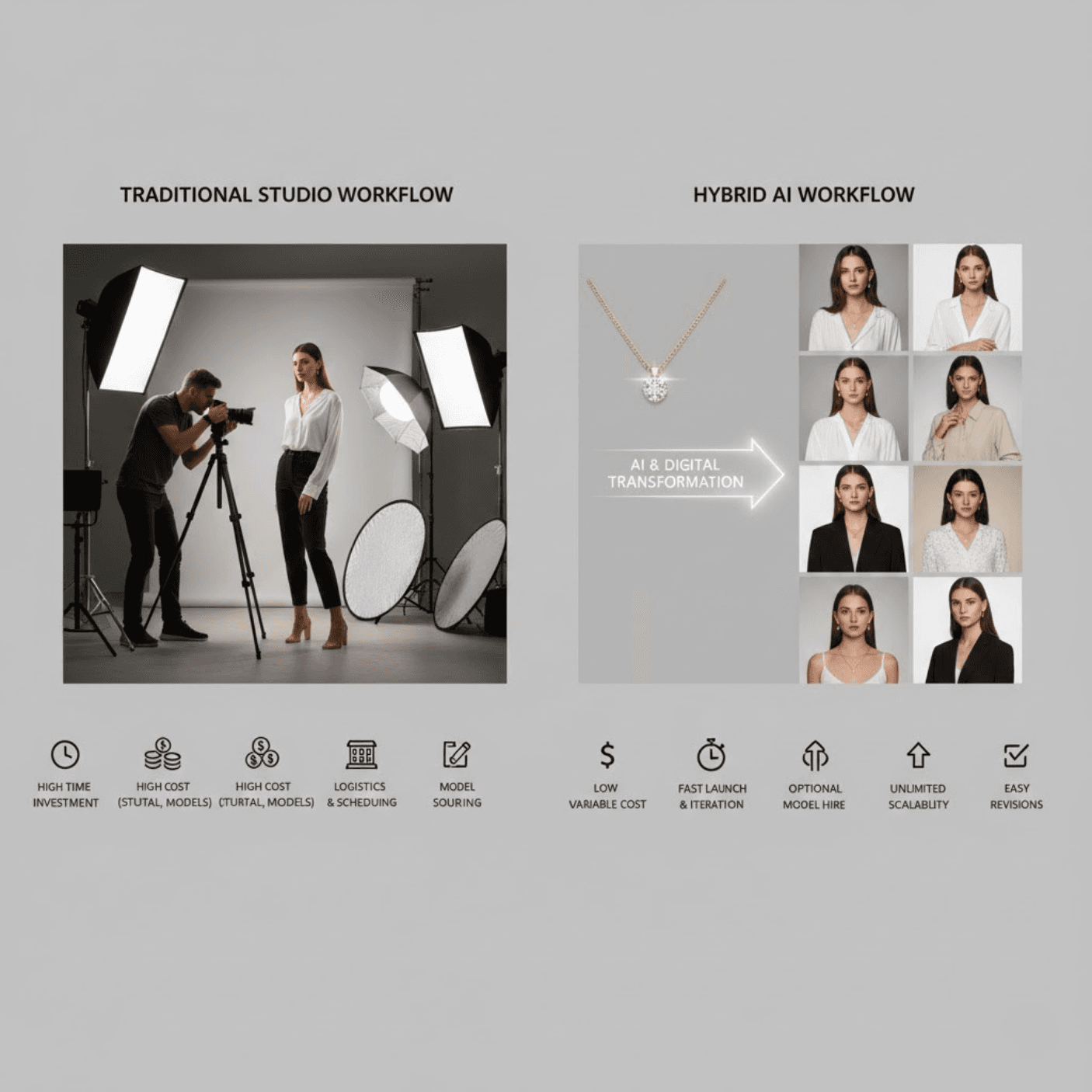
10. Cost Comparison: Studio vs Hybrid Approach
Here’s a clear comparison between traditional studio photography and a hybrid workflow for jewelry brands:
Feature | Traditional Studio | Hybrid Workflow + Look Atlas |
Cost per image | $50 to $500 | $5 to $50 (depending on usage) |
Time to launch | 1 to 2 weeks | Minutes to hours |
Model hiring | Required | Optional |
Studio rental | Required | Not required |
Scalability | Low | High |
Revisions | Manual, time-consuming | Automated, fast |
This table highlights how a hybrid approach can dramatically reduce costs, accelerate production, and improve scalability, all while maintaining high-quality, photorealistic jewelry visuals.
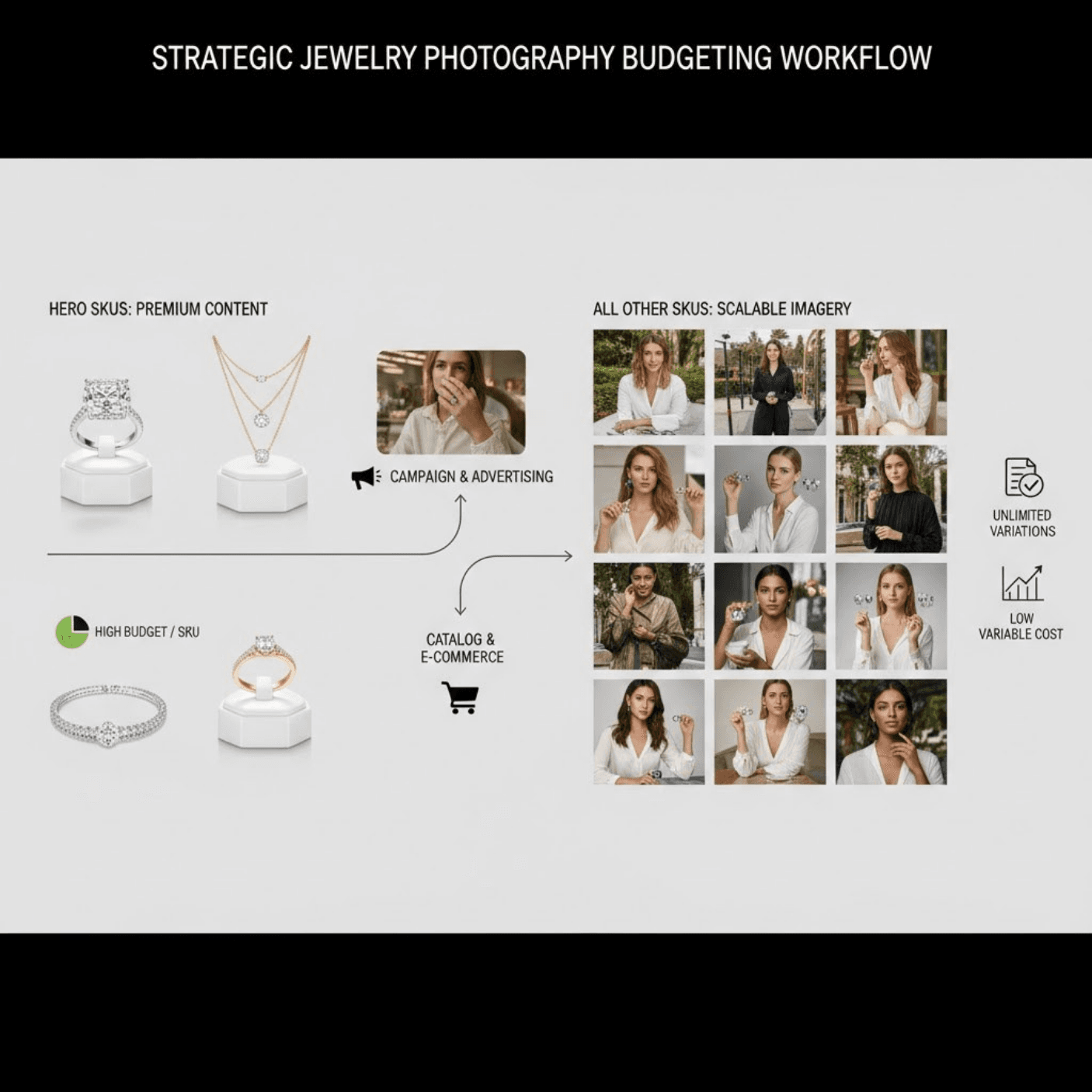
11. How to Budget for Jewelry Photography in 2026
Effective budgeting starts with prioritization and strategic planning.
Identify hero SKUs: Allocate the highest photography budget to your best-selling or flagship pieces. These images will have the biggest impact on conversions and brand perception.
Separate campaign vs catalog imagery: Treat seasonal or marketing campaigns differently from your standard catalog shots. Campaign images can justify higher production costs, while catalog images can leverage scalable workflows.
Use scalable imagery for variations: For products with multiple metals, gemstones, or sizes, consider digital or AI-assisted methods to generate additional visuals from a single shoot. This reduces repetitive costs without sacrificing quality.
Align budget with revenue per SKU: Higher-value items warrant more investment in professional photography, while lower-priced products can utilize cost-efficient workflows.
By following these steps, jewelry brands can maximize visual impact, control costs, and scale efficiently, ensuring each product is presented at its best while staying within budget.
12. Common Jewelry Photography Mistakes to Avoid
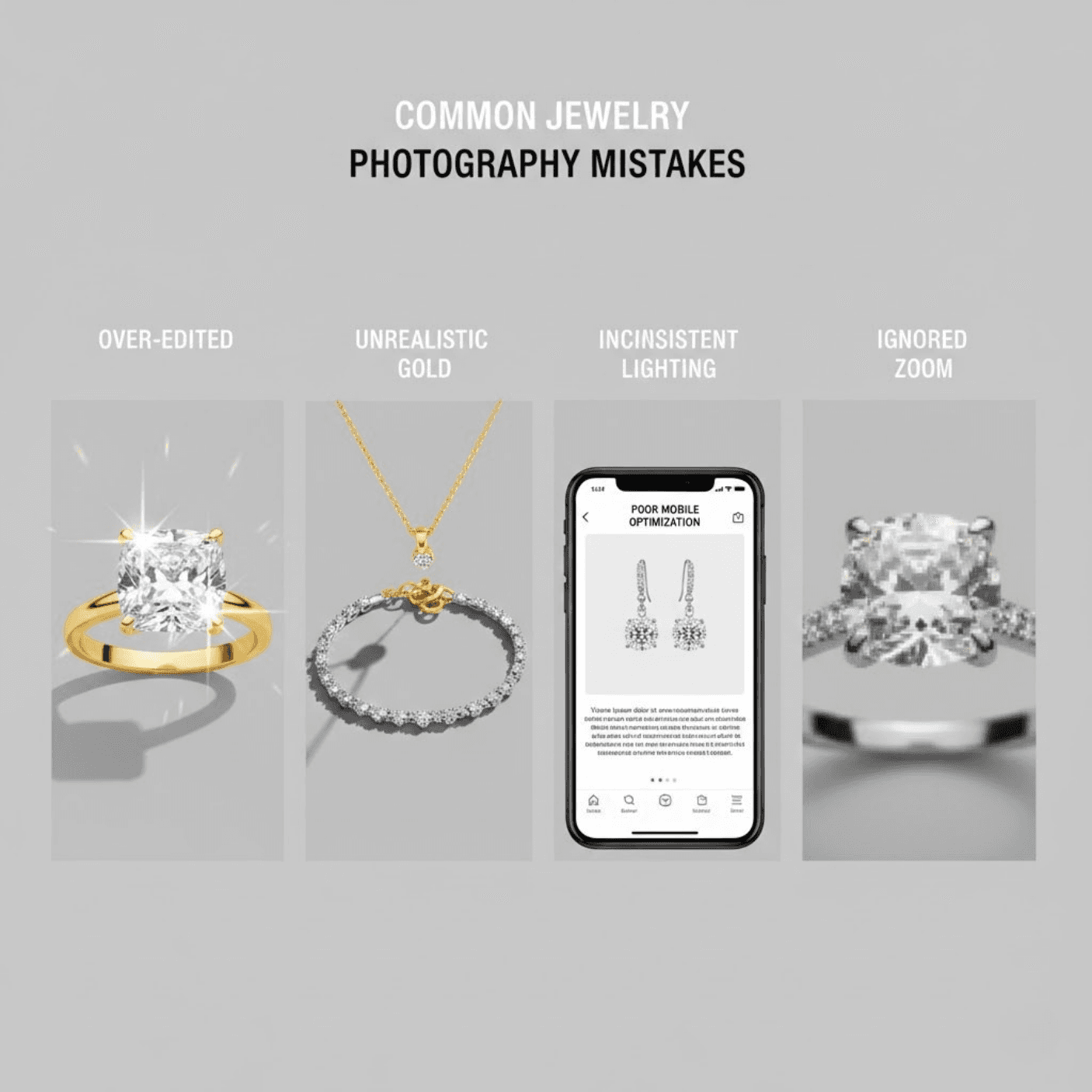
Over-editing gemstones: Excessive sparkle or color adjustments can look fake.
Unrealistic gold tones: Incorrect white balance or filters distort metal appearance.
Inconsistent lighting: Varying highlights reduce catalog cohesion and professionalism.
Poor mobile optimization: Cropping and scale issues hurt small-screen shoppers.
Ignoring zoom behavior: Customers expect to see details up close, blurry or low-res images reduce trust.
Avoiding these pitfalls ensures your jewelry looks premium, realistic, and trustworthy across all platforms.
13. The Future of Professional Jewelry Photography
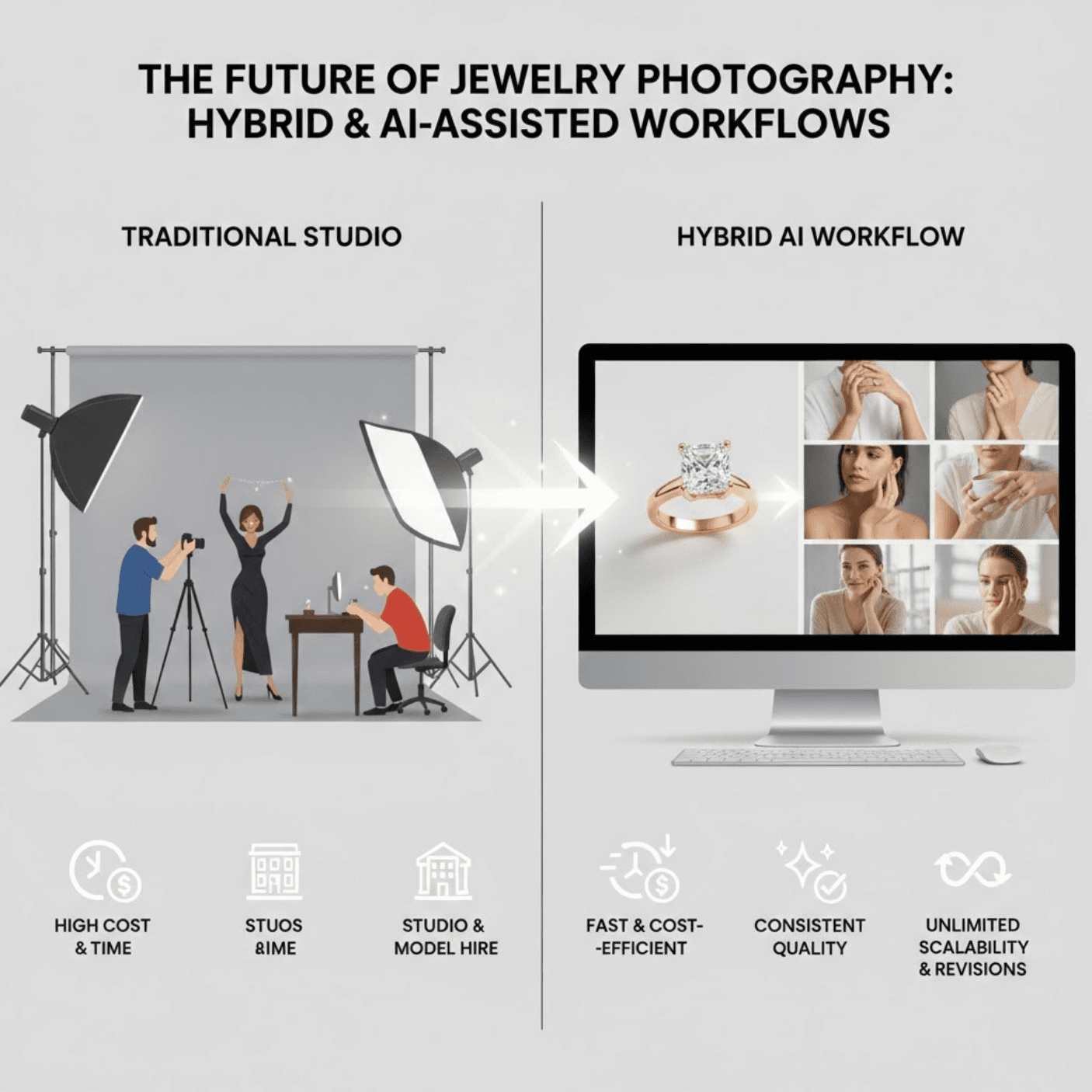
The future of jewelry photography lies in hybrid workflows that combine traditional studio techniques with AI-assisted model visualization tools like Look Atlas. Brands can now create photorealistic on-model and lifestyle images from a single flat product shot, dramatically reducing the time and cost of producing new visuals.
This approach enables faster launches for seasonal collections, new designs, and global marketplaces, while compressing costs without sacrificing image quality. Forward-thinking jewelry brands treat visual production not just as a creative task, but as an operational strategy, using scalable workflows to maintain consistency, increase conversion, and grow revenue efficiently.

14. Final Thoughts: It’s Not Just About Hiring a Photographer
While professional studios remain valuable for hero shots and high-end campaigns, scaling a jewelry brand requires smarter production systems. Relying solely on traditional shoots can strain budgets, slow launches, and limit catalog growth.
By combining quality, speed, and scalability, brands can maintain premium visuals across large inventories, protect margins, and respond quickly to seasonal or international campaigns. Hybrid workflows and AI-assisted tools make it possible to achieve consistent, photorealistic jewelry imagery without the overhead of repeated studio shoots, turning visual production into a strategic advantage rather than just a cost center.
