
Ecommerce Photography Studio: How Modern Brands Create High-Converting Product Images at Scale
1. Introduction: Why Ecommerce Photography Studios Matter More Than Ever
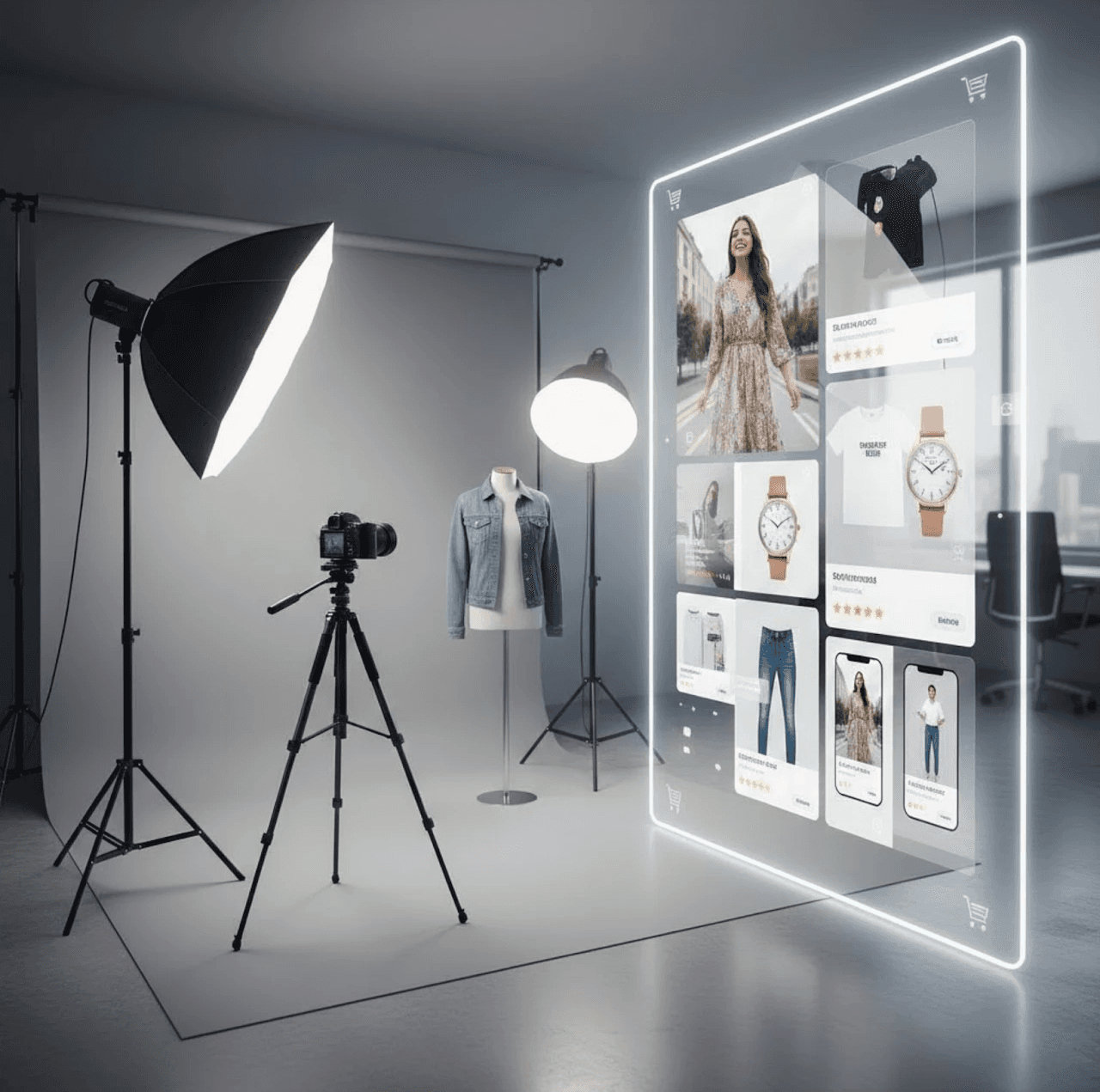
Ecommerce today is completely visual-first. Before reading descriptions or reviews, shoppers judge products based on images that appear in search results, ads, and listing pages. Since customers cannot touch, try, or examine products in person, photography must replace the entire in-store experience, communicating quality, fit, scale, and value within seconds.
This is why ecommerce photography studios have become a critical part of online selling. Professional, consistent visuals build trust, reduce uncertainty, and significantly influence whether a visitor becomes a buyer. High-quality images are no longer just branding assets, they are direct conversion drivers.
However, as catalogs grow and product launches accelerate, brands also face new challenges around cost, speed, and scalability. The need for consistent, high-performing visuals has never been greater, but the traditional studio model is increasingly being tested by the demands of modern ecommerce.
2. What Is an Ecommerce Photography Studio?
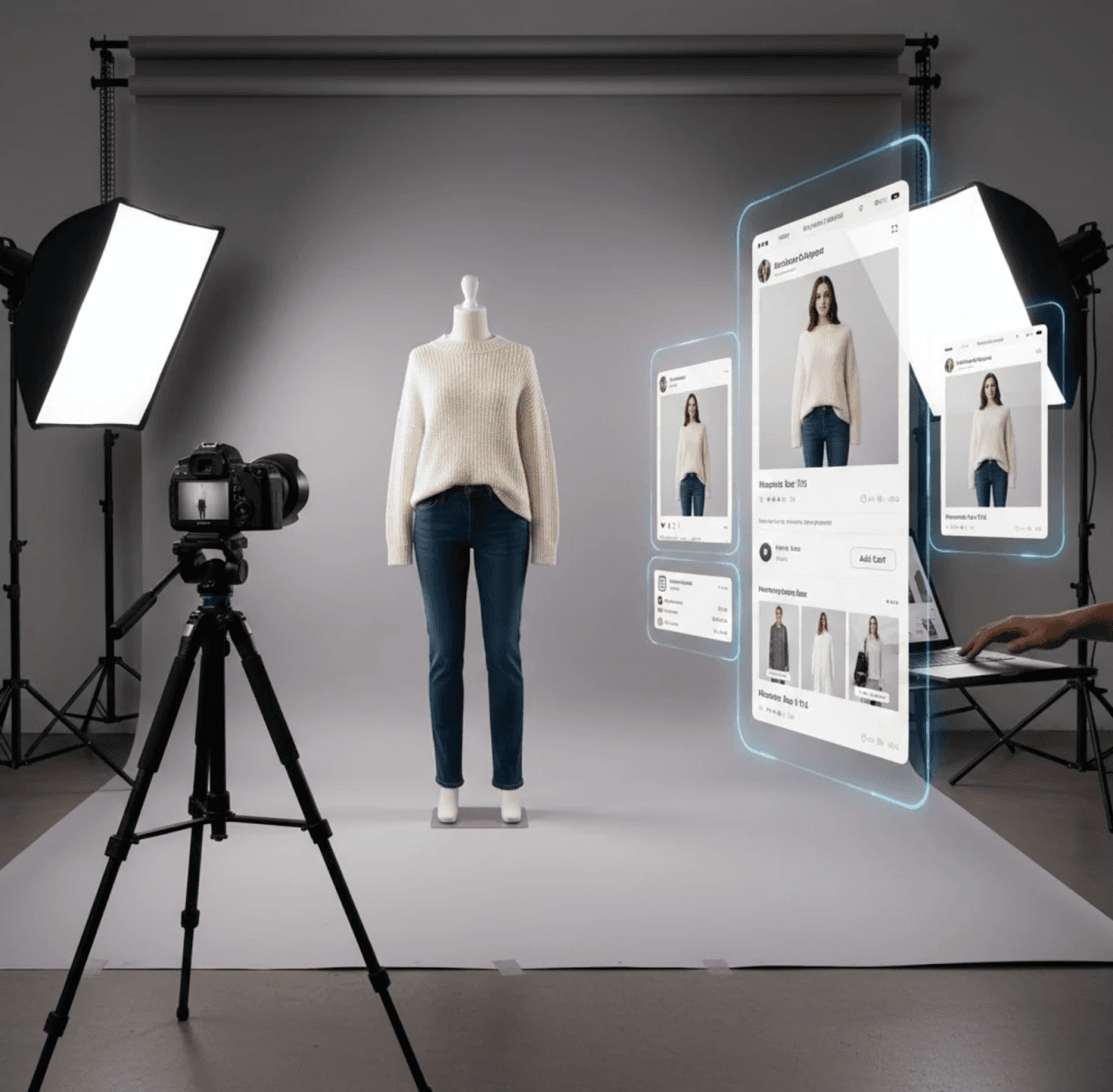
An ecommerce photography studio is a specialized setup designed to produce product images specifically for online selling. Its primary purpose isn’t artistic expression, it’s clarity, consistency, and conversion. Every image is created to help shoppers understand the product quickly and confidently, without seeing it in person.
Unlike casual or general photography, ecommerce-focused studios follow strict standards. Lighting is controlled to ensure accurate colors, angles are consistent across products, and compositions are optimized for marketplaces and mobile screens. The goal is not just to make products look good, but to make them easy to compare, trust, and purchase.
Studio images are used across key ecommerce touchpoints: product detail pages (PDPs), category listings, paid ads, marketplaces like Amazon and Etsy, and social media campaigns. When done right, these visuals create a unified brand experience wherever the product appears, reinforcing professionalism and increasing buyer confidence at every step.

3. How Product Photography Impacts Ecommerce Sales & Conversion
In ecommerce, product photography directly influences buyer trust and purchase decisions. Shoppers rely on images to assess quality, fit, and value, long before they read descriptions or reviews. Clear, professional visuals signal credibility and reduce uncertainty, making customers more confident to complete a purchase.
High-quality images also boost conversion rates, increase perceived product value, and even allow brands to justify premium pricing. In many cases, visuals carry more weight than copy: a well-shot image can convey texture, scale, and style instantly, whereas text takes longer to communicate the same information.
Ultimately, photography is more than decoration, it’s a strategic tool for driving sales, building trust, and elevating your brand in a crowded online marketplace.
4. Types of Ecommerce Photography Studios
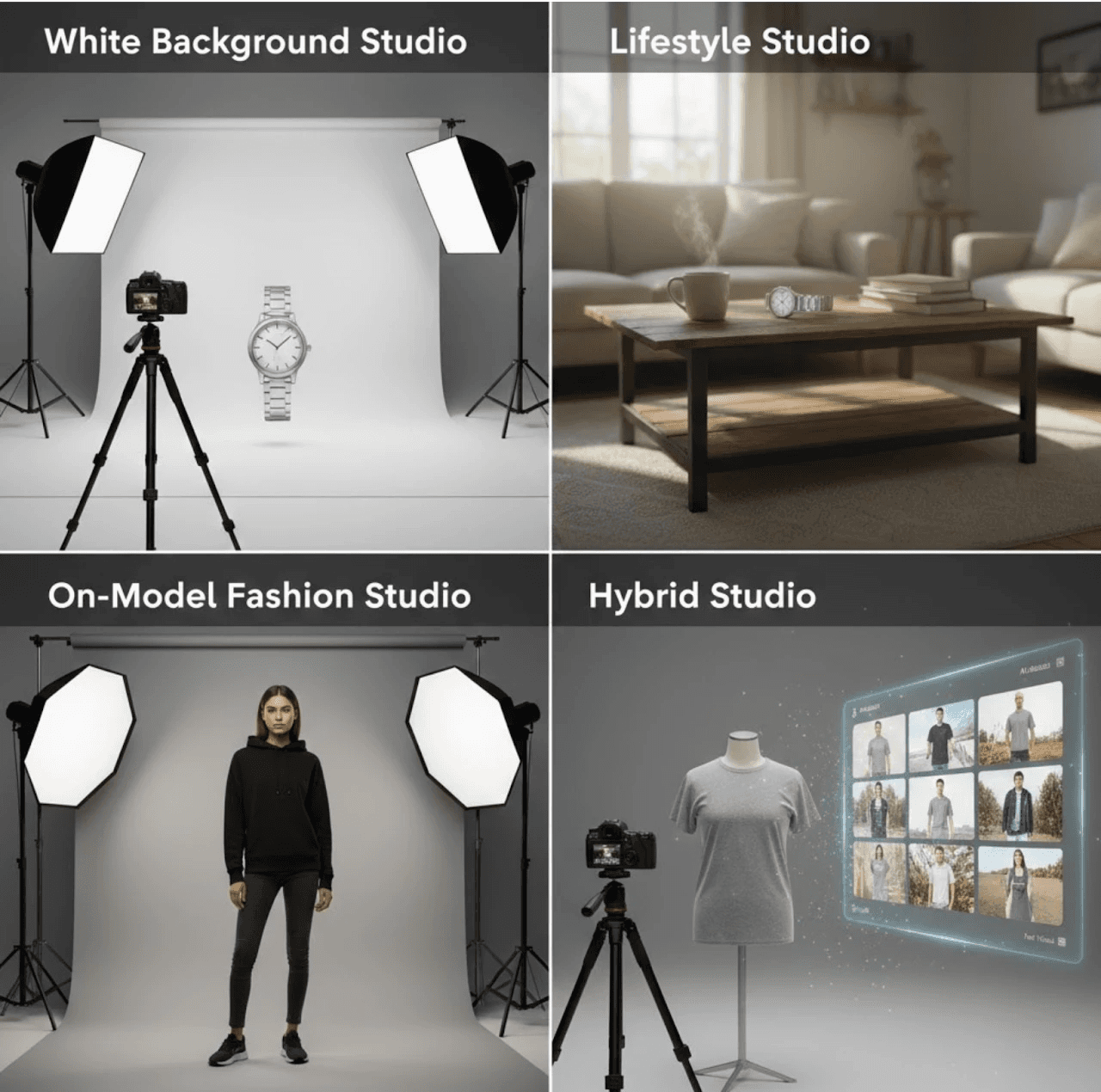
Ecommerce photography studios come in different formats, each designed to serve specific brand needs and product types. Many brands combine approaches to create a versatile, conversion-focused visual strategy.
White Background Studios
These studios focus on clean, distraction-free images with neutral backgrounds. They’re ideal for catalog shots, marketplaces like Amazon, or product listings where clarity and detail matter most. White background images are consistent, easy to compare, and perfect for highlighting product features.
Lifestyle Photography Studios
Lifestyle studios place products in real-world contexts, adding storytelling, emotion, and aspirational appeal. These are commonly used for social media, ads, or Shopify stores, where connecting with the buyer’s lifestyle can drive engagement and conversion.
On-Model / Fashion Studios
Fashion and apparel brands often use on-model studios to show fit, drape, and proportion. Seeing clothing on a person helps shoppers visualize how it looks when worn, reducing returns and building confidence in the purchase. Advanced AI, such as Look Atlas, can now convert simple product photos into realistic on-model images, providing a cost-effective alternative to full-scale photoshoots.
Hybrid Studios
Some studios combine multiple approaches,clean backgrounds, lifestyle setups, and on-model photography,to provide a full suite of visuals for different channels. Hybrid setups give brands flexibility, ensuring they have the right type of image for product pages, marketing campaigns, and social media, all while maintaining consistent quality.
5. Inside a Traditional Ecommerce Studio Workflow
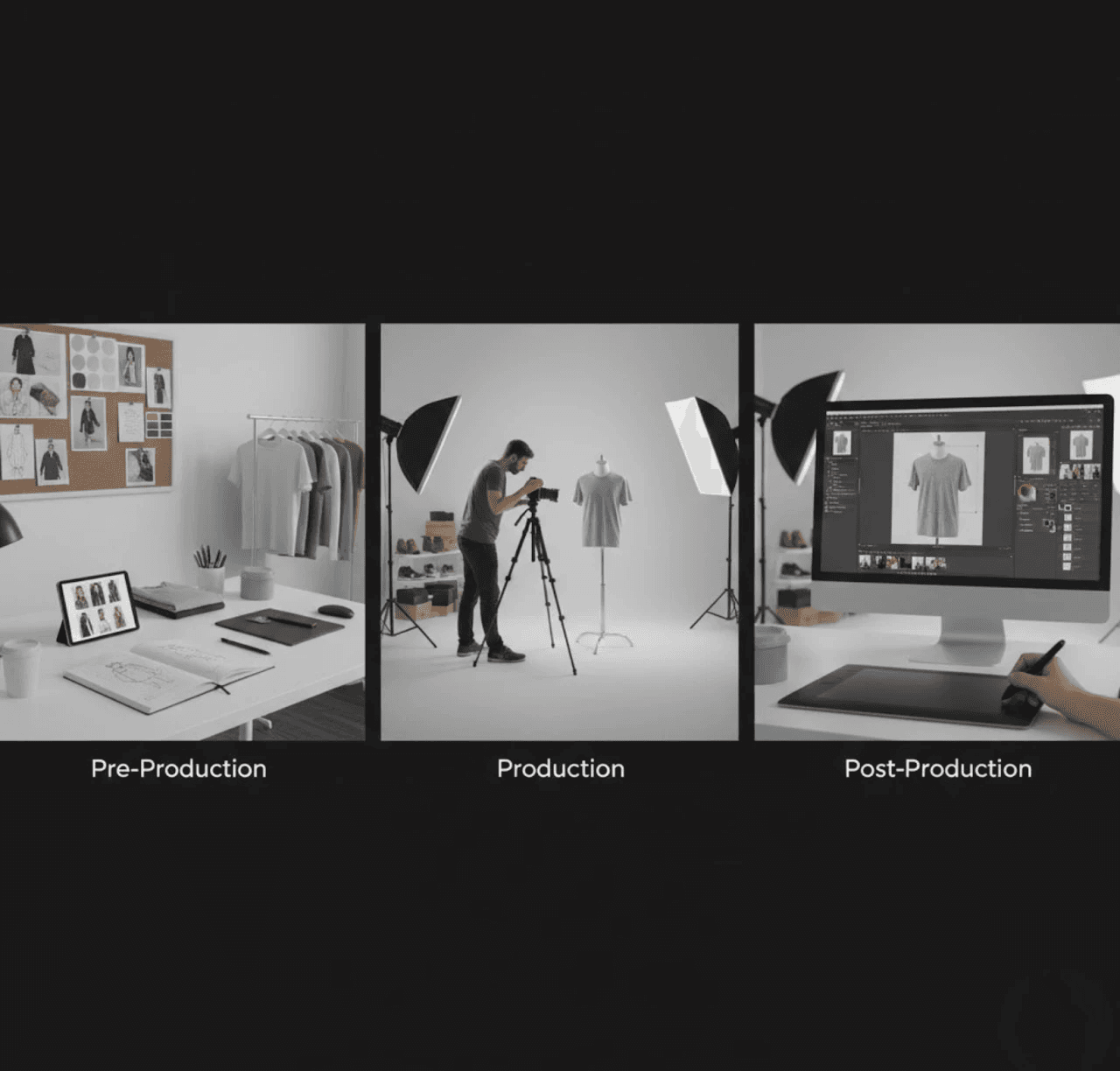
A traditional ecommerce studio workflow involves three main phases, each critical to producing high-quality product images, but also time-intensive and challenging to scale.
Pre-Production: This phase includes planning the shoot, coordinating models, arranging props, and scheduling studio time. Every detail, outfits, lighting setups, angles must be decided in advance to ensure efficiency during the shoot.
Production: On shoot day, photographers capture multiple angles, lighting setups, and product variations. Even small adjustments, like repositioning a model or fixing a garment can take time, and unexpected delays are common.
Post-Production: After the shoot, images go through editing, color correction, retouching, and revisions. This phase ensures consistency and quality across all visuals, but it can take days or even weeks, especially for large catalogs or multiple product variants.
While this workflow produces professional, high-converting images, it’s not easily scalable. Frequent launches, growing product lines, and multiple variations multiply costs and timelines, making it increasingly difficult for ecommerce brands to maintain speed, consistency, and flexibility using traditional studios alone.
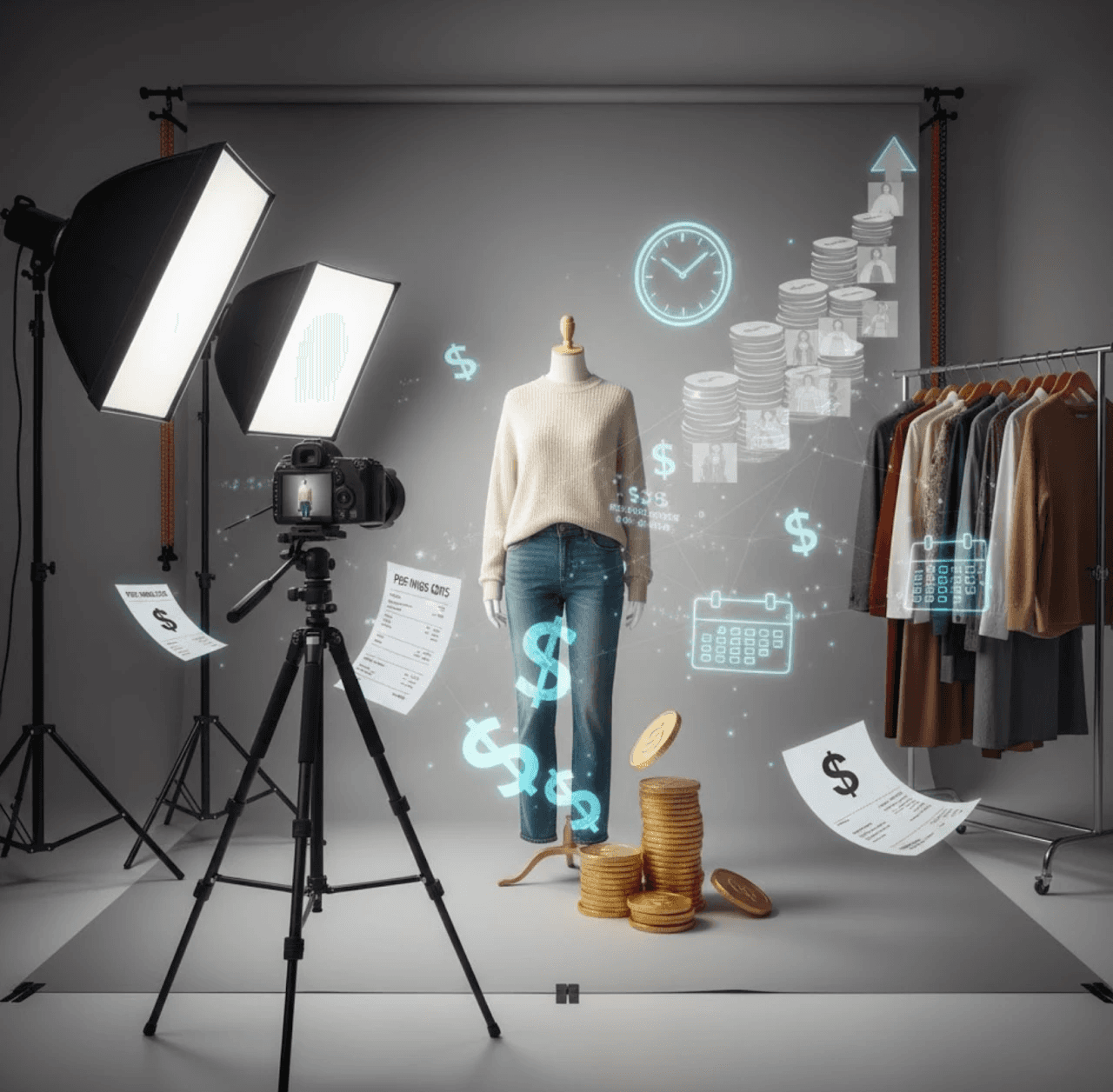
6. The Real Cost of Ecommerce Photography Studios
Hiring a traditional ecommerce photography studio comes with both visible and hidden costs. On the surface, fees can range widely depending on the photographer, studio quality, and product type, per-image costs might start at $20 to $50, while full shoots with models and props can reach several hundred or even thousands of dollars per session.
Hidden costs quickly add up. Reshoots due to errors, additional product variations, or updates for seasonal launches increase expenses. Styling, props, logistics, and post-production revisions further inflate the total spend.
For brands with growing catalogs, these costs scale exponentially. Each new product, color, or size variant requires additional shoots, making traditional studios a significant financial and operational burden. This is why many ecommerce teams are exploring modern workflows and digital alternatives to balance quality, consistency, and cost-efficiency.
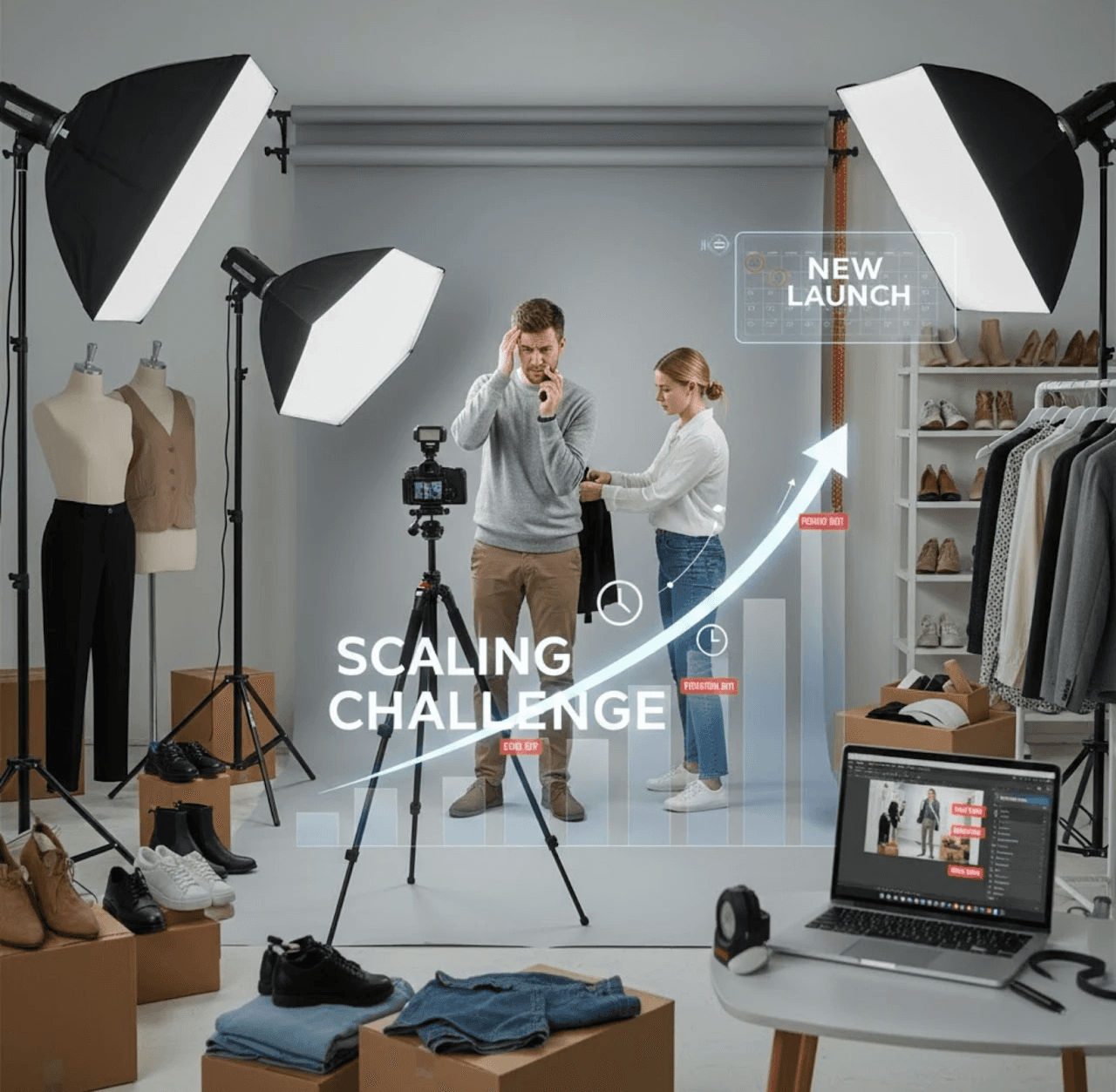
7. Why Scaling Studio Photography Becomes a Bottleneck
For ecommerce brands, scaling traditional studio photography quickly becomes a major bottleneck. Large catalogs, frequent product launches, and seasonal updates all demand new, high-quality images, and each shoot requires models, studios, and post-production time.
Marketplace platforms often have strict image requirements, adding another layer of complexity. Even minor changes, like a new color variant or updated packaging can trigger the need for additional photos.
This leads to the familiar “we need new photos again” problem, where brands constantly juggle schedules, budgets, and logistics. As catalogs grow, relying solely on studio shoots can slow down product launches, inflate costs, and create inconsistent visuals, making it harder to maintain a cohesive brand presence online.
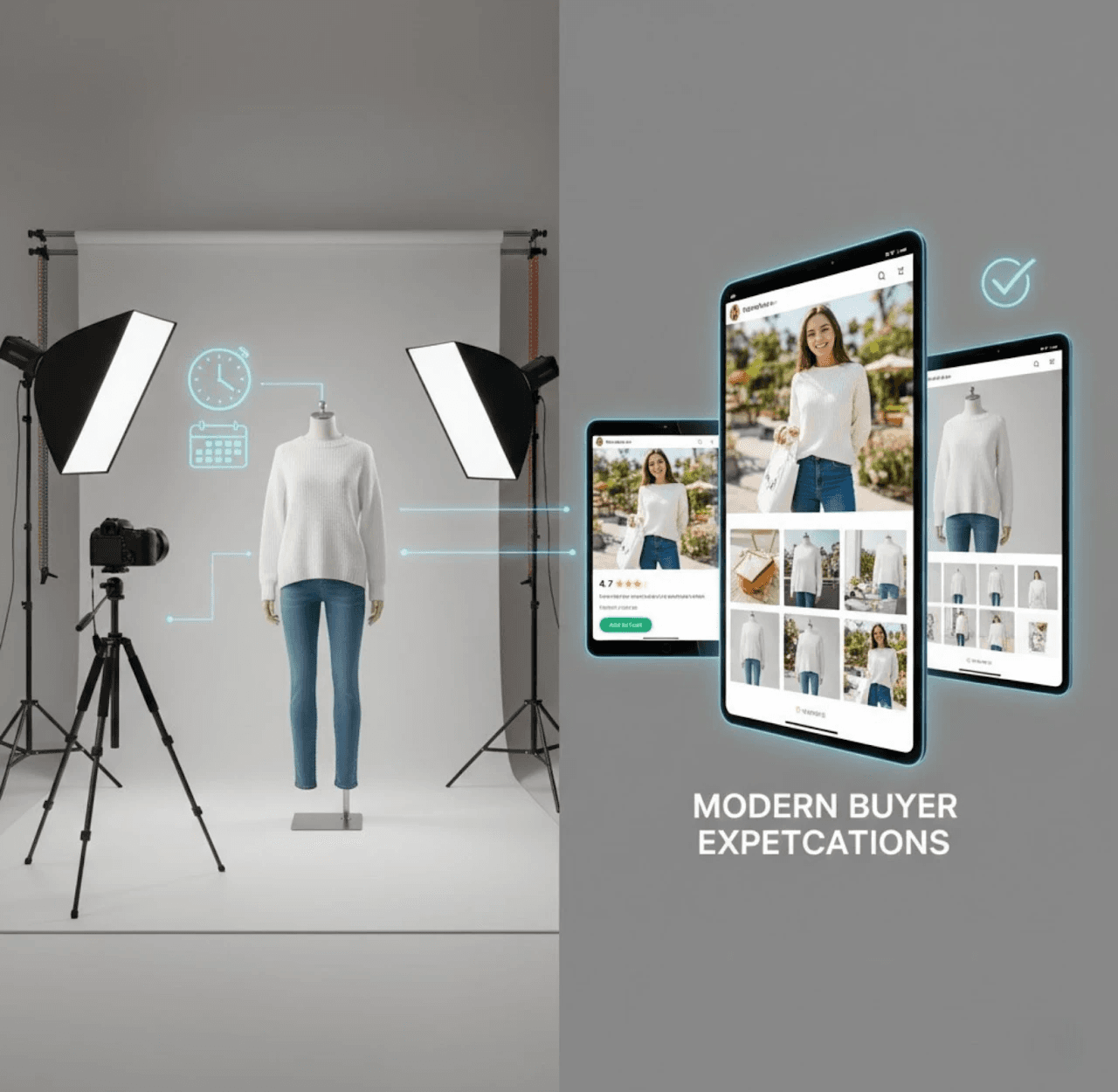
8. Buyer Expectations Have Changed (And Studios Haven’t Fully Kept Up)
Online shoppers now expect more than just clean, white-background images. They want lifestyle and on-model visuals that show products in real-life contexts and help them visualize ownership.
At the same time, ecommerce cycles are faster than ever. New products, seasonal launches, and multiple variants demand quick turnaround times and consistent imagery across marketplaces, social media, and ads.
Traditional studio workflows, designed for slower, single-shoot production, often struggle to keep up. Scheduling models, coordinating shoots, and post-production edits can’t match the pace of modern ecommerce, leaving brands with gaps in consistency, delays in launches, and visuals that fail to meet buyer expectations.
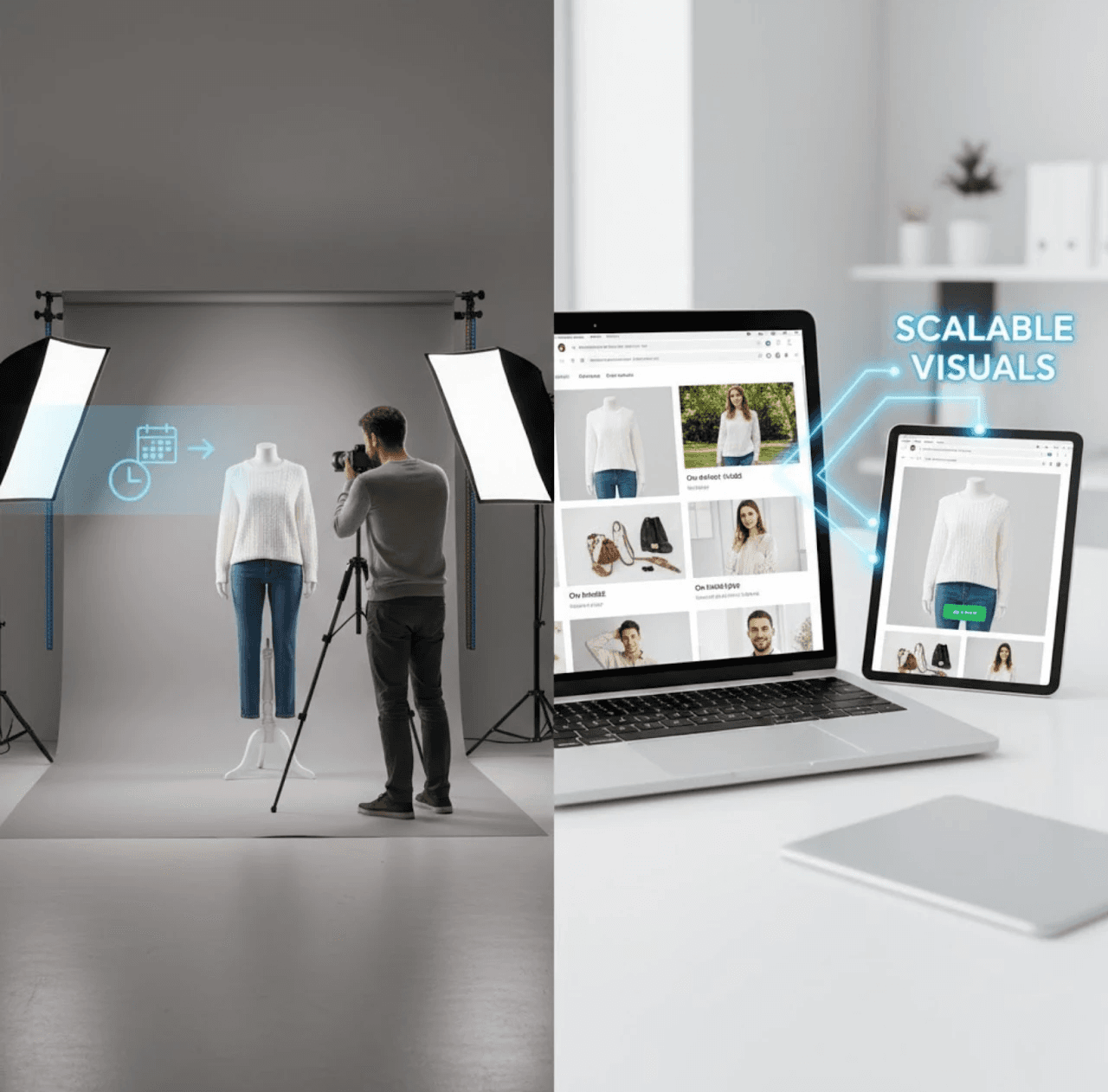
9. From Physical Studios to Scalable Visual Production
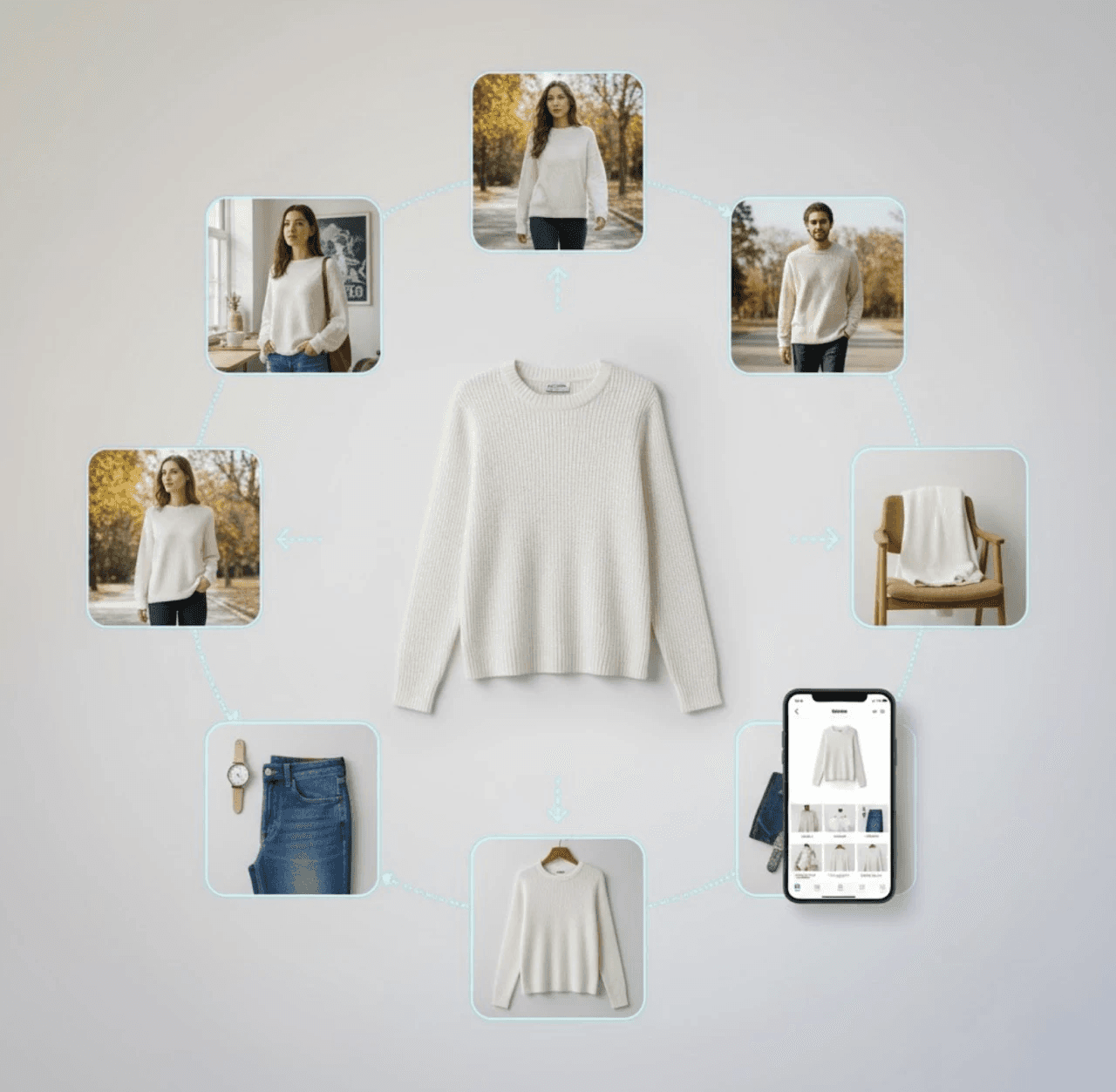
Ecommerce photography is increasingly moving from traditional physical studios to flexible, digital-first workflows. Instead of scheduling repeated shoots for every product variant or seasonal update, brands can start with a single, high-quality product image and expand it into multiple visuals on-model, lifestyle, or different angles without going back to the studio.
This approach allows teams to scale quickly, maintain consistency, and reduce costs, all while keeping up with rapid product cycles and marketplace requirements.
10. How Modern Brands Extend Studio Images Without Reshooting
Many ecommerce teams no longer rely on repeated studio sessions to create fresh visuals. Instead, they start with a single flat product photo and digitally expand it into multiple on-model or lifestyle images. Backgrounds, poses, and lighting can all be adjusted without physically reshooting, giving brands the flexibility to test concepts, update seasonal campaigns, and maintain consistency across channels.
11. When a Traditional Ecommerce Photography Studio Still Makes Sense
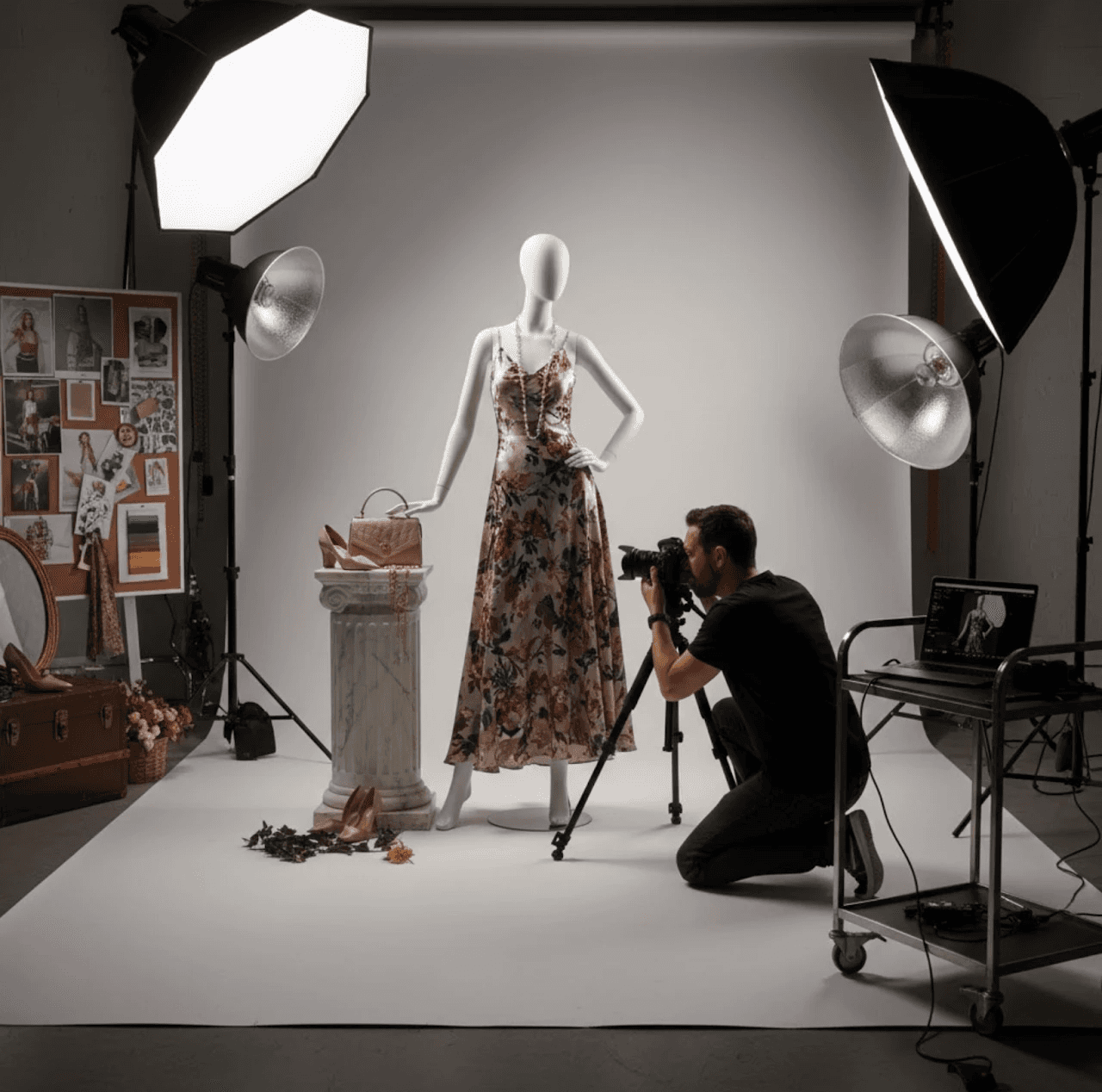
Despite the rise of digital workflows and AI-assisted imagery, traditional ecommerce studios still play a valuable role in certain scenarios. They’re ideal for:
Hero campaigns: Launching flagship products or seasonal promotions where high production value creates maximum impact.
Brand storytelling: Creating lifestyle or aspirational visuals that convey your brand identity and emotional appeal.
Complex or high-end products: Items with intricate details, textures, or premium finishes that require careful lighting and professional capture.
Studios aren’t “dead” ; they remain essential for projects where authenticity, creative control, and premium presentation matter most. Modern brands simply combine studio shoots with scalable digital tools to get the best of both worlds: quality and efficiency.
12. Hybrid Visual Strategies: Studio + Scalable Tools
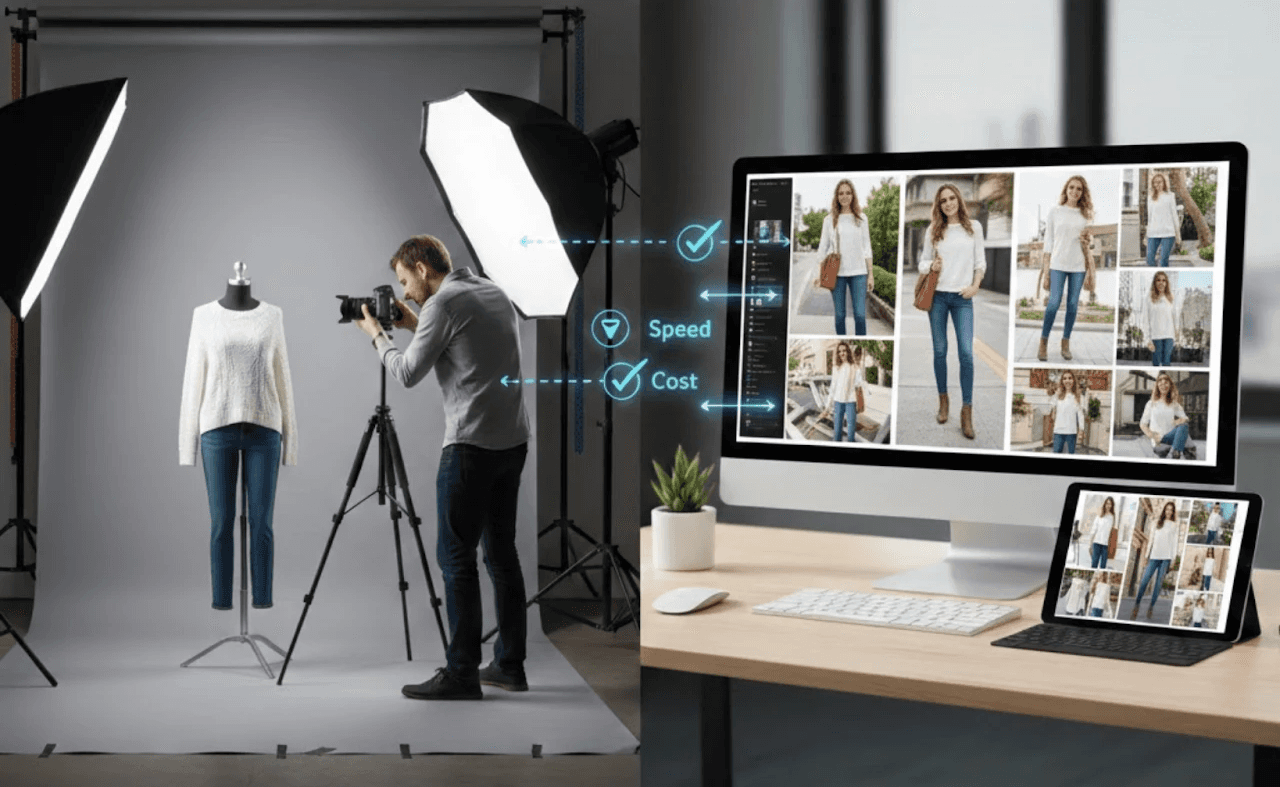
Many ecommerce brands find the most effective approach is a hybrid strategy, combining traditional studio photography with modern, scalable tools.
Studios are used to create high-quality base assets, hero shots, key angles, and lifestyle images while scalable tools can generate variations such as different colors, poses, or backgrounds without repeated photoshoots.
This approach delivers multiple benefits:
Cost efficiency: Reduce repeated studio expenses for every variant.
Speed: Produce new visuals quickly to keep up with product launches and seasonal updates.
Consistency: Maintain uniform lighting, styling, and branding across large catalogs.
By leveraging both methods, brands can maximize image quality and visual impact while keeping production flexible and scalable.
13. How to Choose the Right Photography Approach for Your Brand
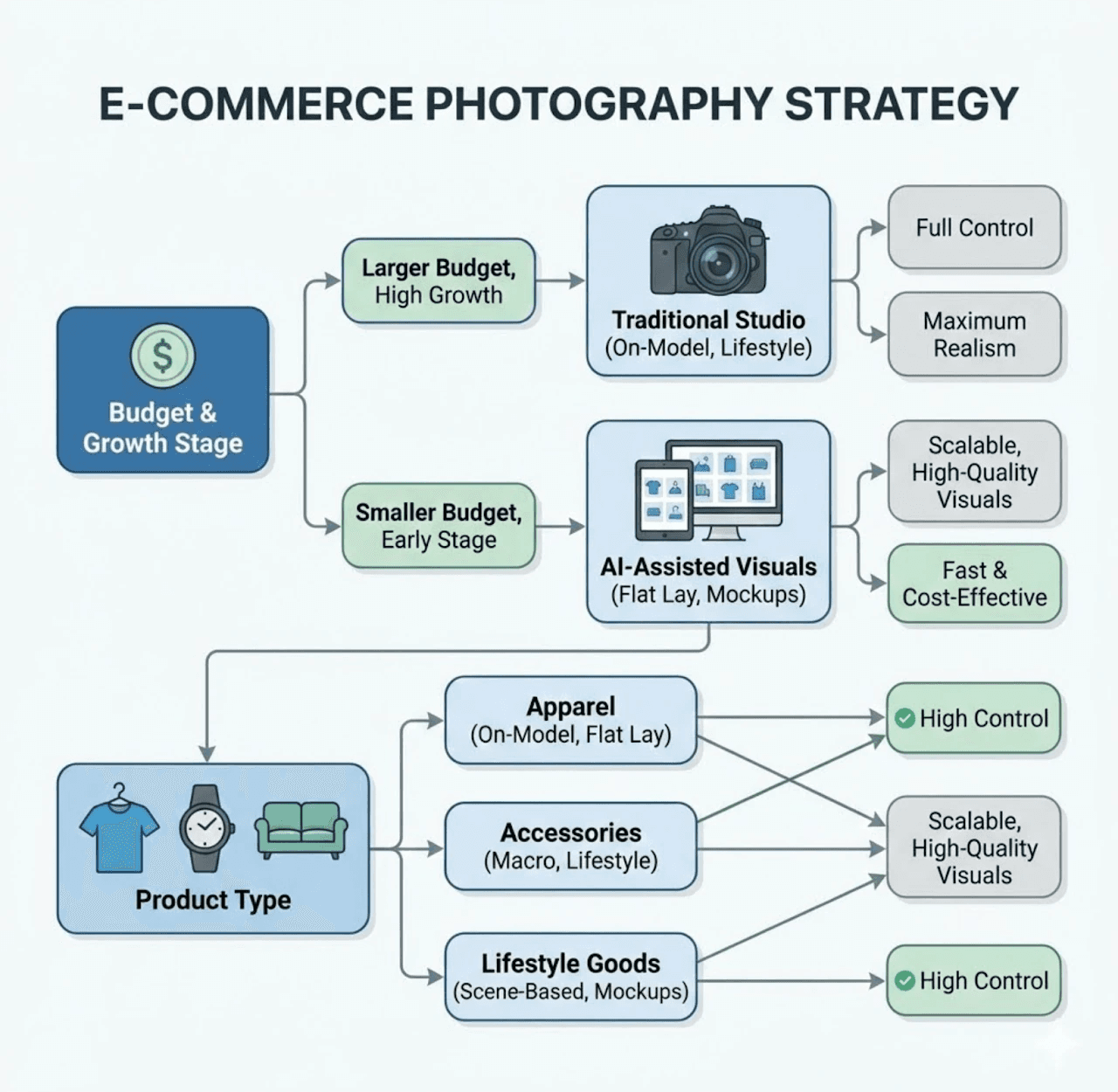
Selecting the right ecommerce photography strategy depends on a few key factors:
Budget: Consider not only upfront costs but also hidden expenses like models, props, revisions, and reshoots. Smaller budgets may benefit from hybrid or digital-first approaches, while larger budgets can accommodate full studio shoots.
Catalog Size: Large catalogs with multiple variants require scalable workflows. A single studio shoot per product may not be practical for dozens of colors or styles.Modern AI like Look Atlas can streamline this process by converting simple product photos into realistic on-model images, making large catalogs easier to manage.
Product Type: Apparel, lifestyle items, or complex products often need on-model or contextual images, while simpler items may succeed with clean, white-background shots.
Growth Stage: Brands in rapid expansion need solutions that scale quickly, maintain consistency, and allow fast iteration for new launches.
By evaluating these factors, brands can create a practical decision framework, choosing between traditional studios, scalable digital tools, or a hybrid approach that balances quality, speed, and cost. Leveraging AI-assisted solutions ensures visuals consistently support conversion, build trust, and enhance brand presentation without the bottlenecks of traditional photography.
14. Common Ecommerce Photography Mistakes to Avoid
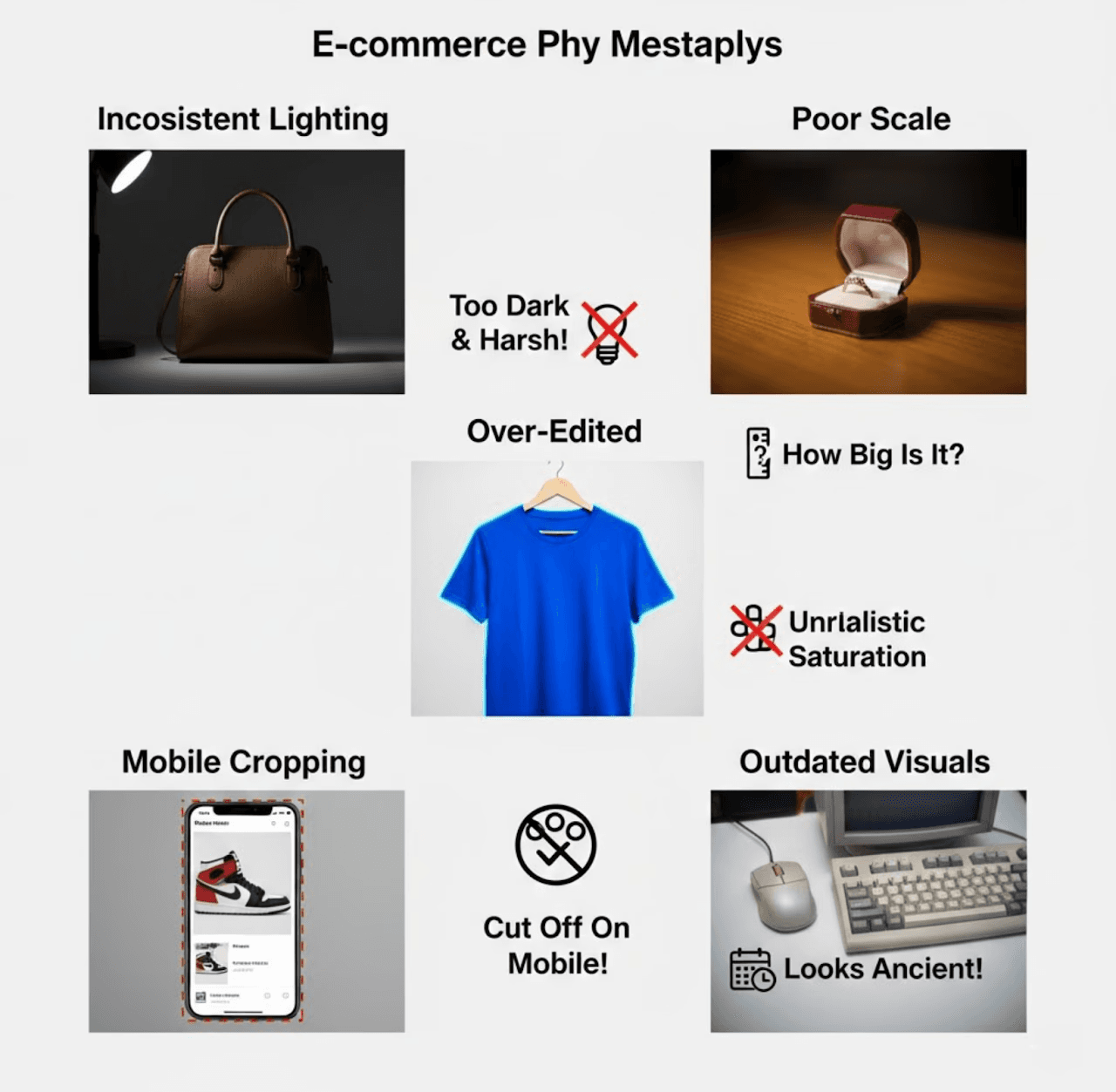
Even professional studios can fall into pitfalls that hurt ecommerce performance. Some of the most common mistakes include:
Inconsistent lighting: Variations in brightness, shadows, or color temperature across images create a disjointed brand look and reduce buyer trust.
Poor scale reference: Failing to show size or fit, especially for apparel or accessories, leaves shoppers guessing and increases returns.
Over-editing: Excessive retouching can make products look unrealistic, leading to disappointment and negative reviews.
Ignoring mobile optimization: With the majority of shoppers browsing on smartphones, images must remain clear and readable on small screens.
Outdated visuals: Using old product photos or mismatched campaigns diminishes credibility and signals neglect.
Avoiding these mistakes ensures your visuals build confidence, communicate quality, and support higher conversion rates across all channels.
15. SEO & Ecommerce Photography: Why Images Affect Rankings
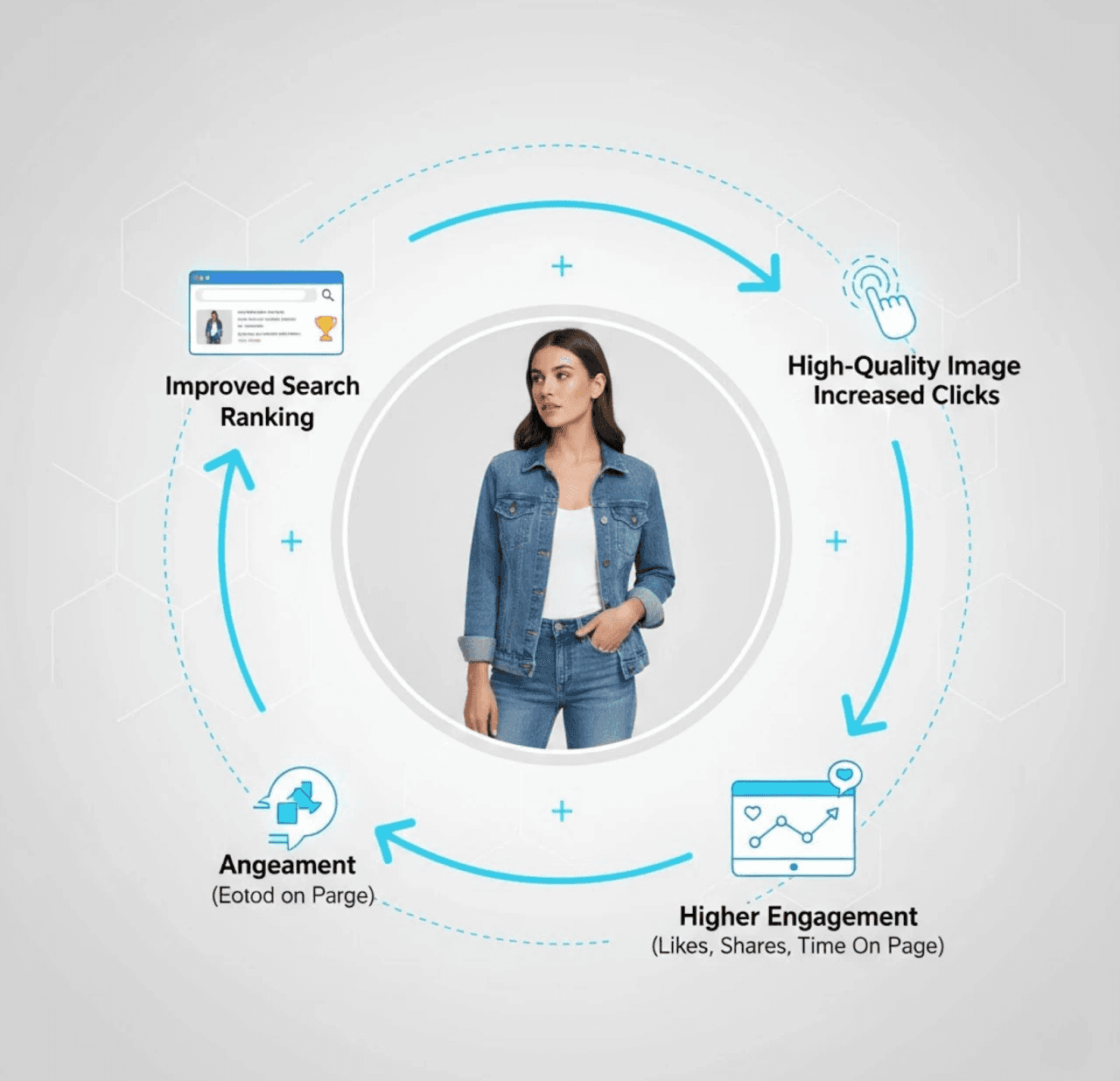
Product images don’t just influence buyer decisions they also play a role in search visibility and marketplace rankings. Higher-quality visuals lead to better engagement, which in turn boosts conversion rates. Platforms like Etsy, Amazon, and Shopify track clicks, time on listing, and add-to-cart behavior, all of which are influenced by compelling imagery.
Marketplace algorithms reward listings that satisfy buyers quickly. Clear, relevant images aligned with search intent signal that a product meets shopper expectations, improving discoverability and performance in search results.
16. The Future of Ecommerce Photography Studios
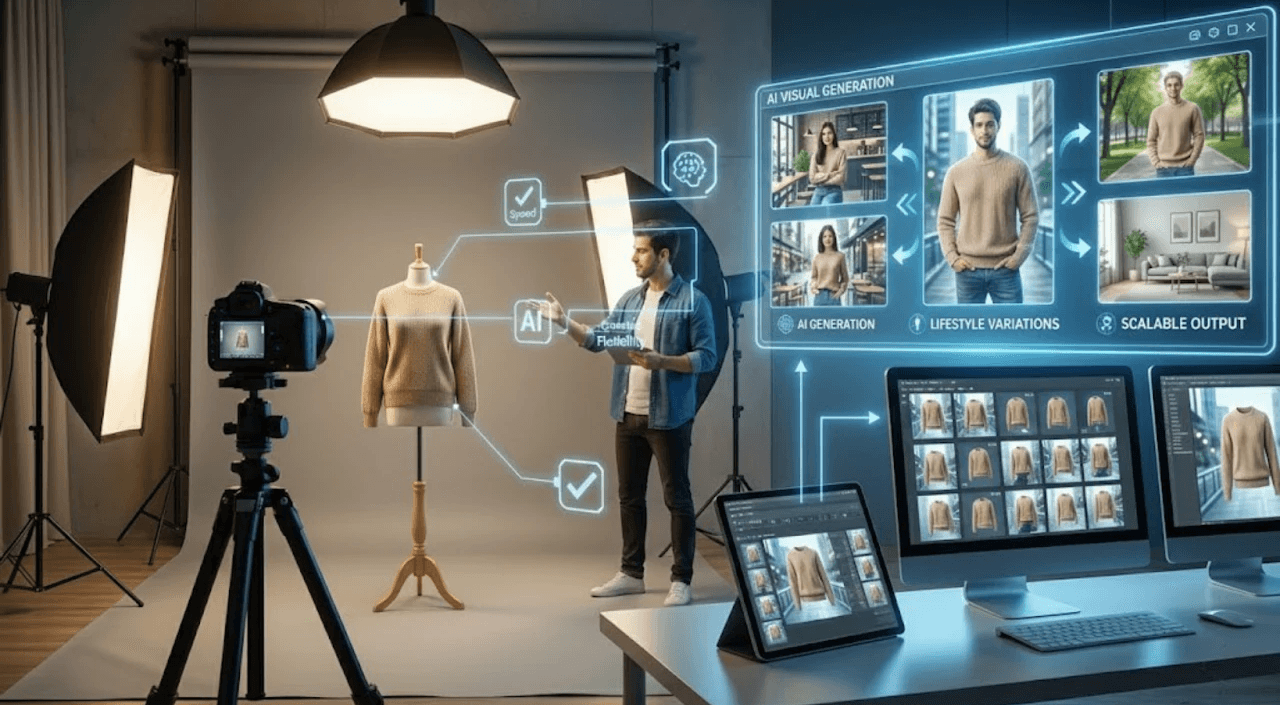
Ecommerce photography studios are evolving to meet the demands of modern online selling. The future is moving toward hybrid production models that combine traditional studio shoots with AI-assisted solutions, allowing brands to create high-quality images without repeated physical shoots.
This shift enables faster product launches, reduces dependency on studios, models, and logistics, and gives teams more creative freedom to experiment with angles, backgrounds, and on-model variations. Advanced AI, such as Look Atlas, can transform simple product photos into realistic on-model images, providing scalable, cost-effective visuals that maintain professionalism and conversion focus.
By blending human expertise with these digital solutions, brands can maintain consistent, engaging, and conversion-driven imagery while staying agile in a rapidly changing ecommerce landscape.
17. Final Takeaway: The Studio Is No Longer a Place, It’s a System
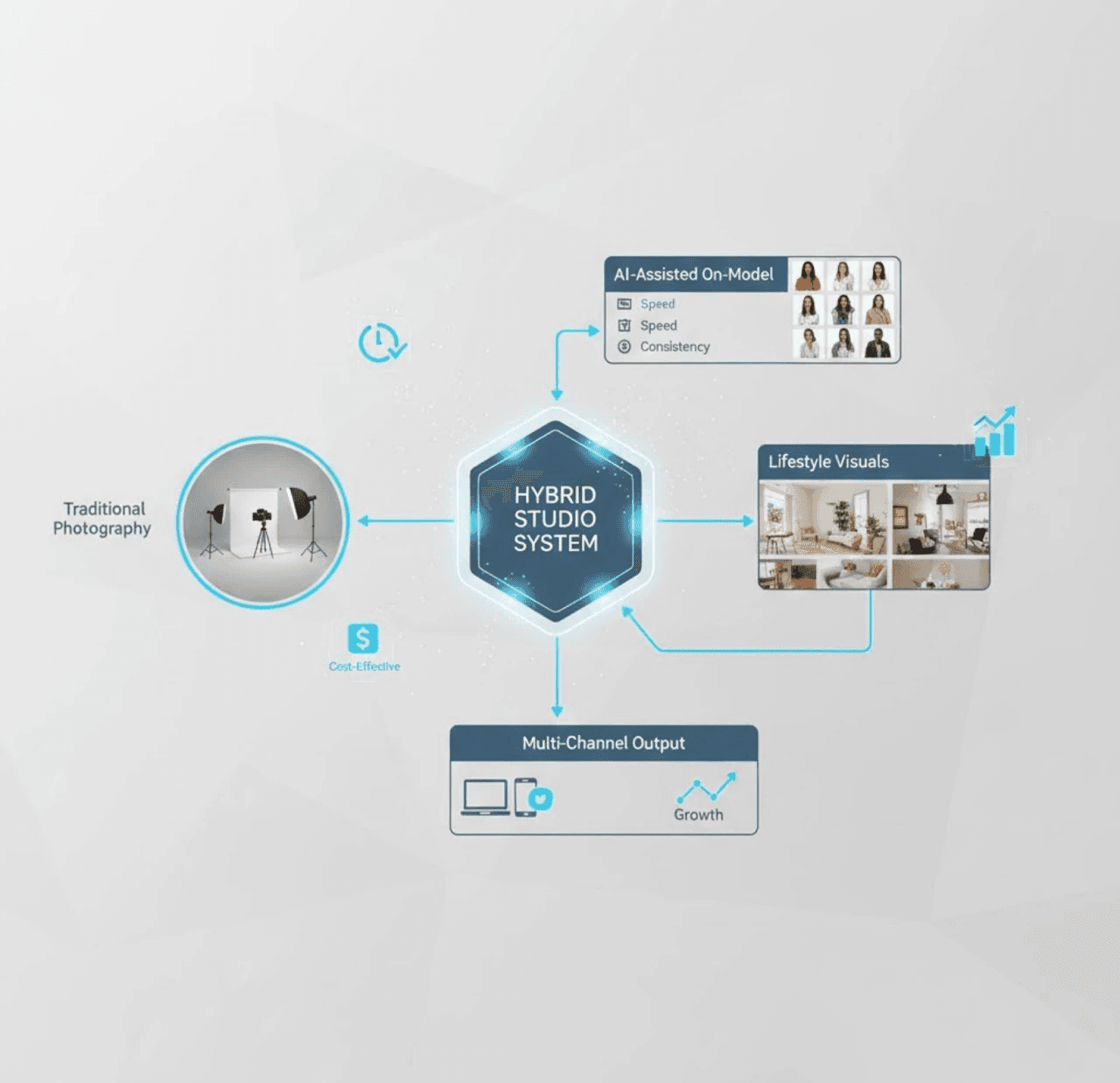
Ecommerce studios remain valuable, but they are no longer defined by physical space alone. Today, winning brands focus on outcomes, high-quality, consistent visuals that drive conversions, rather than the traditional process of shooting in a studio.
Success now comes from balancing quality, speed, and scalability. By integrating hybrid workflows, AI-assisted tools, and strategic studio shoots, visual production becomes a growth lever rather than just a line-item cost.
In modern ecommerce, the “studio” is a flexible system: one that supports frequent launches, maintains brand consistency, and turns professional imagery into a measurable driver of trust, engagement, and sales.
