Ecommerce Photography Pricing: What It Really Costs in 2026 (And How to Budget Smarter)
Introduction
Ecommerce photography is more than just snapping product images, it’s a key driver of sales and brand perception. Yet many brands, from DTC Shopify stores to Etsy sellers, often struggle to understand the true cost of professional product photography. Prices can vary widely depending on factors like product type, number of SKUs, use of models, and post-production work.
In this article, we’ll:
Explore ecommerce photography pricing in 2026
Break down typical cost structures
Reveal hidden expenses brands often overlook
Highlight smarter alternatives to traditional photoshoots
We’ll also subtly touch on modern tools like Look Atlas, which help brands create high-quality visuals at scale without the need for expensive studios or models.
1. How Much Does Ecommerce Photography Cost?
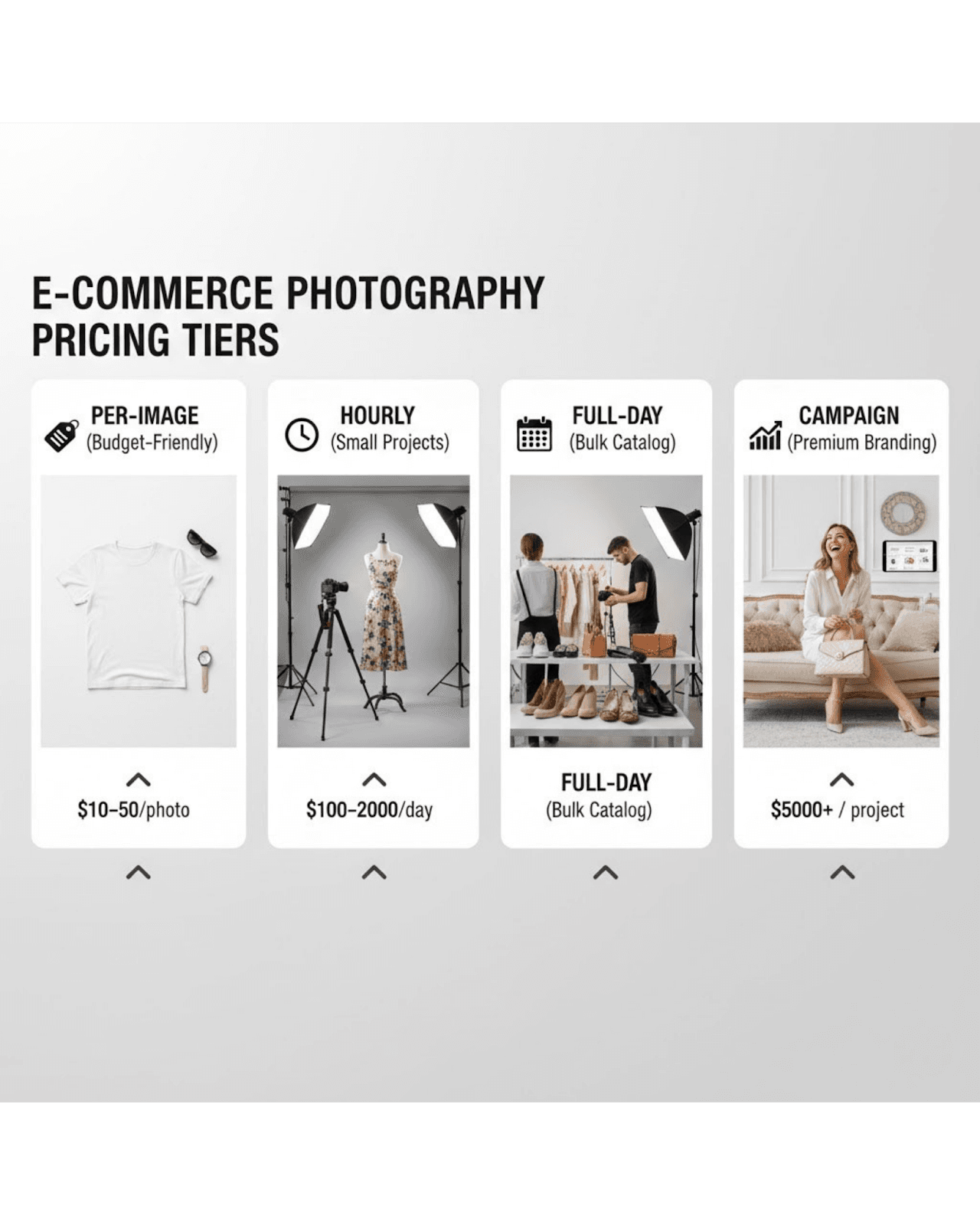
Ecommerce photography costs vary based on product type, photography style, and production complexity. Here’s a rough breakdown:
Per-image pricing: $20 to $150 per image for simple flat-lay or product-on-white shots.
Hourly studio rates: $50 to $200 per hour, depending on photographer experience and location.
Full-day studio shoots: $500 to $5,000+, often including models, stylists, and assistants.
Campaign packages: $1,000 to $10,000+ for multiple products, lifestyle images, and social media-ready visuals.
Keep in mind that regional variations, photographer experience, and post-production requirements can significantly affect these numbers.
Tip: Always clarify what’s included, number of final images, retouching, and licensing, before committing.

2. Pricing Models Explained
Ecommerce photography studios and freelancers typically offer several pricing models, each suited to different needs and catalog sizes:
Per-Image Pricing
Per-image pricing is common for small catalogs or individual products. It’s straightforward but can become costly if you have many SKUs.
Pros: Easy to budget for a few products.
Cons: Doesn’t scale well for larger catalogs.
Hourly Studio Rates
Some photographers charge by the hour, ideal for flexible sessions or quick shoots.
Pros: Good for small batches or experiments.
Cons: Costs can escalate with setup time, adjustments, and revisions.
Day Rates
Full-day rates cover models, lighting, assistants, and equipment. Typically used by fashion brands or larger ecommerce teams with multiple products to shoot.
Pros: Captures multiple products efficiently.
Cons: High upfront investment, may include unused hours if the catalog is small.
Package Pricing
Photography packages bundle multiple images and services for a set price. Best for subscription-based product launches or seasonal campaigns.
Pros: Predictable costs and better value for bulk shoots.
Cons: Less flexibility for ad-hoc or one-off products.
3. Factors That Affect Ecommerce Photography Pricing
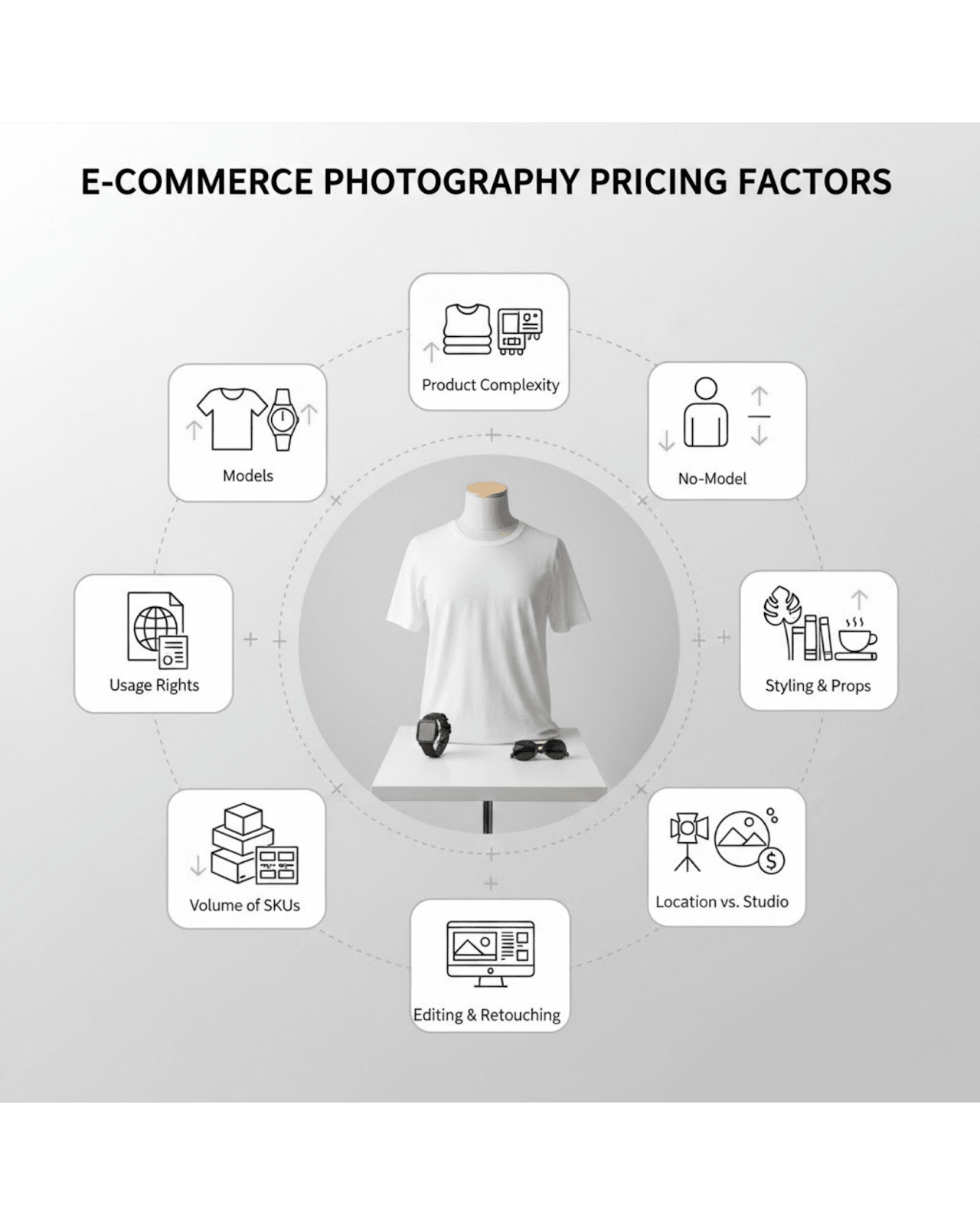
The cost of ecommerce photography isn’t one-size-fits-all. Several factors influence how much a shoot will cost, and understanding them can help brands budget effectively and avoid surprises.
1. Product Complexity: Different products require different levels of attention and setup. Apparel with intricate details, jewelry with reflective surfaces, or electronics with multiple components may need specialized lighting, angles, or equipment, which can increase costs.
2. Model Usage: Incorporating models into your shoot adds realism and helps buyers visualize fit or lifestyle context, but it comes with additional expenses. Model fees, scheduling logistics, and contractual agreements all contribute to higher pricing.
3. Styling and Props: Lifestyle or context-driven photography often requires extra preparation. Props, backgrounds, and coordinated styling increase setup time and effort, which directly affects overall cost.
4. Location vs. Studio: Shooting on location can create more authentic visuals, but it’s typically more expensive than using a controlled studio environment. Travel, permits, and location-specific logistics all add to the final price.
5. Editing and Retouching: Post-production work like color correction, background removal, and detail retouching ensures consistency and professional quality. The more intensive the editing, the higher the cost.
6. Volume of SKUs: The number of products or variations being photographed multiplies the time and resources needed. Large catalogs or multiple color and size variants naturally drive costs up.
7. Usage Rights: Licensing for images, especially extended or global commercial use, can increase pricing. Brands that plan to use visuals across multiple platforms or countries often pay more for broader rights.
By considering these variables, brands can plan smarter budgets, choose the right photography approach, and scale visuals efficiently without unexpected expenses.
4. Hidden Costs Most Brands Overlook
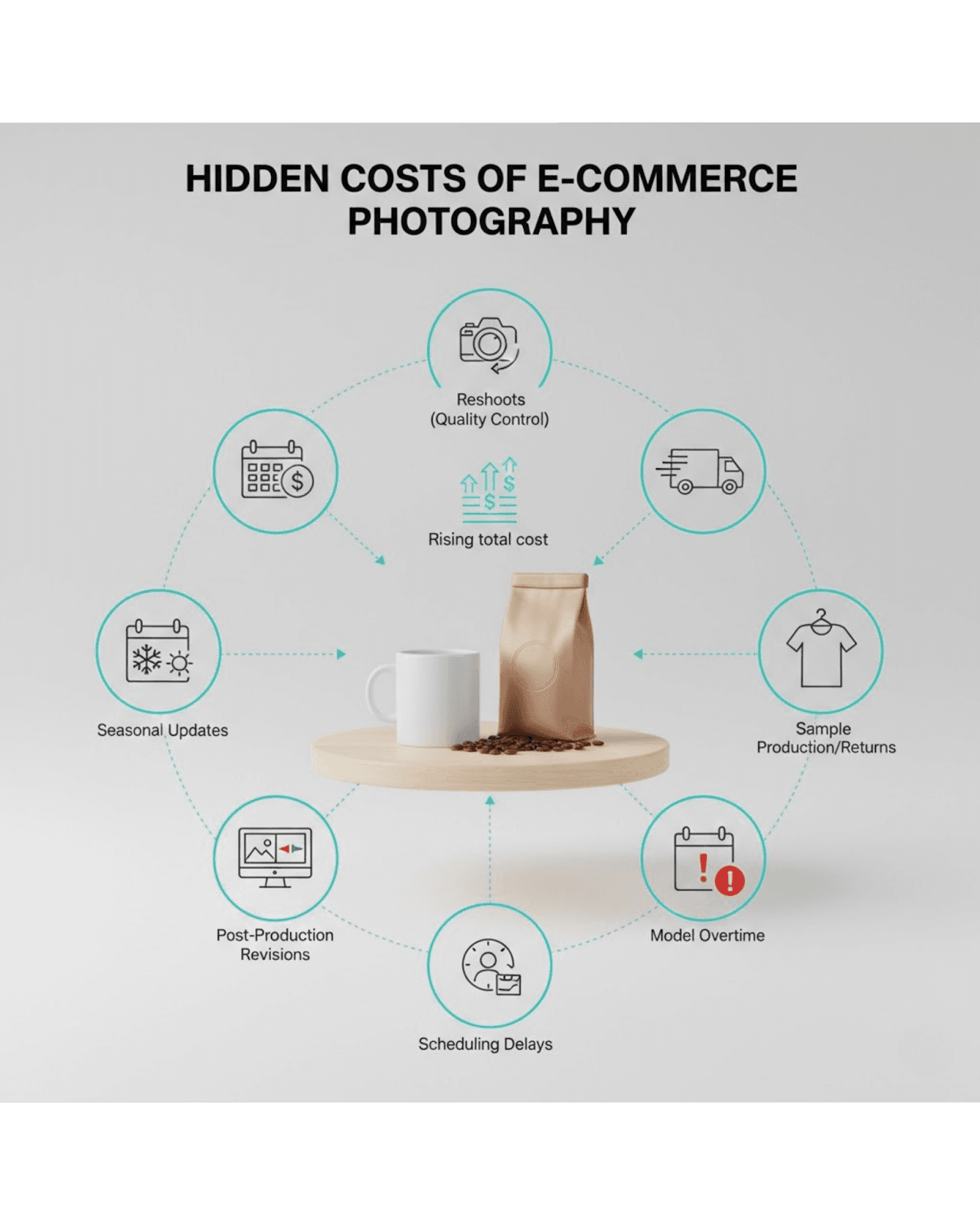
When budgeting for ecommerce photography, the base rate is just the beginning. Many brands underestimate the hidden costs that can quickly add up:
Reshoots due to quality issues: Even small mistakes or inconsistencies may require additional sessions.
Shipping products to the studio: Transporting items safely adds time and expense.
Sample production for photography: Sometimes special samples are needed just for the shoot.
Scheduling delays: Studio availability, model timing, and unforeseen conflicts can slow production.
Model overtime or cancellations: Extra hours or last-minute changes increase costs.
Post-production revisions: Adjustments, color correction, or retouching beyond the initial scope can add fees.
Seasonal updates for product variations: New colors, sizes, or designs often require fresh photos.
Key takeaway: The total cost of ecommerce photography is often higher than initial quotes suggest, and planning for these hidden expenses is essential for accurate budgeting and smooth production.
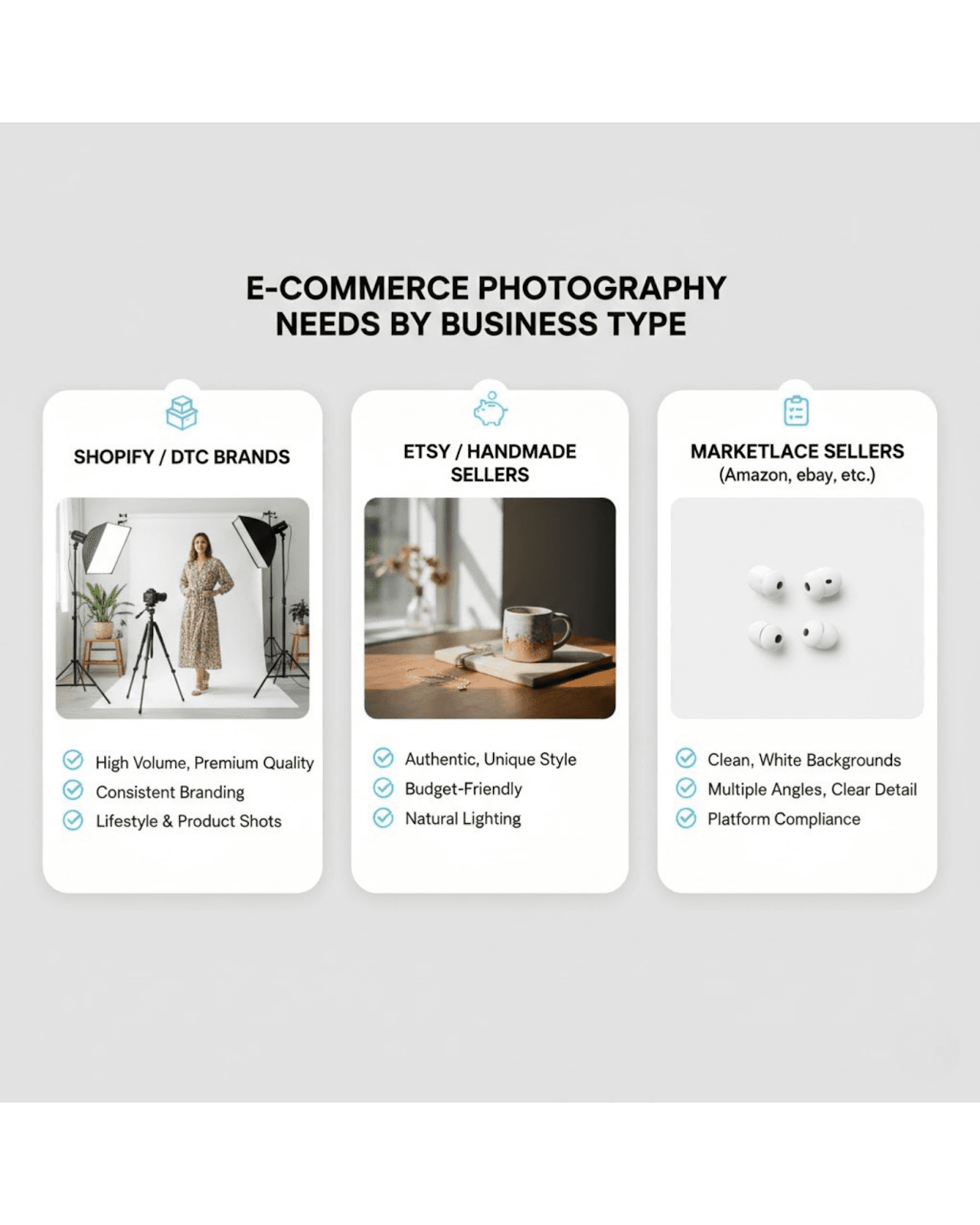
5. Ecommerce Photography Pricing by Business Type
Different types of ecommerce businesses face unique photography needs, which directly affect costs:
Shopify & DTC Brands
Frequent product drops: Regular launches demand consistent, high-quality visuals.
Brand consistency: Maintaining a cohesive look across your store and marketing is critical.
Scalable solutions: Leveraging hybrid or digital workflows can save time and money while keeping imagery consistent.
Etsy & Handmade Sellers
Lower budgets: Many sellers rely on DIY setups or small-scale shoots.
Lifestyle visuals matter: Even simple props or context-driven images can significantly boost perceived value.
Marketplace Sellers (Amazon, Zalando, etc.)
Platform compliance: Most marketplaces require white backgrounds, specific image ratios, and multiple angles.
Detail shots required: High-resolution close-ups are essential for reviews, returns, and buyer confidence.
Understanding how your business type impacts photography needs helps you choose the right approach and budget efficiently for maximum ROI.
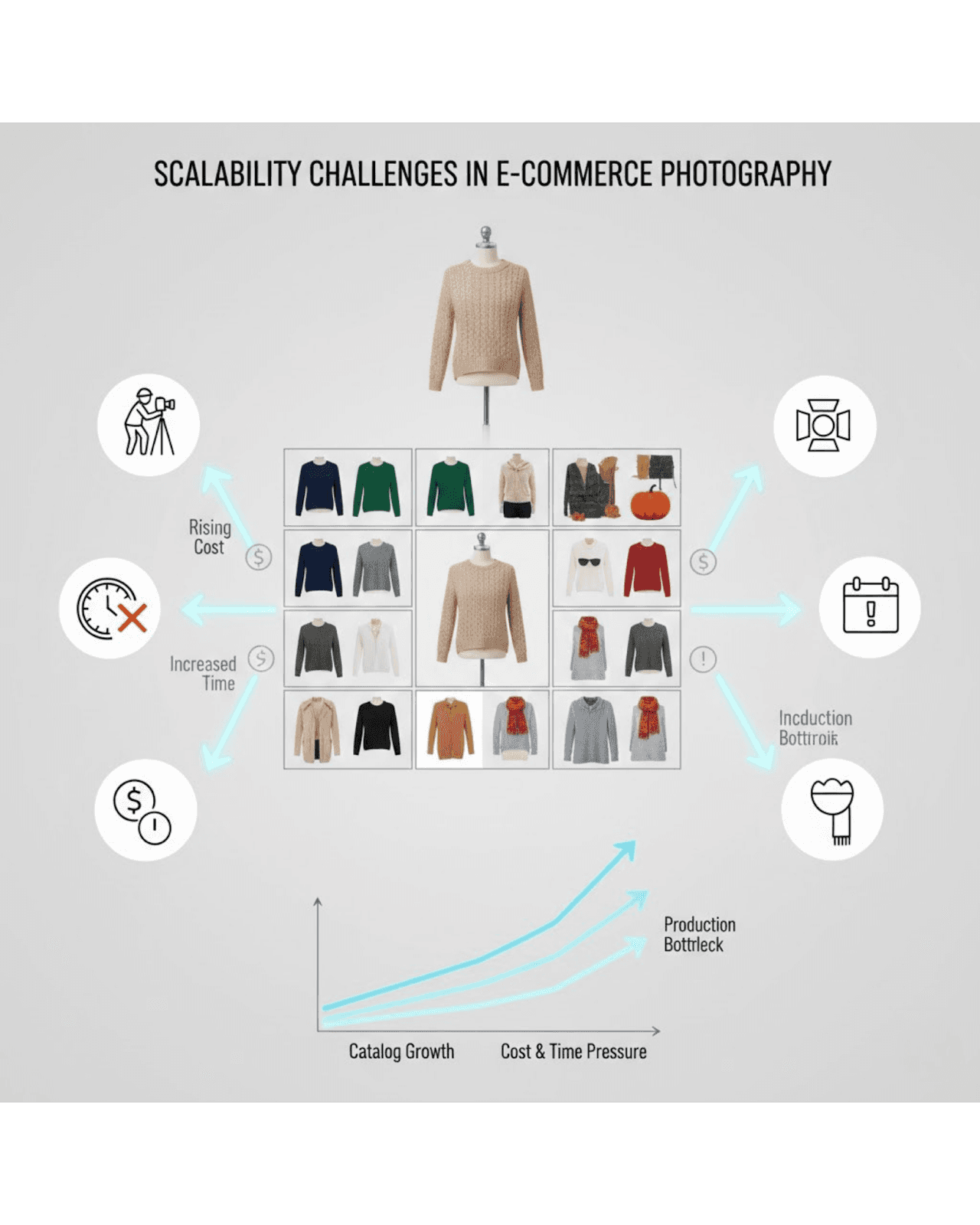
6. The Scalability Problem in Ecommerce Photography
As ecommerce businesses grow, their photography needs increase exponentially:
Catalogs expand: More SKUs mean more images required for listings.
New colorways launch: Each variant often needs separate photos to showcase differences.
Seasonal variations increase: Holidays, trends, and limited editions create additional shoots.
Traditional photography methods struggle to keep up. Studios, models, and repeated retakes create bottlenecks, slowing down product launches and driving costs higher. For growing brands, this scalability problem makes it difficult to maintain consistent, high-quality visuals across all channels.
Many ecommerce brands are now turning to AI-studios like Look Atlas, which can transform simple product photos into realistic on-model images. This approach enables faster production, consistent quality, and scalable workflows, letting brands keep up with expanding catalogs and frequent launches without the traditional bottlenecks.
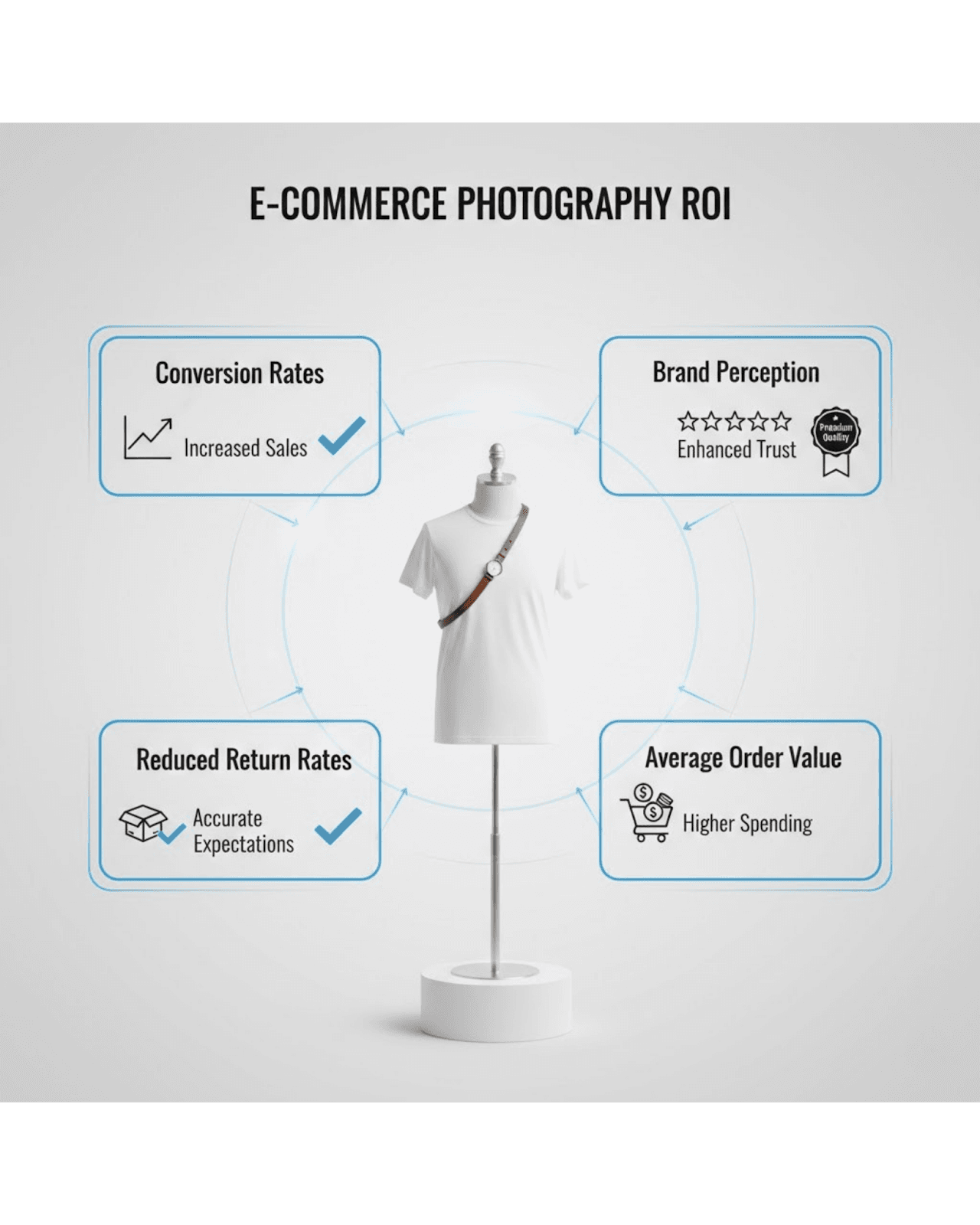
7. Is Ecommerce Photography Worth the Investment?
Investing in high-quality ecommerce photography pays off in multiple ways:
Conversion rates: Clear, appealing visuals increase the likelihood that shoppers move from clicks to purchases.
Brand perception: Professional photos make products appear premium and trustworthy, reinforcing brand credibility.
Return rates: Accurate, detailed images reduce customer dissatisfaction and minimize returns.
Average order value: Shoppers are often willing to pay more for products that are presented clearly and attractively.
In short, ecommerce photography isn’t just a line-item cost, it’s a strategic investment that drives ROI, builds trust, and strengthens your brand’s competitive edge.
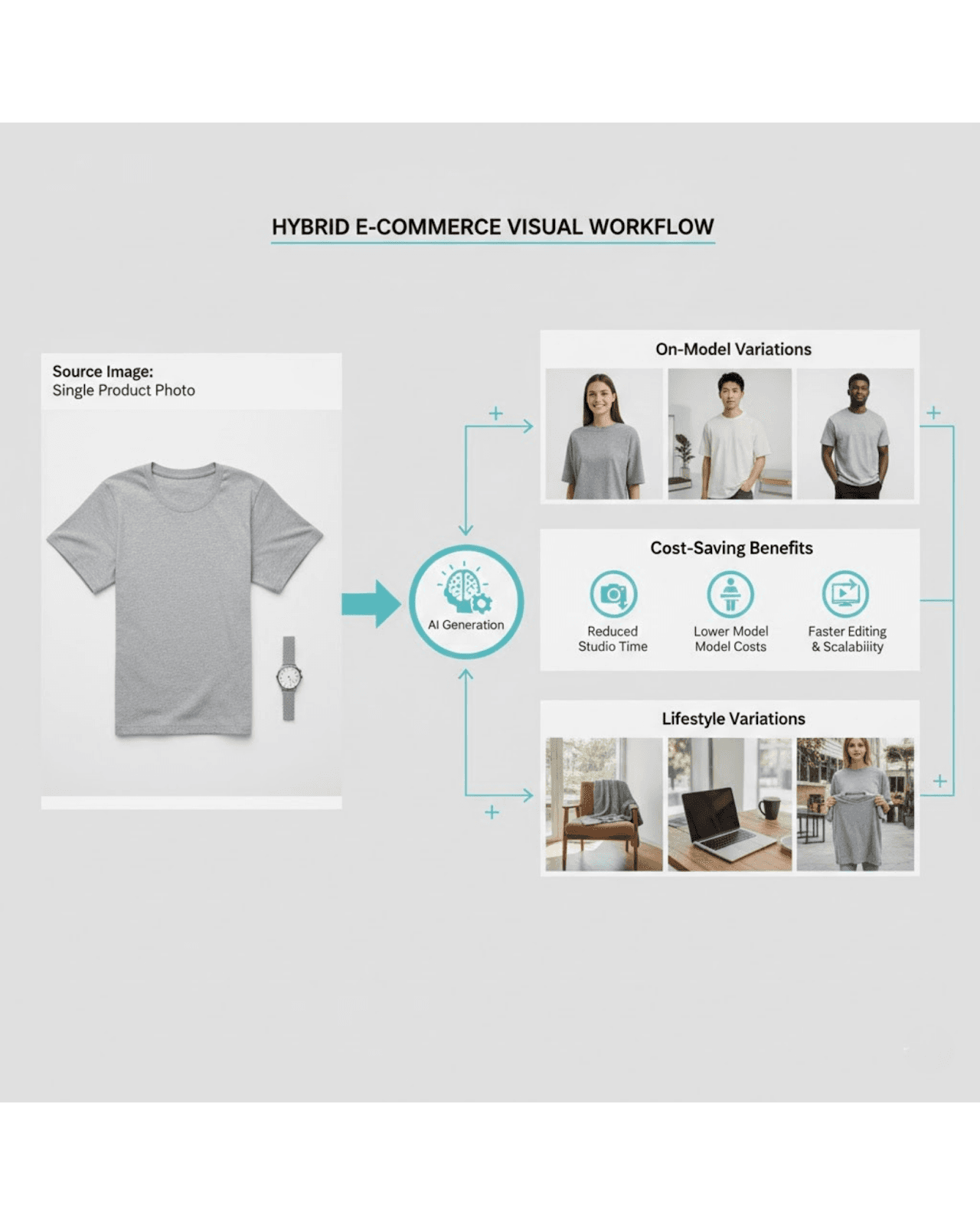
8. Reducing Ecommerce Photography Costs Without Sacrificing Quality
Many brands are now adopting hybrid workflows to control costs while maintaining high-quality visuals:
Capture a flat product image once: A single, well-shot base photo can serve as the foundation for multiple variations.
Generate model and lifestyle variations digitally: Instead of booking models and studios repeatedly, digital tools can create realistic on-model and contextual images.
Leverage AI-assisted tools: Platforms like Look Atlas allow brands to scale images efficiently without full studio reshoots, reducing production time and expenses.
By combining smart photography with modern digital workflows, brands can cut model, studio, and editing costs while still delivering professional, conversion-focused images across all platforms.
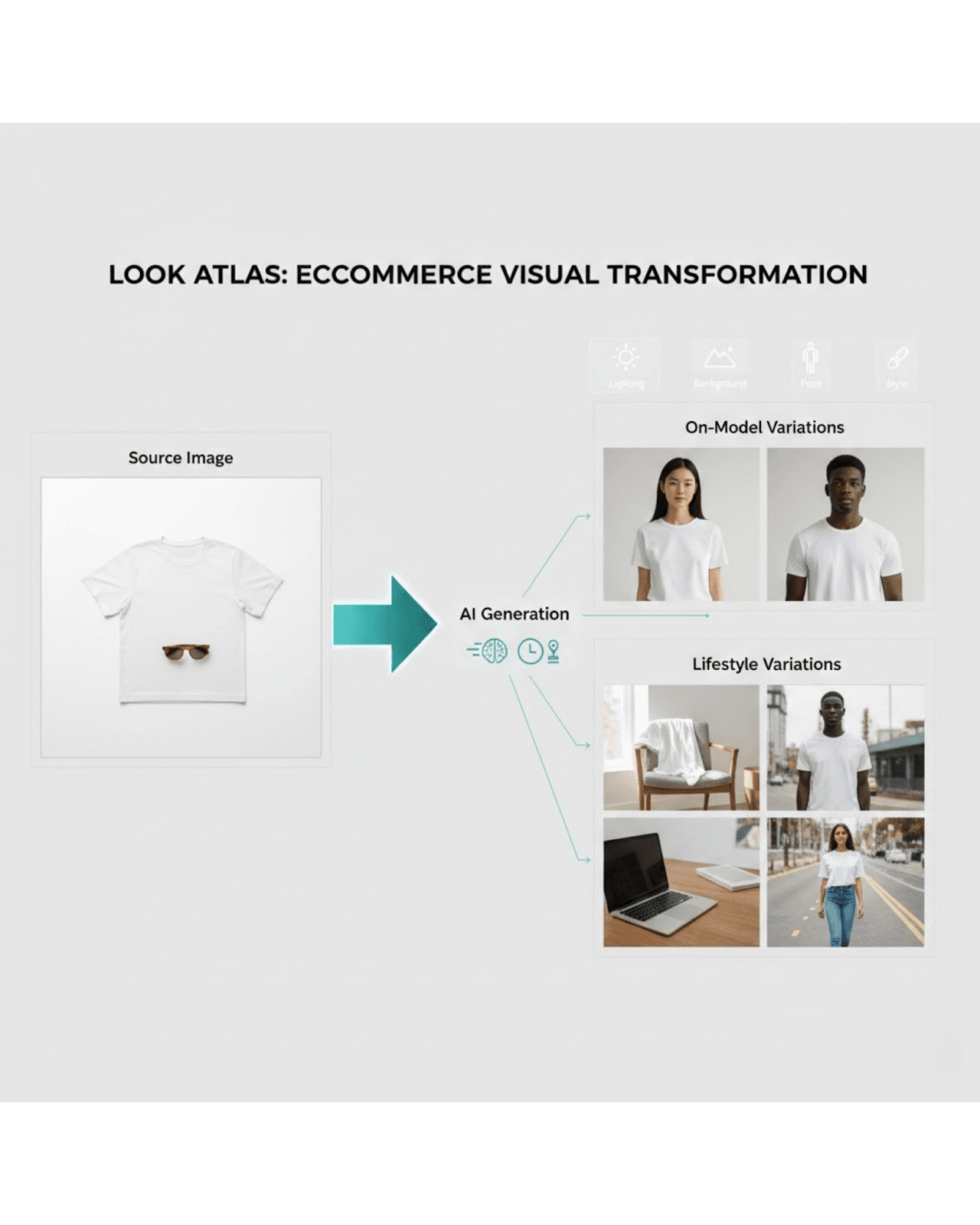
9. Smarter Way to Scale Product Imagery with AI
For apparel, eyewear, accessories, and lifestyle products, brands increasingly need high-quality visuals without the hassle of traditional photoshoots.
Modern AI like Look Atlas helps brands achieve this by allowing them to:
Convert a flat product photo into photorealistic on-model images
Preserve important details such as textures, logos, and patterns
Control model type, pose, background, lighting, and shoot style
Generate outputs ready for product pages, social media, and ads
Rather than replacing studios entirely, many brands use Look Atlas to scale catalog production efficiently, reduce operational costs, and maintain visual consistency across large inventories.
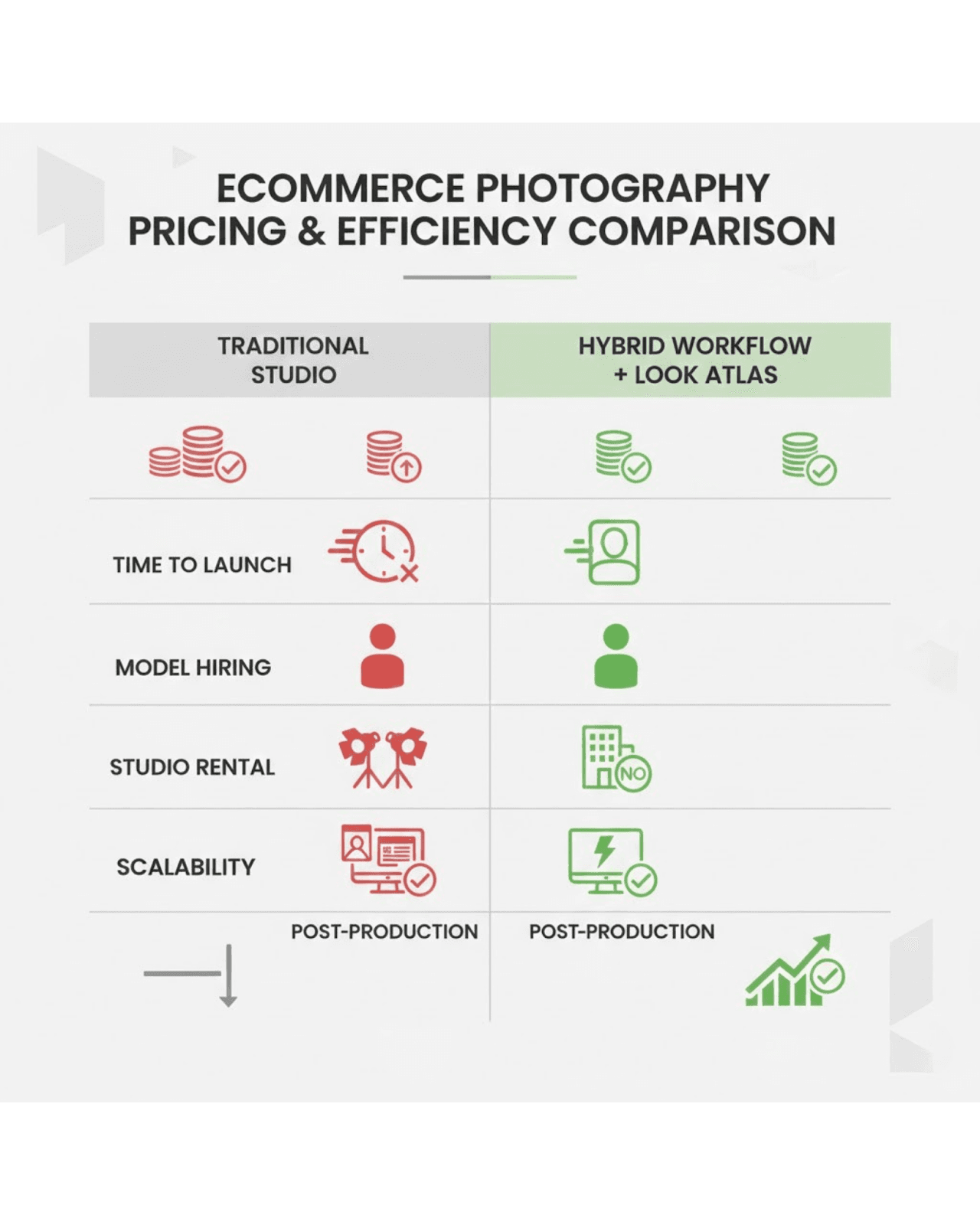
10. Ecommerce Photography Pricing Comparison Table
Feature | Traditional Studio | Hybrid Workflow + AI |
Cost per image | $50 to $500 | $5 to $50 (depending on usage) |
Time to launch | 1 to 2 weeks | Minutes to hours |
Model hiring | Required | Optional |
Studio rental | Required | Not required |
Post-production | Manual, time-consuming | Automated, fast |
Scalability | Low | High |
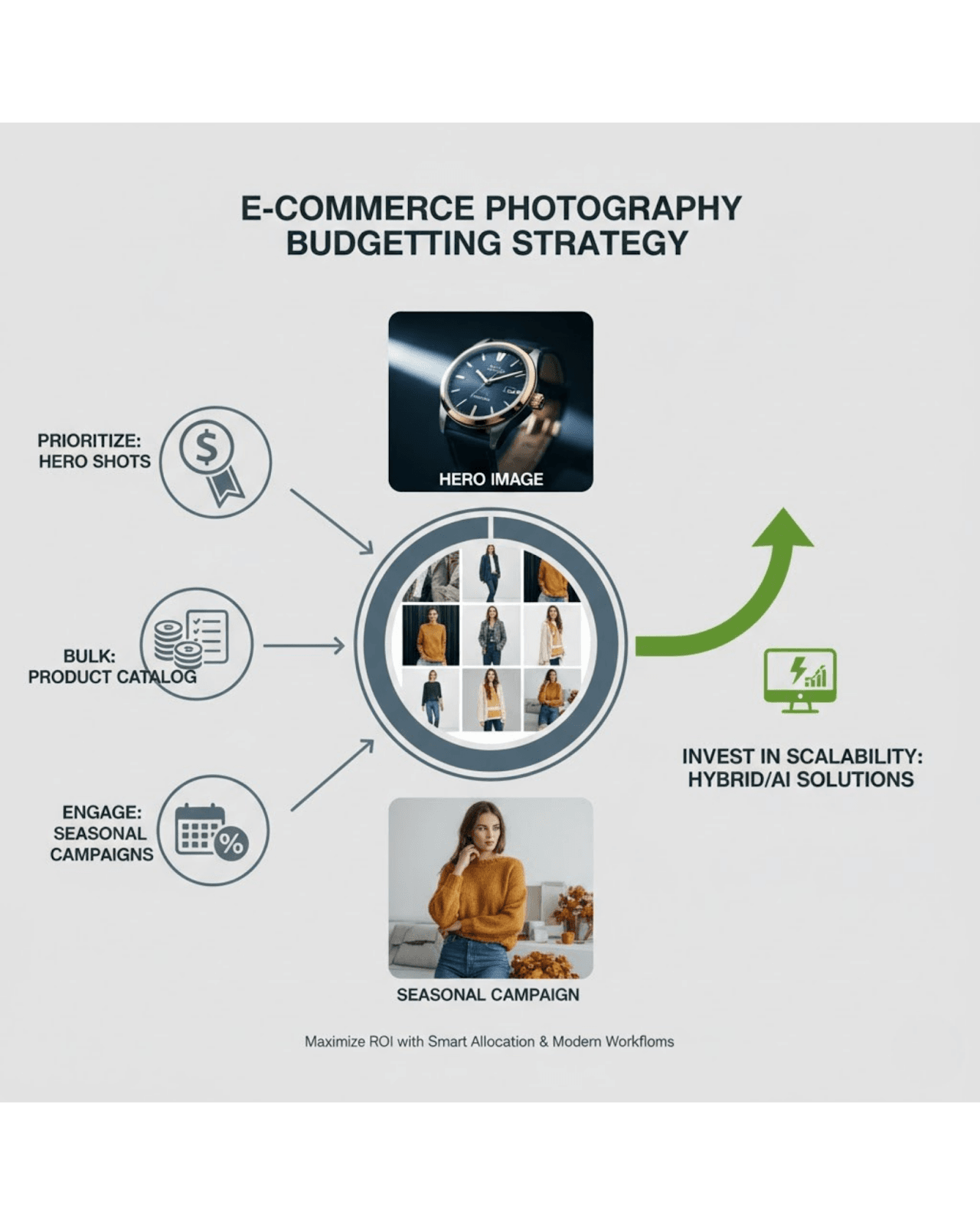
11. How to Budget for Ecommerce Photography
Effective budgeting ensures you get high-quality visuals without overspending. Here are key strategies:
Allocate a percentage of revenue: Many brands dedicate 5–10% of product revenue to photography, adjusting for catalog size and campaign scope.
Prioritize hero and catalog images: Invest first in the images that directly influence conversions, such as main product shots and lifestyle visuals.
Plan seasonal campaigns: Schedule shoots in advance for holidays, launches, and limited-edition products to avoid last-minute cost spikes.
Use scalable solutions for high-volume products: For large catalogs, leverage AI-assisted or hybrid workflows to minimize repetitive costs.
Consider hybrid workflows: Combining traditional shoots with tools like Look Atlas allows brands to stretch budgets further while maintaining professional quality.
By following these strategies, ecommerce brands can maximize ROI from photography while keeping costs predictable and manageable.
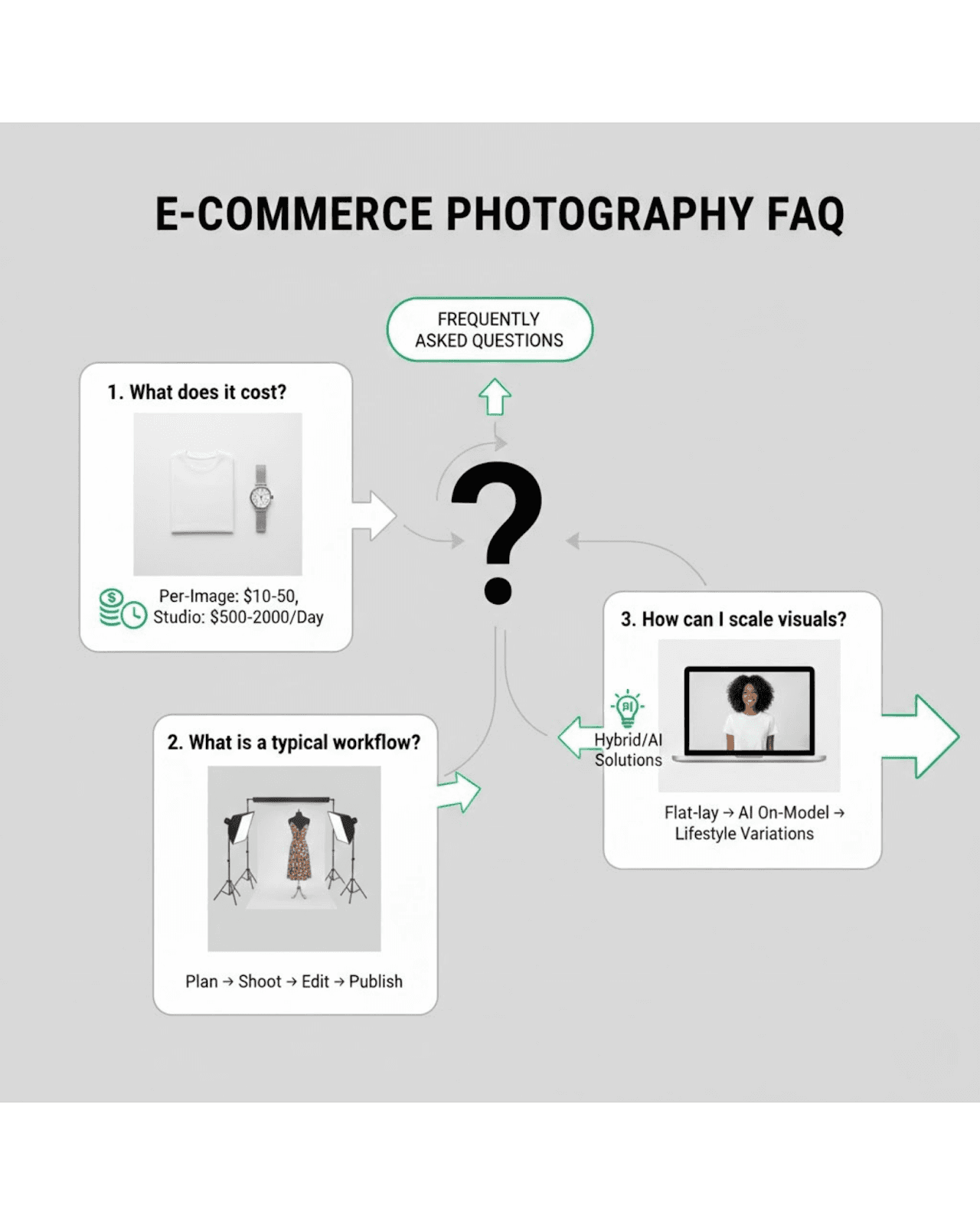
12. FAQ Section
Q1: How much does ecommerce photography cost per product?
A: $20 to $150 per image for basic product-on-white shots. Costs are higher for on-model or lifestyle photography that involves models, props, or complex setups.
Q2: What is a typical studio day rate?
A: $500 to $5,000+ per day, often including models, assistants, lighting, and equipment, depending on location and production complexity.
Q3: Can AI-generated model photos replace professional photography?
A: AI-generated images are ideal for scaling catalogs and lifestyle visuals quickly, but high-end campaigns or hero shots may still benefit from traditional studio photography.
Q4: How can I reduce photography costs?
A: Capture a single flat product image and use hybrid workflows or tools like Look Atlas to create realistic on-model and lifestyle variations without repeated studio shoots.
13. Final Thoughts
Ecommerce photography pricing can be confusing, but understanding cost structures, hidden fees, and scalable alternatives is essential for smart budgeting.
The cheapest option isn’t always the best, quality directly impacts conversions and brand perception.
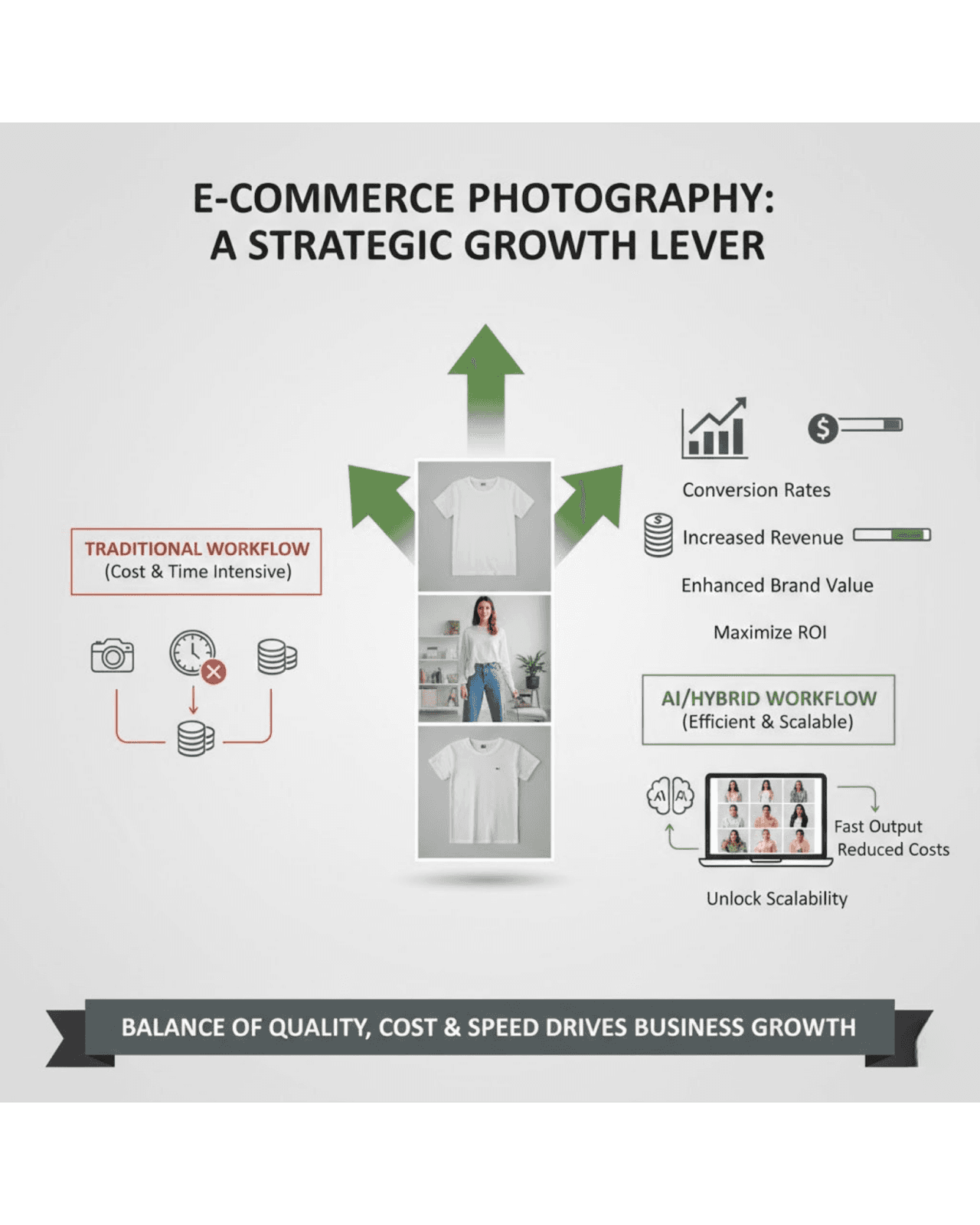
Investing in professional visuals improves click-to-purchase rates, reduces returns, and can increase average order value (AOV).
Hybrid workflows and AI tools like Look Atlas enable brands to scale high-quality imagery efficiently without blowing up budgets.
In 2026, the smartest ecommerce teams treat photography as a strategic growth lever, not just a line-item cost, using a combination of traditional and modern approaches to maximize both efficiency and impact.
