
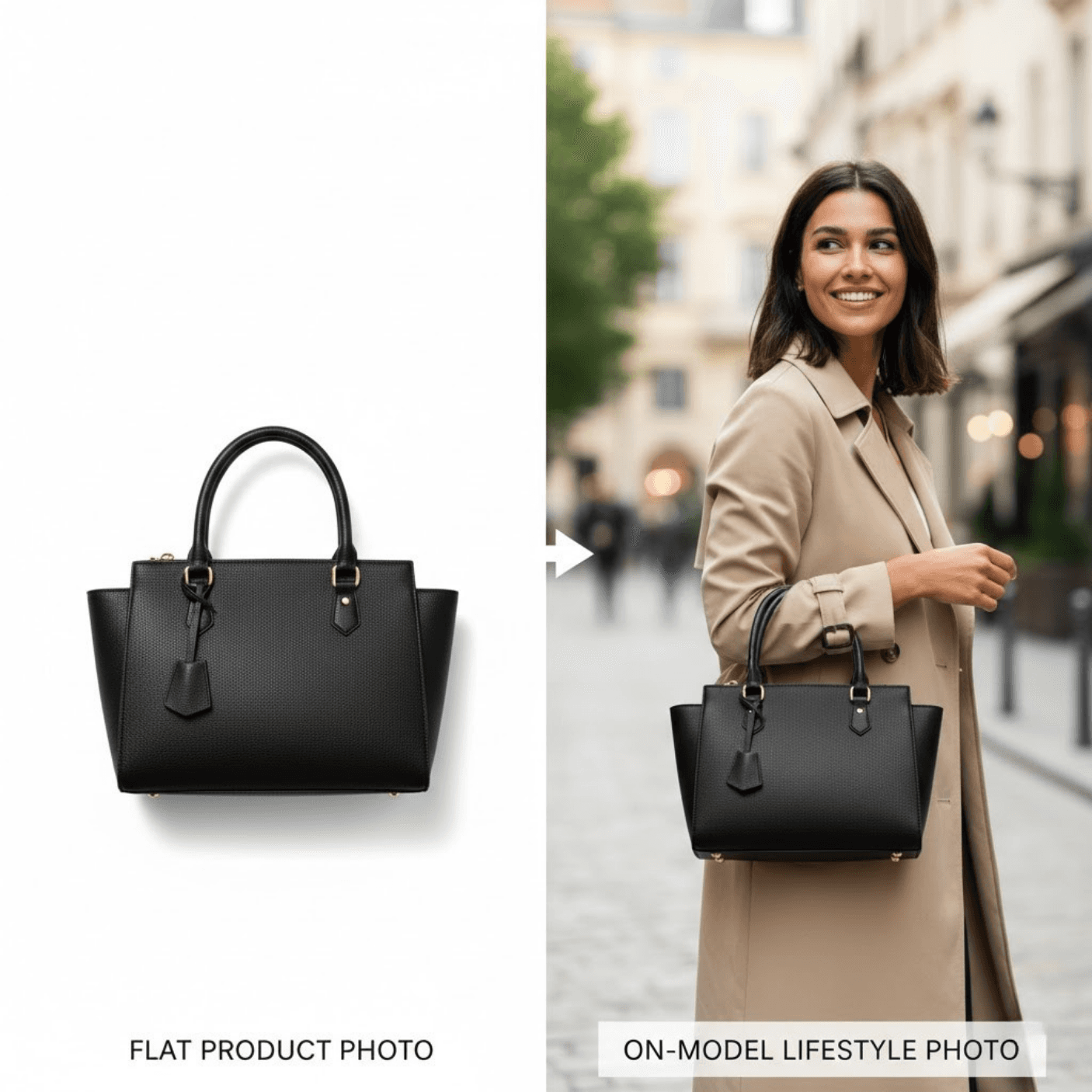
Ecommerce Model Photography: Costs, Benefits & Scalable Alternatives for Online Brands
In ecommerce, customers don’t just buy products, they buy how those products look on people.
That’s why ecommerce model photography has become one of the most powerful tools for increasing conversion rates, improving brand perception, and driving higher average order values.
But professional model photoshoots are expensive. They require coordination, scheduling, and significant production budgets.
So how much does ecommerce model photography cost?
Is it worth it?
And how are modern brands scaling model imagery without constant studio bookings?
Let’s break it down.
1. What Is Ecommerce Model Photography?
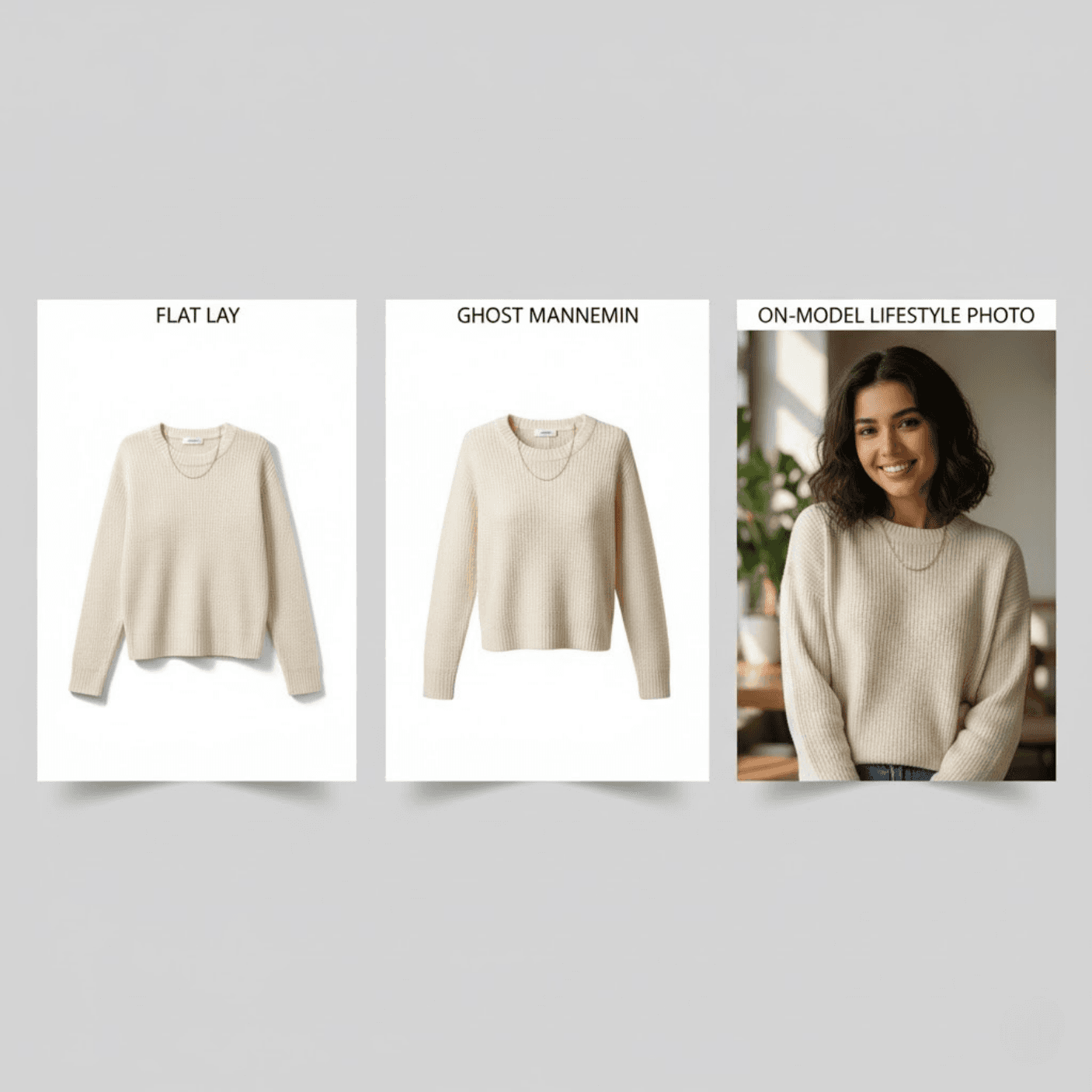
Ecommerce model photography refers to product images that feature real human models wearing or using a product in a natural, styled setting. Instead of showing the item alone on a white background, the product is presented in context, on a person-allowing shoppers to better understand how it looks, fits, and feels in real life.
This type of photography is especially common in:
Fashion & apparel
Jewelry
Eyewear
Accessories
Beauty products
Unlike flat lay or ghost mannequin photography, model photography adds emotion, relatability, and lifestyle context. Customers can see how fabric drapes, how jewelry sits on the skin, how sunglasses fit different face shapes, or how a handbag complements an outfit.
Most importantly, it helps answer the silent buying question every online shopper has:
“What will this look like on me?”
By reducing uncertainty and improving visual clarity, ecommerce model photography builds confidence, and confident customers are far more likely to convert.
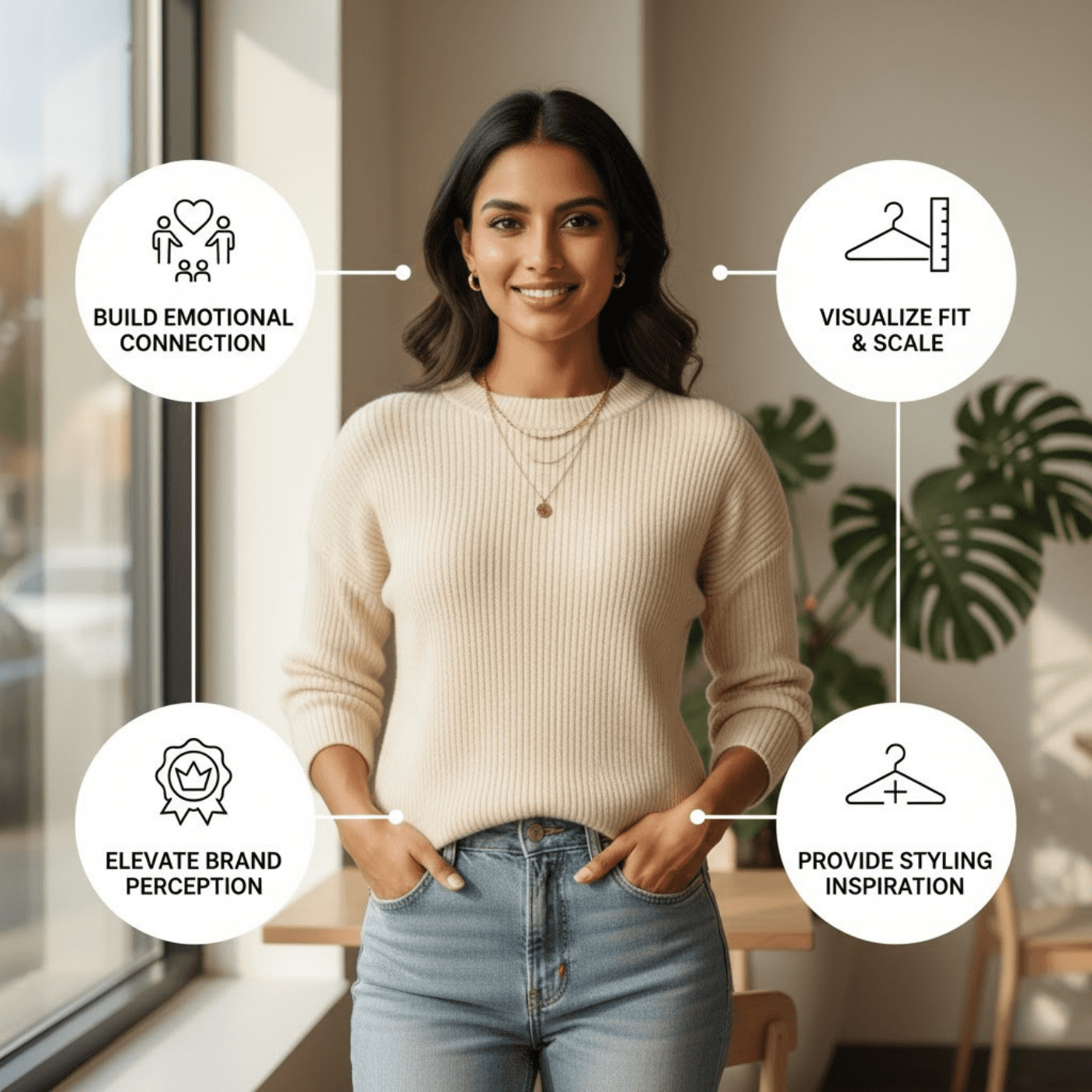
2. Why Ecommerce Model Photography Increases Conversions
1. It Creates Emotional Connection
Humans relate to humans. When shoppers see a real person wearing or using a product, it feels more authentic and trustworthy than a standalone product image.
Facial expressions, posture, and styling communicate mood and lifestyle, helping customers imagine themselves in that same scenario. This emotional connection builds confidence, and confidence increases conversions.
2. It Shows Fit & Proportion
Flat images cannot show how fabric drapes, how structured a blazer feels, or how large a handbag looks when worn.
Model photography demonstrates:
True-to-life scale
Sleeve length and garment fall
How jewelry sits on the neck or wrist
How accessories complement outfits
This reduces uncertainty, which directly reduces return rates and abandoned carts.
3. It Elevates Brand Perception
Premium brands almost always use on-model imagery because it signals professionalism and polish.
A well-executed model shoot communicates:
Brand identity
Target audience positioning
Style and tone consistency
Shoppers subconsciously associate strong visuals with product quality.
4. It Increases Average Order Value (AOV)
When customers can visualize full outfits or styling combinations, they’re more likely to purchase multiple items together.
For example:
A dress styled with matching heels
Jewelry layered for a complete look
A jacket paired with coordinating accessories
Model photography turns a single product page into a styling inspiration moment, increasing cart size naturally.
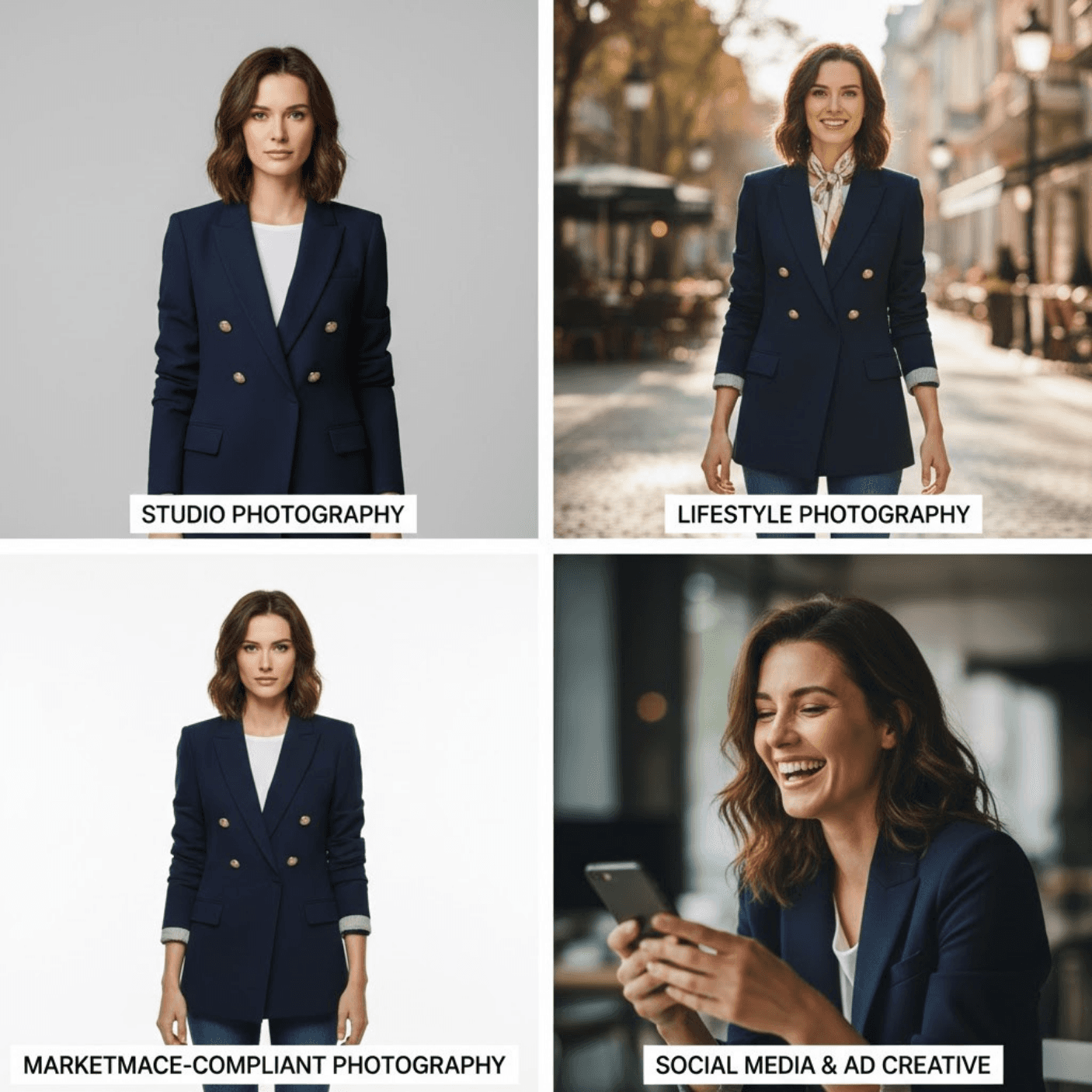
3. Types of Ecommerce Model Photography
Not all model photography serves the same purpose. The style you choose depends on your platform, brand positioning, and marketing goals. Here are the main types ecommerce brands use:
1. Studio Model Photography
Studio shoots are captured in a controlled indoor environment, usually against neutral or seamless backgrounds.
This format is ideal for:
Product pages
Lookbooks
Catalogs
Marketplace listings
Controlled lighting ensures color accuracy and sharp detail, which is especially important for apparel textures, jewelry shine, and material finishes. Studio model photography focuses on clarity and consistency rather than storytelling.
2. Lifestyle Model Photography
Lifestyle shoots place models in real-world environments - outdoors, at home, in cafes, or in curated spaces.
This type is designed for:
Brand storytelling
Homepage banners
Social media
Campaign visuals
Lifestyle imagery creates mood and aspiration. It shows how the product fits into everyday life, helping customers emotionally connect with the brand.
3. Marketplace-Compliant Model Images
Platforms like Amazon and other marketplaces often require clean, distraction-free backgrounds.
Marketplace-compliant model images typically include:
White backgrounds
Clear product visibility
Minimal props
Accurate color representation
These photos balance compliance with conversion optimization. They maintain platform standards while still showing fit and proportion.
4. Social Media & Ad Creative Shoots
These are campaign-style visuals created specifically for paid ads and organic social content.
They often include:
Dynamic poses
Strong styling
Trend-driven aesthetics
Multiple crops for different placements
The goal here isn’t just product clarity, it’s scroll-stopping impact. These shoots tend to require more creative direction, which increases production complexity and cost.
Each type of ecommerce model photography affects budget, timeline, team size, and post-production workload. Understanding the purpose behind the shoot helps brands invest strategically rather than overspend unnecessarily.
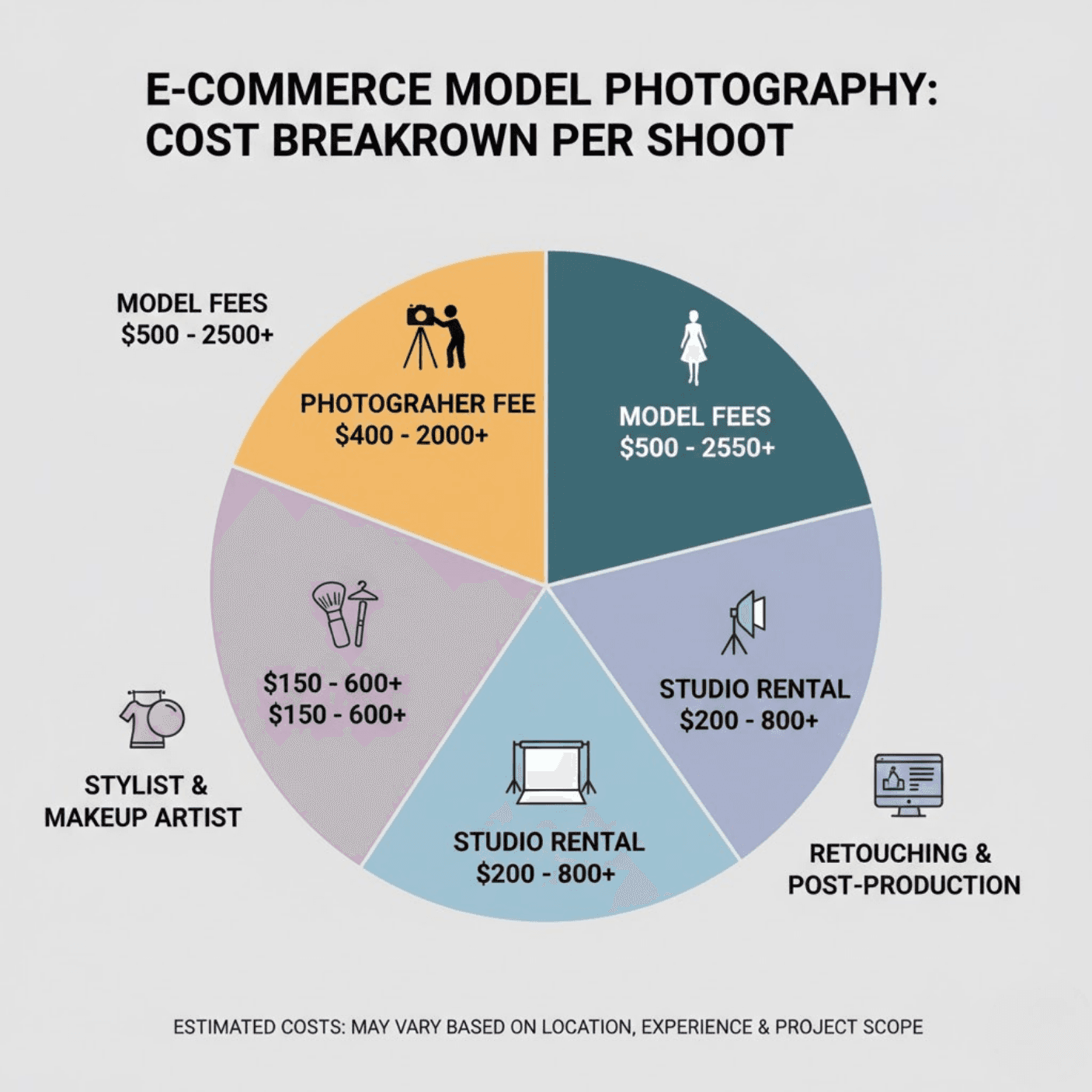
4. Ecommerce Model Photography Costs Explained
Ecommerce model photography can quickly become one of the largest line items in your visual production budget. Here’s a typical cost breakdown for a professional shoot day:
Model fees: $200 to $1,000+ per day, depending on experience and exclusivity
Studio rental: $500 to $2,000 per day, based on location and equipment
Photographer fee: $1,000 to $5,000 per day for a skilled professional
Stylist & makeup: $300 to $1,000 for hair, makeup, and wardrobe coordination
Retouching: $10 to $50 per image for editing, color correction, and final touch-ups
A single full-day shoot can easily cost $3,000 to $10,000.
The cost per image depends on the number of final usable shots, so smaller catalogs or limited outputs can make the per-image cost particularly high.
For brands looking to budget effectively, reviewing broader ecommerce photography pricing strategies can help set realistic expectations and identify areas where hybrid or AI-assisted workflows may reduce overall spend.
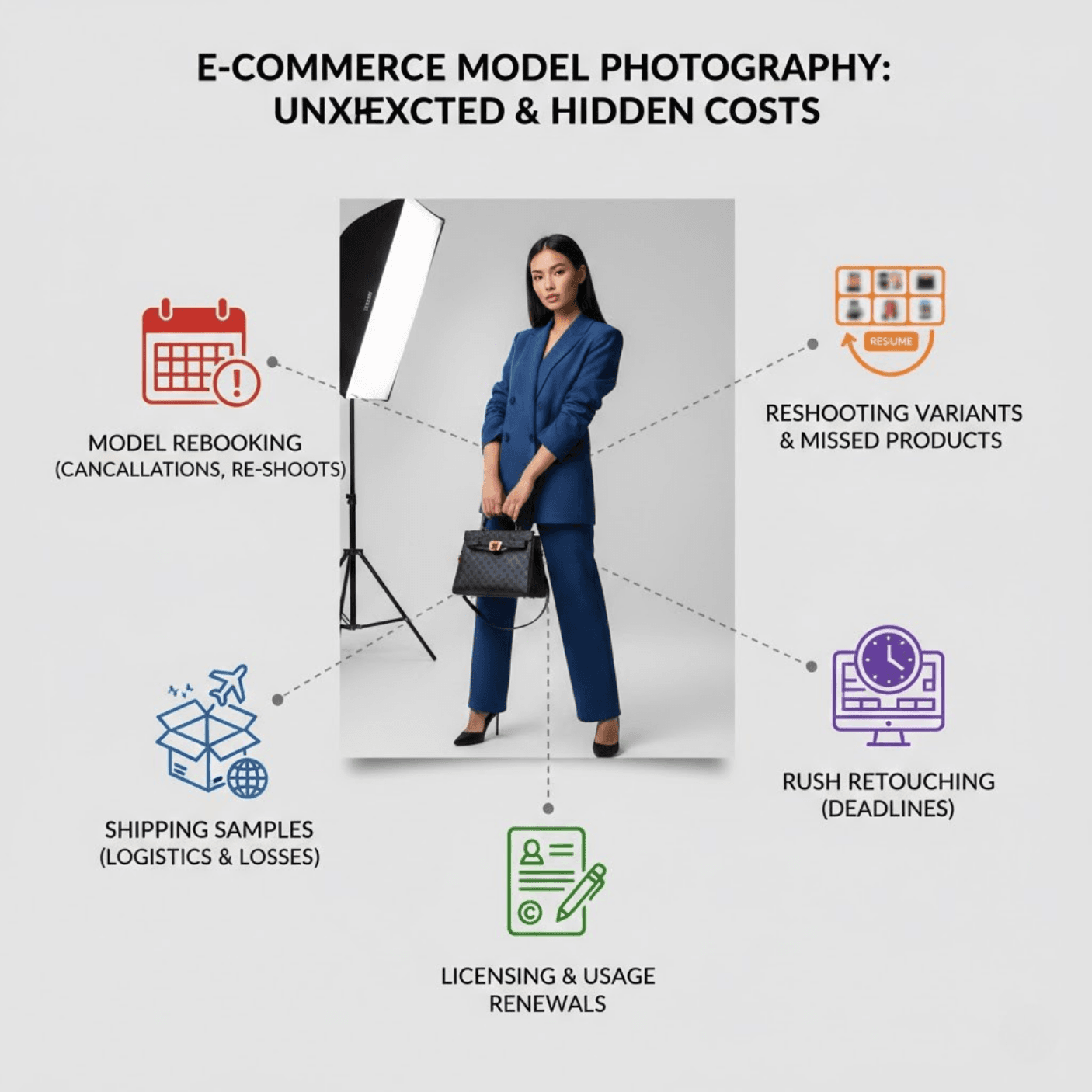
5. Hidden Costs Brands Often Overlook
Beyond the obvious fees for models, studios, and photographers, many brands underestimate the hidden costs associated with ecommerce model photography. These can add up quickly, especially as catalogs expand:
Reshooting new color variants: Every new shade or style may require additional shoot days.
Rebooking models for seasonal launches: Popular models may have limited availability, driving up fees.
Shipping samples internationally: Sending products to multiple locations adds logistics costs and time.
Rush retouching fees: Tight deadlines often come with premium charges for expedited edits.
Licensing agreements: Extended usage rights for images, campaigns, or ads can increase expenses.
As your product range grows, these costs multiply, making careful planning and scalable solutions critical for controlling budgets while maintaining high-quality imagery.

6. The Scalability Problem with Traditional Model Shoots
Scaling traditional model photography quickly becomes a logistical challenge. For example, consider this scenario:
50 new SKUs
4 color variants each
3 model angles per product
That totals 600 images, all needing shooting, editing, and retouching.
Now factor in:
Seasonal drops requiring frequent updates
International markets needing multiple localized visuals
Diverse body types for inclusivity
Paid ad variations in different crops and formats
Traditional studios weren’t designed for exponential SKU growth. The result is longer lead times, higher costs, and inconsistent output, which is why many brands are now exploring AI-assisted and hybrid workflows to scale efficiently.
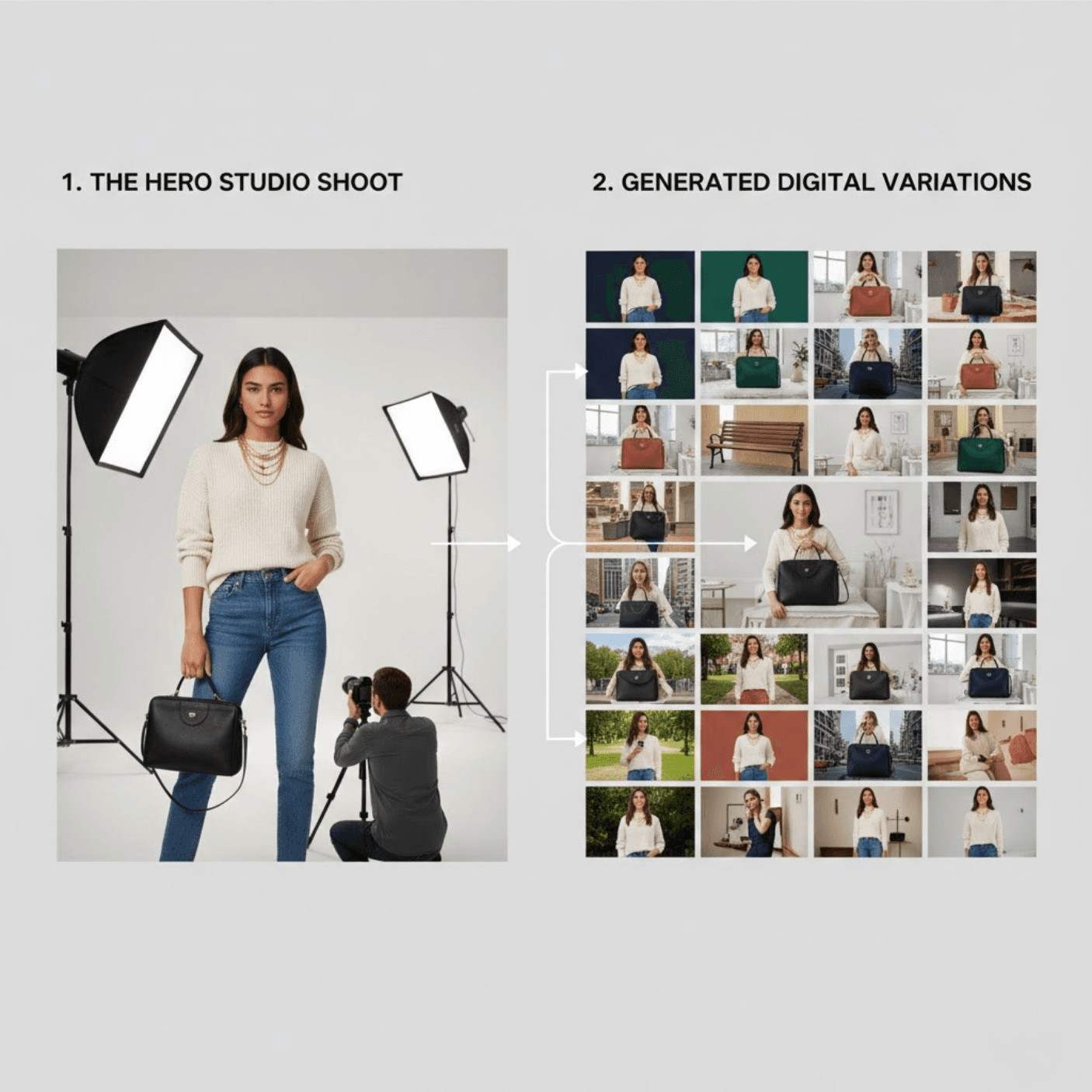
7. How Modern Brands Are Scaling Model Imagery
Instead of relying on constant studio shoots, forward-thinking ecommerce brands are adopting hybrid workflows to scale efficiently:
Shoot hero products traditionally: Capture key items with full studio production to set the visual standard.
Generate variations digitally: Create color variants, different angles, and styling options from the hero shots.
Use scalable visual tools: AI-assisted platforms enable batch generation of on-model and lifestyle images without new photoshoots.
This approach maintains high-quality visuals while controlling costs and speeding up production, allowing brands to expand catalogs and launch campaigns without the bottlenecks of traditional model photography.
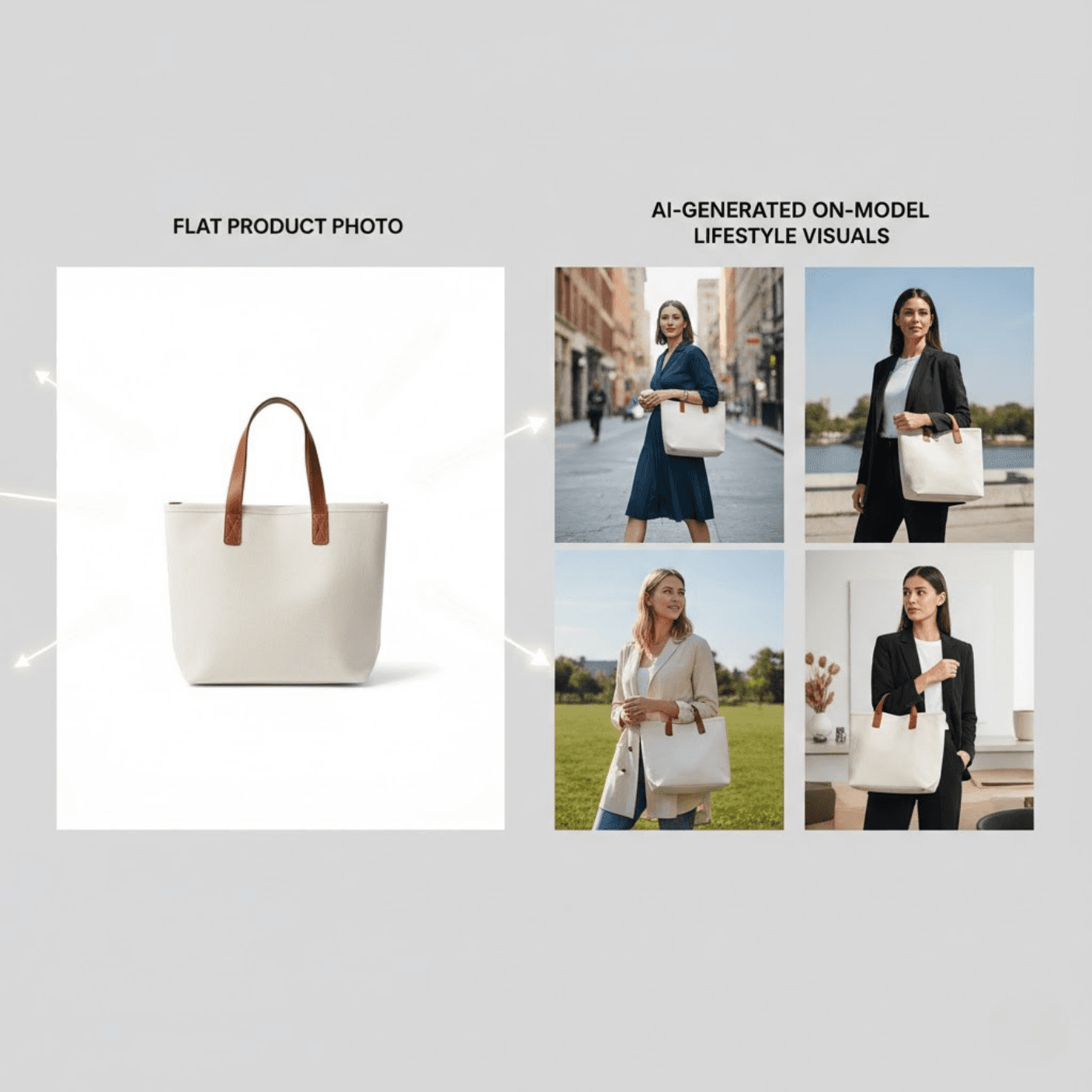
8. From Flat Product to On-Model Visual, Without Booking a Studio
What if a single flat product image could be transformed into a photorealistic on-model visual?
Look Atlas makes this possible. It converts flat product images into realistic on-model visuals without hiring models, studios, or photographers.
Brands retain full creative control over:
Model type
Pose
Lighting
Background
Shoot style
At the same time, it preserves critical product details like:
Logos
Fabric texture
Jewelry shine
Pattern accuracy
The generated outputs are immediately ready for:
Product pages
Paid ads
Social media
Catalogs
Instead of scheduling studio production weeks in advance, brands can generate high-quality model imagery in just hours, dramatically speeding up catalog expansion and campaign launches.
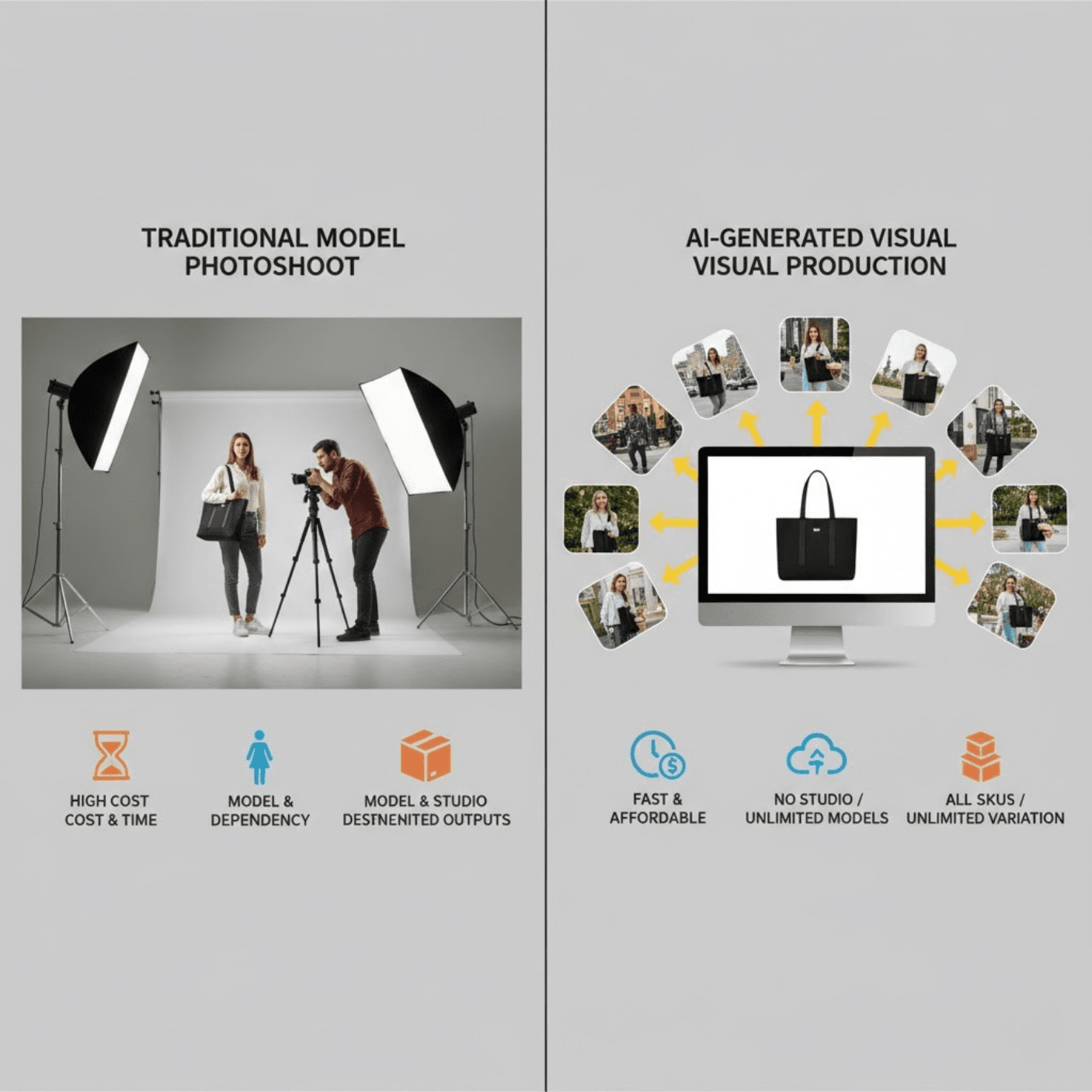
9. Ecommerce Model Photography vs AI-Generated Model Visuals
Factor | Traditional Shoot | AI Visual Workflow |
Cost | High upfront | Credit-based scaling |
Time | Days or weeks | Fast generation |
Model dependency | Yes | No |
Studio booking | Required | Not required |
SKU scaling | Expensive | Efficient |
Both traditional and AI-generated approaches have value. Traditional shoots are ideal for hero products and brand storytelling, while AI-driven workflows like Look Atlas, excel at scalability, quickly generating multiple variations.
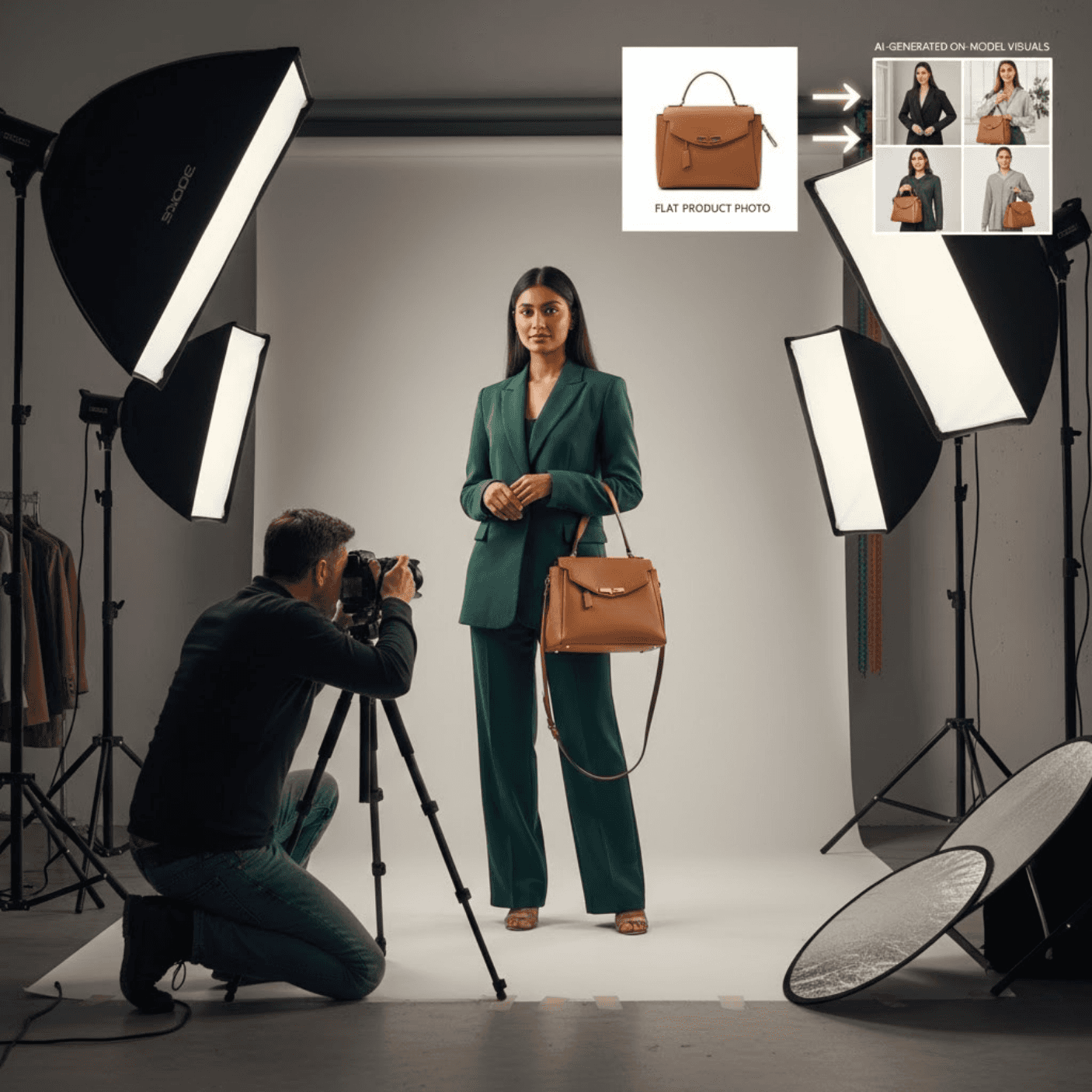
10. When You Still Need a Traditional Model Shoot
Even with AI and scalable workflows, traditional model shoots remain essential for certain purposes:
Brand campaigns: Hero visuals that define brand identity
Lookbooks: Styled collections showcasing seasonal products
High-fashion storytelling: Creative direction that requires human nuance
Video production: Motion content for ads, social, or product demos
The smartest ecommerce brands combine traditional shoots with AI-generated visuals, using studio photography for key assets while scaling the rest digitally for speed, consistency, and cost efficiency.
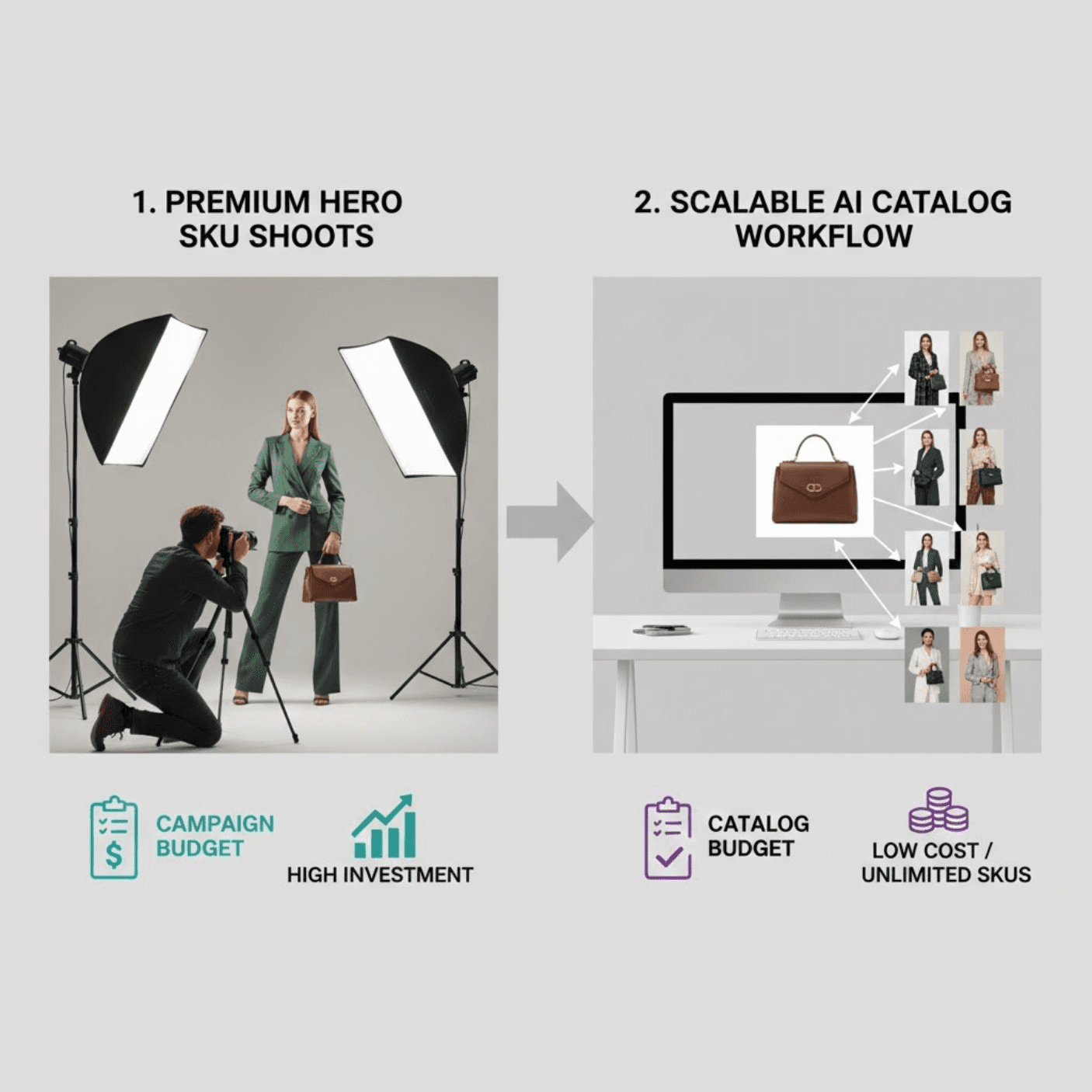
11. How to Budget for Ecommerce Model Photography in 2026
Effective budgeting ensures high-quality visuals without overspending. Key strategies include:
Identify hero SKUs for premium shoots: Reserve full studio production for flagship products that define your brand.
Use scalable generation for variants: Leverage AI tools like Look Atlas to create colorways, angles, and poses without extra shoot days.
Separate campaign and catalog budgets: Allocate resources differently for marketing campaigns versus routine product listings.
Track revenue per SKU: Prioritize investment in high-performing products to maximize ROI.
Additionally, if your flat product images need improvement before model visualization, professional product photo retouching services can enhance baseline quality, ensuring AI-generated visuals start from the best possible source.
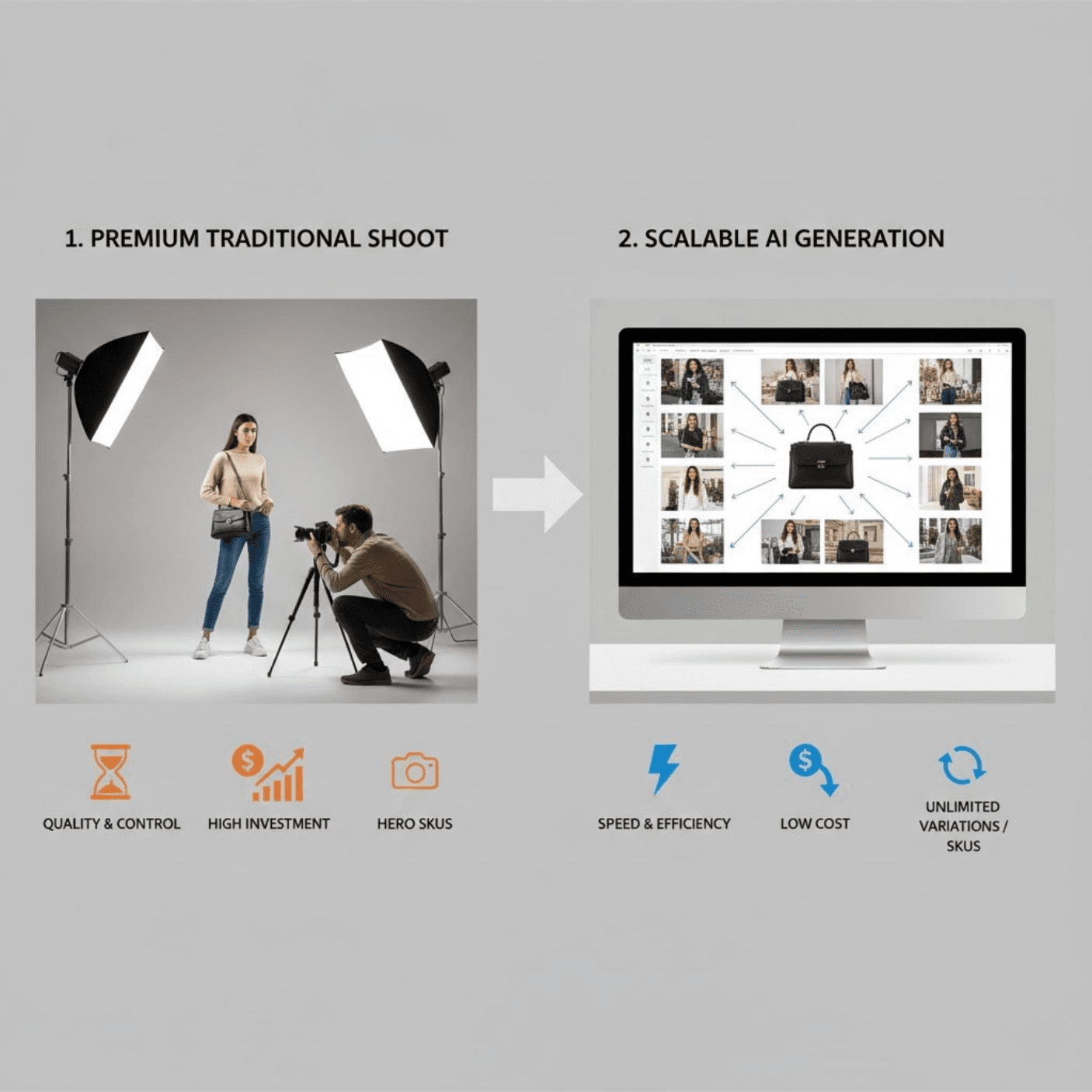
12. Final Thoughts: The Future of Ecommerce Model Photography
Ecommerce model photography isn’t disappearing, it’s evolving.
Today, brands no longer have to choose between quality and scale. The smartest teams combine:
Strategic traditional shoots for hero products and brand storytelling
Digital retouching to perfect base images
AI-powered model visualization to scale variations quickly and efficiently
The results are clear:
Faster launches
Lower production costs
Consistent branding across all channels
Higher conversions and increased AOV
If your catalog is growing and traditional production workflows are slowing you down, it may be time to rethink how you create model imagery, combining human creativity with scalable technology for maximum impact.
