
Clothing Photography for Ecommerce: Complete Guide to Images That Sell

1. Introduction: Why Clothing Photography Matters in Ecommerce
Clothing is one of the hardest products to sell online. Shoppers can’t try it on, feel the fabric, or see how it moves in real life, everything they need to decide comes from visuals. This lack of physical interaction creates hesitation, uncertainty, and abandoned carts.
That’s why, in ecommerce, product images must replace the in-store experience. Your photos need to show fit, texture, drape, and style clearly enough that buyers feel confident clicking “Buy.” Clothing photography isn’t just about looking good, it’s a core conversion driver. Strong images reduce doubt, answer unspoken questions, and help shoppers imagine wearing the product themselves. When done right, photography doesn’t decorate your listing, it sells it.
2. What Is Clothing Photography for Ecommerce?
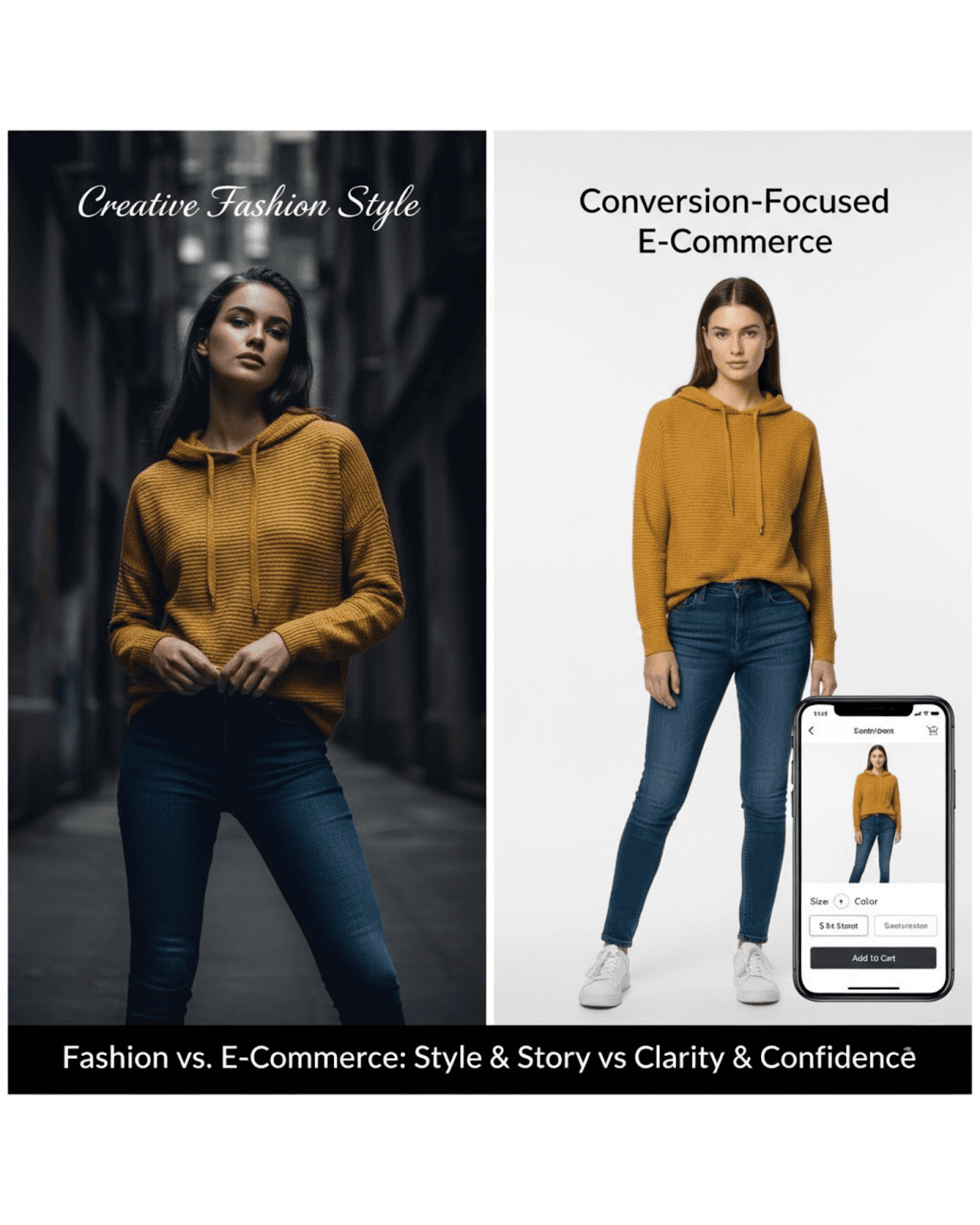
Clothing photography for ecommerce focuses on presenting apparel in a way that helps online shoppers understand fit, fabric, color, and style, all without touching the product. Unlike creative fashion photography, which emphasizes artistic expression, mood, or storytelling, ecommerce photography is conversion-focused, designed to answer buyers’ questions and encourage purchase.
Key principles include clarity, consistency, and realism: images must accurately represent the product, maintain uniform styling across listings, and clearly show details like stitching, texture, and proportions. Ecommerce clothing photography has stricter requirements than editorial shoots because its primary goal is not to impress creatively, it’s to instill confidence and drive sales.
3. How Online Shoppers Judge Clothing Products
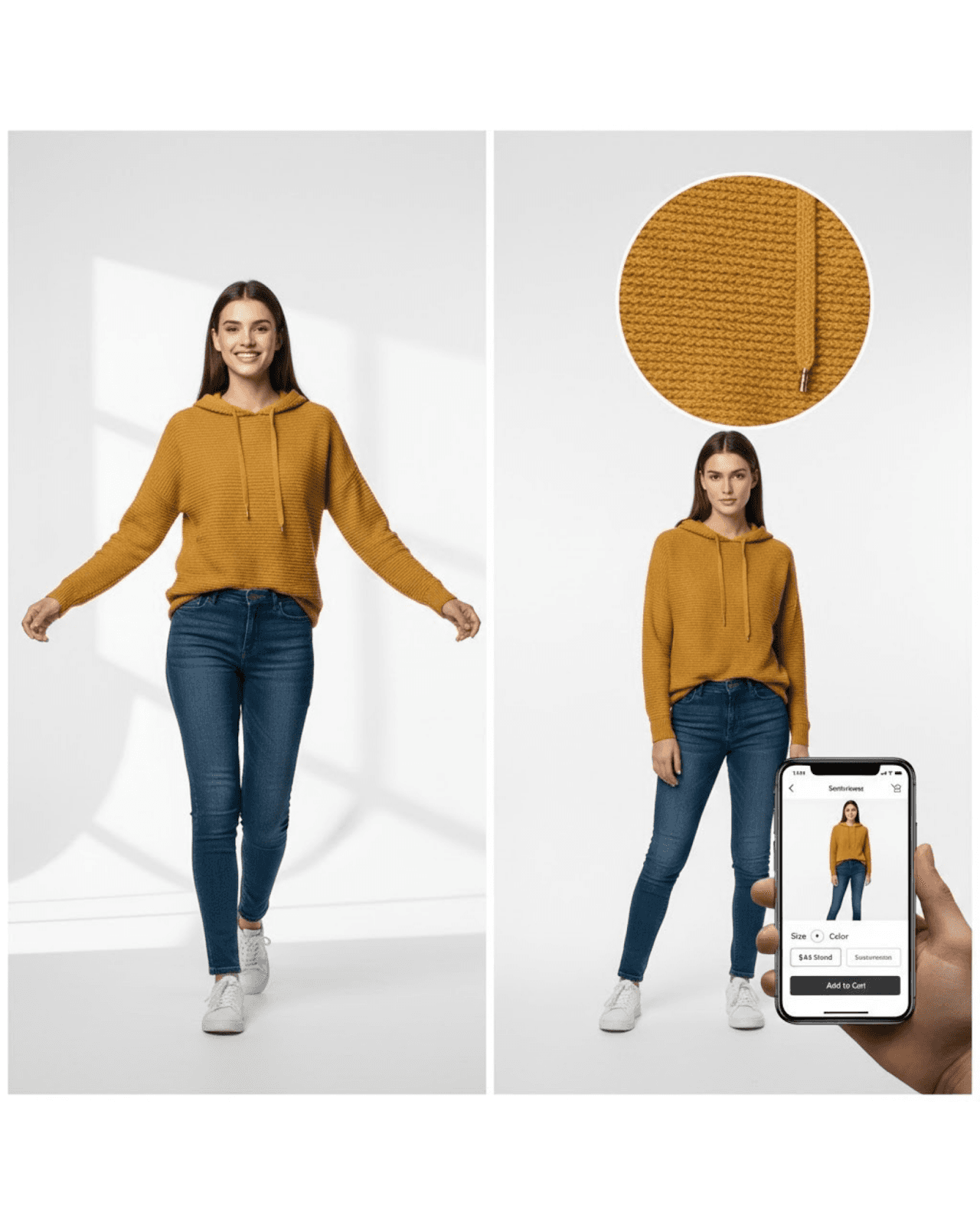
When shopping online, buyers make split-second judgments. They scroll quickly, scan images, and compare multiple listings before reading any text. First impressions are crucial, your photos often determine whether a shopper clicks or scrolls past.
Shoppers subconsciously ask questions like:
How does it fit?
What does it look like when worn?
Is this brand trustworthy?
High-quality clothing images answer these questions faster and more effectively than descriptions ever could. Clear visuals showing fit, fabric, color, and styling help buyers imagine wearing the product, reducing hesitation and increasing the likelihood of purchase.
4. Essential Types of Clothing Photos for Ecommerce Listings
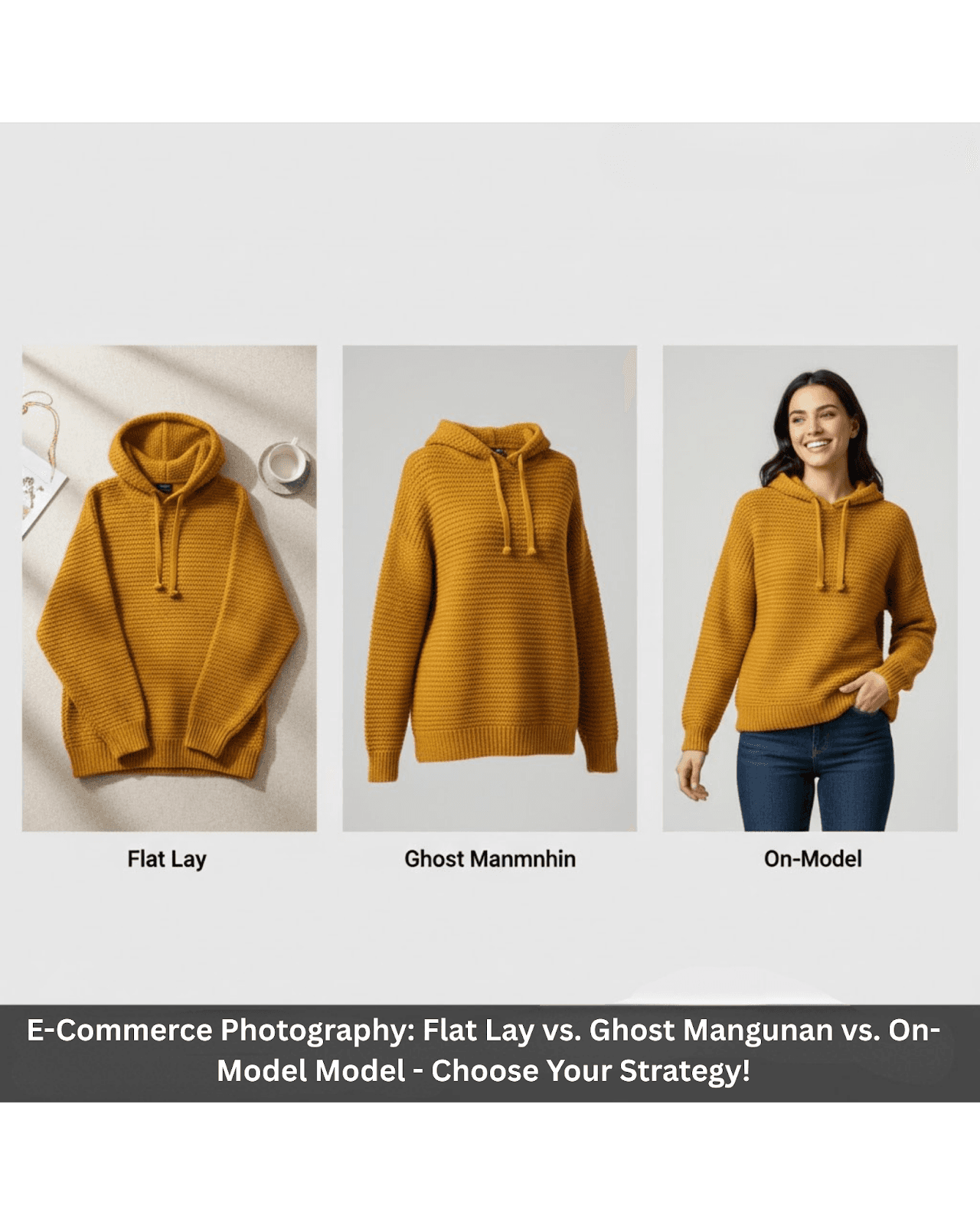
To create high-converting clothing listings, it’s important to include the right mix of image types. Each style serves a different purpose and answers different buyer questions.
4.1 Flat Lay Photography
Flat lay photos display clothing laid out neatly on a surface.
For the overhead setup itself, use our lay-flat clothing photography guide for camera placement, garment shaping, color control, and release QA.
What it’s good for: Shows details like pattern, color, and material clearly.
When it works: Ideal for basics, minimal designs, or small apparel items like scarves and accessories.
Limitations: Does not convey fit, drape, or scale, making it harder for buyers to visualize how the garment looks when worn.
4.2 Ghost Mannequin Photography
Ghost mannequin images remove the model but keep the shape of the clothing.
Professional look: Provides a clean, structured presentation that emphasizes the garment’s form.
Common use cases: Shirts, jackets, dresses, and other items where shape is critical.
Downsides: Lacks emotional connection, shoppers may struggle to imagine themselves wearing the clothing.
4.3 On-Model Clothing Photography
On-model photos show clothing worn by a real person.
Why it performs best for conversion: Helps shoppers understand fit, proportions, and style instantly.
Visualization: Buyers can see how fabric drapes, how the piece moves, and how it pairs with other items.
Especially important for fashion categories: Dresses, jackets, activewear, and accessories benefit most, as shoppers rely heavily on seeing the product in context to make confident purchasing decisions.
5. Why On-Model Images Convert Better Than Flat Photos
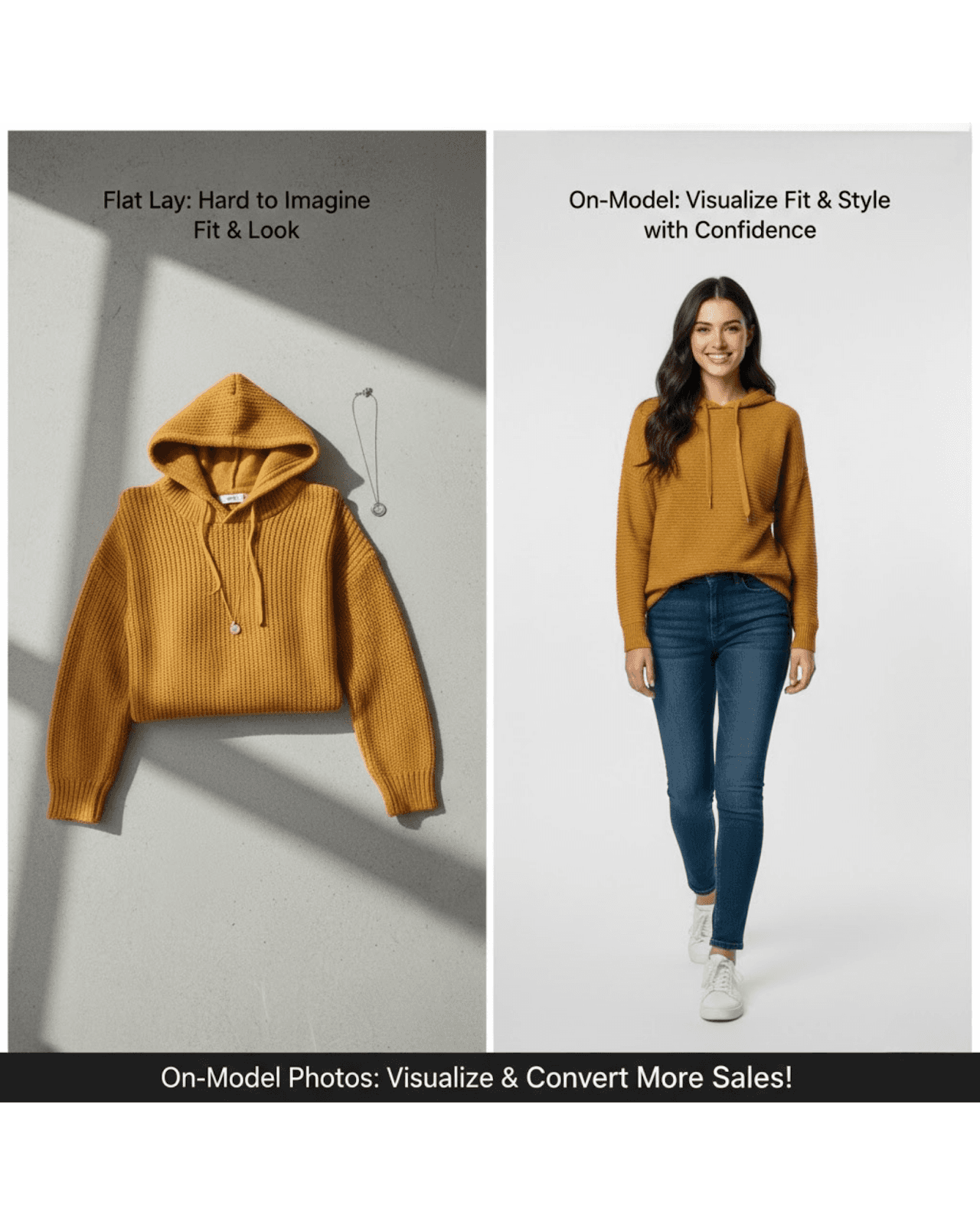
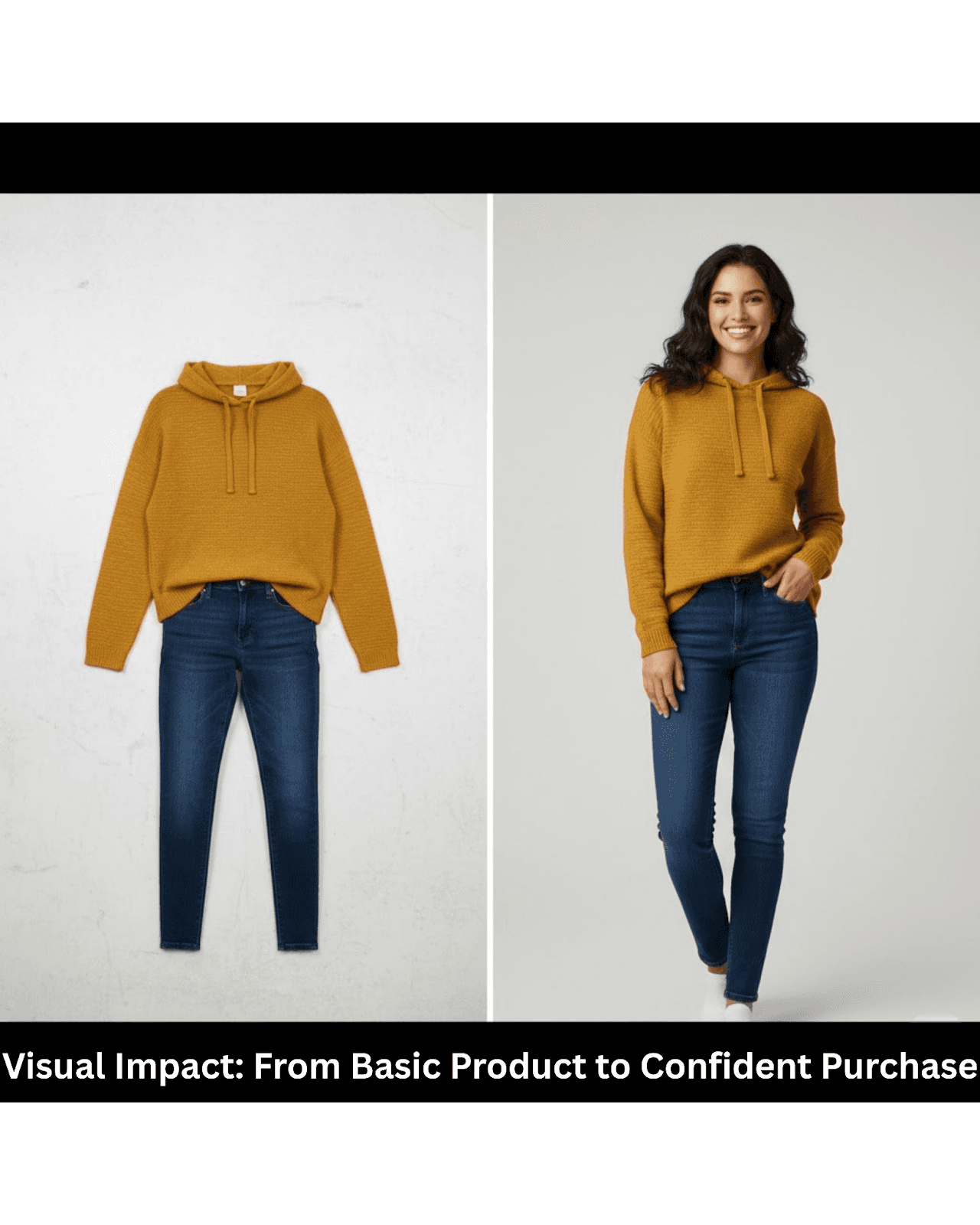
Seeing clothes worn on a person creates an immediate psychological impact. Shoppers can better understand the fit, drape, proportions, and even how the fabric moves, details that flat lay or mannequin shots simply can’t convey. This clarity reduces buyer uncertainty, making customers more confident and more likely to add items to their cart.
Advanced AI tools, like Look Atlas, can take a simple product photo and automatically transform it into a realistic on-model image. This allows sellers to create professional, high-converting visuals without expensive photoshoots.

6. Lifestyle vs Studio Clothing Photography
Clothing photography can take two primary approaches: studio shots and lifestyle shots, each serving different purposes in ecommerce.
Studio shots: These images are clean, controlled, and highly consistent. They highlight the product’s fit, color, and details without distractions, making them perfect for catalog pages and quick comparisons.
Lifestyle shots: These show clothing in real-life contexts, adding emotion, storytelling, and aspirational appeal. They help buyers imagine wearing the product in their own lives and can drive engagement on social media and marketing campaigns.
Many successful brands combine both approaches, using studio images for clarity and detail, while supplementing with lifestyle shots to create context, connection, and a more compelling shopping experience. For a reproducible room, lighting, color, and release-QA plan, use the apparel photography studio setup specification.
7. Lighting Techniques for Clothing Photography
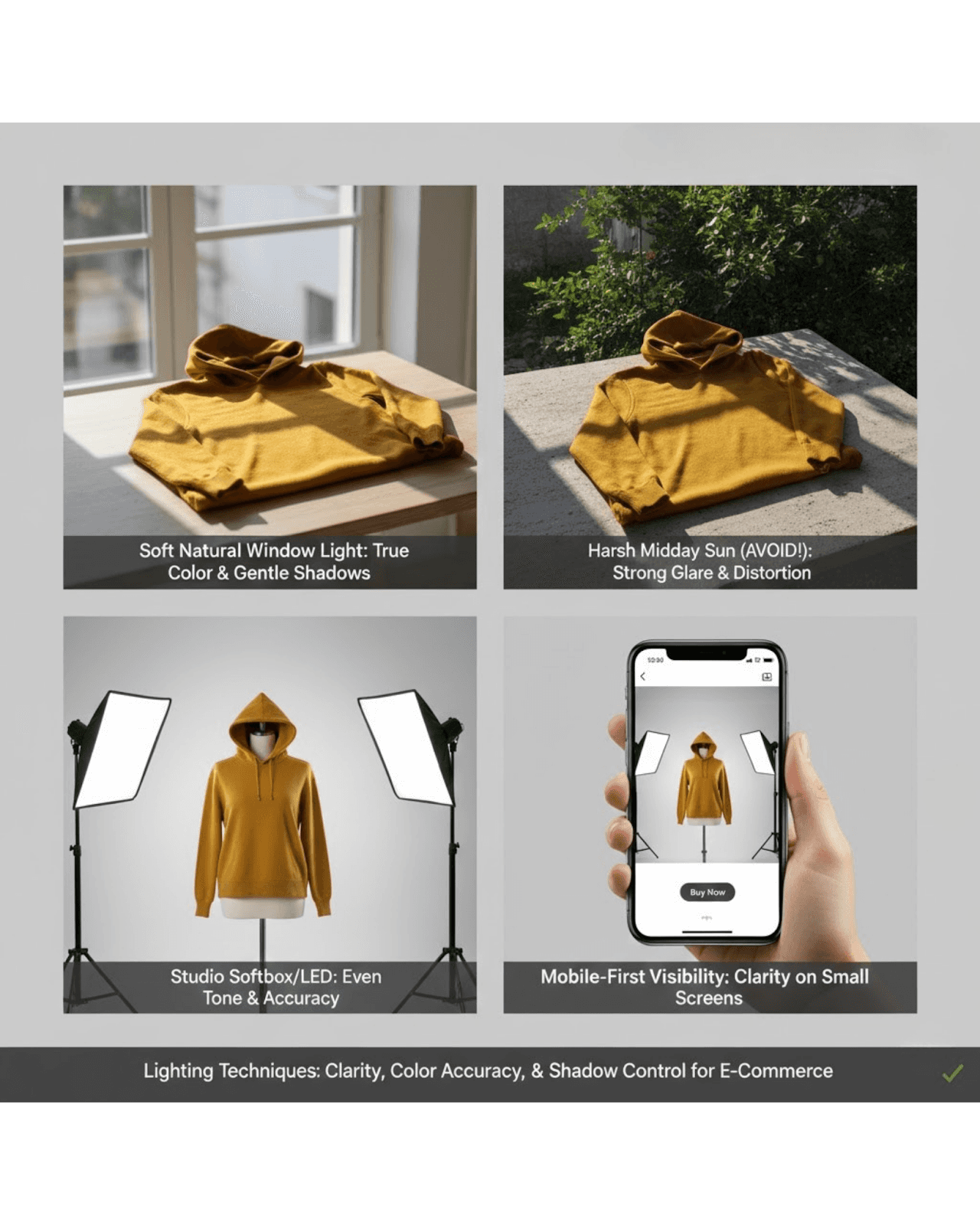
Lighting is critical in clothing photography, as it directly affects how colors, textures, and details are perceived.
For a repeatable bay with fixed camera, light, crop, garment-prep, and rebuild checks, use this clothing photography setup before the first catalog batch.
Natural light vs. artificial lighting: Natural light provides soft, flattering illumination, while artificial light, like softboxes or LED panels, offers full control and consistency regardless of time or weather.
Avoid harsh shadows and color distortion: Uneven lighting can hide details or misrepresent fabric colors, reducing buyer confidence.
Importance of accurate fabric color: Shoppers rely on images to make purchase decisions, so colors must match the product exactly to avoid returns or dissatisfaction.
Mobile-first lighting considerations: Since most online shopping happens on phones, ensure your lighting keeps images bright, clear, and readable at small sizes, so details remain visible on any device.
8. Styling, Fit, and Preparation Before Shooting
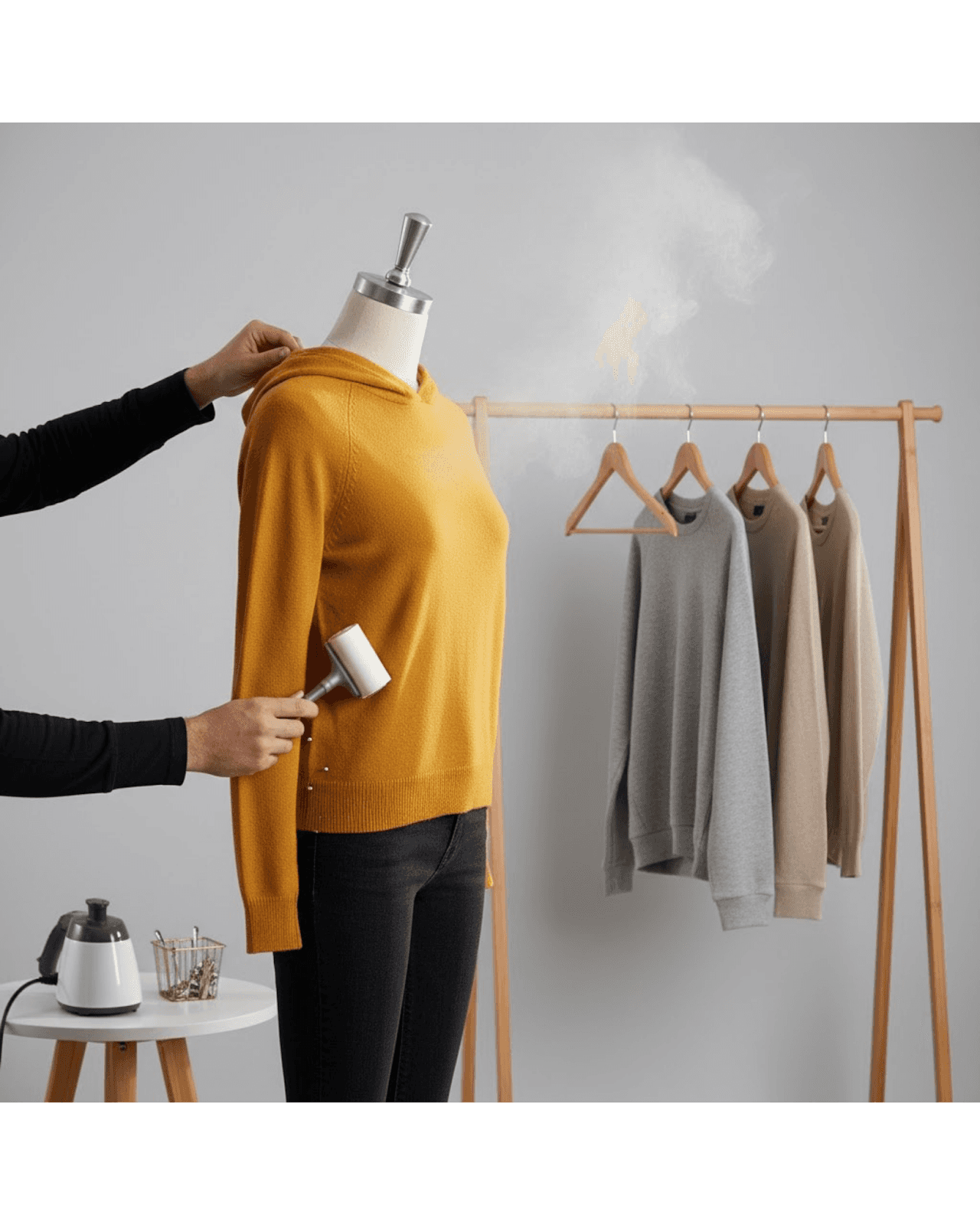
Proper preparation is essential for professional-looking clothing photography.
Steaming and garment prep: Remove wrinkles, lint, and creases so clothes appear polished and well-cared-for.
Pinning and tailoring for better fit: Adjust garments on mannequins or models to show their intended shape and proportions.
Consistent styling across products: Use the same approach for all shots to maintain a cohesive, professional look throughout your catalog.
Even the best lighting and camera work cannot compensate for poorly prepared clothing. Neglecting prep can make garments appear sloppy, distort fit, and reduce buyer confidence, ultimately hurting conversions. Proper preparation ensures your photography highlights the product at its best.

9. Backgrounds That Help Clothing Stand Out
The right background can make or break your clothing photography by directing attention to the product and enhancing perceived quality.
White backgrounds: Provide a clean, minimal look that emphasizes the garment and works well on Etsy, Shopify, and most marketplaces.
Neutral backgrounds: Soft grays, beiges, or pastels can add subtle warmth without distracting from the clothing.
Lifestyle backgrounds: Placing garments in real-world settings adds context, emotion, and aspirational appeal, making buyers imagine the product in their own lives.
Background choice affects perceived value, a cluttered or inconsistent background can make even high-quality clothing appear cheap or unprofessional. Keep setups simple and intentional to ensure the product remains the focal point.
10. Image Consistency Across an Ecommerce Store
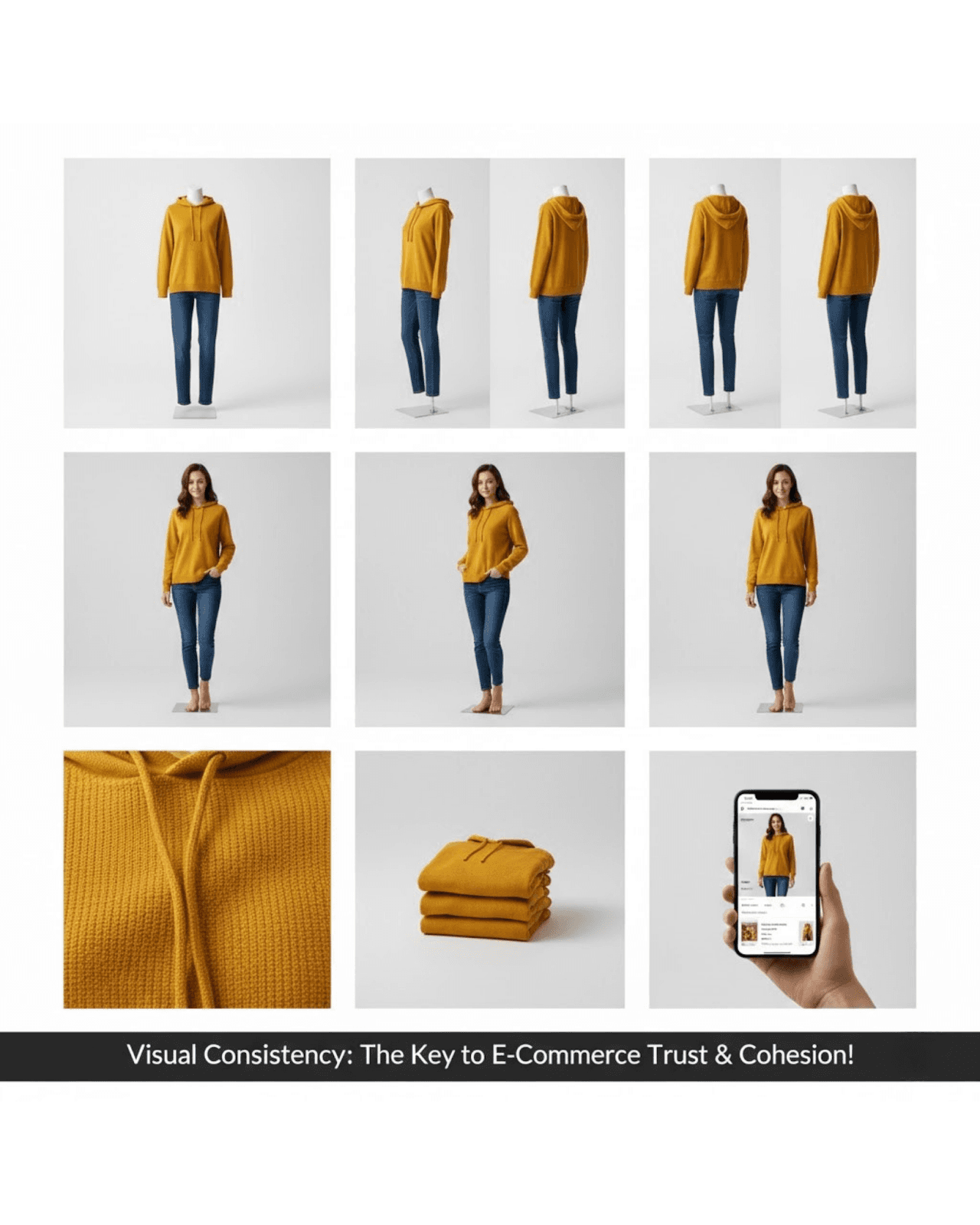
Maintaining consistent images across your store is key to building brand trust and professionalism. Shoppers notice when angles, poses, lighting, or framing vary wildly, which can create doubt about quality or reliability.
By matching visual elements, from model poses to background tones, you create a cohesive shopping experience that reassures buyers. Inconsistent visuals not only confuse shoppers but can also weaken brand perception, making your store feel unpolished.
Consistency also sets the stage for scaling your photography workflow, allowing new products or variants to fit seamlessly into your existing catalog without additional effort or risk of mismatch.
11. The Cost and Limitations of Traditional Clothing Photoshoots
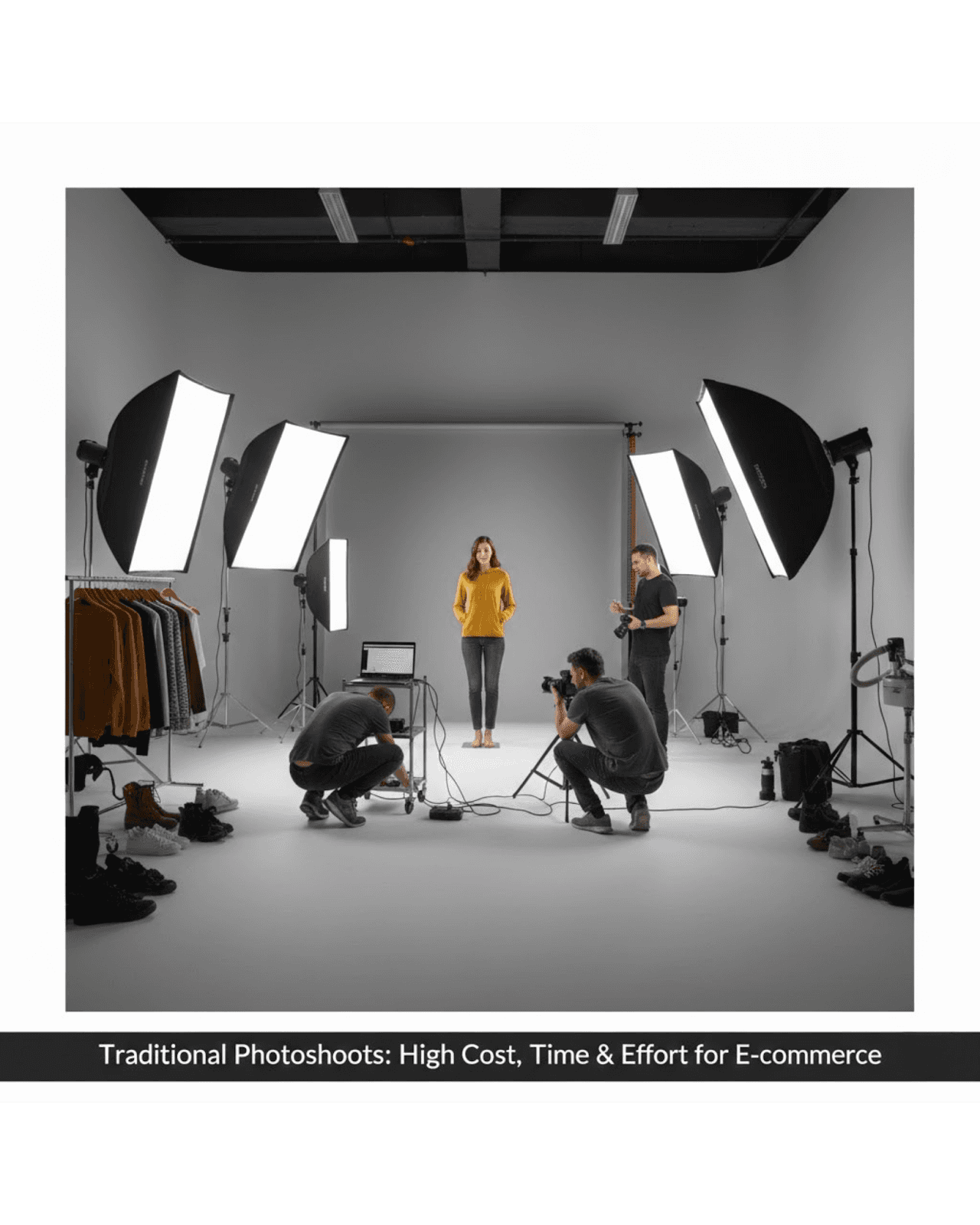
Traditional clothing photoshoots involve models, photographers, studios, and careful scheduling, all of which can quickly add up in time and expense.
High cost per product or variation: Every new style, color, or size may require a separate shoot, making large catalogs expensive to photograph.
Slow turnaround for new launches: Planning and executing full shoots delays product updates and seasonal releases.
Difficulty maintaining consistency at scale: Lighting, styling, and composition can vary between shoots, making it hard to keep a cohesive look across your store.
These challenges highlight why many ecommerce brands are exploring modern alternatives to streamline photography while maintaining quality and brand consistency.
12. Modern Alternatives to Traditional Clothing Photography
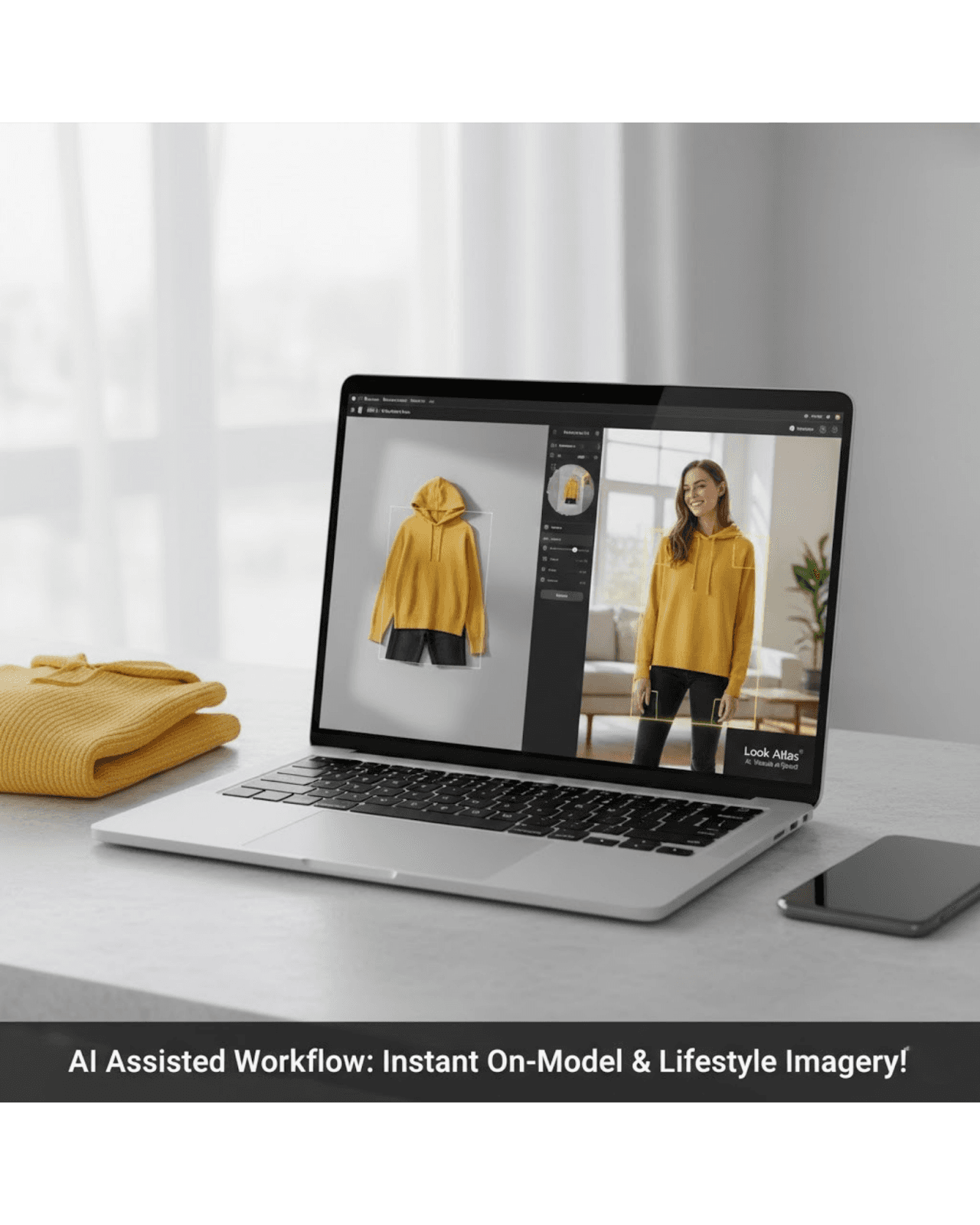
Ecommerce brands are increasingly adopting faster, more flexible photography workflows. Instead of relying solely on traditional photoshoots, many are now incorporating digital and AI-assisted solutions that produce high-quality images without constant studio setups.
These modern methods allow for quicker iteration and testing, enabling brands to update product visuals, experiment with styles, and launch new items faster while maintaining consistency across listings. Advanced AI, such as Look Atlas, can even transform a simple product photo into a realistic on-model image, giving sellers professional, conversion-focused visuals at scale.
By leveraging these solutions, stores can maintain a polished, professional appearance while freeing themselves from the time and cost constraints of traditional photography.
13. Scaling Clothing Photography for Growing Ecommerce Brands
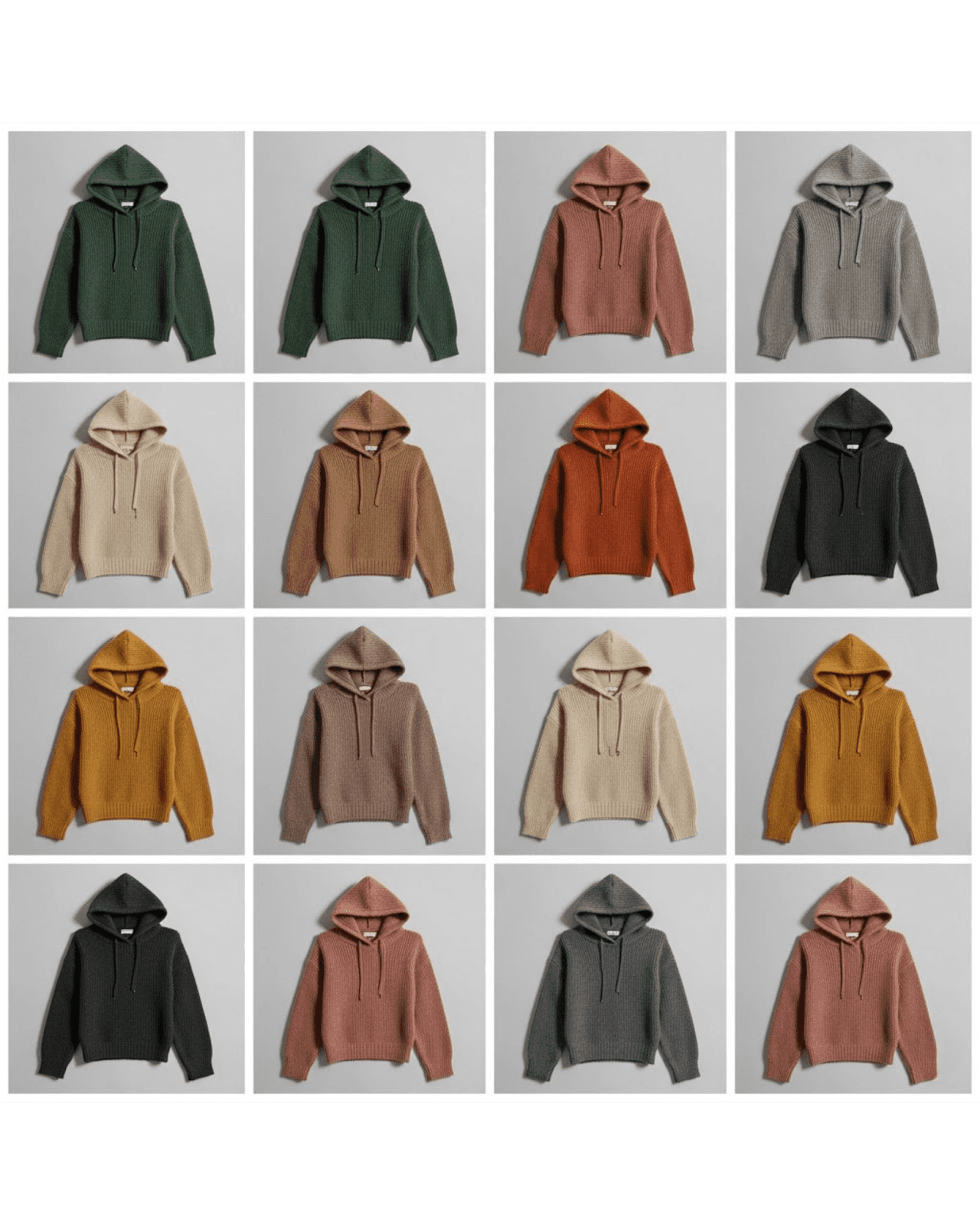
As ecommerce brands grow, scaling clothing photography becomes a major challenge. Large catalogs require dozens, sometimes hundreds, of images, and each new launch or seasonal drop adds pressure to produce visuals quickly and consistently. Managing photos for every color, size, and style variation often leads to delays and rising costs.
Traditional photography methods struggle at this stage. Re-shooting products for every update is time-consuming, expensive, and difficult to keep visually consistent. As variants multiply, brands need smarter, more scalable ways to maintain high-quality imagery without slowing down growth.
14. Tools That Help Ecommerce Teams Create On-Model Images Efficiently
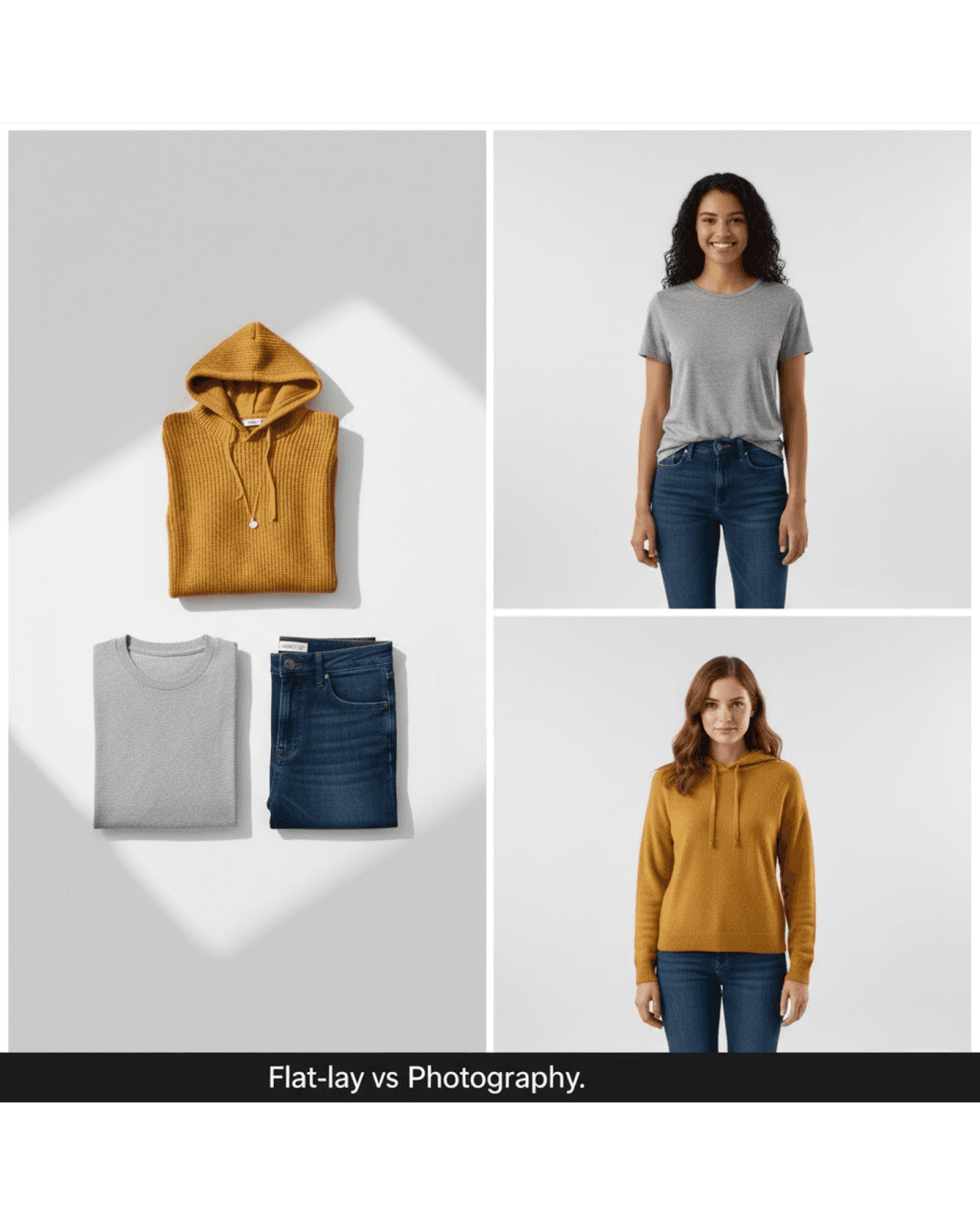
As ecommerce teams scale, many look for ways to create on-model visuals without repeating full photoshoots. This has led to the rise of tools that can take a clean product image, such as a flat lay or studio shot, and convert it into a realistic, worn-on visual. The goal isn’t to replace creativity, but to speed up production and improve consistency across large catalogs.
These tools help teams quickly visualize how a garment looks when worn, making it easier for shoppers to understand fit, drape, and style. By reducing reliance on models, studios, and scheduling, brands can launch faster, maintain a consistent look, and test new visuals with less effort.

15. Optimizing Clothing Images for Mobile Shopping
Most ecommerce browsing now happens on mobile, which means clothing images must be designed for small screens and fast scrolling. Shoppers don’t zoom in immediately, they glance, compare, and decide within seconds. Images need to communicate fit, style, and quality at a glance, without relying on fine details that only work on desktop.
Clean cropping and centered framing help garments stay clear even when thumbnails are small. Avoid wide empty space or complex backgrounds that shrink the product visually. High contrast between the clothing and background improves readability, while consistent lighting prevents important details from getting lost on mobile displays.
On-model images tend to perform better on small screens because they instantly show scale, fit, and how the clothing sits on a real body. Even at reduced sizes, buyers can understand silhouette and proportion, which reduces hesitation and increases tap-through rates.
Finally, image order matters. Lead with your strongest on-model or hero image first, followed by supporting views like back angles, close-ups, and lifestyle shots. A clear visual hierarchy guides mobile shoppers smoothly through the listing, helping them feel confident enough to keep scrolling, and ultimately, to buy.
16. Editing and Post-Production Best Practices
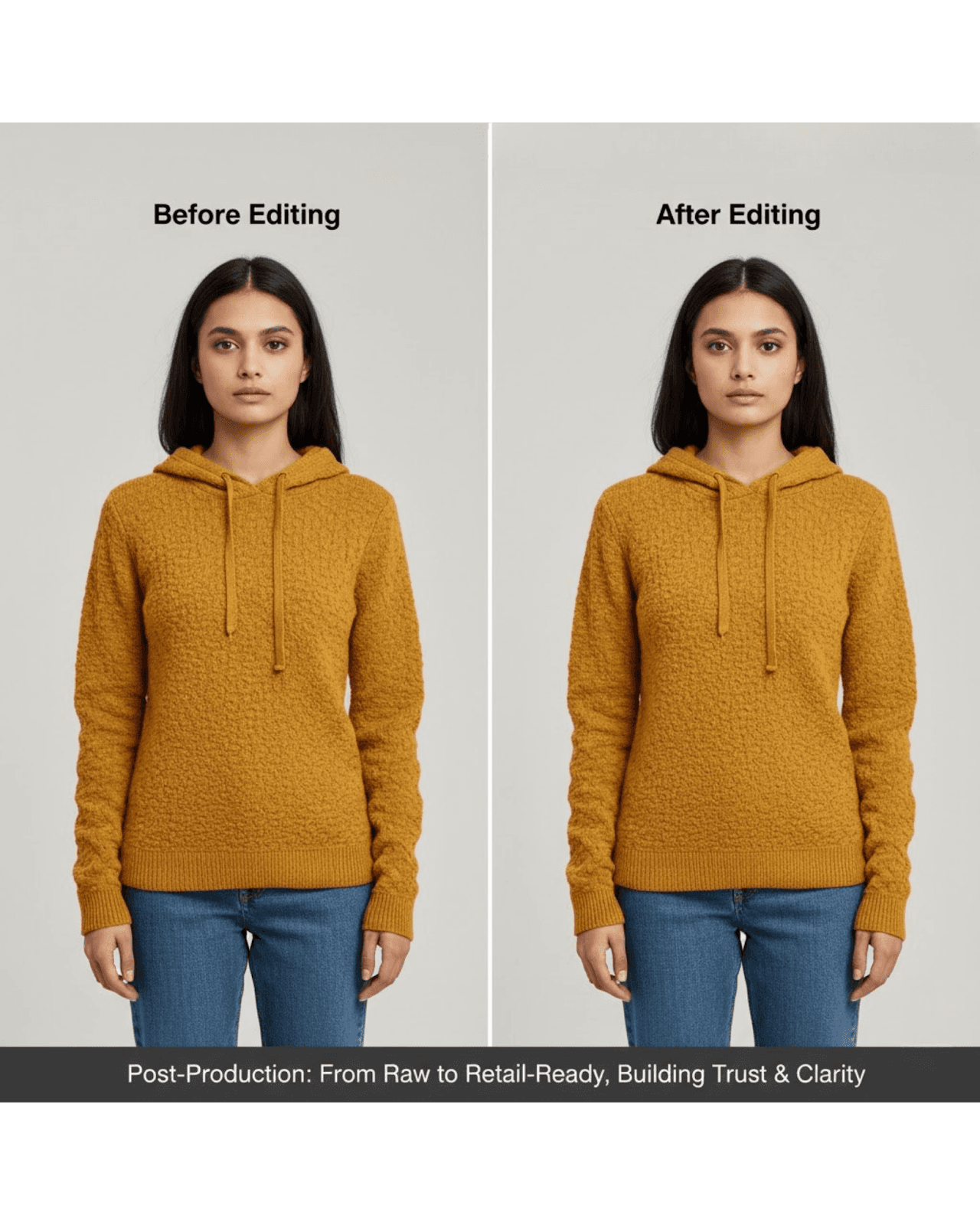
Editing should enhance your clothing photos, not transform them. The primary goal is accuracy, especially when it comes to color and fabric appearance. Start with basic color correction to ensure the product looks as close to real life as possible. Inaccurate tones are one of the biggest causes of returns and negative reviews, particularly in fashion.
Remove small distractions like dust, wrinkles, or background imperfections, but avoid heavy retouching that changes the garment’s shape, texture, or finish. Over-smoothing fabrics or sharpening edges too aggressively can make items look artificial and reduce trust once the product arrives.
Keep exposure, contrast, and white balance consistent across your entire catalog. This creates a professional, cohesive look and helps shoppers compare products confidently. Realistic shadows and natural highlights also help clothing feel tangible rather than digitally manipulated.
Most importantly, avoid misleading visuals. Don’t alter fit, length, or structure in ways the real product can’t deliver. Honest, well-balanced editing builds long-term trust, making customers more likely to purchase again, even if the photo isn’t “perfect.”
17. How Better Clothing Photography Improves Conversion Rates
High-quality clothing photography directly impacts buyer confidence. When shoppers can clearly see fit, fabric, and style, they feel more certain about their purchase, which reduces hesitation and abandoned carts.
Better visuals also lead to fewer returns and customer questions, since buyers know exactly what to expect. Clear, consistent imagery gives products a higher perceived value, making shoppers more willing to pay premium prices and engage with your brand repeatedly.

18. Measuring Performance: What to Track
To understand how your clothing photography impacts sales, focus on key performance metrics:
Conversion rate: Measures how many visitors complete a purchase after viewing your listing.
Add-to-cart rate: Indicates how effectively your images and listing encourage initial buying interest.
Time on listing: Shows engagement, longer viewing times often reflect stronger visual appeal and clarity.
A/B testing main images: Experiment with different hero images or on-model shots to see which drives higher clicks and conversions.
Tracking these metrics helps identify which visuals perform best, allowing you to iterate and optimize your photography for maximum impact and return on investment.
19. Who Benefits Most From Upgrading Clothing Photography
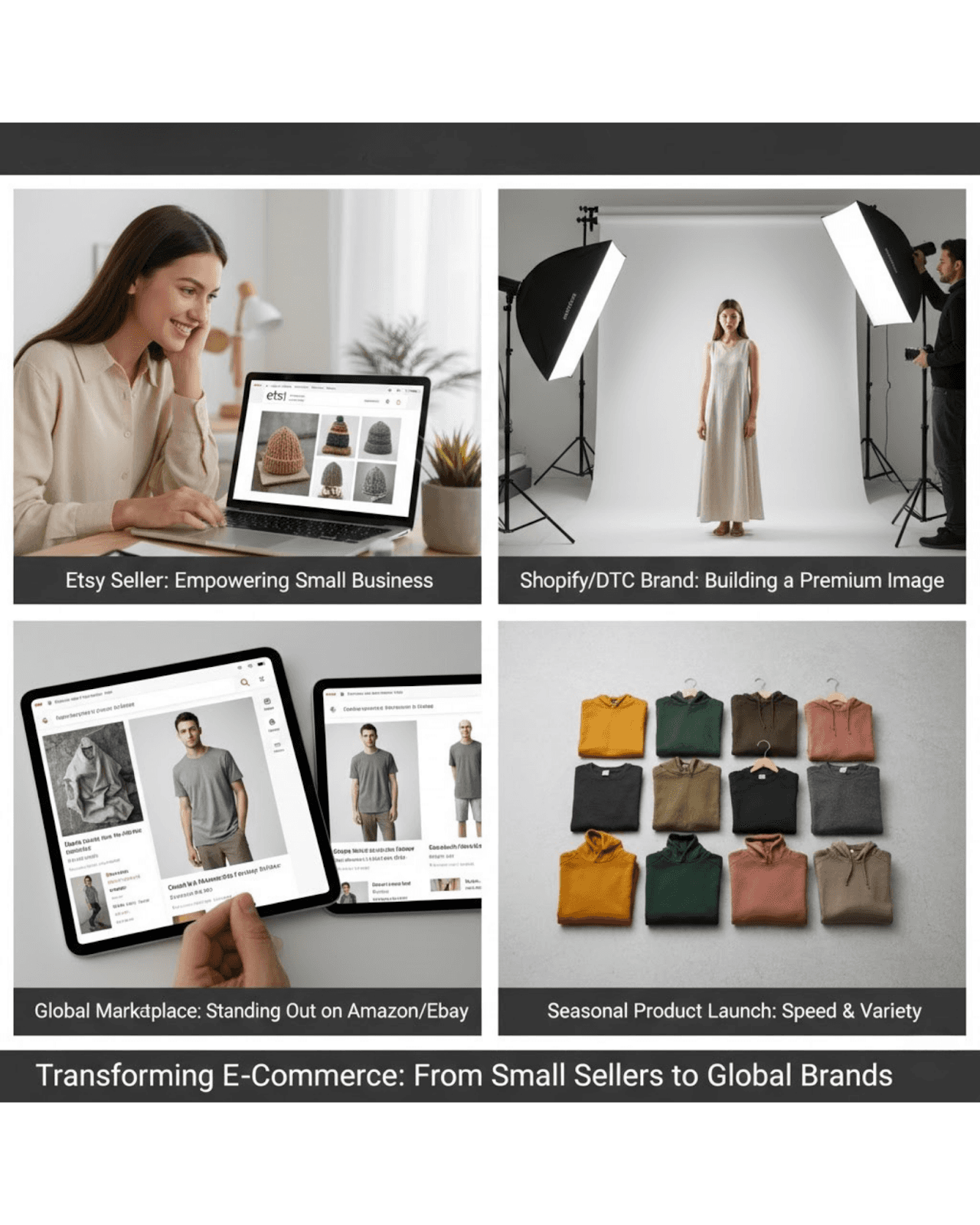
Upgrading clothing photography delivers value across many types of ecommerce sellers:
Etsy sellers: High-quality images help stand out in crowded marketplaces and reduce buyer hesitation.
Shopify & DTC brands: Clear, consistent visuals build brand credibility and encourage repeat purchases.
Marketplaces (Amazon, eBay, etc.): Competitive listings with professional photos drive clicks and conversions over similar products.
Brands with frequent launches: Better photography streamlines scaling new products, ensuring consistency and reducing production delays.
In short, any seller who relies on visuals to communicate product quality and style sees measurable benefits from investing in improved clothing photography.
20. Final Takeaway: Show the Product the Way Buyers Imagine Wearing It
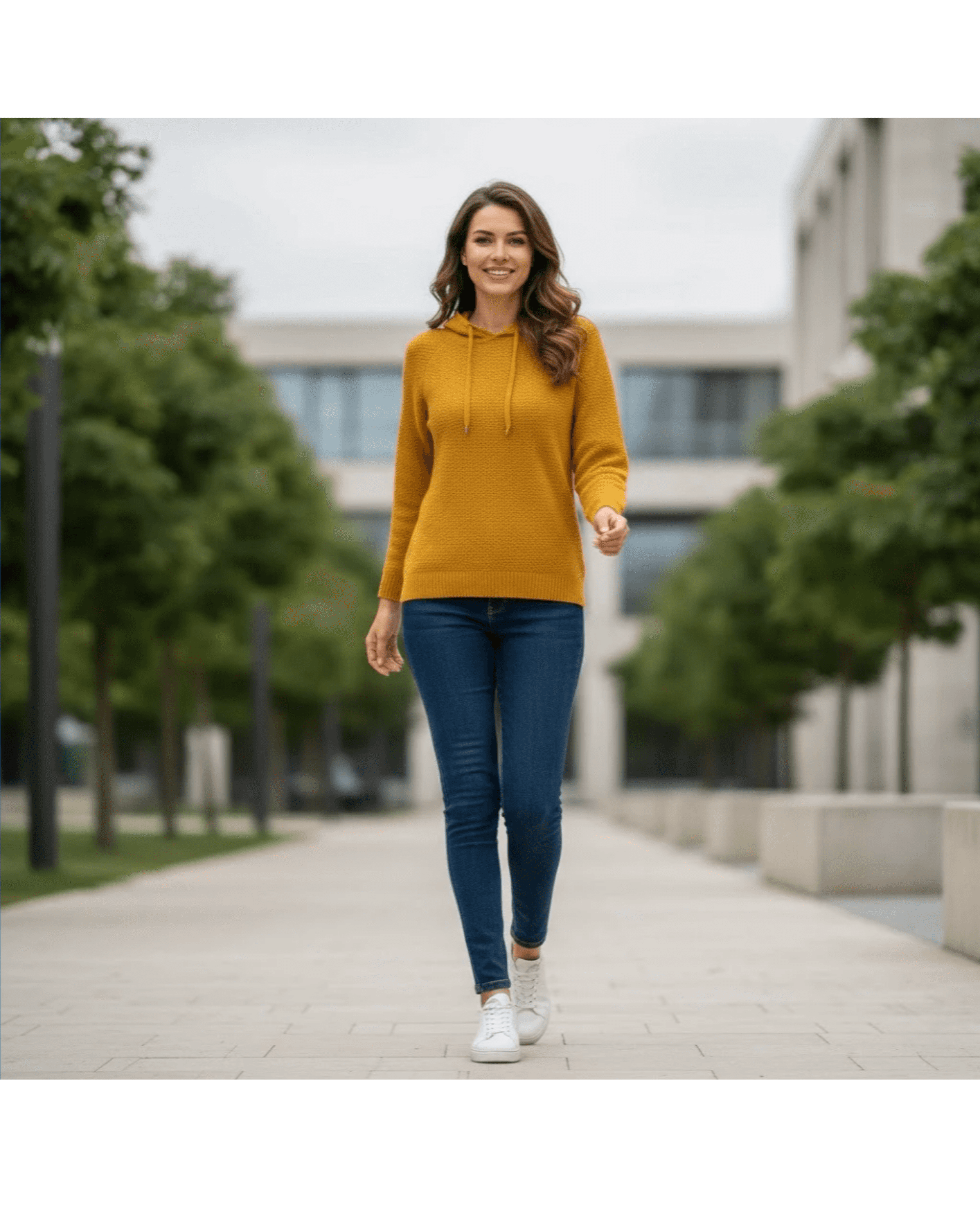
The most effective clothing photography allows shoppers to visualize themselves wearing the product. Clear, well-composed images answer their questions about fit, fabric, and style faster than any description can, reducing hesitation and building confidence.
Once those base questions are clear, use this product-page image gallery method to sequence identity, detail, scale, and context without assigning redundant frames.
In ecommerce, clarity always trumps creativity, beautiful but confusing images won’t convert, while honest, informative visuals drive sales and loyalty. Photography is not just decoration; it’s a strategic growth lever that influences conversion, reduces returns, and strengthens your brand.
As online shopping continues to evolve, brands that prioritize consistent, realistic, and engaging clothing imagery will stay ahead, scaling confidently while keeping customers inspired and informed.
